Ministry of Agriculture &
Farmers Welfare
ICAR-CMFRI Advises Consumers Not to Avoid Tuna Over Parasite Reports from Specific Region
Posted On:
24 SEP 2026 4:57PM by PIB Delhi
The ICAR-Central Marine Fisheries Research Institute (ICAR-CMFRI), Kochi, has advised consumers not to avoid tuna or other commercially available fish solely on the basis of reports of parasitic infections detected in fish from a specific geographical region. The Institute stated that fish examined along the Indian coast, including tuna, have not shown external manifestations of harmful parasitic infestation and that such findings from other regions should not be generalised to fish caught in Indian waters.
The advisory follows reports highlighting the presence of parasites in skipjack tuna based on a study of fish from the Atlantic Ocean off Brazil. ICAR-CMFRI emphasised that the presence and abundance of parasites can vary between individual fish and geographical regions depending on ecological conditions and the availability of intermediate or secondary hosts such as copepods.
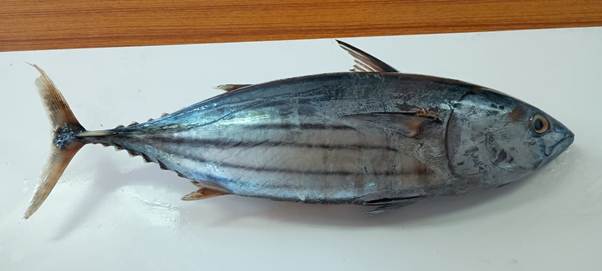
Dr Grinson George, Director, ICAR-CMFRI, said that scientists at the Institute regularly examine fish, including skipjack tuna, as part of fish biology studies and observe them for abnormalities and parasites whenever necessary. He stated that the fish examined by the Institute do not show external manifestations of harmful parasitic infestation.
The Institute further explained that variations in parasite occurrence have also been used globally as indicators for differentiating fish stocks or populations. Therefore, findings relating to fish from one geographical region cannot automatically be applied to the same species occurring in another region.
As an additional food-safety precaution, ICAR-CMFRI advised that proper and prompt evisceration is important during fish handling and processing. The intestines and other viscera are normally removed during cleaning and processing. Proper cooking also kills parasites and significantly reduces any associated food-safety risk.
The Institute noted that in some countries raw or lightly cooked seafood is consumed as part of cultural practices, where the risk may be higher if parasite prevalence in the particular locality is high and has not been properly assessed. In India, seafood is generally prepared through cooking at high temperatures, which provides an additional food-safety measure.
ICAR-CMFRI emphasised that consumers need not avoid tuna or other commercially available fish merely because parasites have been reported in fish from a specific geographical region. The Institute advised consumers to follow appropriate handling, cleaning and cooking practices to minimise potential risks while continuing to benefit from the nutritional value of fish and other seafood.
*****
SS/MS
(Release ID: 2314423)
Visitor Counter : 351