Ministry of Health and Family Welfare
India Highlights Progress on Universal Health Coverage, Hepatitis Elimination and Sickle Cell Care at UNGA81
India Showcases Ayushman Arogya Mandirs, AB-PMJAY and e-Sanjeevani in Advancing Universal Health Coverage at UNGA81
With Over 1.8 Lakh Ayushman Arogya Mandirs, 900 Million+ Unique Health IDs and 497 Million+ Teleconsultations, India is Advancing Universal Health Coverage: Union Health Secretary
Union Health Secretary Smt. Punya Salila Srivastava highlights Progress Towards Hepatitis Elimination by 2030 at UNGA81
India Joins Global Partners to Launch OneSCD at UNGA81, Advancing Equitable and Accessible Sickle Cell Care
India Highlights Comprehensive Sickle Cell Response and 2047 Elimination Goal at OneSCD Global Partnership Launch at UNGA81
Posted On:
24 SEP 2026 12:36PM by PIB Delhi
India reiterated its commitment to making quality healthcare accessible and affordable for all, while sharing its experience in strengthening public health systems and addressing priority health challenges at two key global health engagements held on the sidelines of the 81st United Nations General Assembly (UNGA81) in New York.
Union Health Secretary Smt. Punya Salila Srivastava participated in the Seventh Annual Ministerial Meeting of the Group of Friends of Universal Health Coverage (UHC) & Global Health, where she highlighted India’s efforts to strengthen healthcare delivery across the continuum, from comprehensive primary healthcare to secondary and tertiary care, while protecting people from financial hardship.
She highlighted India’s network of over 1.8 lakh Ayushman Arogya Mandirs, which bring a broad range of healthcare services closer to communities. These include services related to reproductive and child health, screening and management of non-communicable diseases, mental health, elderly and palliative care, along with preventive, promotive and curative healthcare. She also underlined the continued focus on quality standards in primary healthcare delivery.
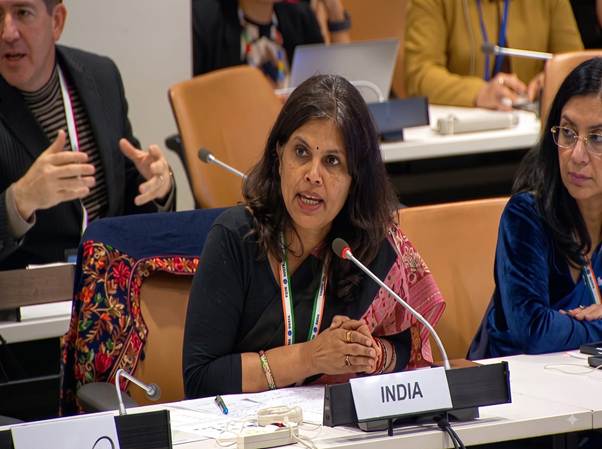
Ms. Srivastava highlighted the role of Ayushman Bharat Pradhan Mantri Jan Arogya Yojana (AB-PMJAY), the publicly funded health assurance scheme, in strengthening financial protection for vulnerable and underserved sections of society. She also underlined the importance of the Free Drugs and Diagnostics Service Initiative and the Prime Minister’s National Dialysis Programme in reducing the financial burden on patients and improving access to essential healthcare services.
Emphasising the importance of an integrated continuum of care, she noted that India’s approach connects comprehensive primary healthcare through Ayushman Arogya Mandirs with secondary and tertiary care, supported by referral linkages. The approach is aimed at bringing preventive, promotive and curative services closer to people while ensuring access to specialised care when required.
Highlighting India’s growing digital health ecosystem, the Union Health Secretary noted that over 900 million citizens have unique health identities. Interoperable digital registries of health facilities and healthcare professionals, along with ABHA-enabled health records, are helping strengthen continuity of care and facilitate access to health services.
She also highlighted the growing use of technology to bridge geographical barriers in healthcare. More than 497 million teleconsultations have been facilitated through e-Sanjeevani, alongside services and innovations such as teleradiology, AI-enabled X-rays and Mobile Medical Units. These initiatives are helping extend healthcare services to people in remote and underserved areas.
Delivering India’s perspective at the UNGA81 side event on “Advancing Global Action to Eliminate Hepatitis”, the Union Health Secretary highlighted the country’s commitment to the 2030 goal of eliminating Hepatitis B and C as public health threats. She underlined the importance of early diagnosis, affordable access to treatment and an integrated approach to prevention and care to accelerate progress towards this goal.
Embedded within the National Health Mission (NHM) framework, viral hepatitis screening services are being provided from nearly 1.80 lakh primary healthcare facilities, including Health and Wellness Centres, to tertiary care facilities. The programme has also expanded to 1,039 treatment centres. Since the launch of the National Viral Hepatitis Control Programme in 2018, nearly 225 million beneficiaries have been screened.
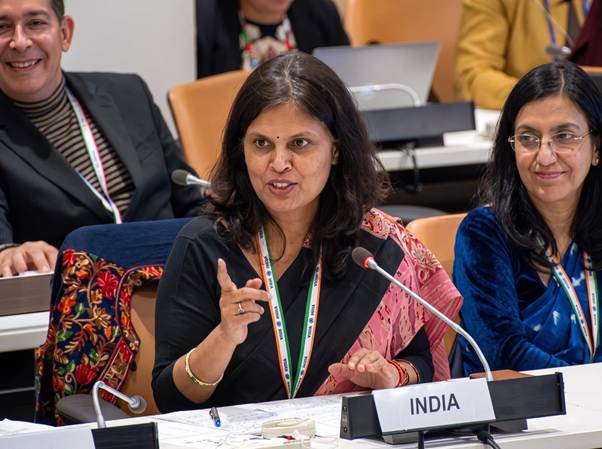
Ms. Srivastava also highlighted efforts to strengthen prevention by integrating viral hepatitis interventions across national health programmes, including measures to prevent mother-to-child transmission under the reproductive, maternal, neonatal, child and adolescent health framework.
She emphasised that sustained progress towards hepatitis elimination will require continued efforts to expand access, promote early diagnosis and ensure timely treatment, while strengthening health systems and integrating interventions across existing public health programmes.
At another key global health engagement on the sidelines of UNGA81, India co-hosted the launch of OneSCD: A Global Partnership to Advance Equity and Transform Sickle Cell Care, bringing together global partners to strengthen the international response to Sickle Cell Disease (SCD).
The initiative brought together partners including the Government of Nigeria, WHO, UNICEF, Africa CDC, the World Coalition on Sickle Cell Disease and St. Jude Children’s Research Hospital, with a shared focus on advancing more equitable and accessible approaches to Sickle Cell care.
Speaking at the launch, Ms. Punya Salila Srivastava highlighted India’s comprehensive response to Sickle Cell Disease through the National Sickle Cell Anaemia Elimination Mission, launched in 2023 under the leadership of Hon’ble Prime Minister Shri Narendra Modi, with the goal of eliminating Sickle Cell Anaemia as a public health problem by 2047.
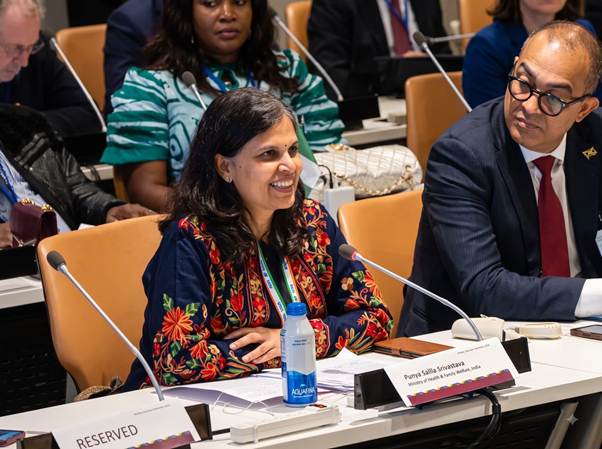
She outlined India’s approach of integrating population-level screening, early diagnosis, counselling, treatment, follow-up and digital tracking into the public health system. The Mission seeks to identify the disease and carrier status early, facilitate appropriate counselling and ensure that individuals diagnosed with Sickle Cell Disease remain connected to care.
Under the Mission, more than 7.29 crore people have been screened, over 20 lakh carriers identified and 2.5 lakh people diagnosed, while more than 4.93 crore Sickle Cell Cards have been distributed. These efforts are helping strengthen the continuum of care and create greater awareness among individuals, families and communities about the disease.
The Union Health Secretary also highlighted efforts to expand access to affordable point-of-care diagnostics and hydroxyurea therapy, along with ongoing research towards an indigenous gene-editing therapy. She emphasised the importance of timely diagnosis, appropriate treatment and continued follow-up for people living with Sickle Cell Disease.
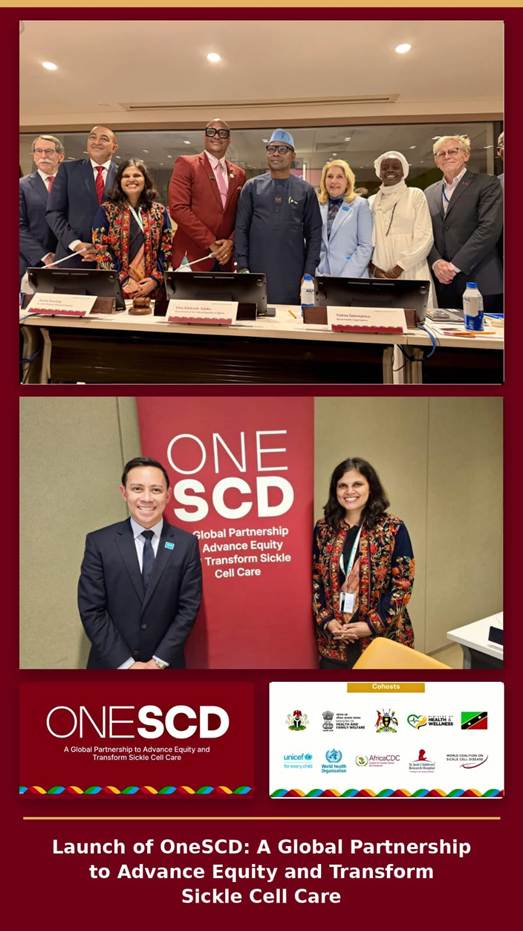
India’s participation in the two engagements reflects its continued efforts to strengthen health systems that are accessible to people across geographical and socio-economic settings. While the UHC discussions focused on building comprehensive, affordable and digitally enabled health services, the OneSCD initiative highlighted the importance of sustained global cooperation in addressing Sickle Cell Disease.
India reaffirmed its commitment to working with international partners towards equitable, affordable and people-centred healthcare, and to sharing experiences and approaches that can contribute to stronger health systems and better health outcomes globally.
*****
SR
(Release ID: 2314294)
Visitor Counter : 632