Ministry of Social Justice & Empowerment
Prime Minister Emphasises Inclusive Innovation and Jan Bhagidari while Highlighting Divyang Sahara Yojana in Post-Budget Webinar
Posted On:
10 MAR 2026 9:10AM by PIB Delhi
Describing the growing participation in Post-Budget Webinars as a powerful example of Jan Bhagidari, Hon’ble Prime Minister Shri Narendra Modi said that the aspirations of India’s youth from villages, towns and cities represent the country’s greatest strength and its most valuable capital for the future. He observed that over the past decade a significant shift has taken place in the national mindset, with young Indians increasingly eager to innovate and contribute to nation-building. As India advances towards an innovation-driven economy, the Prime Minister emphasised the importance of continuously modernising the education system and drawing upon the ideas emerging from these consultations, where lakhs of stakeholders, experts and beneficiaries are actively sharing practical suggestions for effective implementation of the Union Budget.
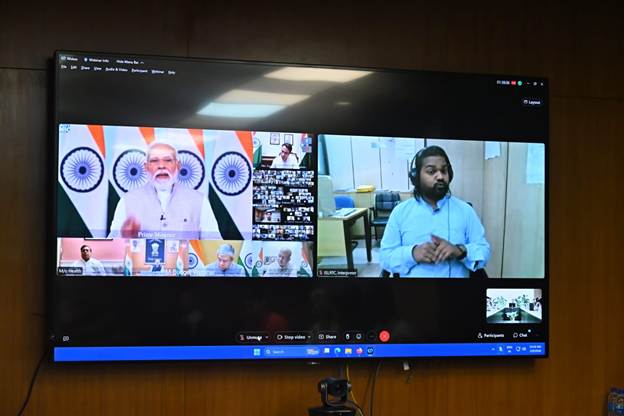
The Hon’ble Union Minister of State for Social Justice and Empowerment Shri B. L. Verma said that under the leadership of the Prime Minister the Government has adopted a transformative approach towards disability inclusion by moving beyond welfare to partnership in nation-building. Guided by the principle of Sabka Saath, Sabka Vikas, Sabka Vishwas aur Sabka Prayas, the Government is expanding accessibility, opportunities and participation for persons with disabilities. He noted that the proposed Divyang Sahara Yojana aims to strengthen the manufacturing, innovation and distribution ecosystem for assistive technologies, ensuring timely access to quality devices while positioning India as a potential global hub for affordable assistive technology.
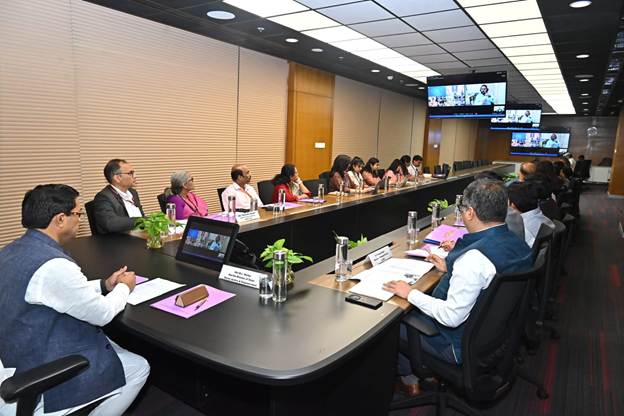
The breakout session was moderated by Shri Praveen Kumar, Chairman and Managing Director of the Artificial Limbs Manufacturing Corporation of India. Experts highlighted a four-pillar framework—Aspiration, Availability, Affordability and Awareness—to expand the reach of assistive technologies through collaboration among government, startups, academia and investors. Participants underlined that innovation is increasingly emerging from Tier-3 and Tier-4 cities and stressed that distribution of assistive devices must be complemented by accessible infrastructure such as ramps, signage and barrier-free public spaces. It was also noted that nearly ninety percent of persons with disabilities globally lack access to assistive technologies, and that affordable innovations can significantly expand their economic participation. Suggestions included leveraging CSR and philanthropic support, strengthening tax incentives and data systems, and enabling beneficiaries to select assistive devices suited to their individual needs with professional guidance.
The Post-Budget Webinar on Divyang Sahara Yojana held on 9 March 2026 marked an important step towards technology-driven inclusion and economic empowerment of persons with disabilities. The initiative aims to expand access to advanced assistive technologies while strengthening an industry-linked skill development framework that enables Divyangjan to participate more meaningfully in India’s growth story. Building on the legacy of the ADIP Scheme, the proposed programme will modernise assistive support through devices such as motorised wheelchairs, e-scooters, myoelectric hands and advanced orthotic systems that enhance mobility, independence and employability.
Under the proposed framework, Pradhan Mantri Divyasha-Vayoshri Kendras will be expanded as Assistive Technology Service Hubs providing assessment, customisation, fabrication and maintenance services. The initiative also envisages Assistive Technology Marts where beneficiaries can see, try and select devices suited to their individual needs. It further seeks to strengthen domestic manufacturing and research through ALIMCO, including the establishment of an R&D centre at the Andhra Pradesh MedTech Zone in Visakhapatnam. Summarising the discussions, Dr. V K Paul, Member of NITI Aayog, highlighted the importance of collaborations for technology transfer, research and development, AI integration and expansion of PMDVKs as key pillars for advancing the Divyang Sahara Yojana. These efforts reflect a comprehensive vision aligned with the Rights of Persons with Disabilities Act and reaffirm the Government’s commitment to building an inclusive society where every Divyangjan can live with dignity, independence and equal opportunity.
****
KV/HK
(Release ID: 2237298)
Visitor Counter : 885