Ministry of Jal Shakti
From Infrastructure Creation to Service Delivery: DDWS Holds 10th District Collectors' Peyjal Samvad
Five Districts Showcase Best Practices on Sustainable Rural Water Service Delivery under Jal Jeevan Mission 2.0
प्रविष्टि तिथि:
14 JUL 2026 4:09PM by PIB Delhi
The Department of Drinking Water & Sanitation (DDWS), Ministry of Jal Shakti, organised the 10th edition of the District Collectors' Peyjal Samvad today through video conferencing, bringing together Senior Officials, District Collectors/Deputy Commissioners and Mission Directors of State/UTs to deliberate on accelerating the implementation of Jal Jeevan Mission (JJM) 2.0 for strengthening sustainable rural drinking water service delivery through community participation. The Samvad was chaired by Shri Ashok K.K. Meena, Secretary, DDWS. Shri Kamal Kishore Soan, Additional Secretary & Mission Director, National Jal Jeevan Mission (NJJM), and other Senior officers from DDWS, also participated.
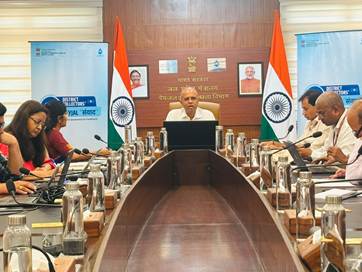
Shri Ashok K.K. Meena, Secretary, DDWS, in his inaugural address said that Jal Jeevan Mission has entered a new phase where the focus has shifted from infrastructure creation to assured and sustainable rural piped water service delivery through community-led governance (Jan Bhagidari).
Emphasising the need to strengthen community ownership, Shri Ashok K.K. Meena called upon States and districts to accelerate the certification of Har Ghar Jal (HGJ) Gram Panchayats (GPs) and institutionalise Jal Arpan as an annual community-led event in every Gram Panchayat to celebrate and reinforce local ownership of rural water supply systems. Highlighting water service delivery, he noted that over 1.17 lakh activities have already been executed nationwide under the Jal Seva Aankalan. He emphasised that the operation and maintenance (O&M) of rural water supply systems and the assets created under the Mission, must now be maintained by Gram Panchayats and Village Water & Sanitation Committees (VWSCs).
Speaking on the growing role of digital technologies in water governance, the Secretary directed State and District officials to ensure digital mapping of all rural water supply assets, from source to tap, through Sujalam Bharat Digital Registry, integrated with the PM Gati Shakti portal. He further emphasised that all water supply assets should be geo-tagged to strengthen planning, monitoring, preventive maintenance and evidence-based decision-making.
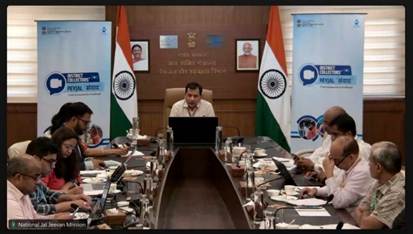
Addressing the gathering, Shri Kamal Kishore Soan, Additional Secretary & Mission Director, NJJM, emphasised the critical role of district administrations in translating the objectives of JJM 2.0 into measurable outcomes to ensure the availability of safe drinking water in rural areas. He highlighted that sustained service delivery, source sustainability, community participation and technology-driven monitoring will be the defining pillars of the Mission going forward. He urged District Collectors to strengthen convergence across departments, regularly review implementation and promote innovation, along with proper mapping of HGJ assets to ensure long-term functionality of rural drinking water systems.
In the Peyjal Samvad the important role of 16th Finance Commission Grants for Water, Sanitation and Hygiene (WaSH) in strengthening the sustainability of rural drinking water and sanitation services was highlighted through a detailed presentation. The progress and best practices of five selected districts, Kinnaur (Himachal Pradesh), Haveri (Karnataka), Dumka (Jharkhand), South Goa (Goa) and Unakoti (Tripura), were also presented by the respective District Collectors/District Magistrates to facilitate cross-learning and support other districts in strengthening implementation under JJM 2.0.
Innovative Best Practices shared by Five Districts through Presentations by the respective District Collector/ District Magistrate
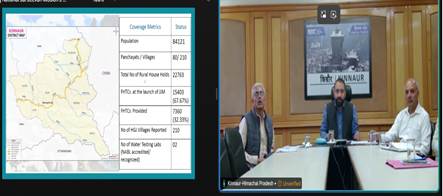
- Kinnaur, Himachal Pradesh: Dr. Amit Kumar Sharma, Deputy Commissioner, showcased Kinnaur's achievement of 100% Har Ghar Jal coverage across all 210 villages despite the challenges of difficult mountainous terrain, scattered habitations and extreme weather conditions. The district highlighted innovative interventions such as source augmentation, infrastructure modernisation, pond rejuvenation, snow-water harvesting, groundwater recharge and protection of traditional water bodies to ensure long-term water security. Adoption of the Sujalam Bharat Digital Registry, GIS-based monitoring, regular DWSM reviews, strengthened Village Water & Sanitation Committees (VWSCs), and community-led initiatives such as Jal Mahotsav, Jal Arpan and women-led water quality testing have further strengthened sustainable service delivery under JJM 2.0.
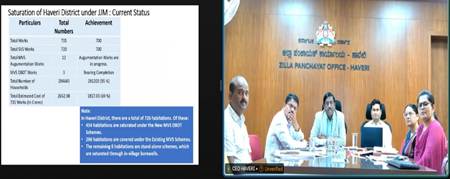
- Haveri, Karnataka: Dr. Vijaymahantesh B. Danammanavar, Deputy Commissioner, presented Haveri's progress in advancing sustainable drinking water services through technology-driven governance and community-led operation and maintenance. The district has achieved 95.36% Functional Household Tap Connection (FHTC) coverage and is implementing large Multi Village Schemes under the Design-Build-Operate-Transfer (DBOT) model. Key innovations include universal adoption of O&M policies across all Gram Panchayats, geo-tagging of water supply assets, Sujal Gaon-based asset management, the Jeeva Jala mobile application for transparent water quality monitoring, and the declaration of six villages as 24×7 water supply villages, improving service efficiency, reducing water consumption and lowering pumping hours.
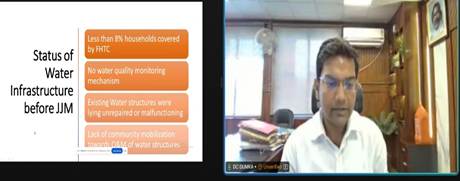
- Dumka, Jharkhand: Shri Abhijeet Sinha, Deputy Commissioner, highlighted Dumka's successful convergence-based approach towards restoring and sustaining rural drinking water infrastructure. The establishment of an Integrated Control Room, training of village-level maintenance personnel, locally developed spare-part supply chains and strengthened grievance redressal mechanisms have significantly enhanced functionality and responsiveness. Community participation through Jan Bhagidari, Jal Arpan Divas, Jal Sahiyas, user charge collection and water quality surveillance has further strengthened ownership and sustainability of water supply systems.
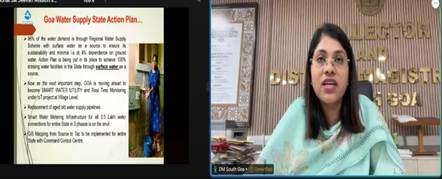
- South Goa, Goa: Ms. Egan Cletus, Collector and District Magistrate, presented South Goa's vision of developing a Smart Water Utility through digital technologies and sustainable water resource management. The district has completed and commissioned all 118 Jal Jeevan Mission works, ensuring tap water connectivity to all rural households, while nearly 96% of the State's drinking water demand is being met through surface water-based regional water supply systems. Adoption of GIS-based network mapping, IoT-enabled monitoring, SCADA systems, smart metering initiatives, regular DWSM reviews, village-level water quality surveillance and structured O&M planning are strengthening reliable, efficient and sustainable drinking water service delivery.
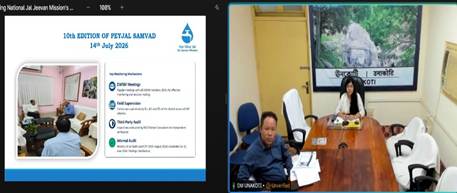
- Unakoti, Tripura: Ms. Megha Jain, District Magistrate & Collector, highlighted the district's progress in expanding rural drinking water access, with 89.16% FHTC coverage benefiting over 47,800 households. The district showcased robust monitoring through regular DWSM meetings, third-party inspections, digital grievance redressal platforms and community engagement mechanisms. Emphasis was placed on groundwater recharge, source sustainability, convergence with MGNREGS, Finance Commission grants and SBM(G), alongside innovative recharge interventions. The successful implementation of the Kaligiri surface water project demonstrated how community-led planning transformed water access in remote border villages by replacing seasonal and tanker-based supplies with sustainable piped drinking water, significantly improving public health and quality of life.
In his concluding address, Shri Kamal Kishore Soan, Additional Secretary & Mission Director, NJJM, commended the innovative approaches implemented by districts and underscored that the success of JJM 2.0 depends on the proactive leadership of District Collectors in mobilising community-led governance. The Peyjal Samvad successfully showcased achievements, ongoing challenges, and best practices under JJM, underlining the diversity of approaches adopted to accelerate progress under Har Ghar Jal.
***
PS/AK
(रिलीज़ आईडी: 2284469)
आगंतुक पटल : 1343