Ministry of Steel
PM Modi's Viksit Bharat Vision to Be Powered by a Digitally Transformed Steel Sector: H.D. Kumaraswamy
Digitalization No Longer a Choice, But Steel Sector's Survival Strategy: H.D. Kumaraswamy
Steel Sector Must Move Beyond Capacity Expansion to Intelligent Manufacturing: H.D. Kumaraswamy
"India's Steel Future Will Be Shaped by Data, AI and Smart Factories": H.D. Kumaraswamy
Chintan Shivir 2026 Charts Digital Transformation Path for India's Steel Industry
प्रविष्टि तिथि:
24 JUN 2026 1:32PM by PIB Delhi
Union Minister for Steel and Heavy Industries H.D. Kumaraswamy on Wednesday asserted that digitalisation is no longer an option but the "foundational cornerstone of long-term survival" for India's steel industry, underscoring the need for the sector to embrace emerging technologies to remain globally competitive.
Addressing the Chintan Shivir 2026 on Digitalisation in the Steel Sector at Vigyan Bhawan in New Delhi, Union Minister H.D. Kumaraswamy said the future of the steel industry would not be determined merely by production capacities, but by its ability to build intelligent, connected and data-driven manufacturing ecosystems. Invoking Prime Minister Narendra Modi's vision of a Viksit Bharat by 2047, H.D. Kumaraswamy described the steel sector as a strategic pillar of India's economic transformation, powering infrastructure creation, manufacturing, renewable energy, urbanisation, transportation and defence production.
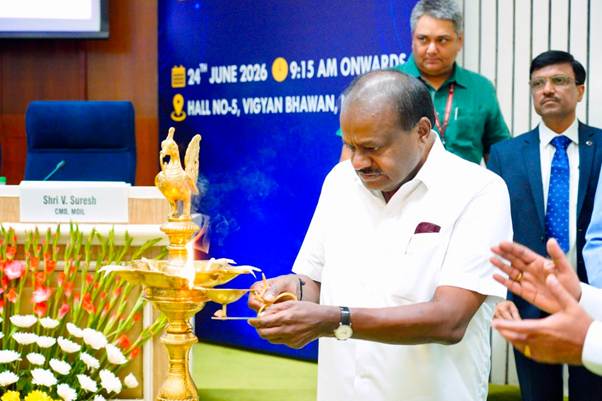
"Steel is the backbone of nation-building," he said, noting that India has consistently retained its position as the world's second-largest steel producer since 2018, even as steel demand remains subdued in several advanced economies. Highlighting the sector's robust growth trajectory, the Minister pointed out that crude steel production has expanded at an average annual rate of nearly 8 percent since FY 2021-22, while finished steel consumption has grown by approximately 13 percent annually, reflecting strong domestic demand and rapid industrialisation.
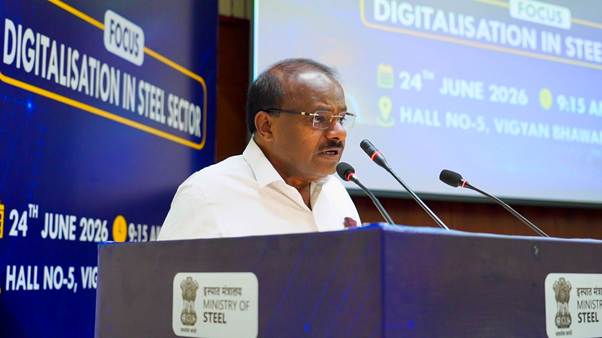
Kumaraswamy reiterated the government's long-term vision of increasing India's steelmaking capacity to 300 million tonnes by 2030 and 400 million tonnes by 2035. However, he cautioned that achieving these targets would require the industry to simultaneously address challenges related to raw material security, operational efficiency, decarbonisation, modernisation and export competitiveness. Emphasising the transformative potential of technology, the Minister said Artificial Intelligence, Machine Learning, Industrial Internet of Things, Digital Twins, Robotics and Advanced Data Analytics are redefining steel manufacturing globally and must be adopted extensively in India.
He observed that digitalisation and automation can significantly improve productivity, optimise energy consumption, reduce operational costs and enable predictive maintenance systems capable of identifying equipment failures before they occur. Such interventions, he said, would help minimise unplanned downtime, reduce human errors and enhance workplace safety.
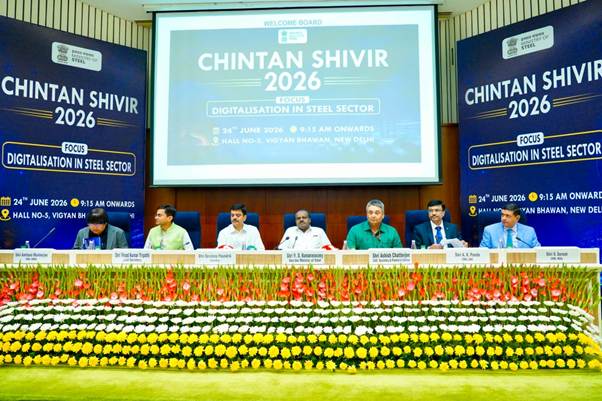
The Chintan Shivir featured thematic sessions on AI-led mining solutions, digital transformation of steel plants, PM Gati Shakti, Industry 4.0 applications and case studies showcasing measurable business impacts. Leading startups and industry stakeholders also participated in discussions aimed at accelerating the sector's technological transition. Expressing confidence in the deliberations, Kumaraswamy said the insights emerging from the forum would contribute towards building a smarter, greener, more efficient and globally competitive steel industry aligned with the Prime Minister's vision of Atmanirbhar Bharat and Viksit Bharat 2047.
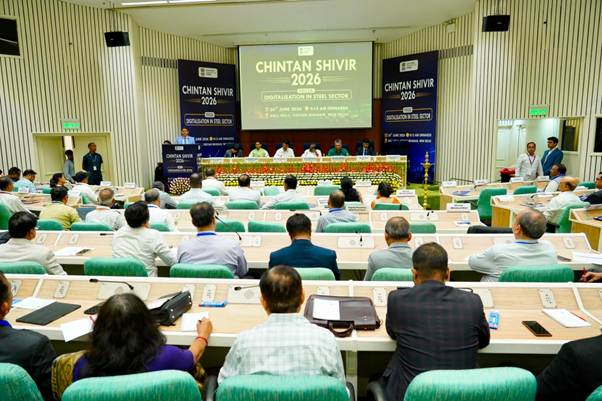
Held under the Ministry of Steel, the conclave brought together senior officials of the Ministry, along with Chairmen and Managing Directors of major steel public sector undertakings, including SAIL, NMDC and MOIL, besides industry leaders, startups and technology experts.
***
AG
(रिलीज़ आईडी: 2277384)
आगंतुक पटल : 1550