Posted On:
10 SEP 2026 9:02PM by PIB Delhi
Union Minister of Agriculture and Farmers Welfare and Rural Development Shri Shivraj Singh Chouhan today called for an integrated approach based on science, policy and market support to transform dryland agriculture, strengthen food and nutritional security and improve farmers’ livelihoods. Addressing the Opening Session of Dryland Congress 2026 at the National Agricultural Science Complex (NASC), New Delhi, Shri Chouhan said that drylands should not be viewed as a weakness and, with appropriate scientific interventions, policies and market support, can become a source of strength for India and other regions facing similar challenges.
Dryland Congress 2026, being held in New Delhi from 10 September 2026, has brought together more than 800 delegates from over 25 countries, including scientists, policymakers, development partners, industry representatives, academicians, civil society organisations and farmers, to deliberate on science-, technology- and policy-based solutions for resilient and sustainable dryland agriculture. The three-day Congress focuses on strengthening crop resilience, sustainable management of dryland landscapes, nutrition, markets and policies, while improving livelihood opportunities for communities dependent on dryland agriculture.
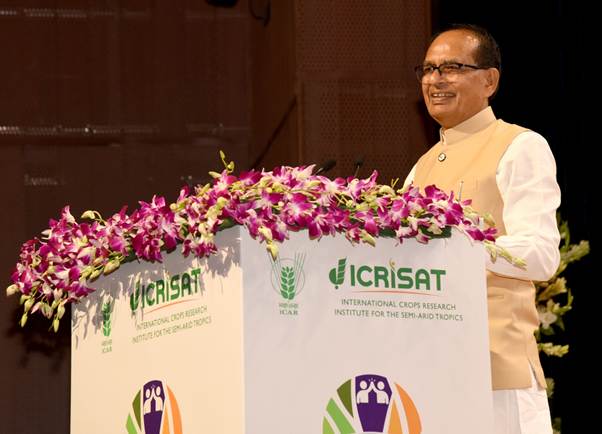
Shri Shivraj Singh Chouhan emphasised that food security, nutritional security and farmers’ prosperity must remain at the centre of efforts to transform agricultural systems. He said that the ultimate measure of success should not be increased production alone, but also improved livelihoods and prosperity of farming communities. He stated, “Drylands are not a weakness. With the right science, the right policy and the right market support, they can become one of the greatest strengths for India, Africa and other regions facing similar challenges.”
The Opening Session was presided over by Dr R. S. Paroda, Former Secretary, Department of Agricultural Research and Education (DARE) and Former Director General, Indian Council of Agricultural Research (ICAR). Former leaders of ICAR and ICRISAT, including Dr Panjab Singh, Dr Trilochan Mohapatra and Dr William D. Dar, participated in the session along with Ms Cathy Reade, Board Chair, ICRISAT, and Dr Sandra Milach, Chief Scientist, CGIAR. Dr M. L. Jat, Secretary, DARE and Director General, ICAR, and Dr Himanshu Pathak, Director General, ICRISAT, are the Patrons of the Congress. The Congress Co-Chairs are Dr Stanford Blade, Deputy Director General – Research and Innovation, ICRISAT; Dr Devendra Kumar Yadava, Deputy Director General – Crop Science, ICAR; and Shri Sanjay Agarwal, Additional Director General, ICRISAT.
The farmer perspective was represented by Padma Shri awardee and farmer Bhikiya Ladakya Dhinda, underlining the importance of incorporating farmers’ experiences and requirements in strategies for transforming dryland agriculture.
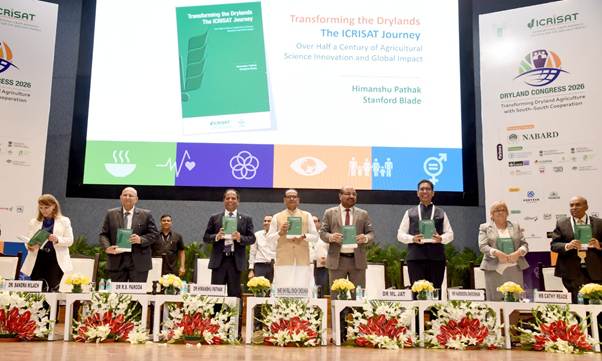
During the Opening Session, Shri Shivraj Singh Chouhan also launched Transforming the Drylands: The ICRISAT Journey, edited by Dr Himanshu Pathak and Dr Stanford Blade and published by ICRISAT. The publication documents more than five decades of ICRISAT’s work in science, innovation, partnerships and impact across Asia, Africa and other regions. The Dryland Congress 2026 Abstract Book, containing more than 250 abstracts, and the ICRISAT Research and Corporate Profile, highlighting the institute’s work across Accelerated Crop Improvement, Resilient Farming Systems and Transforming Agri-Food Systems, were also launched.
The technical programme on the first day featured three thematic sessions — “Breeding for Tomorrow: Accelerating Genetic Gains”, “Climate-Resilient Dryland Landscapes” and “Better Diets and Nutrition through Markets & Policies”. The sessions brought together experts to deliberate on accelerating genetic gains in crops, strengthening climate resilience, improving management of dryland landscapes, enhancing nutrition and creating better livelihood opportunities.
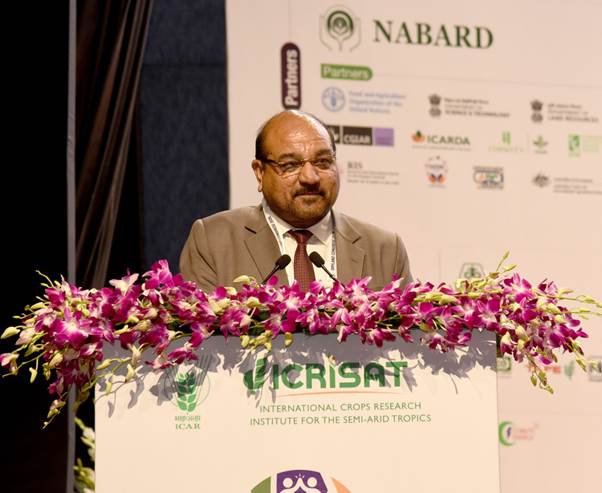
Dr M. L. Jat, Secretary, DARE and Director General, ICAR, delivered a visionary address on India’s experience in transforming agricultural systems and the lessons emerging for the Global South. He emphasised that transforming drylands requires interventions beyond agriculture and called for a whole-of-system, whole-of-society and whole-of-government approach to create opportunities and improve livelihoods in dryland regions. He said, “From recommendations to action, from silos to systems — that is the pathway to transforming dryland agriculture.”
Shri Narendra Bhooshan, Secretary, Department of Land Resources, Government of India, spoke on reimagining drylands through digital public infrastructure, land resources management and community action. His address highlighted the role of integrated approaches in strengthening land and resource management and supporting communities in dryland regions.
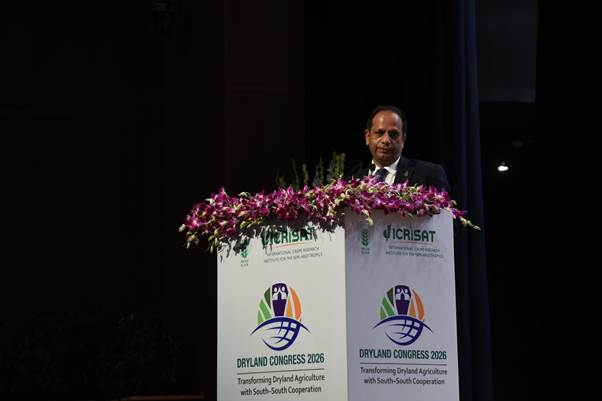
Dr Himanshu Pathak, Director General, ICRISAT, highlighted the global importance of drylands for food systems and livelihoods and called for a roadmap to make drylands productive, profitable and resilient while creating livelihood opportunities and reducing out-migration. He emphasised the need to make drylands central to future agricultural development.
Dr R. S. Paroda stressed the importance of water management in dryland agriculture and called for ensuring greater economic and nutritional value from every drop of water. Dr Panjab Singh emphasised that the next phase of dryland development should focus on farming systems that are profitable, resilient, environmentally sustainable and attractive to future generations.
Dr Trilochan Mohapatra highlighted the importance of South-South cooperation in sharing knowledge, expertise and successful models to accelerate the adoption and scaling of solutions across dryland regions. Ms Cathy Reade, Board Chair, ICRISAT, called for greater global focus, investment and action in dryland agriculture and highlighted the potential of South-South cooperation in strengthening resilience across dryland landscapes.
Dr William D. Dar, Former Director General, ICRISAT, emphasised that South-South cooperation enables countries of the Global South to learn, innovate and scale solutions together as equal partners. Dr Sandra Milach, Chief Scientist, CGIAR, noted that India is increasingly emerging as a source of solutions for the Global South, with innovations that can be adapted and scaled across dryland regions facing similar challenges.
The Dryland Congress 2026 will continue its deliberations over the next two days, focusing on scientific innovation, climate resilience, sustainable farming systems, nutrition, markets, policies and livelihood opportunities to support the transformation of dryland agriculture.
*****
RC/MS/HR/DK