Ministry of Science & Technology
CSIR-CRRI, New Delhi, OSEPL and Ooms India Demonstrate Landmark 60% RAP Technology on NH-716
Field-scale demonstration marks a significant milestone towards sustainable, circular and resource-efficient highway construction in India
Posted On:
02 SEP 2026 8:21PM by PIB Delhi
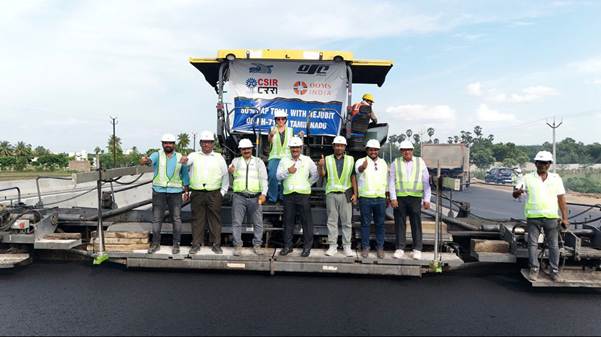
In a significant step towards promoting sustainable and circular road construction in India, CSIR-Central Road Research Institute (CSIR-CRRI), Oriental Structural Engineers Private Limited (OSEPL) and Ooms Polymer Modified Bitumen Pvt. Ltd. (Ooms India) successfully demonstrated the use of 60% Reclaimed Asphalt Pavement (RAP) in the Dense Bituminous Macadam (DBM) layer on National Highway-716, Chennai–Tirupati Package-I.
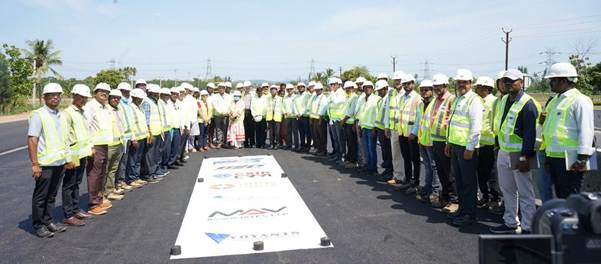
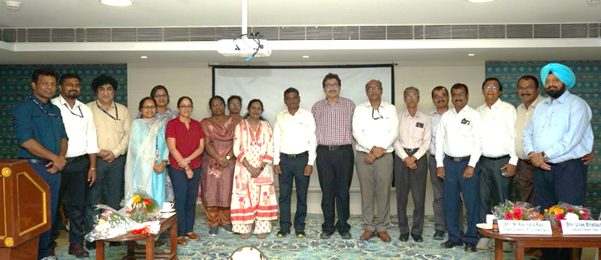
The field demonstration represents an important milestone in advancing high-RAP recycling technology under actual highway construction conditions. The programme was attended by senior officials from the National Highways Authority of India (NHAI) and the Government of Tamil Nadu, along with representatives of highway infrastructure companies, technical experts and industry stakeholders.
The demonstration showcased the complete high-RAP recycling process, including RAP recovery and processing, material characterisation, rejuvenation, mix design, hot-mix plant production, laying and field compaction. The participants also visited the Hot Mix Plant to understand the production process and an Experience Centre showcasing the journey of reclaimed asphalt from recovery and processing to its reuse in new pavement construction.
60% RAP: Turning Existing Roads into a Resource Bank
Reclaimed Asphalt Pavement contains valuable aggregates and aged bitumen that can be scientifically recovered, characterised, rejuvenated and reused. Higher utilisation of RAP can reduce the requirement for virgin aggregates and bitumen while making productive use of materials already available within the existing road network.
At 60% RAP utilisation, a substantial proportion of the material required for the new asphalt mix is derived from the existing pavement. This approach has the potential to conserve natural resources, reduce dependence on virgin and imported raw materials, minimise construction waste and lower the environmental footprint of highway construction.
The demonstration therefore provides an important pathway towards treating existing highways as a “resource bank” for future road construction and promoting a more circular and resource-efficient model of infrastructure development.
REJUBIT: Indigenous RAP Rejuvenation Technology
A key component of the demonstration was REJUBIT, an indigenous RAP rejuvenator jointly developed by CSIR-CRRI and Ooms India. The technology is designed to restore key properties of aged bitumen present in reclaimed asphalt, thereby facilitating the incorporation of a higher proportion of existing pavement material into new asphalt mixes.
The successful application of REJUBIT in the NH-716 demonstration marks the progression of an Indian research-led technology from laboratory development towards field-scale implementation.
CSIR-CRRI’s Role in Advancing Sustainable Road Construction
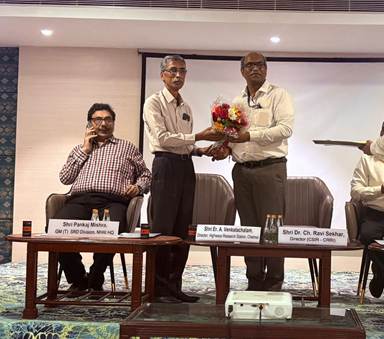
Speaking on the occasion, Dr. Chalumuri Ravi Sekhar, Director, CSIR-CRRI, said:
“This field demonstration marks an important step towards advancing sustainable and circular road construction in India. RAP should not be viewed merely as waste; it is an engineering resource containing valuable aggregate and bitumen that can be scientifically recovered, rejuvenated and reused.”
He further highlighted that the demonstration brings together the complete recycling chain—from RAP recovery and characterisation to scientific mix design, rejuvenation, hot-mix production, laying and compaction under actual field conditions. He emphasised that such demonstrations are important for generating field knowledge, building confidence and establishing a scientific pathway for greater utilisation of reclaimed materials in Indian road construction.
Dr. Ambika Behl (F.I.E.), Senior Principal Scientist, CSIR-CRRI and Project Leader of the 60% RAP Field Demonstration, described RAP as “black gold for the road sector”, noting that it contains two valuable non-renewable resources—aggregate and bitumen—already present within the existing road network.
She emphasised that the significance of the demonstration lies in showing how higher levels of recycling can be achieved through RAP characterisation, evaluation of aged binder, scientific mix design, appropriate rejuvenation and rigorous quality control. The use of REJUBIT demonstrates a practical pathway towards greater reuse of existing road materials and reduced consumption of virgin resources.
Collaborative Effort Towards Wider Adoption
The field trial was carried out through collaborative technical efforts involving OSEPL, CSIR-CRRI and Ooms India, combining highway construction expertise, scientific research and specialised rejuvenation technology.
Mr. Nagaraj, Sr. CPM (Project Head), OSEPL, stated that the true test of an innovative pavement technology is its ability to progress from laboratory design to plant production and finally to execution under actual highway conditions. He noted that the 60% RAP trial provides an opportunity to evaluate high-RAP construction at field scale while maintaining the required quality-control framework.
Mr. Palash Kathal, Director, Ooms India, highlighted that higher RAP utilisation can extract greater value from aggregates and bitumen already present in existing pavements while reducing dependence on virgin materials. He noted that taking a 60% RAP mix from laboratory evaluation through plant production to live highway laying represents a significant technical milestone.
Recognition by Tamil Nadu Highway Research Station
The Chief Guest, Sh. Er. A. Venkatachalam, Director, Highway Research Station, Chennai, congratulated the participating organisations for the successful 60% RAP field demonstration and described it as an important milestone for Tamil Nadu towards more sustainable and resource-efficient road construction.
He observed that Tamil Nadu’s extensive road network provides significant potential for recycling materials from existing pavements, which can reduce the demand for virgin aggregates and bitumen as well as construction waste. He expressed confidence that the demonstration would provide valuable field experience and support wider adoption of high-RAP recycling in suitable road projects across Tamil Nadu.
About the Trial
The 60% RAP trial section on NH-716 was executed under the technical guidance of CSIR-CRRI. Dr. Ambika Behl, Scientist F, CSIR-CRRI, led the project, while Dr. Rajiv Kumar, Scientist E1, CSIR-CRRI, was actively involved in the design and construction of the trial section along with teams from Ooms India and OSEPL.
The initiative aims to generate technical and field experience on higher RAP utilisation and contribute to the evidence base required for its responsible and wider adoption in Indian highway construction.
Towards Greener and Circular Highways
The successful 60% RAP field demonstration on NH-716 reinforces the potential of science-driven recycling technologies to transform pavement materials from waste into valuable engineering resources. The initiative demonstrates how collaboration between research institutions, highway contractors and technology providers can accelerate the transition towards greener, resource-efficient and circular highway construction in India.
*******
NKR/AK/NM
(Release ID: 2306102)
Visitor Counter : 1485