Ministry of Health and Family Welfare
NHA Convenes BRICS Dialogue on Strengthening Continuum of Care Through Digital Health and Responsible AI
Continuity of Care is the True Measure of Whether Digital Health and AI are Serving Citizens: Union Health Secretary
Over 940 million ABHA IDs and 1 billion Linked Digital Health Records Power India's Digital Health Ecosystem: Smt. Punya Salila Srivastava
Panel Discusses Digital Public Infrastructure and AI as Key Enablers of Connected, Patient-Centric Healthcare Across BRICS
Posted On:
24 JUL 2026 3:00PM by PIB Delhi
As part of the 16th BRICS Health Ministers' Meeting, a side event titled "From Digital Health Records to AI-Enabled Healthcare: Strengthening the Continuum of Care Through Interoperable Data Infrastructure and Responsible Artificial Intelligence" was organised today, by National Health Authority, Ministry of Health and Family Welfare, bringing together policymakers, technical experts and health leaders from BRICS countries to deliberate on the transformative role of digital health infrastructure and responsible Artificial Intelligence (AI) in delivering seamless, patient-centric healthcare.
The dialogue was anchored in the findings of the BRICS Health Track Technical Working Group 4 (TWG-4) Compendium on Continuum of Care, which underscores the importance of coordinated and uninterrupted health service delivery across different levels of care, healthcare providers and BRICS member states. The Compendium highlights that while continuity of care remains a shared policy objective, its effective implementation is often constrained by the lack of interoperable digital health infrastructure capable of supporting seamless exchange of health information across the patient care journey.
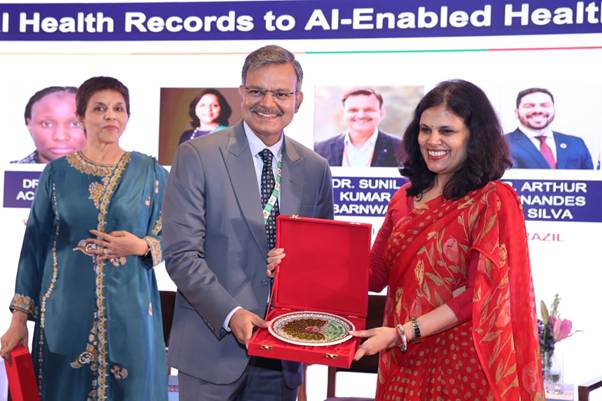
In her keynote address, Union Health Secretary Smt. Punya Salila Srivastava said that the discussions held over the past two days had reflected the collective commitment of BRICS countries to strengthening resilient, equitable and future-ready health systems. She noted that health cooperation remains one of the strongest pillars of the BRICS partnership, founded on mutual learning, shared innovation and a common commitment to achieving Universal Health Coverage (UHC).
Emphasising that continuity of care lies at the heart of every health system, she said the fundamental challenge before all countries is to ensure that a citizen's healthcare journey—from prevention and diagnosis to treatment, rehabilitation and long-term follow-up—remains connected rather than fragmented across institutions, providers and geographies. She observed that continuity of care is the true measure of whether digital health and Artificial Intelligence (AI) are delivering meaningful benefits to citizens.
The Union Health Secretary stated that while no country can build the future of AI-enabled healthcare in isolation, BRICS nations share common challenges, including large and diverse populations, significant rural-urban disparities, a growing burden of chronic and non-communicable diseases, and stretched health workforces. These challenges, she said, make interoperable digital health infrastructure and responsible AI essential tools for strengthening integrated and people-centric healthcare delivery.
Highlighting the importance of interoperable digital health records, she said that a person's health journey spans multiple providers and institutions, making it imperative that health information travels securely and seamlessly with the individual. Built on interoperability, open standards and robust governance, digital health records help bridge information gaps between healthcare providers, improve clinical decision-making, reduce duplication of services, strengthen referrals and follow-up, and preserve the continuity of care.
Speaking on the role of AI, Smt. Srivastava said that responsible AI is already strengthening healthcare delivery by identifying patients at risk of dropping out of chronic disease management programmes, supporting early interventions, and providing clinical decision support to frontline and community health workers in remote and underserved areas. However, she emphasised that AI is only as effective as the quality of the digital public infrastructure on which it is built, and that trusted, interoperable and citizen-centric digital health systems must remain the foundation of AI-enabled healthcare.
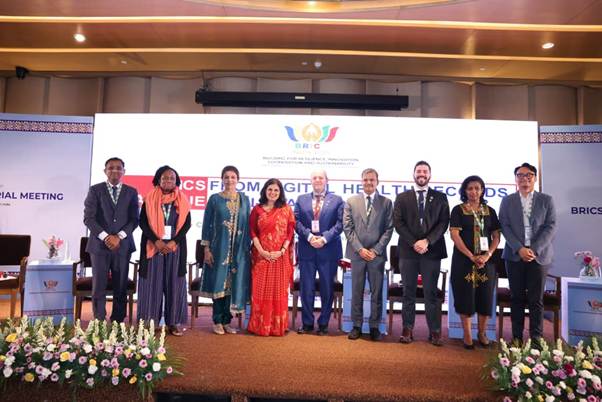
Sharing India's experience, the Union Health Secretary highlighted the progress made under the Ayushman Bharat Digital Mission (ABDM) in creating a federated Digital Public Infrastructure for health. She informed delegates that India has created over 940 million ABHA (Ayushman Bharat Health Account) IDs, issued unique digital identities to more than one million healthcare professionals and over five lakh health facilities, while enabling citizens to securely access more than one billion linked digital health records across the continuum of care.
She also referred to India's recently launched SAHI (Strategic Framework for AI in Healthcare), unveiled during the AI India Impact Summit earlier this year, which provides a framework for the responsible adoption of AI to strengthen healthcare delivery while ensuring ethics, transparency, safety and citizen trust.
The Union Health Secretary emphasised that India's experience was being shared not as a model to be replicated, but as one example among many represented within BRICS. She called for deeper collaboration among member countries on interoperable standards, digital public infrastructure, governance frameworks for responsible AI, cybersecurity, health workforce capacity building, and collaborative research and innovation.
Welcoming the release of the BRICS Technical Working Group-4 Compendium on Digital Health Architecture for Continuum of Care, she described it as a significant milestone reflecting the collective expertise and innovation of BRICS nations. She congratulated all member countries and the Technical Working Group for developing the compendium, which demonstrates that despite diverse health systems, BRICS countries are united by a shared vision of connected, equitable and future-ready healthcare.
Concluding her address, Smt. Srivastava said that while digital health records provide the foundation, responsible AI offers the opportunity to redefine continuity of care for present and future generations.
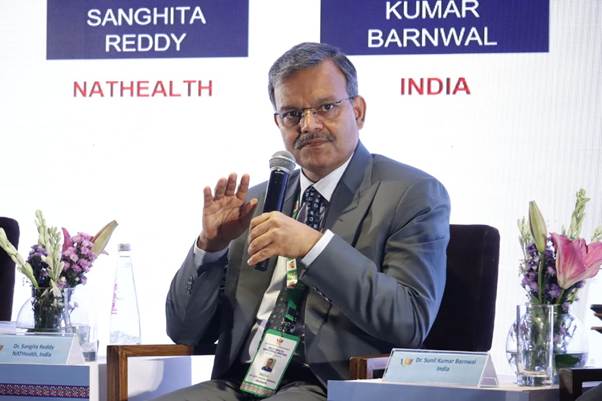
Speaking at the Occasion, Chief Executive Officer, National Health Authority (NHA), Shri Sunil Kumar Barnwal delivered a detailed presentation on the BRICS Technical Working Group-4 (TWG-4) Compendium on Digital Health Architecture for Continuum of Care, outlining its key findings and recommendations. He explained that the compendium provides a comprehensive assessment of the current state of digital health ecosystems across BRICS countries and identifies the critical building blocks required to achieve seamless continuity of care through interoperable digital health infrastructure.
Presenting a comparative analysis of the digital health landscape across BRICS nations, Shri Barnwal highlighted the unique strengths and innovations demonstrated by each member country while also identifying the common challenges faced across the grouping. These include fragmented health information systems, limited interoperability, uneven digital maturity across regions, growing burden of chronic and non-communicable diseases, workforce constraints, and the need for robust data governance frameworks.
He emphasised that despite the diversity of health systems, BRICS countries share a common aspiration to build connected, patient-centric and resilient healthcare systems. The compendium, he noted, offers a practical framework for strengthening the continuum of care by promoting interoperable digital public infrastructure, adoption of open standards, secure and consent-based data exchange, and the responsible use of Artificial Intelligence.
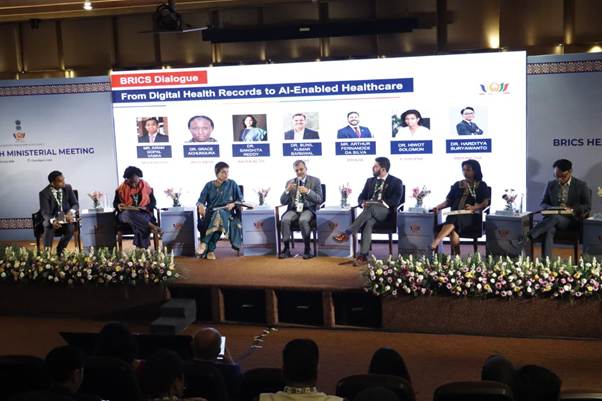
The side event also featured a high-level panel discussion with delegates and experts from BRICS member countries and partner nations, who exchanged experiences and best practices on strengthening the continuum of care through interoperable digital health infrastructure and responsible Artificial Intelligence.
The discussion highlighted how countries are leveraging digital public infrastructure to improve continuity of care across diverse healthcare settings. Delegates from Brazil shared their experience with the National Health Data Network (RNDS), which has transformed the country's healthcare ecosystem from paper-based referrals to a unified national health information exchange. They also highlighted the expansion of telehealth services, now reaching nearly 80 per cent of municipalities, significantly improving access to specialist healthcare in remote and underserved regions, including the Amazon.
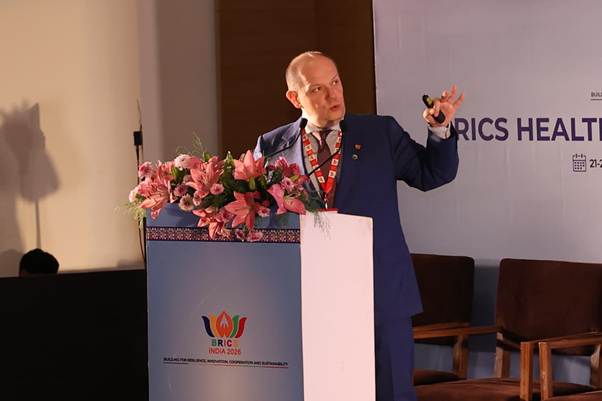
Representatives from Indonesia outlined the rapid scale-up of the country's Integrated Primary Health Care model across thousands of Puskesmas (primary health centres). They also discussed the implementation of the SATUSEHAT digital health platform, which has been adapted to support continuity of care across Indonesia's geographically dispersed archipelago of more than 17,000 islands despite connectivity challenges.
The panel underscored that while Artificial Intelligence presents immense opportunities for improving healthcare delivery, its safe and effective deployment depends on high-quality, interoperable health data and locally validated clinical evidence. Participants stressed the need for BRICS countries to invest in robust governance frameworks, data quality, interoperability standards, validation mechanisms, cybersecurity, health workforce capacity building and sustainable financing before scaling AI-enabled healthcare solutions.
The dialogue reaffirmed the collective commitment of BRICS countries to harness digital innovation and responsible AI for building resilient, inclusive and people-centric health systems, while advancing universal health coverage and strengthening continuity of care across the health ecosystem.
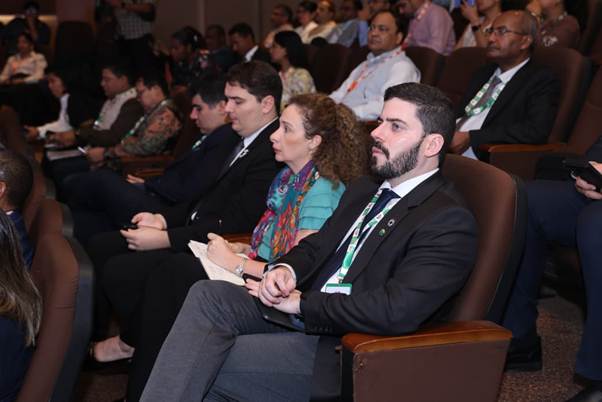
Deputy Minister of Health Vladimir Zelensky, Russia; Mr. Arthur Fernandes da Silva, Brazil; Dr. Hiwot Solomon, Ethiopia; Dr. Harditya Suryawanto, Indonesia; Dr. Grace Achungura, Team lead Health Systems in WHO-India; Ministers, Senior Officers and Delegates from the BRICS member and partner nations participated in the event.
*****
SR
HFW/16th BRICS Side Event on AI /24 July 2026/6
(Release ID: 2288817)
Visitor Counter : 851