Posted On:
02 JUN 2026 7:36PM by PIB Delhi
As a remarkable step towards sustainable, assured, and citizen-centric rural drinking water supply across India, reform-linked Memoranda of Understanding (MoUs) were signed today under Jal Jeevan Mission (JJM) 2.0 with four States (Arunachal Pradesh, Jharkhand, Tamil Nadu, and Nagaland) and one UT (Puducherry).
The reform‑linked MoU mandates a Gram Panchayat‑led, service‑based and community‑centred model of rural water governance, aligned with the objectives of Jal Jeevan Mission 2.0 and seeks to ensure that every rural household has access to drinking water supply in adequate quantity and of prescribed quality on a regular basis, through strengthened community participation (Jan Bhagidari) and bringing in structural reforms for sustainable operation and maintenance of rural water supply systems, thereby enhancing the living standards of rural communities contributing to long‑term water security aligned with the national vision of Viksit Bharat @2047.
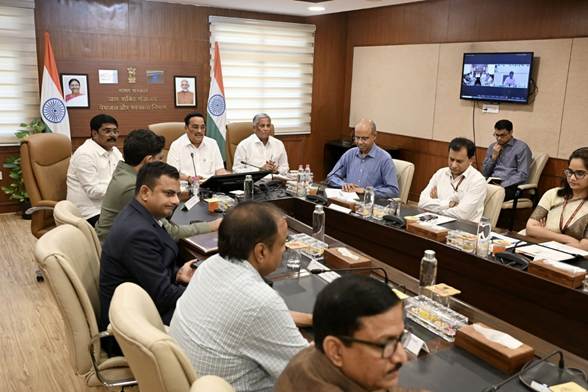
The MoUs were signed in the presence of the Union Minister of Jal Shakti, Shri C.R. Patil, Minister of State, Shri V. Somanna and the Chief Ministers of the respective States/UT during five separate scheduled meetings conducted via online video conference.
Senior officials from the Department of Drinking Water and Sanitation (DDWS), including Shri Ashok K. K. Meena, Secretary, DDWS, Shri Kamal Kishore Soan, Additional Secretary & Mission Director, National Jal Jeevan Mission (NJJM), Joint secretaries, Directors and Deputy Advisors were also present during the MoU signing.
The MoU with Arunachal Pradesh was signed in the presence of Union Minister of Jal Shakti, Shri C. R. Patil. The Chief Minister of Arunachal Pradesh, Shri Pema Khandu, and Minister-PHE & WS, Shri Mama Natung, also joined the event virtually, along with senior officials from Government of Arunachal Pradesh. The MoU was signed and exchanged between Smt. Swati Meena Naik, Joint Secretary (Water), DDWS, and Shri Amjad Tak, Commissioner, PHE and WSD, Government of Arunachal Pradesh.
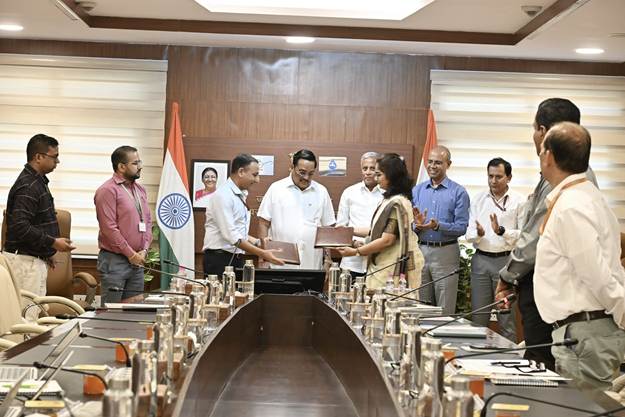
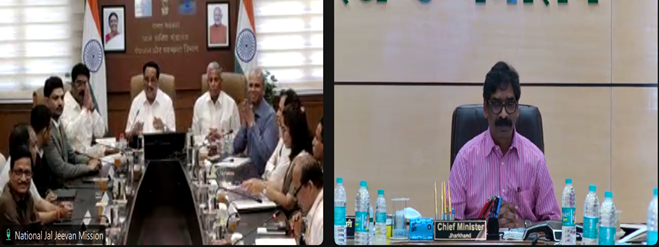
Marking a pivotal moment in Centre-State collaboration, the MoU with State of Jharkhand was formally signed at 2:00 p.m. today. The meeting commenced in the presence of Union Minister of Jal Shakti, Shri C. R. Patil, Jharkhand Chief Minister Shri Hemant Soren, and other key officials from the State, who all joined virtually through video conferencing. Shri Yogendra Prasad, Minister, Department of Drinking Water and Sanitation, Jharkhand was physically present during the meeting with mission officials.
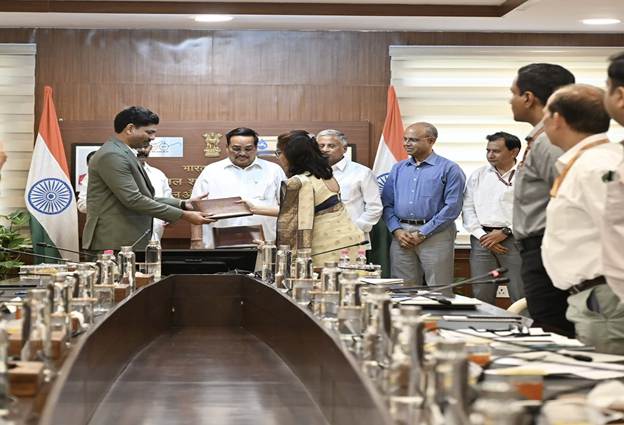
The MoU was signed and exchanged by Smt. Swati Meena Naik, Joint Secretary (Water), DDWS, and Shri Abu Imran, Secretary, Department of Drinking Water & Sanitation, Government of Jharkhand.
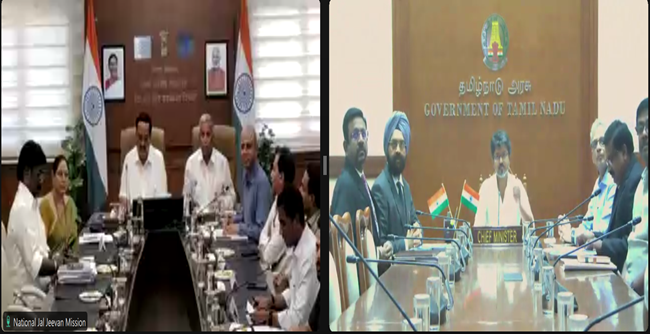
For the State of Tamil Nadu the MoU signing took place at 02:30 p.m., under the presence of Union Minister Shri C. R. Patil, Chief Minister of Tamil Nadi, Thiru. C. Joseph Vijay, and other officials from the State who joined through VC. The MoU was signed by D Senthil Pandiyan, Joint Secretary, NJJM and Thiru. Gagandeep Singh Bedi, Additional Chief Secretary, Municipal Administration and Water Supply Department, Government of Tamil Nadu and was exchanged by Tmt. R. Jaya, Chief Resident Commissioner.
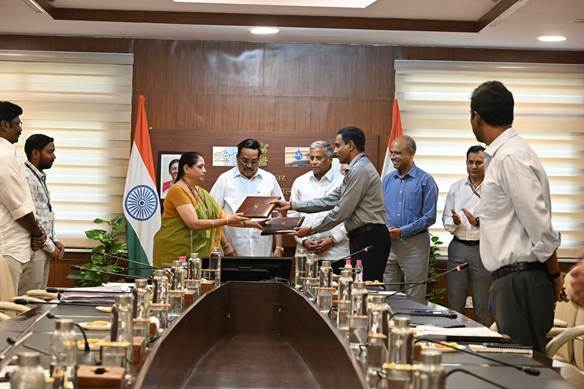
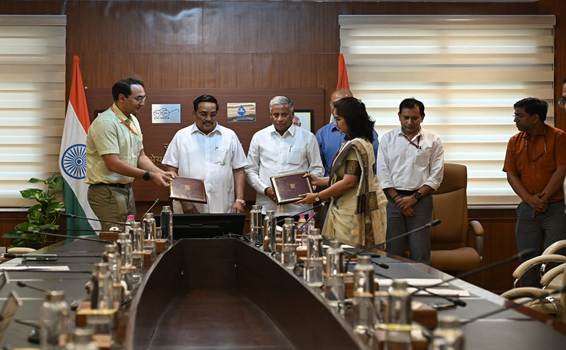
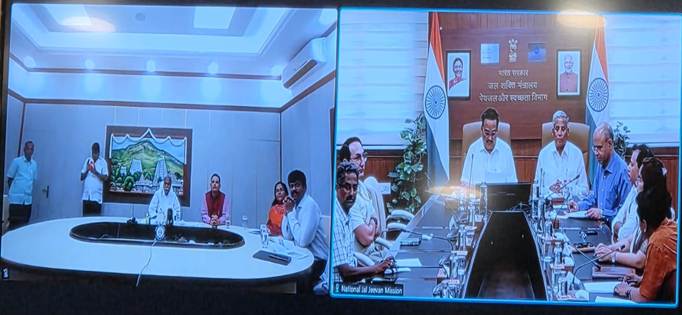
The MoU with UT of Puducherry was signed between Smt. Swati Meena Naik, Joint Secretary (Water), DDWS, Ministry of Jal Shakti, and Dr. A. Muthamma, Commissioner-cum-Secretary, PWD, Puducherry and exchanged by Shri Ravi Deep Singh Chahar, Joint Resident Commissioner, Puducherry in the presence of Union Minister of Jal Shakti, Shri C.R. Patil, and virtual presence of Chief Minister of Puducherry, Shri N. Rangasamy, and other senior officials from the UT at 03:30 p.m.
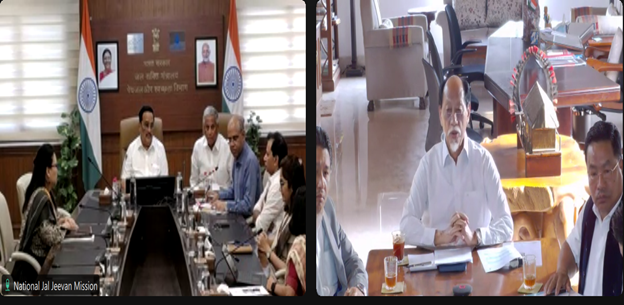
The fifth MoU of the day was held with the State of Nagaland at 04:00 p.m. in the presence of Chief Minister of Nagaland, Shri Neiphiu Rio who joined through VC along with PHED Minister of Nagaland, Shri Jacob Zhimomi and other senior officials from the State.
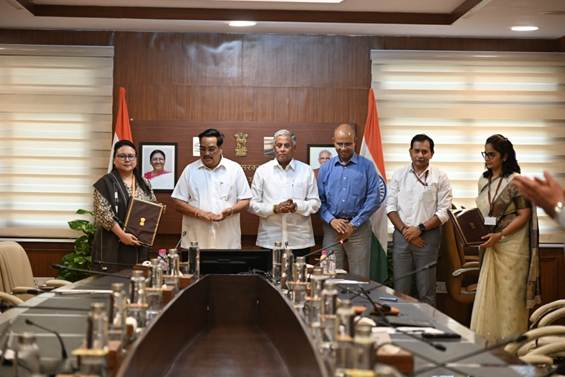
The MoU was signed by Smt. Swati Meena Naik, Joint Secretary (Water), DDWS, and Shri Zarenthung Ezung, Secretary & Mission Director (JJM) Nagaland and was exchanged by Smt. Sharon Longchari, Joint Resident Commissioner, Nagaland House.
Addressing the gathering, Union Minister of Jal Shakti, Shri C. R. Patil said that Jal Jeevan Mission, launched under the leadership of the Prime Minister Shri Narendra Modi, has transformed rural drinking water supply across the country and reduced the ordeal of fetching water especially by women and girls. Under JJM 2.0, now the focus is on sustaining the infrastructures created under the Mission, functionality of tap connections, water quality, source sustainability, O&M, community ownership and regular monitoring as key priorities.
The Minister also stressed the need for water conservation, rainwater harvesting, groundwater recharge, greywater management, catchment area protection and community-based water quality monitoring. He said Gram Panchayats, District Water and Sanitation Missions, State Water and Sanitation Missions and local communities must work together to ensure reliable drinking water services.
Under his addressal to the State of Arunachal Pradesh, Shri Patil said considering the state's mountainous terrain and heavy rainfall, the O&M policy to be notified soon. He also stressed holding regular meetings of DWSMs, accelerating NABL accreditation of laboratories, and conducting 'Jal Arpan Diwas' to formally handover of assets to the GPs.
To the state of Jharkhand, the Union Minister asked to ensure proper O&M, source sustainability, and water conservation. Appreciating the State’s progress, he urged faster completion of ongoing works so remaining rural households receive safe drinking water and expressed confidence that coordinated efforts will help Jharkhand achieve JJM 2.0 goals.
While addressing to Tamil Nadu, Shri Patil commended the states progress under JJM. He also expressed confidence that the state will complete remaining work soon. He urged to focus on community-level rainwater harvesting, source sustainability, water conservation, and greywater management, by effectively using the Finance Commission grants and VB-G RAM G funds.
Shri C.R Patil commended Puducherry for achieving ‘Har Ghar Jal’ certification in the year 2021. He said the focus should now be on regular, reliable and sustainable water services, public awareness, community ownership, Gram Panchayat-level service delivery, Sujal Gaon ID creation and notification of the revised O&M policy.
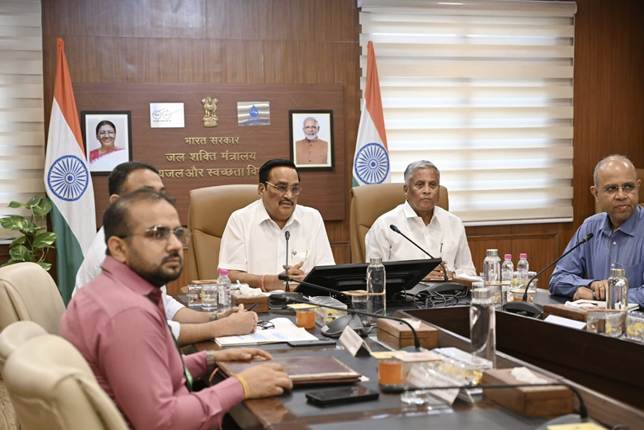
Addressing Nagaland, Shri Patil expressed confidence that the State will provide tap connections to the remaining households this year, ensuring that community particularly women and children continue to benefit from safe and reliable drinking water.
Chief Minister of Arunachal Pradesh, Shri Pema Khandu, in his address said, Jal Jeevan Mission has significantly transformed rural drinking water supply in Arunachal Pradesh, a State with difficult terrain, scattered habitations and remote locations. He said under the Mission the state is progressing towards achieving universal household tap water coverage.
The Chief Minister said the MoU under JJM 2.0 will further strengthen water security and improve the sustainability and reliability of rural drinking water supply systems. He also highlighted the State’s effort ‘Jal Sankalp’ for gap funding to strengthen source sustainability including the Arunachal Pradesh Spring Rejuvenation Programme.
He said catchment area protection is critical for Arunachal Pradesh, where most landholdings are community-based. Through the ‘Arunachal Pradesh Protection and Management of Drinking Water Catchment Areas Act’, the State Government is taking proactive steps to protect drinking water sources and catchment areas with community participation and institutional support.
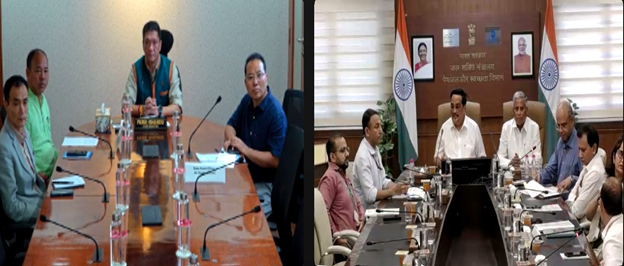
He reaffirmed the State’s commitment to the Mission, and added that the State Water and Sanitation Mission, State Nodal Officers and concerned departments are working proactively to ensure effective implementation and long-term sustainability of rural drinking water systems.
In his address, Shri Hemant Soren, Chief Minister of Jharkhand highlighted Jharkhand’s commitment to provide safe and reliable drinking water to every rural household under Jal Jeevan Mission. He said the MoU will further strengthen efforts to expand functional tap water connections, especially in remote and rural areas.
He noted that Jharkhand faces challenges due to difficult terrain, laying pipelines through forest areas, NHAI, DVC working areas required NoCs. He requested continued support from the Government of India for timely completion of ongoing rural water supply schemes.
He emphasised regular monitoring, accountability and corrective action to improve implementation. Highlighting community participation, he said community-based groups and Jal Sahiyas are playing an important role in the operation, monitoring and maintenance of rural water supply systems. They have also been trained to register and address grievances through the online grievance redressal system.
Chief Minister of Tamil Nadi, Thiru. C. Joseph Vijay, in his address congratulated the Government of India and the Ministry of Jal Shakti for extending the implementation period of Jal Jeevan Mission up to December 2028.
He highlighted that Tamil Nadu faces unique water resource challenges, as the State does not have any major perennial source of water. Consequently, ensuring reliable drinking water supply requires the implementation of large-scale and multi-village water supply schemes, supported by long-term planning and substantial investments in water infrastructure.
Referring to ongoing initiatives, he stressed the importance of expediting the already sanctioned Kaveri-based water supply schemes, benefiting water-stressed districts such as Dharmapuri and Krishnagiri. These projects are critical for ensuring dependable and safe drinking water access to rural communities.
He emphasised that central assistance would help strengthen its rural water supply infrastructure and ensure that every rural household receives safe and adequate drinking water on a sustained basis. He reiterated the State Government's commitment to the objectives of the Mission and expressed confidence that continued cooperation between the Centre and the State would further strengthen rural drinking water service delivery in the State.
Chief Minister of Puducherry, Shri N. Rangasamy, conveyed his sincere appreciation to the Prime Minister and the Ministry of Jal Shakti for conceptualising and successfully implementing Jal Jeevan Mission, describing it as one of the most significant public welfare initiatives. He noted that the Mission has transformed the delivery of drinking water services by placing dignity, health, and quality of life at the core of rural development. In Puducherry, the Local Administration Department is committed to the objectives of Jal Jeevan Mission 2.0 and expresses readiness to collaborate closely with the Ministry of Jal Shakti. He underscored key priorities including source sustainability, adoption of digital systems for water quality monitoring and grievance redressal, promotion of community-owned and managed water supply systems, and sustainable water resource management, aligning with the Mission’s holistic approach.
In his address, Shri Neiphiu Rio, Chief Minister of Nagaland, expressed sincere gratitude to the Government of India, Ministry of Jal Shakti, and DDWS for their steadfast support and described JJM as one of the most transformative rural development initiatives in recent years. He noted that the Mission has significantly improved the quality of life by bringing safe drinking water directly to households. Reflecting on the State’s unique geographical challenges, he highlighted that providing reliable water supply in hilly, dispersed rural areas had long been difficult, with many families earlier depending on distant springs and traditional sources. In this context, JJM has marked a transformation by reducing daily hardships especially for women and children and ensuring safer, more accessible water for rural communities.
Welcoming the vision of Jal Jeevan Mission 2.0, he reaffirmed the State’s commitment to its reform-driven, whole-of-government approach, which promotes institutional strengthening, community ownership, and sustainable water management.
In his opening remarks, Shri Ashok K. K. Meena, Secretary, DDWS underscored that the MoU prioritises not just infrastructure setup of pipelines, but sustainable services managed at the grassroots level. He emphasised decentralisation and community ownership, with Gram Panchayats and Village Water & Sanitation Committees (VWSCs) being empowered to manage and operate in-village water supply systems. While stating the importance of the MoU signing with the State and UT, Shri Meena highlighted that the MoU is a shared commitment between the State/UT which ensures the upholding of JJM 2.0 guidelines in order to provide safe, secure and sustainable drinking water to the rural households.
Emphasising the importance of institutional mechanisms for sustainable water service delivery, the Secretary stressed that District Water and Sanitation Mission (DWSM) meetings should be conducted regularly by all District Collectors. He noted that timely meetings would facilitate the preparation of Village Action Plans and support the certification of Panchayats as capable institutions for managing rural water supply systems. The Secretary underlined that district administrations would play a crucial role in monitoring implementation, conducting periodic reviews, and extending necessary support to Gram Panchayats whenever required.
He also mentioned that this step is an initiative which aligns with the fulfillment of Prime Minister Shri Narendra Modi’s Har Ghar Nirantar Nal Se Jal vision.
***
ND/AK