Ministry of Social Justice & Empowerment
National Chintan Shivir on Social Justice concludes in Chandigarh with time-bound roadmap for Antyodaya-driven Viksit Bharat 2047
From scholarships to accessibility and transgender welfare, this Chintan Shivir has focused on practical solutions, not just policy intent: Union Minister Dr. Virendra Kumar
States and UTs adopt actionable recommendations on Antyodaya se Aatmanirbharata, Samaveshan–Pehchan–Ekikaran, Arthik Sashaktikaran, Accessibility and Certification for PwDs
Focus on inclusion of DNTs in Census-2027, strengthening SEED Scheme, economic empowerment of SCs/OBCs and comprehensive support for transgender persons
States and UTs agree on concrete measures for “Jagrukta se Sugamyata” (Awareness to Accessibility) and simplification of processes in DoSJE schemes
Three-day Shivir reinforces shared resolve to move from welfare intent to measurable ground-level outcomes in social justice delivery
Posted On:
26 APR 2026 5:44PM by PIB Delhi
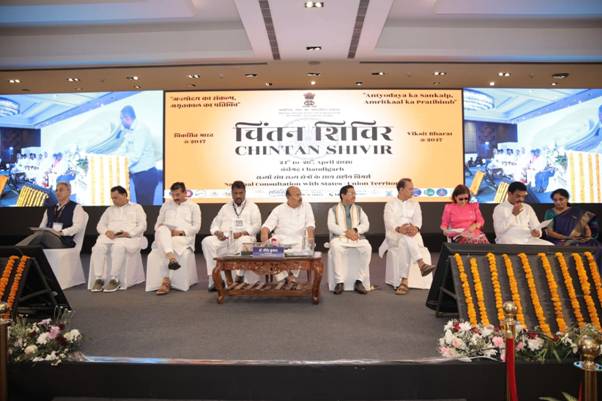
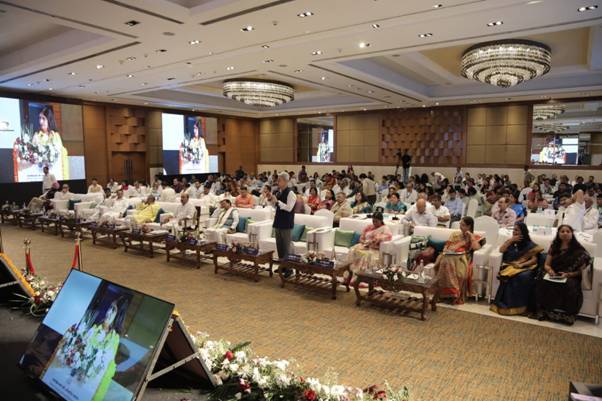
The three-day National Chintan Shivir of the Ministry of Social Justice and Empowerment concluded in Chandigarh today with States and Union Territories agreeing on a set of time-bound, actionable recommendations to strengthen last-mile delivery of social justice schemes in line with the theme “Antyodaya ka Sankalp, Amrit Kaal ka Pratibimb – Viksit Bharat@2047”. Organised over three days from 24–26 April 2026, the Shivir progressed from an inaugural focus on vision, dignity and accessibility, to intensive theme-wise deliberations on the second and third days, culminating in a concluding session that consolidated the outcomes into a forward-looking roadmap.
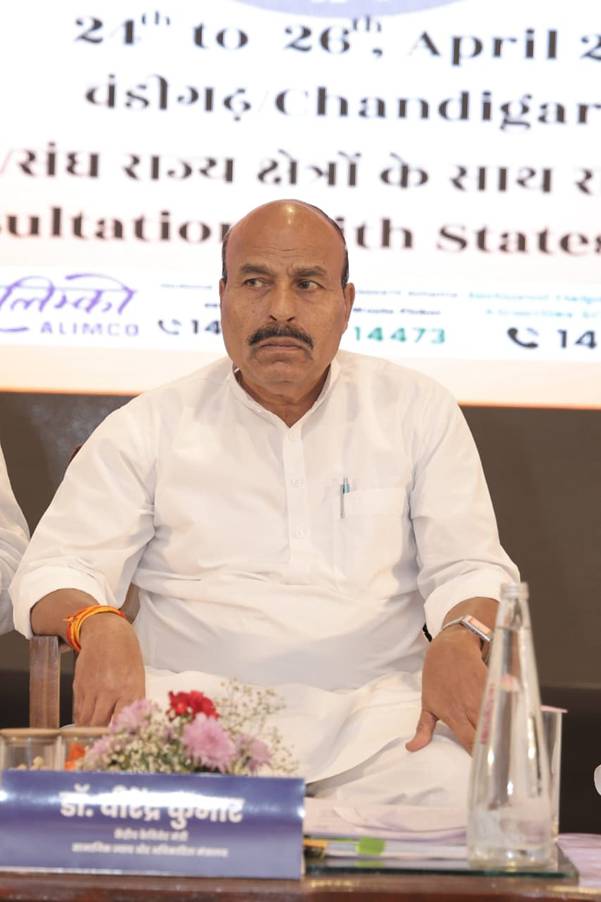
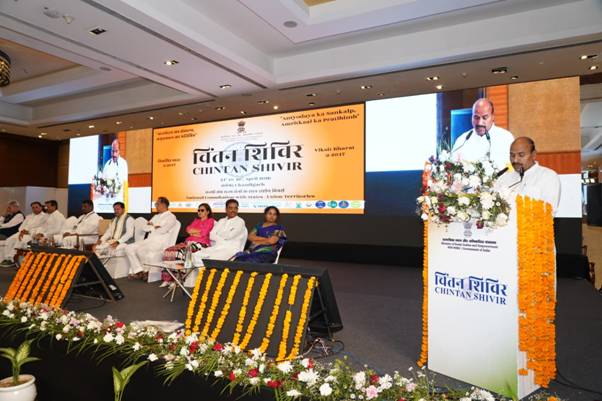
Union Minister for Social Justice and Empowerment Dr. Virendra Kumar, in his concluding remarks, said that the three-day National Chintan Shivir had provided a serious and result-oriented platform for the Centre, States and Union Territories to reflect collectively on how social justice delivery can be made more accessible, responsive and implementation-driven. He noted that the deliberations were anchored in the larger national resolve of “Antyodaya ka Sankalp, Amrit Kaal ka Pratibimb – Viksit Bharat@2047” and reaffirmed that social justice must remain rooted in dignity, accessibility and continuity for the last person in the queue.
Dr. Virendra Kumar observed that the discussions during the Shivir went beyond broad policy intent and focused on practical solutions in areas such as scholarship delivery, de-addiction, senior citizen welfare, accessibility, certification for persons with disabilities, and inclusion-linked support systems for vulnerable communities. Referring to the Ministry’s ongoing digital and institutional initiatives, including platforms and applications launched during the inaugural session, he underlined the importance of technology-enabled governance, process simplification, better monitoring and stronger coordination between the Centre and States/UTs to ensure that benefits reach eligible beneficiaries without delay.
The Union Minister expressed confidence that the recommendations emerging from the thematic meals, breakout sessions and group presentations would help shape a more effective implementation framework in the social justice sector. He said the Ministry would take forward the outcomes of the Chintan Shivir in close partnership with States and Union Territories, with continued emphasis on inclusion, empowerment and measurable ground-level outcomes for the poor, disadvantaged and vulnerable sections of society.
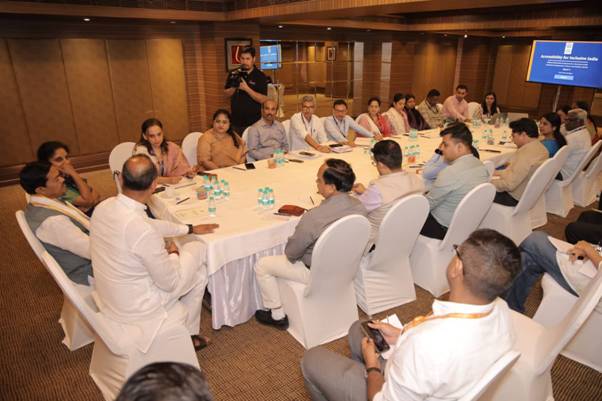
The third day began with a yoga session too, followed by a thematic breakfast on “Jagrukta se Sulabhata – Awareness to Accessibility under DoSJE”, where participants discussed the need to move from scheme-centric thinking to a rights-based, universal design approach that treats accessibility as integral to all public infrastructure, services and digital platforms. States and UTs underlined the importance of sustained awareness, capacity building of engineers and architects, better use of technology and a stronger role for local bodies in making built environments, transport, ICT and public services accessible to all, including persons with disabilities.
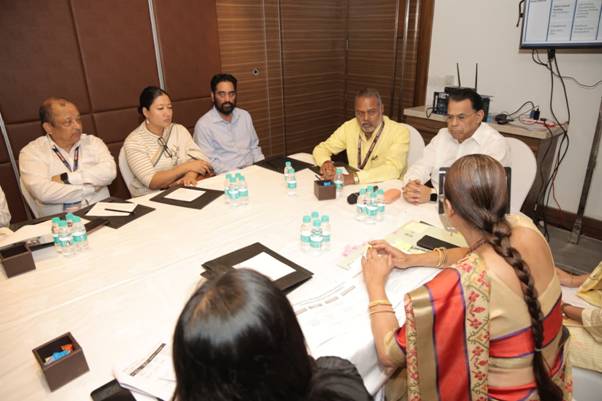
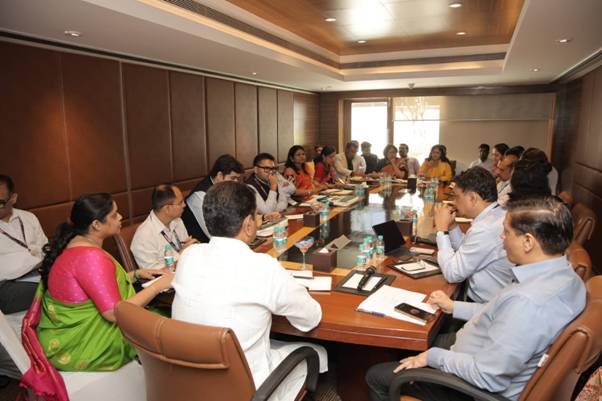
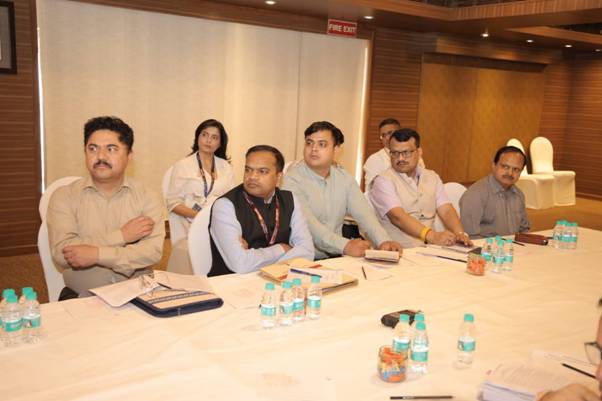
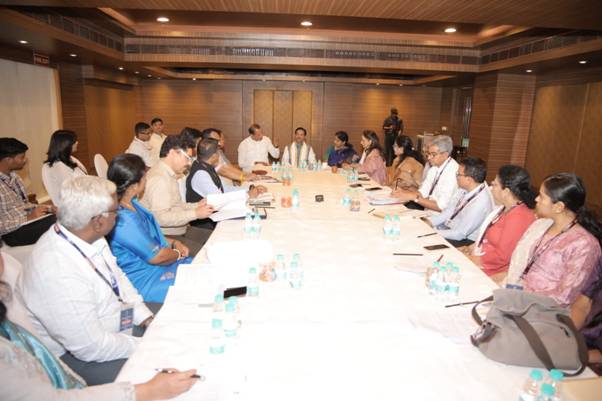
In the morning breakout session, five thematic groups took up their second set of themes for detailed discussion and presentation under the Viksit Bharat 2047 framework.
Group I focused on “Antyodaya se Aatmanirbharata: Accelerating Socio-Economic Development through Area-Based Interventions”, discussing issues such as convergence under PM-AJAY, village development plans, skilling and livelihood support for SC communities, and the need for outcome-oriented monitoring at village, district and State levels.
Group II deliberated on “Samaveshan, Pehchan aur Ekikaran”, with a special focus on the SEED Scheme for Economic Empowerment of De-Notified, Nomadic and Semi-Nomadic Tribes (DNTs/NTs/SNTs) and the importance of accurate enumeration, certification and sensitive administrative outreach to historically marginalised communities.
Group III discussed “Arthik Sashaktikaran: Democratizing Credit Access and Financial Empowerment”, examining ways to improve access to credit, skilling, entrepreneurship support and financial inclusion for SCs, OBCs and other disadvantaged sections, including better convergence with existing financial and livelihood schemes.
Group IV took up “Sugamyata se Samaveshan: Accessibility”, building on the Accessibility breakout presentation to call for non-negotiable accessibility standards, State-level schemes mirroring central barrier-free efforts, earmarked funds, empanelled accessibility auditors and systematic capacity building by 2027–28.
Group V focused on “Pehchan se Samman: Certification for PwDs”, highlighting the need for timely, technology-enabled disability certification, hassle-free access to benefits and better integration of data across departments.
Across the groups, participants also discussed specific issues such as inclusion of DNT communities in Census-2027, strengthening implementation of the SEED Scheme, enhancing livelihood and social security measures under PM-AJAY and other SC/OBC programmes, and comprehensive rehabilitation for transgender persons under the SMILE-TG sub-scheme. States and UTs presented best practices and success stories on DNT land rights, scholarship delivery, transgender welfare (including Garima Grehs, protection cells and welfare boards), community-based support for senior citizens and innovations in accessibility, with a view to replication and scale-up.
A thematic lunch on “Simplification of Processes in DoSJE Schemes (Prakriya Saralikaran)” was held to distil concrete steps for easing procedures, rationalising documentation, strengthening grievance redressal and improving fund flow and utilisation. The discussions emphasised that process simplification, digital platforms and clear timelines are essential to ensure that scholarships, pensions, rehabilitation support, accessibility grants and other benefits reach eligible beneficiaries without delay or procedural barriers.
The National Chintan Shivir concluded with a shared understanding that the Ministry, in close partnership with States and Union Territories, will take forward the outcomes of the deliberations in a structured manner through revised guidelines, strengthened monitoring, wider outreach and sustained capacity building. The three-day exercise has reinforced the collective resolve that social justice must go beyond intent and translate into measurable improvements in the lives of the poorest and most vulnerable, thereby contributing to the vision of an inclusive, empowered and equitable Viksit Bharat by 2047.
Links to the press releases issued on the Inaugural Session (24 April 2026) and Day 2 (25 April 2026) of the National Chintan Shivir can be read here.
https://www.pib.gov.in/PressReleasePage.aspx?PRID=2255407®=3&lang=1
https://www.pib.gov.in/PressReleasePage.aspx?PRID=2255543®=3&lang=1
***
Siraj
(Release ID: 2255700)
Visitor Counter : 970