Ministry of Railways
Railways Drives Reform Express with “Better On-Board Services” & “Rail-Based Logistics Through Gati Shakti Cargo Terminals and Cargo-Related Facilities’’
In a Historic Step with Focus on General Coaches, Railways Aims at Continuous Cleaning of Trains
Service Provider to be Identified for Better Linen and Quality Cleaning of Coaches; Provision for AI-Enabled Monitoring to Ensure Superior Cleaning
Implementation Planned Across All Indian Railways Based on Field Learning and Improved Operational Efficiency
Current 124 Multi-Modal Terminals to Become Cargo-Plus-Processing Hubs in a Significant Reform
Over 500 Gati Shakti Cargo Terminals Planned to Boost the Logistics Sector
Posted On:
14 FEB 2026 6:52PM by PIB Delhi
Union Minister for Railways, Information & Broadcasting and Electronics & Information Technology, Shri Ashwini Vaishnaw today announced that in line with Indian Railways’ resolve to undertake “52 reforms in 52 weeks” during 2026, two new reforms are approved by the Indian Railways and their implementation will commence immediately. He said that reforms are not one-time events but a continuous process.
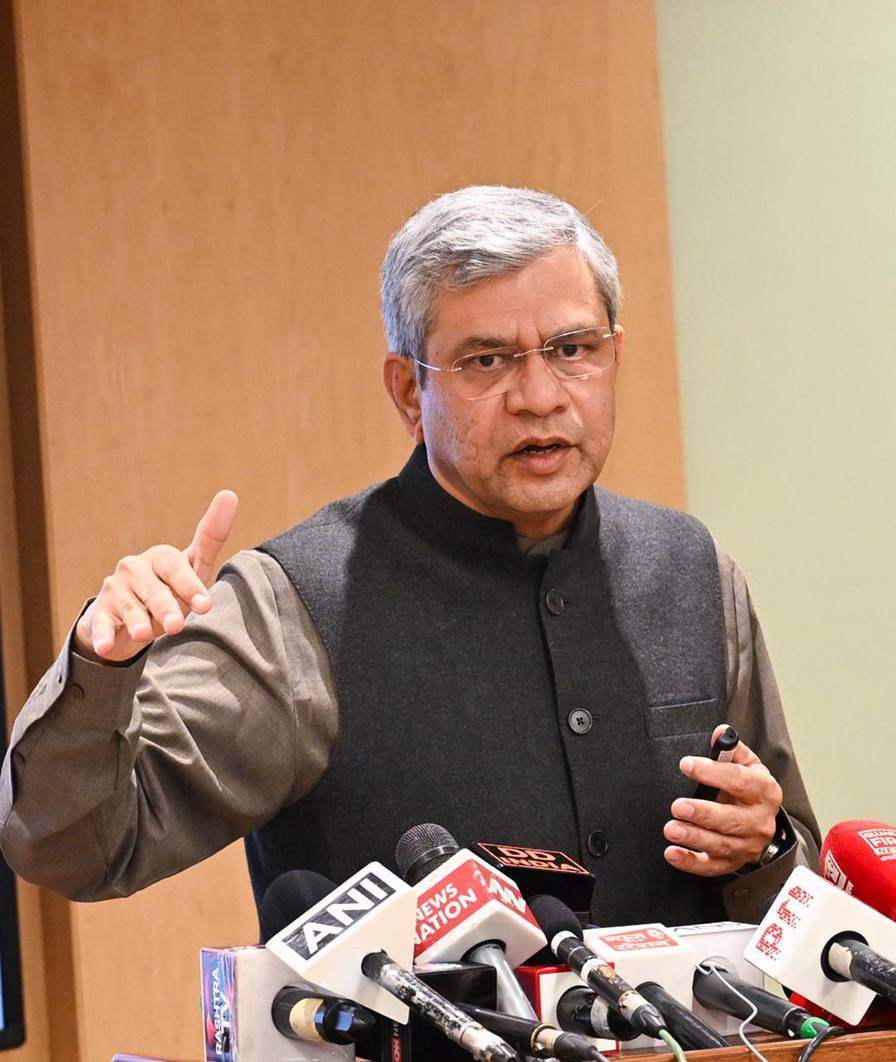
Shri Vaishnaw stated that the impact is visible today as Indian Railways has become the second largest cargo carrier in the world, with new generation trains and new ways of working emerging across the system.
Reforms for Better On-Board Services
Explaining the first reform, the Union Minister said that beginning 2026, Indian Railways will ensure proper end-to-end cleaning of trains, especially long-distance trains. He stated that under the existing mechanism, cleaning was largely limited to reserved coaches, and that for the first time in railway history, cleaning of general coaches has been fully integrated into the system.
He explained that the earlier “Clean Train Station” concept, which provided thorough cleaning at limited stations, is now being replaced with a continuous cleaning model from the train’s origin to its destination. Toilets, garbage bins, cabin interiors, water availability, and minor electrical or mechanical defects such as lights going out will be addressed continuously during the journey so that passengers experience a significantly improved travel environment.
Shri Vaishnaw stated that this reform has been created with the thought process of completely improving the travel environment for customers. In consultation with Zonal Railways, approximately four to five trains per zone, primarily long-distance and high footfall trains, have been identified for rollout over the next six months. A total of 80 trains have already been identified across zones in the first phase, and over a period of three years the reform will be implemented across all trains of Indian Railways. The selection of trains has been carried out at the managerial level based on field inputs and operational criteria.
The Minister elaborated that a fully technology-enabled professional team will be hired under clearly defined Service Level Agreements specifying cleaning frequency, with more frequent cleaning during peak hours and relatively lower frequency during non-peak hours. Continuous toilet cleaning, garbage removal, cabinetry cleaning, linen handling and related services will be ensured.
He further stated that the linen distribution, linen collection, and cleaning functions, which were earlier distributed among separate agencies, will now be integrated and awarded to a single agency. At designated stations, staff deployed in reserved coaches will move into general coaches to ensure cleaning standards equivalent to reserved coaches. He described this as a very big change in the history of Railways and stated that for the first time such substantial attention is being paid to general coach cleanliness.
The reform includes the creation of war room control centres where AI-generated images of cleaning activities will be monitored and analysed. AI-based assessment will verify whether cleaning has been properly done, and if not, strict action will follow. Route-specific teams will be formed after detailed study by Railway Board officials based on long operational experience. These teams will include multi-tasking personnel capable of addressing minor mechanical and electrical repairs in addition to cleaning, thereby providing integrated on-board service delivery .
More Gati Shakti Cargo Terminals with Better Facilities to Meet Freight Targets
Turning to the second reform, the Union Minister said it builds upon the Gati Shakti Cargo Terminal (GCT) Policy introduced in 2022, which significantly simplified the cargo terminal approval process. Work that earlier took six years began getting completed in approximately three months, and approvals for engineering drawings, signalling plans and electrical plans were streamlined. As a result, 124 multi-modal cargo terminals were developed with an estimated traffic potential of around 200 million tonnes and revenue potential of approximately ₹20,000 crore annually.
Shri Vaishnaw stated that after four months of stakeholder consultations based on three years of experience, a substantially enhanced reform has been approved. With this reform, the existing 124 Gati Shakti Cargo Terminals are expected to increase to more than 500 in the next five years. He described this as a fundamental reform of even greater magnitude than the 2022 reform.
The most significant addition is the integration of processing within cargo terminals, transforming them into “cargo plus processing” hubs. He explained that cement clinker can be transported to the GCT and ground into cement within the terminal itself, followed by bagging or dispatch through Ready-Mix Concrete vehicles. Similarly, food grain processing, stuffing and destuffing, and other value addition activities can now occur within terminal premises. This eliminates the need to process material elsewhere before bringing it to the terminal, removes artificial barriers, and attracts additional cargo traffic to Railways.
He stated that many underutilized goods sheds will be developed as GCTs and cargo facilities . Legacy sidings developed under earlier policies can migrate to the simplified GCT framework. For short connecting stretches between terminals and main lines, where private operators faced difficulty maintaining tracks and electrical systems due to high equipment costs, Railways will now optionally undertake maintenance on a payment basis, improving safety and clarifying maintenance responsibility.
The reform permits expanded common user facilities including Y-connections and rail-over-rail structures. Multi-GCT connectivity has been formalized so that if a new terminal is developed along an existing stretch, connectivity cannot be denied, thereby preventing disputes that earlier led to litigation. A dispute prevention framework has been introduced whereby monthly or milestone-based joint meetings between terminal developers and railway officials will result in joint notes and “no dispute certificates,” reducing the need for arbitration or court cases.
Standard layouts have been incorporated into policy , and applicants adopting standard designs will receive automatic approvals, similar to the telecom reform model where standardization reduced approval timelines drastically. Contract tenure for GCTs and cargo-related facilities has been extended from 35 years to 50 years, enabling long-term investments and ecosystem development.
The Minister estimated that the reform could generate approximately ₹30,000 crore in additional revenue over a three-year period through enhanced cargo movement. He cited the example of the cement transportation reform launched in November–December, where bulk cement tonnage more than doubled, with January figures reaching around 95,000 tonnes compared to around 40,000 tonnes last year . He noted that railway-based bulk cement transportation has reduced costs significantly, including reductions of up to 30% in Jammu & Kashmir and nearly half in Mizoram, while also reducing pollution through scientific transport methods.
More Reforms to Follow
Shri Vaishnaw added that seven more reforms are underway with two to be unveiled this month and three more in early March and work initiated on another 30-40 reforms. With structural reforms in passenger services and freight logistics, Indian Railways marks the beginning of an ambitious year-long transformation agenda.
*****
Dharmendra Tewari/ Dr. Nayan Solanki/ Manik Sharma
(Release ID: 2228171)
Visitor Counter : 2838