Ministry of Railways
Mega Infrastructure Projects of the 21st Century: Indian Railways Driving a New Era of Connectivity
Engineering Marvels - Chenab Bridge, New Pamban Bridge and Bairabi Sairang Line - Transforming Travel and Economic Activity
60 Stations Across North East Undergoing Development Under Amrit Bharat Station Scheme
Posted On:
30 DEC 2025 5:24PM by PIB Delhi
Indian Railways is carrying out some of the most ambitious infrastructure projects of the 21st century. These projects are strengthening national integration, improving logistics, and expanding the modern railway network. From iconic bridges in difficult terrain to freight corridors and high-speed rail, they reflect India’s growing engineering strength and long-term vision.
One of the most significant projects is the Udhampur-Srinagar-Baramula Rail Link (USBRL). It is a project of high strategic and national importance. Built at a cost of approx. ₹44,000 crore, the 272 km line passes through the Himalayan region. The project includes the Chenab Rail Bridge, the world’s highest railway arch bridge. It stands 359 metres above the river, higher than the Eiffel Tower. It is a 1,315 metre long steel arch bridge engineered to withstand seismic and wind conditions.
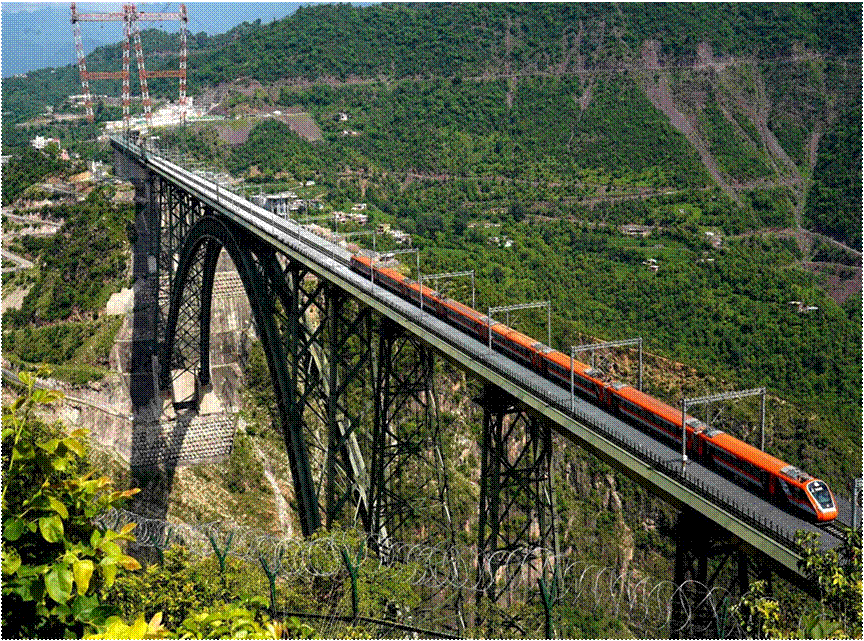
Chenab Rail Bridge
The project also includes India’s first cable-stayed railway bridge over Anji river, known as Anji Rail Bridge. Thirty six tunnels (spanning 119 km) and 943 bridges are part of the project. The USBRL provides all-weather rail connectivity to the Kashmir Valley. It is boosting mobility, tourism, and economic activity in the region.
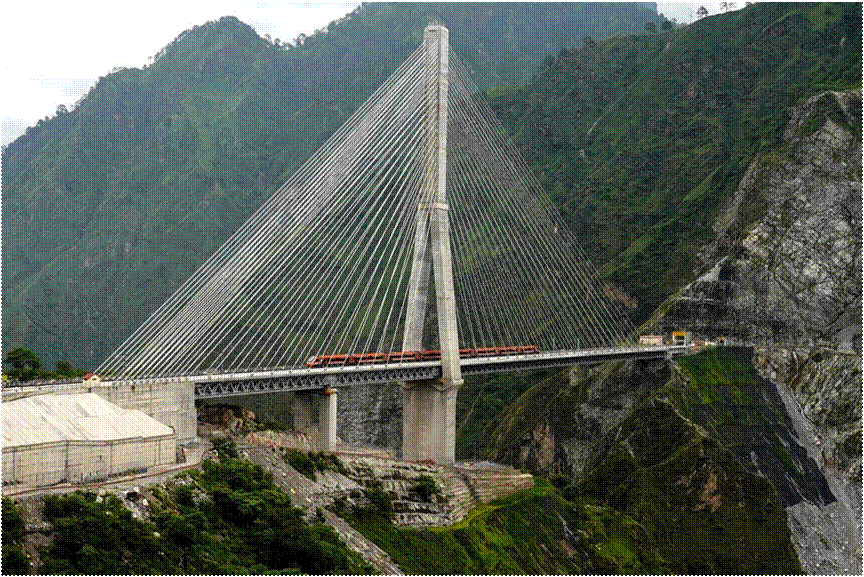
Anji Rail Bridge
Another major achievement is the New Pamban Railway Bridge in Tamil Nadu. The new bridge is India’s first vertical-lift sea bridge. Built at a cost of about ₹550 crore, the 2.08 km long bridge consists of 100 spans, with 99 spans of 18.3 metres each and one main span of 72.5 metres.
The bridge features a robust substructure system comprising 333 piles and 101 pile caps, ensuring structural stability. It also includes 99 approach girders designed for efficient load distribution. The bridge is engineered to withstand harsh marine conditions and strong coastal winds. To enhance durability, a corrosion protection system has been provided, capable of extending the bridge’s service life up to 38 years without maintenance and up to 58 years with minimal maintenance.
The new bridge ensures rail connectivity to Rameswaram, an important pilgrimage and tourism centre. Reflecting its advanced design and engineering excellence, the New Pamban Railway Bridge has been conferred the prestigious Steel Structures & Metal Buildings Award 2024 in the Bridge Design category.
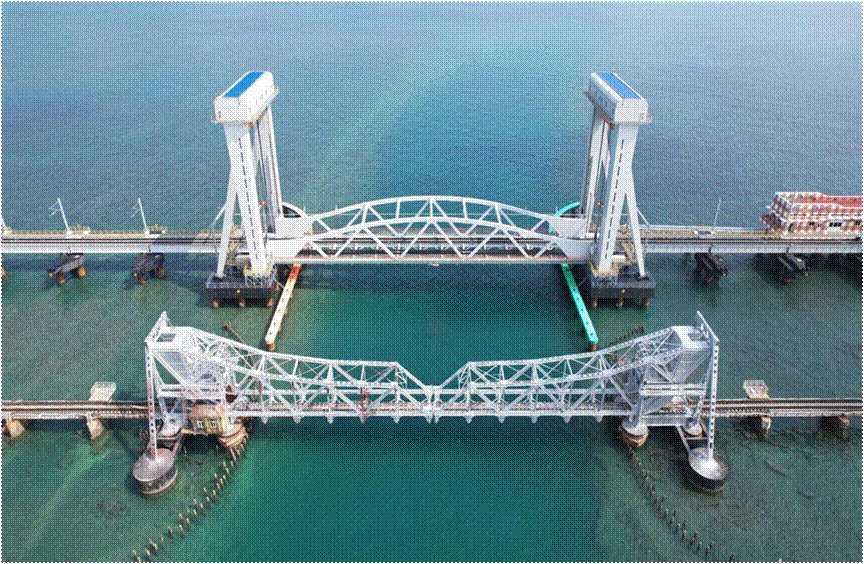
Pamban Rail Bridge
Indian Railways has also made major progress in the Northeast. For many years, the region faced serious connectivity challenges. Since 2014 in the Northeast, more than 1,679 km of railway tracks have been laid. Over 2,500 route kilometres have been electrified. More than 470 road overbridges and underbridges have been constructed. The Bairabi-Sairang new line has been fully commissioned. This has connected Aizawl to the rail network for the first time. Aizawl is now the fourth capital in the Northeast to be linked with the national rail network.
Sixty stations in North East are being redeveloped under the Amrit Bharat Station Scheme. Major projects such as Sivok-Rangpo, Dimapur-Kohima, and Jiribam-Imphal are also progressing steadily. These projects are improving economic and social integration of the North East with the rest of the country.
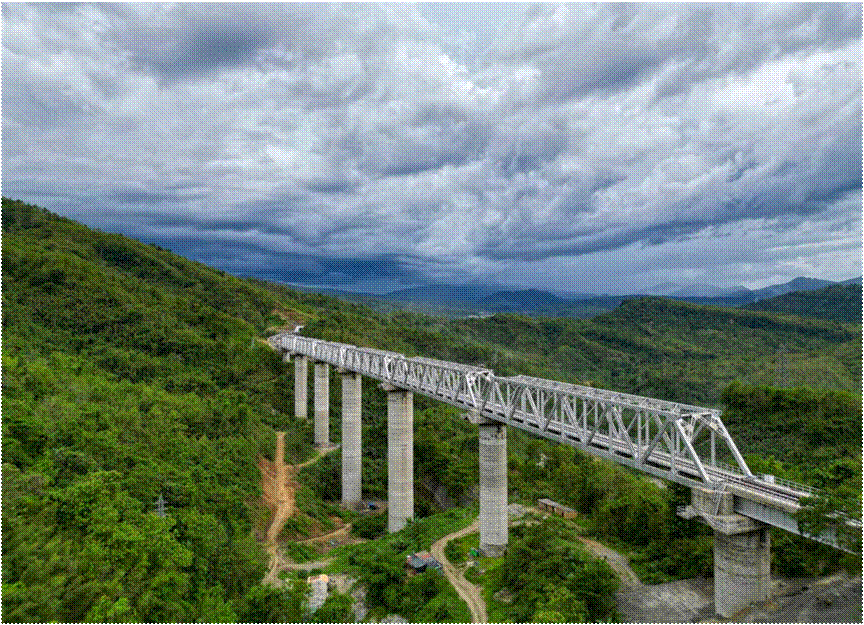
Bridge No. 144 (42 metre taller than Qutub Minar) of Bairabi-Sairang Rail Line
In the freight sector, Indian Railways is transforming logistics through the Dedicated Freight Corridor (DFC). The Eastern Dedicated Freight Corridor (EDFC), running from Ludhiana to Sonnagar, spans 1,337 km and has been fully commissioned. The Western Dedicated Freight Corridor (WDFC), connecting Jawaharlal Nehru Port Terminal to Dadri, is 1,506 km long, of which 1,404 km i.e. 93.2% has been commissioned.
Together, the two corridors cover a total length of 2,843 km. So far, 2,741 route kilometres have been commissioned, accounting for about 96.4% of the total length. These dedicated corridors are significantly reducing congestion on passenger routes. They are cutting transit time, lowering logistics costs, and improving reliability for industries and ports. The DFCs are strengthening India’s freight movement and supporting faster economic growth.
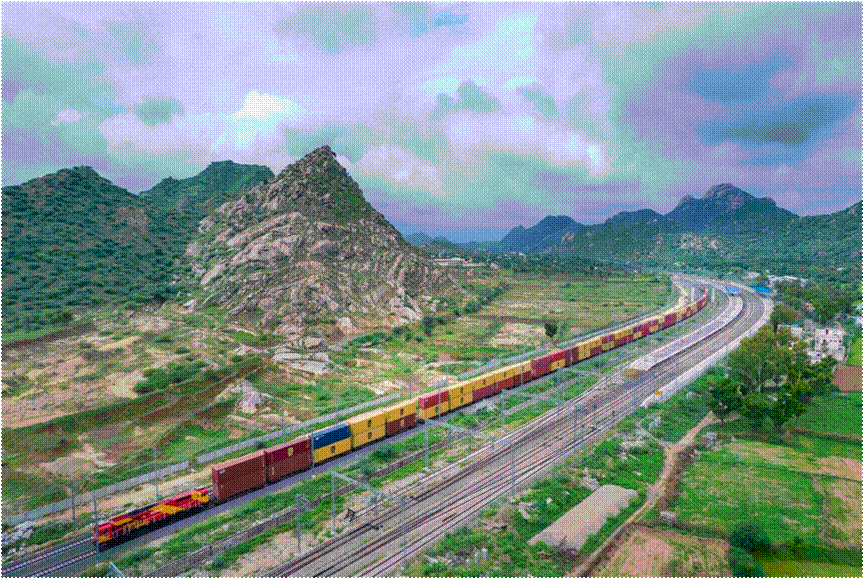
Dedicated Freight Corridor
Indian Railways is also moving ahead in the field of high-speed rail. The Mumbai-Ahmedabad High-Speed Rail Project is being implemented by NHSRCL. As of 21 December 2025, 331 km of viaduct work has been completed out of the total 508 km alignment. Pier work has been completed for 410 km. Seventeen river bridges, five PSC bridges, and eleven steel bridges have already been completed. Around 272 track km of RC track bed has been constructed. More than 4100 OHE masts have been installed. Major tunnelling works in Maharashtra are in progress. Rolling stock depots at Surat and Ahmedabad are also being developed.
The project will bring world-class high-speed rail technology to India. It will sharply reduce travel time between two major economic hubs.
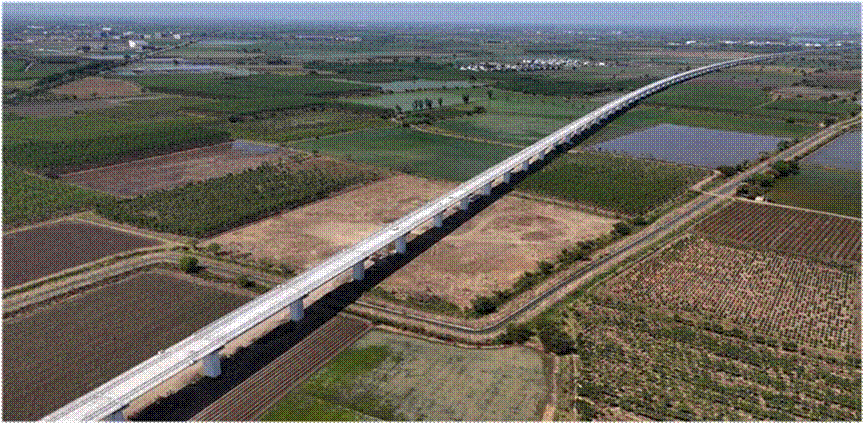
Viaduct in Surat district, part of the Mumbai-Ahmedabad Bullet Train project
Together, these landmark projects show Indian Railways' role in national development. They reflect large-scale investment and advanced engineering capabilities. Through these efforts, Indian Railways is improving connectivity, supporting economic growth, and strengthening national unity across regions.
*****
Dharmendra Tewari/ Dr. Nayan Solanki/ Manik Sharma
(Release ID: 2209846)
Visitor Counter : 15216