PIB Backgrounder
India's Commitment to Disability Rights
Posted On:
02 DEC 2025 12:04PM by PIB Delhi
Key Takeaways
- India’s disability framework has evolved through progressive legislation like the Rights of Persons with Disabilities Act, 2016, emphasising equality, dignity, and accessibility across all sectors.
- With initiatives like the revamped Sugamya Bharat App, the ISL Digital Repository (3,189 e-content videos), and Channel 31 for ISL Training, the government is leveraging technology to build a barrier-free digital and learning ecosystem.
- Flagship events like the Divya Kala Mela have provided market linkages to Divyang artisans and entrepreneurs nationwide, showcasing the “Vocal for Local” spirit.
India’s Vision for an Inclusive and Accessible Nation
In India, where diversity thrives as the cornerstone of national identity, a strong movement for disability rights is growing, driven by the government’s commitment towards true inclusivity and self-reliance for everyone.
According to Census 2011, there are 2.68 crore persons with disabilities in India which constitute 2.21 percent of the total population. Out of these, approximately 1.50 crore are male and 1.18 crore, are female. According to The Rights of Persons with Disabilities Act, 2016, a "person with disability" is someone who has a long-term physical, mental, intellectual or sensory impairment which, in interaction with barriers, hinders their full and effective participation in society equally with others.
Backed by forward-thinking policies and dynamic programmes, the Government ensures that no one is deprived on account of their disability, and creates pathways to opportunity and active societal involvement for every individual.
India's Legal and Policy Framework for Disability Rights
India’s legal and policy framework for disability rights is dynamic and shapes a landscape where accessibility, education, and empowerment are not just ideals but realities for Persons with Disabilities (PwDs).
The Rights of Persons with Disabilities Act, 2016
This Act was enacted in 2016 and came into effect on April 19, 2017, replacing the Persons with Disabilities Act of 1995. It recognises 21 categories of disability, mandates reservation in education and employment and places a legal duty on governments to ensure accessibility, non-discrimination and full participation for persons with disabilities. It also introduces a centralised certification regime and strengthens rights to inclusive education, employment and community living.
The National Trust for the Welfare of Persons with Autism, Cerebral Palsy, Mental Retardation and Multiple Disabilities Act, 1999
The Act establishes a national body dedicated to the welfare of individuals with Autism, Cerebral Palsy, Mental Retardation, and Multiple Disabilities, along with related matters and incidental provisions.
Rehabilitation Council of India (RCI) Act, 1992
The Rehabilitation Council of India (RCI) was initially established as a registered society in 1986 and later became a statutory body under an Act of Parliament in 1993. The RCI Act, 1992, amended in 2000, mandates the Council to regulate and monitor training programmes for rehabilitation professionals, standardise syllabi, and maintain the Central Rehabilitation Register of qualified personnel in the fields of rehabilitation and special education.
Scheme for Implementation of Rights of Persons with Disabilities Act 2016 (SIPDA)
The Scheme for Implementation of the Rights of Persons with Disabilities Act, 2016 (SIPDA) is an umbrella programme of the Department of Empowerment of Persons with Disabilities (DEPwD). It provides financial and technical support to Central Ministries, States, and UTs for implementing the RPwD Act through projects that promote accessibility, inclusion, awareness, and skill development for persons with disabilities.
Key Government Initiatives and Schemes
The government has adopted a wide range of initiatives and schemes to ensure accessibility and inclusion for persons with disabilities:
Sugamya Bharat Abhiyan (Accessible India Campaign)
Launched on 3 December 2015, the Sugamya Bharat Abhiyan or Accessible India Campaign marks a significant step towards building an inclusive and accessible nation. Guided by the vision of “Sabka Saath, Sabka Vikas, Sabka Vishwas,” the campaign addresses long-standing barriers faced by persons with disabilities. It focuses on achieving universal accessibility across three key domains — built infrastructure, transport systems and information and communication technology (ICT) — ensuring equal access and participation for all.
India, as a signatory to the UN Convention on the Rights of Persons with Disabilities (UNCRPD), is committed to building an accessible and inclusive society.
In a significant stride towards building a digitally inclusive India, the Department of Empowerment of Persons with Disabilities (DEPwD) has launched the revamped Sugamya Bharat Appat the International Purple Fest 2025.
- The upgraded app, designed with a user-first and accessibility-first approach, serves as India’s digital accessibility hub, providing persons with disabilities easy access to information, government schemes, and essential services.
- It features an accessibility mapping tool that enables users to locate and rate public spaces, encouraging community-driven accessibility data.
- The app also offers a comprehensive directory of schemes, scholarships, employment opportunities, and educational resources curated for persons with disabilities.
- Equipped with a grievance redressal module, the app allows users to report inaccessible infrastructure directly, promoting transparency and accountability. It is compatible with assistive technologies, supports multiple Indian languages, and is available on both Android and iOS platforms.
Assistance to Disabled Persons for Purchase/Fitting of Aids/Appliances (ADIP)
The ADIP Scheme, launched in 1981, aims to help persons with disabilities (PwDs) get durable, scientifically manufactured, and modern aids and appliances that support their physical, social, and economic rehabilitation.
These devices are provided to help PwDs live more independently, reduce the impact of their disabilities, and prevent further complications. All aids and appliances given under the scheme must be properly certified for quality and safety. The scheme also provides for corrective surgeries, when needed, before fitting assistive devices.
A Sound of Hope — Kritika’s Journey to Hearing
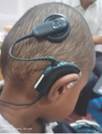
Three-year-old Kritika from Nagpur was diagnosed with bilateral severe-to-profound sensorineural hearing loss, which made it difficult for her to hear or speak. On February 6, 2024, she underwent a cochlear implant surgery under the ADIP (Assistance to Disabled Persons) Scheme, supported by the Department of Empowerment of Persons with Disabilities (DEPwD).
Post-surgery, Kritika attended regular therapy sessions at the Digital Diagnostic Clinic, Nagpur, an empanelled centre under the ADIP Cochlear Implant Programme. Now, 11 months after implantation, she has made remarkable progress — she can comprehend sounds, speak familiar words clearly, and follow verbal commands.
She is now enrolled at an Anganwadi in a Marathi Medium Government School in Nagpur. Her parents express immense happiness and gratitude, proud to witness their daughter’s steady progress and newfound ability to experience the world through sound.
Deendayal Divyangjan Rehabilitation Scheme (DDRS)
This Central Sector Scheme of the Government of India provides financial assistance to voluntary organisations engaged in the education, training, and rehabilitation of persons with disabilities.
Initially launched in 1999 and revised and renamed in 2003, the scheme aims to create an enabling environment that ensures equal opportunities, equity, social justice, and empowerment for persons with disabilities. It also promotes voluntary participation to strengthen the effective implementation of the Rights of Persons with Disabilities Act, 2016.
National Divyangjan Finance and Development Corporation (NDFDC)
The National Divyangjan Finance and Development Corporation (NDFDC) is a public sector organisation under DEPwD. Established in 1997 as a not-for-profit company, NDFDC works to promote the economic empowerment of persons with disabilities (PwDs).
It provides financial support for self-employment and income-generating activities through State Channelising Agencies (SCAs) and partner banks such as public sector and regional rural banks.
NDFDC operates two main loan schemes:
- Divyangjan Swavalamban Yojana (DSY): Provides concessional loans to individual PwDs.
- Vishesh Microfinance Yojana (VMY): Supports self-help groups and joint liability groups for the welfare and rehabilitation of Persons with Disabilities in the country.
Artificial Limbs Manufacturing Corporation of India (ALIMCO)
Artificial Limbs Manufacturing Corporation of India (ALIMCO) is a Schedule ‘C’ Miniratna Category II Central Public Sector Enterprises, registered under Section 8 (Not for Profit motive) of the Companies Act 2013, (corresponding to Section 25 of the Companies Act, 1956) is functioning under the Administrative Control of Ministry of Social Justice & Empowerment, Department of Empowerment of Persons with Disabilities. It is 100% owned Govt. of India Central Public Sector Enterprises with an objective of benefiting the persons with disability to the maximum extent possible by manufacturing Rehabilitation Aids for persons with disabilities and by promoting, encouraging and developing the availability, use, supply and distribution of Artificial Limbs and other Rehabilitation Aids to the disabled persons of the country. Profitability is not the motive of the operations of the Corporation and its main thrust is in providing better quality of Aids & Appliances to larger number of disabled persons at reasonable price.
In endeavour to enhance outreach of benefits of ADIP scheme by providing aids and assistive devices to Persons with Disabilities across the country, ALIMCO has started the opening of Pradhanmantri Divyasha Kendra (PMDK) at National Institutes (NIs) and Satellite/ Regional Centers working under DEPwD, Govt. of India on PAN India basis.
ALIMCO is the only manufacturing company producing various types of assistive devices under one roof to serve all types of disabilities across the country.
Unique ID for Persons with Disabilities (UDID)
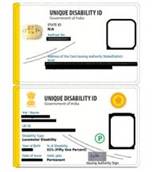
The Unique ID for Persons with Disabilities project is being implemented to create a national database of Persons with Disabilities (PwDs) and issue a Unique Disability Identity Card (UDID) to each individual. This initiative ensures transparency, efficiency, and ease in delivering government benefits to PwDs while maintaining uniformity across regions. It also aids in tracking the physical and financial progress of beneficiaries across various administrative levels.
The UDID project aims to build a comprehensive end-to-end system for issuing Universal IDs and Disability Certificates. This system includes:
- Nationwide availability of PwD data through a centralised web application
- Online application submission for Disability Certificate/UDID card (offline submissions are also allowed and digitised later)
- Efficient assessment process by hospitals or Medical Boards to calculate disability percentage
- Elimination of duplicate PwD records
- Online renewal and update of information by or on behalf of PwDs
- Management Information System (MIS) reporting framework
- Integrated management of various government benefits/schemes for PwDs
- Support for additional disabilities in the future (currently 21 disabilities, subject to updates)
The Divyangjan Card, also known as the E-Ticketing Photo Identity Card (EPICS), is a railway identity card for people with disabilities (Divyangjan) that allows them to get concessions on train travel. Applicants may apply or renew the card through the Indian Railways Divyangjan portal or the central government services portal. The card is issued on the basis of a valid disability/concession certificate (UDID is accepted for some categories).
PM-DAKSH-DEPwD Portal
PM-DAKSH DEPwD is the digital platform created by the Department of Empowerment of Persons with Disabilities (DEPwD). It is intended as a one-stop hub connecting persons with disabilities, training institutes, employers, and job aggregators under the national skill & employment ecosystem.
The portal features two key modules:
- Divyangjan Kaushal Vikas: Implements the National Action Plan for Skill Development of Persons with Disabilities (NAP-SDP), offering Unique Disability Identity (UDID)based registration, over 250 skill courses, online learning resources, and details on training partners, study materials, and trainers.
- Divyangjan Rozgar Setu: A dedicated platform bridging PwDs and employers, offering geo-tagged job vacancies (over 3,000 across various disabilities) with private sector details. MoUs with companies like Amazon, Youth4Jobs, and Godrej Properties boost employment prospects.
National Institutes and Composite Regional Centres (CRCs)
9 national institutes, namely National Institute for Empowerment of Persons with Visual Disabilities (NIEPVD), Dehradun, Ali Yavar Jung National Institute for Speech & Hearing Disabilities (AYJNISHD) National Institute for Empowerment of Persons with Intellectual Disabilities (NIEPID), Secunderabad, National Institute for Empowerment of Persons with Multiple Disabilities (NIEPMD), Chennai, Pt. Deendayal Upadhyaya National Institute for the Physically Handicapped (PDUNIPPD), Delhi, Swami Vivekanand National Institute of Rehabilitation Training and Research (SVNIRTAR), Cuttack, National Institute for Locomotor Disabilities (NILD), Kolkata, Indian Sign Language Research & Training Centre (ISLRTC), National Institute of Mental Health and Rehabilitation (NIMHR), Sehore, and Atal Bihari Vajpayee Disabled Sports Training Centre – Gwalior focus on helping people with hearing and speech disabilities.
Additionally, 30 Composite Regional Centres (CRCs) have been approved in various States/UTs as outreach centres providing rehabilitation services, training professionals, and creating awareness about the needs and rights of PwDs.
Divya Kala Mela: A Platform for Empowerment
In 2025, the Department of Empowerment of Persons with Disabilities (DEPwD) and the National Divyangjan Finance and Development Corporation (NDFDC) organised multiple editions of the Divya Kala Mela across India, celebrating entrepreneurship, creativity, and inclusion among Divyangjan.The fair aligns with the “Vocal for Local” initiative, providing a platform for economic empowerment, skill-showcase and cultural celebration of persons with disabilities.
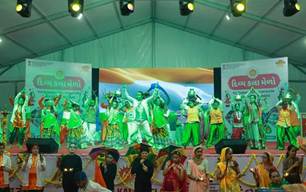
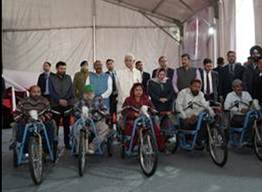
The 26th Divya Kala Mela took place from August 23 – 31, 2025 in Patna, Bihar. Approximately 100 Divyang artisans and entrepreneurs representing around 20 states and UTs participated. 75 stalls displayed handicrafts, handlooms, embroidery, packaged food, eco-friendly items, toys, stationery and accessories from across India.
The event also featured special zones for assistive devices, a job fair, cultural performances and accessibility-friendly infrastructure to ensure inclusivity for all attendees.
The 23rd and 24th editions of the Divya Kala Mela were held in Vadodara and Jammu respectively in early 2025. The fairs featured assistive technology showcases, cultural performances, skill linkages, and job opportunities, highlighting inclusion through art, enterprise, and empowerment.
Purple Fest 2025- India’s Festival of Inclusion

The Purple Fest is India’s largest celebration of inclusion, accessibility, and empowerment of persons with disabilities (PwDs). The festival brings together Divyangjan, innovators, educators, and policymakers from across India to showcase best practices, assistive technologies, and cultural performances that promote inclusion.
At this year’s Purple Fest organised in Goa, the government unveiled major digital and educational initiatives aimed at deepening accessibility:
· Revamped Sugamya Bharat App: An upgraded accessibility platform featuring screen-reader support, voice navigation, multilingual interface, and direct grievance redressal.
· Accessibility in Learning — Three Key Launches:
-
- IELTS Training Handbook for PwDs — created by Believe in the Invisible (BITI support), offering adapted materials and ISL video links.
- Recognition of Prior Learning (RPL)- Certification in ISL Interpretation (CISLI) / Skill Course for SODA (Siblings of Deaf Adults) and CODA (Children of Deaf Adults)- 17 candidates from various parts of India appeared for the assessment, all of whom successfully completed the course.
- Specialised Basic Training Programme on American Sign Language (ASL) and British Sign Language (BSL) launched atIndian Sign Language Research and Training Centreto introduce ISL professionals to the fundamentals of ASL and BSL, provide knowledge of grammar, syntax and vocabulary and strengthen professional opportunities for Indian interpreters in international forums.
Promotion of Indian Sign Language (ISL)
The Indian Sign Language Research and Training Centre (ISLRTC), set up in 2015 under DEPwD, serves as the nodal institution for advancing ISL across India. In December 2024, the Government launched PM e-vidya Channel 31 on DTH, exclusively dedicated to ISL training for hearing-impaired students, special educators, and interpreters.
On Sign Language Day 2025, ISLRTC unveiled the world’s largest ISL digital repository, featuring 3,189 e-content videos— now accessible to teachers, learners, and the Deaf community.
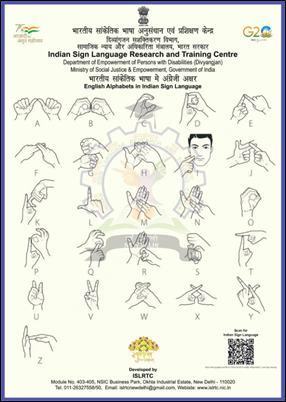
The Indian Sign Language Dictionary has now expanded to include over 10,000 terms, while the digital repository features a rich collection of academic videos, fingerspelling resources, and more than 2,200 glossary videos across subjects such as history, geography, economics, and sociology. Indian Sign Language has also evolved as an academic discipline, supported by over 1,000 instructional videos designed to enhance teaching and learning.
Complementing these efforts, the PRASHAST App facilitates early identification and screening of disabilities in schools, ensuring timely intervention and personalised learning support. To date, more than 92 lakh students have been screened at the preliminary level through the app.
In 2020, the Indian Sign Language Research and Training Centre (ISLRTC) even signed an MoU with the National Council of Educational Research and Training (NCERT) to translate textbooks for classes I–XII and other teaching materials into ISL. This process is expected to be completed by 2026.
Conclusion
The evolution of disability affairs in India reflects a growing recognition of the rights and potential of persons with disabilities. The establishment of dedicated departments and initiatives exemplify a commitment to fostering inclusivity, creativity, and resilience within the community. By providing platforms for showcasing talent and facilitating economic opportunities, these efforts not only empower individuals but also contribute to a more inclusive society where every individual can thrive with dignity.
References
Click here to see pdf
*****
RK
(Release ID: 2197426)
Visitor Counter : 18456