PIB Backgrounder
9th Rashtriya Poshan Maah
A Month-long Celebration of Nutrition
प्रविष्टि तिथि:
08 SEP 2026 5:05PM by PIB Delhi
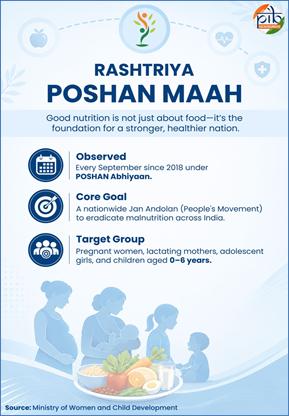
The Rashtriya Poshan Maah (National Nutrition Month) is observed every September as a dedicated platform to mobilise communities and reinforce key nutrition, health and caregiving behaviours among pregnant women, lactating mothers, children, adolescents, and their families. The 9th Poshan Maah 2026, which will be launched on Sept. 9, 2026, highlights the importance of Anganwadi Centres. It will raise awareness about balanced, protein-rich nutrition for pregnant and lactating women Over successive Poshan Maah campaigns, awareness and positive behaviour change have been strengthened on maternal nutrition, infant and young child feeding (IYCF) practices, growth monitoring and hygiene, alongside broader efforts to improve nutrition outcomes across the country.
Background
Malnutrition remains one of India’s most significant public health challenges, affecting the health, growth, learning and productivity of women and children across the life cycle. To mount a coordinated response, the Government of India launched POSHAN Abhiyaan in March 2018 as a multi-ministerial convergence mission placing nutrition at the centre of the development agenda.
In the Union Budget 2021–22, these interventions were integrated under Mission Poshan 2.0—India’s unified National Nutrition Mission anchored by the Ministry of Women and Child Development. Poshan 2.0 consolidates three core schemes into one framework:
- POSHAN Abhiyaan (Technology-driven monitoring, Jan Andolan mass mobilisation, and behavioural change).
- Anganwadi Services/ Integrated Child Development Services (ICDS) (Supplementary nutrition, hot cooked meals, and early childhood care).
- Scheme for Adolescent Girls (Nutritional support for out-of-school/adolescent girls).
The Rashtriya Poshan Maah, or the National Nutrition Month, observed every September, is one of the ways through which the government spreads awareness of the Mission POSHAN 2.0 scheme and objectives.
The 9th Rashtriya Poshan Maah, will be launched on September 9, 2026, at the Rudraksh International Cooperation and Convention Centre in Varanasi, Uttar Pradesh, to recognise the importance of Anganwadi centres. Anganwadi centres are the world's largest childcare network, delivering essential care and support to children in even the most remote communities. The Central theme this year is "Hamari Anganwadi Hamari Jimmedari", calling upon every citizen to take shared ownership of Anganwadi centres.
9th Rashtriya Poshan Maah
Rashtriya Poshan Maah 2026, under the overarching theme “Hamari Anganwadi, Hamari Jimmedari,” seeks to place Anganwadi Centres at the heart of community-led action for nutrition, care and early childhood development, while strengthening collective ownership and accountability for Poshan. It is proposed to be anchored in five mutually reinforcing priorities:
- promotion of dietary diversity, with a focus on adequate protein intake, diverse food groups and local foods;
- promotion of fresh, diverse HCM under the SNP through menu rotation, hygiene and quality assurance;
- strengthening community ownership and accountability for Poshan through the newly constituted AMCs (guidelines issued on 23rd June 2026) and the display of SNP Menu Boards;
- promoting cognitive development and adequate nutrition as fundamental pillars of Early Childhood Care and Education (ECCE), highlighting the inseparable link between what a child eats and how a child learns; and
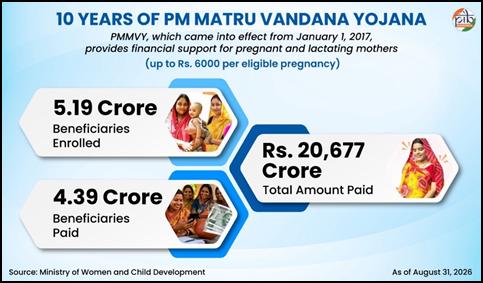
- Rashtriya Poshan Maah 2026 will also commemorate 10 years of the Pradhan Mantri Matru Vandana Yojana (PMMVY), India's flagship maternity benefit programme, highlighting its contribution to supporting maternal nutrition, promoting health-seeking behaviours, and providing income support during pregnancy, while reinforcing the critical importance of maternal nutrition and care during the first 1,000 days of life for healthy growth, cognitive development, and lifelong well-being.
Proposed Themes for Rashtriya Poshan Maah 2026
1. Dietary Diversity & Adequate Protein: A diverse diet that includes cereals and millets, pulses, fruits and vegetables, nuts and seeds, and milk and milk products, along with adequate protein from both plant and animal sources, is essential for meeting nutrient requirements, supporting healthy growth and development, and preventing all forms of malnutrition. Promoting dietary diversity across the life course, particularly during the complementary feeding period, is fundamental to improving nutrition outcomes and fostering healthy eating habits from an early age.
Activities may include –
- Healthy and Diverse Recipe Demonstrations: Conduct live demonstrations of healthy and diverse recipes at Anganwadi Centres, using affordable, locally available ingredients drawn from different food groups, cereals and millets, pulses, vegetables and fruits, nuts and seeds, milk and milk products, and eggs.
- Poshan Melas: Organise Poshan Melas showcasing local nutritious foods through interactive displays and recipe demonstrations, with counselling on building balanced and diverse meals for every age group.
- 'Protein-Rich Foods' Campaign: Conduct awareness activities on protein-rich foods from plant and animal sources, pulses, legumes, nuts and seeds, milk and milk products, and eggs, demonstrating practical and affordable ways to add protein to daily diets.
- Showcasing Poshan Vatika Produce and Local Foods: Showcase produce from Poshan Vatikas and locally available seasonal foods, promoting their regular use in household meals and in complementary feeding for young children.
2. Fresh Hot Cooked Meals (HCM) at Anganwadi Centers: Ensuring that beneficiaries consistently receive fresh, diverse, and nutritious Hot Cooked Meals (HCM) is central to improving the quality, utilisation, and effectiveness of the SNP, while encouraging regular attendance at Anganwadi Centres. Emphasising freshly prepared, hygienic meals made from locally available ingredients, including millets, pulses, and seasonal vegetables, reinforces the importance of dietary diversity and supports the adoption of healthier eating practices at the household level. Poshan Maah 2026 provides an opportunity to strengthen the quality and acceptability of HCMs through weekly menu rotation, community participation, and robust quality assurance mechanisms.
Activities may include –
- Weekly Menu Rotation: States/UTs should be encouraged to operationalise weekly menu rotation at Anganwadi Centres, ensuring a diverse Hot Cooked Meals (HCM) menu across days of the week using locally available ingredients, millets, pulses and seasonal vegetables.
- Hot Cooked Meal (HCM) Demonstrations: Live demonstrations of HCM prepared as per the SNP guidelines, highlighting appropriate ingredients, hygienic preparation practices, and balanced meal composition.
- Mission-Mode Hot Cooked Meal (HCM) Quality Testing: Conduct nationwide testing of HCM in collaboration with FSSAI to reinforce food safety and quality standards.
- Community Hot Cooked Meal (HCM) Tasting Sessions: Organize community tasting sessions of HCMs at Anganwadi Centres with participation from parents, Panchayats, SHGs and Anganwadi Management Committees.
3. Community Ownership & Accountability: The recent constitution of Anganwadi Management Committees (AMCs), as per the Ministry's guidelines issued on 23 June 2026, provides a timely opportunity to strengthen community ownership and accountability within the SNP. Chaired by the Anganwadi Supervisor, AMCs are intended to promote participatory oversight, strengthen community engagement, and improve the quality and effectiveness of service delivery at the Anganwadi Centre. Poshan Maah 2026 can serve as an important platform to operationalise these committees by encouraging their active participation in awareness generation, beneficiary mobilisation, and oversight of nutrition and early childhood care services.
Complementing this effort, the universal display and use of SNP Menu Boards at AWCs can enhance transparency by making beneficiary entitlements and daily menus visible to the community. Together, AMCs and Menu Boards can foster greater community participation in monitoring menu adherence, meal quality, and service regularity, while increasing awareness of supplementary nutrition, beneficiary entitlements, and responsive childcare practices.
Activities may include –
- Activation of Anganwadi Management Committees (AMCs): Activate AMCs across all Anganwadi Centres to lead community participation, review nutrition service delivery & support Poshan Maah activities. Additionally, ensure that at least one AMC meeting is conducted during Poshan Maah.
- SNP Menu Board Display: Ensure States/UTs to display SNP Menu Boards at all Anganwadi Centres to improve beneficiary awareness of day-wise HCM/THR menus and strengthen transparency and community monitoring of service delivery.
- Community Monitoring of Meal Quality: Engage AMCs and Mothers' Committees in monitoring meal quality, quantity, menu adherence and periodic social audit of Supplementary Nutrition Programme.
Theme 4: Nutrition and Early Stimulation for Childhood Development: Reflecting the direction of the Chief Secretaries' Conference that cognitive development and adequate nutrition are fundamental to Early Childhood Care and Education (ECCE), this theme highlights the inseparable link between what a child eats and how a child learns.
Good nutrition and responsive caregiving during the first 1,000 days are essential for optimal brain development, while undernutrition during this critical period can have lasting effects on cognitive, motor, and socio-emotional development. The revised Home Visit Scheduler, with its structured package of 34 developmental milestones for children aged 0–3 years, provides a tool for Anganwadi Workers (AWWs) to strengthen caregiver counselling, and promote early stimulation.
Activities may include –
- Revised Home Scheduler: Accelerate the rollout of the revised Home Visit Scheduler to improve coordinated counselling and follow-up during the first 1,000 days and early childhood. Promote quality Early Childhood Care and Education (ECCE) through the implementation of the Navchetna and Aadharshila curricula, fostering age-appropriate learning, development, and school readiness.
- Referral of Children with Developmental Delays: Promoting referral pathways and mass awareness on identification and referral of children with developmental delays with health systems and RBSK teams.
- Awareness about the importance of nutrition on early stimulation: Mass awareness campaign on the importance of adequate nutrition and early childhood stimulation for optimal brain development, and cognitive development.
Theme 5: Pradhan Mantri Matru Vandana Yojana (PMMVY): Cash transfers for Maternal Health: Pradhan Mantri Matru Vandana Yojana (PMMVY) marks 10 years as India's flagship maternity benefit programme, supporting maternal nutrition, promoting health-seeking behaviours, and providing income support during pregnancy. Poshan Maah 2026 presents an opportunity to expand coverage among all eligible beneficiaries, strengthen citizen awareness, and celebrate a decade of progress in advancing maternal and child health.
Activities may include –
- 100% Saturation Drive: Conduct special enrolment drives to identify and register all eligible pregnant and lactating women under PMMVY. Review pendency and expedite verification, approvals, and Direct Benefit Transfers (DBTs). Monitor regular progress reviews through PMMVY dashboards.
- Citizen Awareness Campaign: Conduct awareness campaigns on PMMVY eligibility, benefits, installments and the application process. Promote beneficiary testimonials and success stories through social and mass media.
- Launch of PMMVY Toolkit: Release of PMMVY toolkit for field implementation by States/UTs. Encourage States/UTs to localize and disseminate toolkit materials in regional languages.
Community Engagement: Nutrition as a Jan Andolan
The defining character of POSHAN Abhiyaan is its positioning of nutrition improvement as a Jan Andolan, a genuine people's movement rather than a government-administered programme.
The mission recognises that lasting behavioural change around infant feeding practices, dietary diversity, antenatal care, hand hygiene, and institutional health-seeking can only be achieved through active community ownership and ground-level participation. Poshan Maah and Poshan Pakhwada are among the largest nutrition centric community mobilisation campaigns, and are conducted annually in designated months, to reach out to the masses to promote practices that nurture health, wellness and immunity.
Poshan Pakhwada (April 2026)
Observed annually since 2018, Poshan Pakhwada is a two-week intensive outreach campaign conducted in April to strengthen community mobilisation and reinforce key nutrition behaviours under POSHAN Abhiyaan.
In 2026, the 8th edition of Poshan Pakhwada is being held from 9th to 23rd April. Scientific evidence indicates that more than 85% of brain development occurs by the age of six years, with the most rapid growth taking place during the first 1000 days – a crucial period for optimal brain growth, physical development and holistic well-being.
Recognizing the critical importance of care and nutrition for children in the early stage of life, the 8th Poshan Pakhwada seeks to deepen the Jan Andolan by focusing on a scientifically critical and transformative theme “Maximizing Brain Development in the First Six Years of Life” and strengthen awareness among families and communities about practices that support healthy growth and brain development.
It aims to shift the narrative from “nutrition for health” to “nutrition and early childhood stimulation for optimal brain development” through the following Central Theme: Maximizing Brain Development in the First Six Years of Life.
8th Rashtriya Poshan Maah
The 8th Rashtriya Poshan Maah was launched by the Prime Minister on 17th September 2025 from Dhar, Madhya Pradesh, along with the Swasth Nari, Sashakt Parivar Abhiyaan (SNSPA). The initiative is jointly implemented by the Ministry of Women and Child Development and the Ministry of Health and Family Welfare.
The 2025 Rashtriya Poshan Maah focused on promoting nutrition literacy and healthy lifestyles. Key themes included maternal nutrition, Infant and Young Child Feeding (IYCF), Early Childhood Care and Education (ECCE) and reduction in sugar and oil consumption to address obesity. A total of 14.33 crore activities were conducted nationwide in convergence with more than 20 Ministries.
The Poshan Tracker: A Digital Platform for Nutrition Governance
Launched on 1st March 2021, the Poshan Tracker serves as the primary governance tool for monitoring infrastructure and service delivery. The application has facilitated near real-time data collection for Anganwadi Services, including the opening of Anganwadi Centres, daily attendance of children, ECCE activities, and growth monitoring. Currently, the system monitors a universe that consists of Pregnant Women, Lactating Mothers, Children up to 6 years of age, and Adolescent Girls.
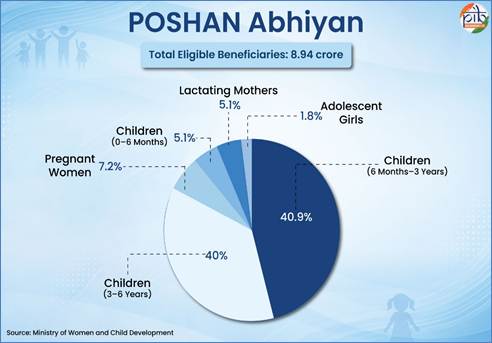
As of July 31, 2026, India's nutrition infrastructure spans nearly 13.99 lakh Aanganwadi Centers staffed with 13.30 lakh Aanganwadi workers, forming a vast grassroots network reaching almost 8.94 crore beneficiaries.
Children remain the primary focus, with those aged 6 months to 6 years accounting for over 7.2 crore of all beneficiaries combined, underscoring the emphasis on early childhood nutrition and development.
Meanwhile, pregnant women and lactating mothers together number nearly 1.1 crore, reflecting sustained attention to maternal health during the critical first 1,000 days.
Towards Healthier Families and Nation
By combining technology-driven real-time tracking with large-scale community mobilization (Jan Andolan), Rashtriya Poshan Maah has transformed nutrition into a nationwide public movement. Operating under the unified framework of Mission Poshan 2.0, this annual campaign continues to bridge service-delivery gaps, promote dietary diversity, and prioritise the critical initial years of a child to build a healthier, malnutrition-free India.
References
Ministry of Women and Child Development
https://www.pib.gov.in/Pressreleaseshare.aspx?PRID=1910097®=48&lang=2
https://www.pib.gov.in/PressReleasePage.aspx?PRID=2180384®=48&lang=2
https://www.pib.gov.in/PressReleasePage.aspx?PRID=2249920®=48&lang=2
https://www.poshantracker.in/aboutus
https://www.pib.gov.in/PressReleaseDetail.aspx?PRID=2307291®=48&lang=1
https://cdn.poshantracker.in/public-assets/pdf/Resources/Awareness/Navchetana/Navchetana_en.pdf
Ministry of Health and Family Welfare
https://www.nfhsiips.in/nfhsuser/assets/National%20Family%20Health%20Survey%20(NFHS-6)%202023-2024%20Fact%20Sheets.pdf
https://www.nfhsiips.in/nfhsuser/publication.php
PIB Backgrounders
https://static.pib.gov.in/WriteReadData/specificdocs/documents/2025/sep/doc2025918640501.pdf
https://www.pib.gov.in/PressReleasePage.aspx?PRID=2251769®=3&lang=1
UNICEF
https://www.unicef.org/laos/ensuring-healthy-start-first-1000-days-0
9th Rashtriya Poshan Maah
*****
PIB Research
(रिलीज़ आईडी: 2307886)
आगंतुक पटल : 646
इस विज्ञप्ति को इन भाषाओं में पढ़ें:
हिन्दी