Ministry of Heavy Industries
India Must Build Resilient Supply Chains to Lead the Global Energy Transition: HD Kumaraswamy
Green Steel, Advanced Manufacturing Key to India's Energy Security Vision: HD Kumaraswamy
Energy Security Today is Defined by Manufacturing Capability, Not Just Resources: HD Kumaraswamy
India Must Become a Global Producer of Clean Energy Technologies: HD Kumaraswamy at CII Energy Conference
Steel, Supply Chains and Self-Reliance to Drive India's Clean Energy Future: HD Kumaraswamy
प्रविष्टि तिथि:
06 AUG 2026 3:07PM by PIB Delhi
Union Minister for Steel and Heavy Industries H.D. Kumaraswamy on Thursday asserted that the definition of energy security has undergone a fundamental transformation, stating that in today's rapidly evolving global landscape, a nation's strength is determined not merely by access to energy resources but by its ability to manufacture, innovate and build resilient supply chains for the technologies that will power the future.
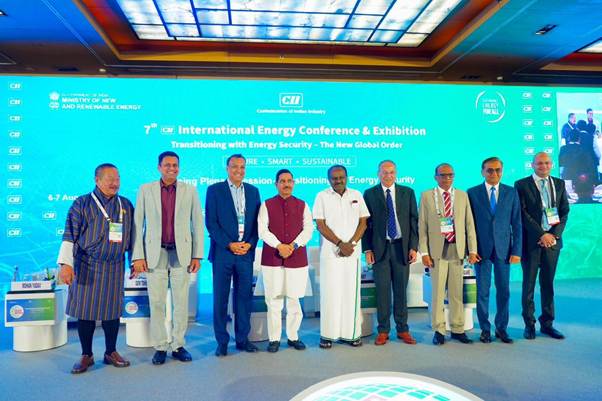
Delivering the keynote address at the Special Plenary Session on "Energy Security & Supply Chains" during the 7th CII International Energy Conference & Exhibition in New Delhi, the Minister outlined India's strategy to emerge as a global manufacturing hub for clean energy technologies under the leadership of Prime Minister Narendra Modi, emphasising that industrial capability and energy security are now inseparable.
"Today, under the visionary leadership of Hon'ble Prime Minister Narendra Modi, India's energy security is no longer defined solely by access to energy resources. It is increasingly determined by our ability to manufacture, innovate and build resilient supply chains for the technologies that will power the future," the Minister said.
He noted that recent geopolitical developments, supply chain disruptions and growing competition for critical minerals have reshaped global industrial priorities, making manufacturing resilience and technological capability central to national economic security.
Kumaraswamy said India is responding to these global shifts through the vision of Aatmanirbhar Bharat, building globally competitive domestic manufacturing capabilities while remaining deeply integrated with trusted international value chains.
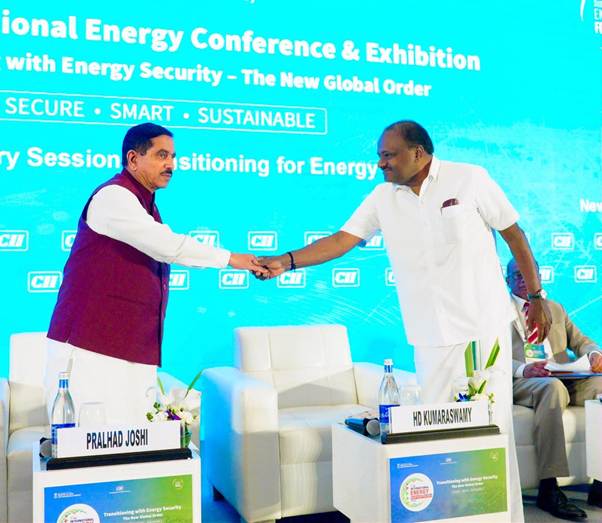
"India should not merely become one of the world's largest consumers of clean energy technologies. India must become one of the world's leading producers of the equipment, materials and technologies that will drive the global energy transition," he said.
Highlighting the role of the Ministry of Steel and the Ministry of Heavy Industries in this transformation, the Minister said that the country's energy ambitions would be realised only through a strong manufacturing ecosystem encompassing steel, heavy engineering, batteries, transformers, power equipment, electric mobility, construction equipment and advanced industrial technologies.
Describing steel as the backbone of the clean energy transition, Kumaraswamy said every major investment in renewable energy infrastructure, from solar parks and wind turbines to transmission networks, battery manufacturing facilities, ports and green hydrogen projects depends fundamentally on steel.
He observed that India, as the world's second-largest steel producer, is well positioned to support the country's expanding infrastructure and manufacturing requirements, while simultaneously meeting the growing global demand for sustainable steel.
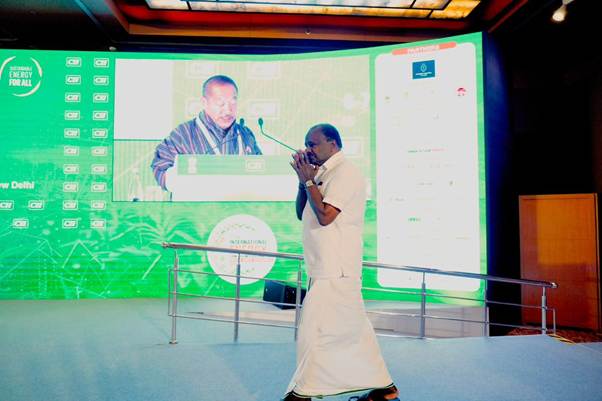
The Minister reiterated India's aspiration of achieving 300 million tonnes of steelmaking capacity by 2030, stressing that this growth must be achieved through sustainable and environmentally responsible production practices.
"Steel has become the backbone of the global energy transition. The future of the steel sector will not be defined only by production capacity but by sustainability, competitiveness and technological advancement," he remarked.
Emphasising the importance of Green Steel, Kumaraswamy said the transition to low-carbon steel production has become both an environmental necessity and an economic imperative.
He said the Government is promoting greater deployment of renewable energy in steel manufacturing, adoption of energy-efficient technologies, improved resource efficiency and accelerated decarbonisation across the steel value chain to ensure Indian steel remains globally competitive.
Turning to the Heavy Industries sector, the Minister underlined that India's clean energy transition requires far more than increased renewable energy generation.
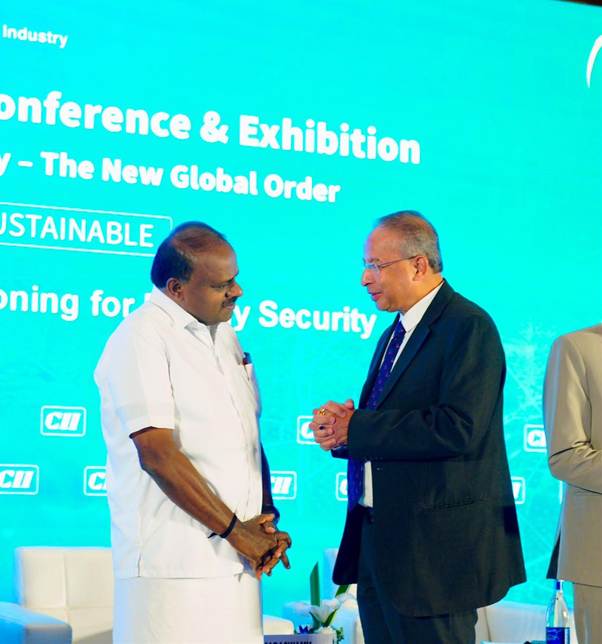
According to him, the country must simultaneously strengthen domestic manufacturing across the entire industrial value chain, including advanced batteries, heavy electrical equipment, construction equipment, automotive manufacturing and energy storage systems.
Kumaraswamy highlighted the Government's initiatives to promote indigenous manufacturing of advanced construction equipment and strengthen domestic industrial capability through targeted policy interventions.
Referring to India's rapidly expanding electric mobility ecosystem, the Minister said the PM E-DRIVE Scheme, with a financial outlay of ₹10,900 crore, reflects the Government's integrated approach towards building complete industrial ecosystems rather than simply encouraging vehicle adoption.
He noted that the initiative is simultaneously generating demand while strengthening domestic manufacturing capabilities, localisation and supply chain resilience.
The Minister further highlighted the Production Linked Incentive (PLI) Scheme for Advanced Chemistry Cell Batteries, under which the Government has committed ₹18,100 crore to establish 50 GWh of domestic battery manufacturing capacity.
He said these investments are laying the foundation for India's long-term energy security by reducing dependence on imported battery technologies and creating globally competitive manufacturing capabilities.
Recognising that access to critical minerals has emerged as a strategic necessity, Kumaraswamy said India is actively strengthening domestic capabilities while expanding international cooperation in areas such as rare earths, advanced materials and mineral processing.
He also referred to the Government's ₹7,280 crore Scheme for Promotion of Manufacturing of Sintered Rare Earth Permanent Magnets, describing it as a major step towards reducing import dependence and securing critical supply chains for sectors including automotive, defence, renewable energy and aerospace.
Calling for deeper collaboration between Government, industry, academia, research institutions and financial organisations, the Minister said resilient supply chains cannot be built through policy interventions alone.
"Our objective is to build complete domestic manufacturing ecosystems that create value and generate employment. This is the essence of resilient supply chains in the twenty-first century," he said.
Inviting industry to actively participate in India's industrial transformation, Kumaraswamy expressed confidence that the deliberations at the conference would generate meaningful partnerships to strengthen India's manufacturing ecosystem and accelerate its clean energy ambitions.
"I invite industry and all stakeholders to come forward and work with the Government to make India Aatmanirbhar and realise the vision of Viksit Bharat by 2047," the Minister said, concluding his address.
****
TJ
(रिलीज़ आईडी: 2295437)
आगंतुक पटल : 957