Goa, 22 November 2026
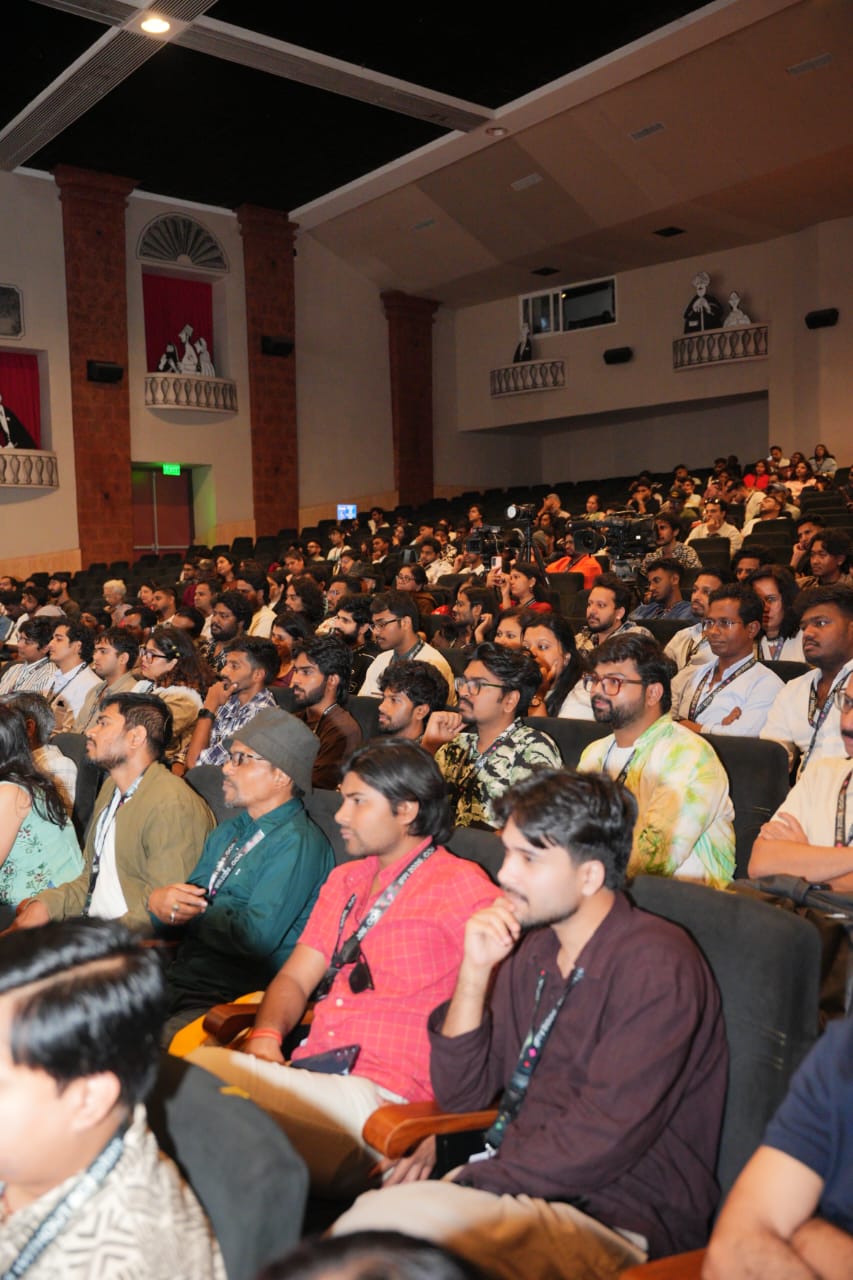
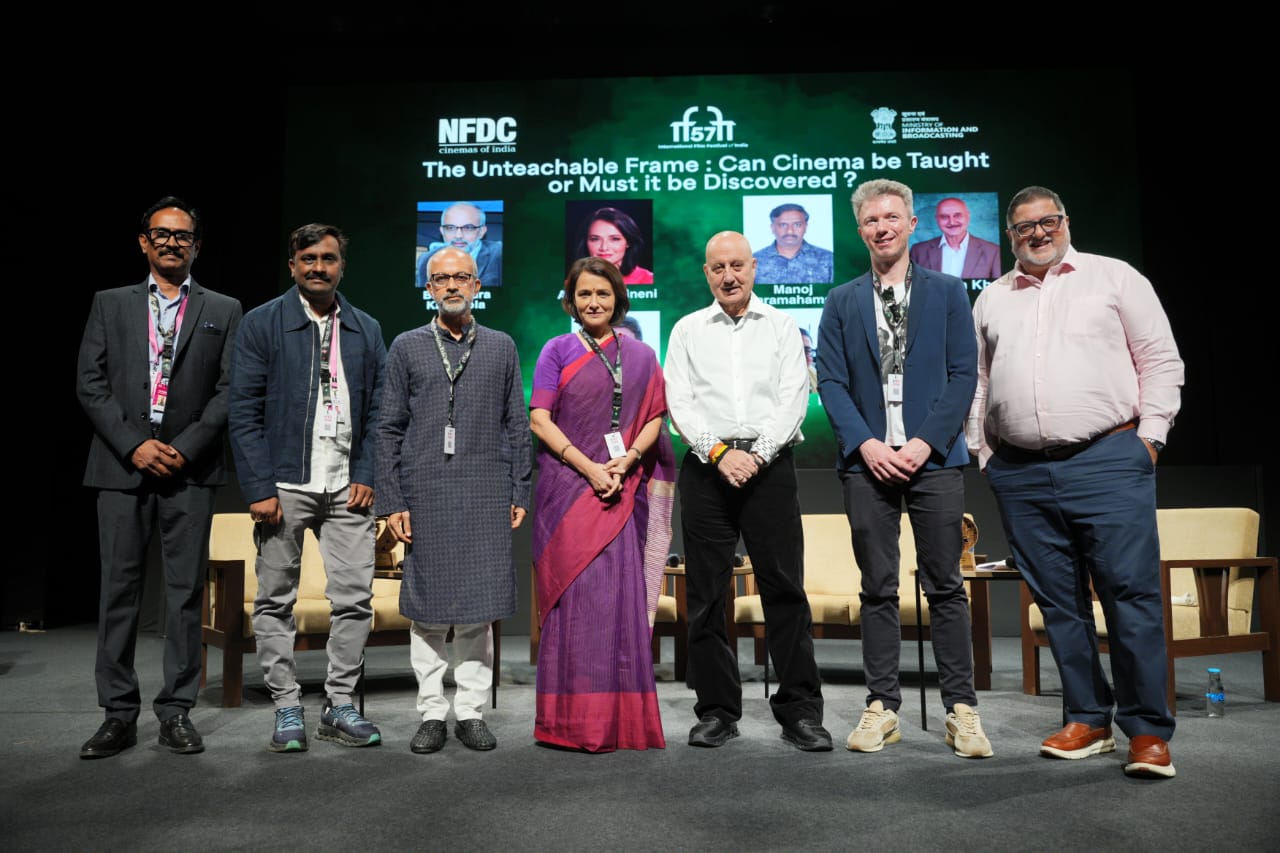
Can cinema be taught, or must it be discovered? This question set the tone for a panel discussion titled ‘The Unteachable Frame: Can Cinema Be Taught or Must It Be Discovered?’ held alongside film screenings at the 57th International Film Festival of India (IFFI) in Goa today. The discussion explored the role of film schools in nurturing creative talent, imparting technical skills and preparing aspiring filmmakers for the demands of the industry.
The panel featured Amala Akkineni, actor and director of Annapurna College of Film and Media; Anupam Kher, actor and founder of Actor Prepares; Artur Daborski, cultural journalist, vice-rector for international cooperation at Warsaw Film School, programme director of the Summer Film Academy, programmer at the Tofifest International Film Festival and FIPRESCI member; Bhupendra Kainthola, former director of the Film and Television Institute of India (FTII); and Manoj Paramahamsa, cinematographer in the Tamil, Telugu and Malayalam film industries, mentor and founder of Cinema Factory Academy. The session was moderated by Vikramjit Roy, who has held leadership positions at Sony Pictures India and the National Film Development Corporation (NFDC).

Amala Akkineni highlighted the collaborative nature of filmmaking, noting that film schools provide an environment where students learn to work together and understand the interdependence of different filmmaking disciplines. She also called upon film educators to challenge prevailing stereotypes and encourage more women to pursue professional training in filmmaking. Emphasising the importance of commitment, she urged aspiring filmmakers to develop the willingness to go the extra mile.
Sharing his personal experience, Anupam Kher underscored the importance of formal training in shaping an actor’s abilities. Recalling his years at the National School of Drama (NSD), he said, “I would not have been sitting here had I not gone to National School of Drama.”
Referring to his debut film Saaransh, in which he portrayed a 65-year-old man at the age of 28, Kher credited his NSD training with equipping him to undertake the challenging role. He identified observation, imagination and emotional memory as three essential qualities of an actor. An individual’s experiences, he explained, are stored in memory and become an important resource for portraying characters convincingly.
Describing acting as an engagement with the nine emotions or Navarasas, he said an actor must be able to recall and express them in keeping with the demands of a scene, sequence or story. Film schools help aspiring actors understand, practise and communicate these emotions effectively. Advising young actors to draw inspiration from everyday life, he said, “Every experience teaches you something. What you learn as a human being will help you in your acting.”
Kher also cautioned young actors against complacency, observing that competence can sometimes become an obstacle to brilliance. Artists, he said, must continually strive to improve their skills and craft.
Artur Daborski emphasised that filmmaking demands continuous practice, experience and exposure to cinema from across the world. He highlighted the role of film festivals in introducing young filmmakers to diverse cinematic traditions and enabling them to engage with films and professionals from different backgrounds. Understanding developments in world cinema, he observed, is essential for filmmakers seeking to create something original.
Sharing the approach followed at Warsaw Film School, Daborski said students are encouraged to make films in a supportive institutional environment that allows them to experiment and learn from their mistakes. Such opportunities are important, he noted, as mistakes on professional film sets can have significant financial and practical consequences.
He also stressed the need to prepare students for the business aspects of filmmaking, including pitching projects to producers, securing funding and understanding the professional ecosystem. Exposure to film festivals, he added, is an integral part of this preparation.
Speaking about the kind of films that European festivals look for, Daborski encouraged young filmmakers to explore subjects that trouble them or issues they find difficult to accept. He noted that festivals value films that engage meaningfully with important social and human concerns.
Bhupendra Kainthola highlighted the relationship between artistic expression and institutional training. “Art can be discovered, but craft has to be taught,” he said, emphasising the value of formal education for aspiring film professionals.
He observed that success in filmmaking requires creativity to be supported by discipline, structured learning and adherence to professional processes. Drawing on his experience at FTII, Kainthola noted that many students choose film education despite conventional career expectations within their families. Public-funded institutions such as FTII, he said, have a responsibility to provide an enabling environment in which their creative ambitions can be nurtured.
Manoj Paramahamsa emphasised that professional film sets operate under multiple practical constraints, leaving limited scope for beginners to experiment and learn through trial and error.
Film schools, therefore, provide an important foundation by teaching the fundamentals of filmmaking in a structured environment. Beyond technical skills, they equip students to manage human resources, coordinate teams and work collaboratively, all of which are critical to the successful execution of a film project, he said.
The panel also discussed the growing influence of Artificial Intelligence (AI) on film education and filmmaking.
Manoj Paramahamsa observed that AI is increasingly being used to simplify repetitive tasks, generate preliminary storyboards and improve production workflows. Technological advances have also transformed visual production, enabling filmmakers to modify backgrounds and create sophisticated visual environments even after filming.
While acknowledging the need to adapt to technological advancements, Anupam Kher emphasised that human emotion remains central to creative expression. Referring to AI-generated virtual avatars, he said technology may be able to create images and performances, but it cannot replicate the heart and soul that human beings bring to acting.
The discussion underscored the continuing relevance of film schools in nurturing creative talent through a combination of institutional training, practical exposure and experimentation. It also highlighted the need for aspiring filmmakers to remain adaptable, technologically aware and committed to continuous learning and reinvention.
The 57th International Film Festival of India (IFFI), being held in Goa from November 20 to 28, 2026, brings together filmmakers, industry professionals and cinema enthusiasts from India and across the world. Through film screenings, masterclasses and interactive discussions, the festival provides a platform for cinematic exchange, learning and collaboration.
Read IFFILOID here: https://www.pib.gov.in/iffi/57/iffiLoid.aspx?yr=2026&lang=1®=48
* * *
PIB IFFI Team | Rajith/ Supriya/ Sriyanka/ Darshana | IFFI 57 - 068