PIB Backgrounder
World Tourism Day 2026
India’s tourism growth and the digital transformation
Posted On:
26 SEP 2026 2:34PM by PIB Delhi
|
World Tourism Day 2026, to be observed on 27 September under the theme “Digital Agenda and Artificial Intelligence to Redesign Tourism”, highlights the role of technology in shaping the future of tourism. In India, the sector is emerging as an important contributor to economic growth, employment, and livelihoods, contributing 5.22% to GDP and supporting 8.46 crore jobs in 2023-24. Domestic Tourist Visits reached 428.55 crore in 2025, while Foreign Tourist Visits rose to 2.53 crore and foreign exchange earnings from tourism increased to ₹2,76,831 crore. India is also strengthening its digital tourism ecosystem through e-Visa, the Incredible India Digital Platform and NIDHI+, with AI enabling more personalised and seamless travel experiences. Alongside digital innovation, initiatives such as Swadesh Darshan 2.0, PRASHAD, cruise tourism and tourism skill development are expanding destinations, improving visitor experiences and creating livelihood opportunities. India’s World Tourism Day 2026 celebrations, highlights India’s efforts to build a more connected, inclusive and sustainable tourism sector.
|
Tourism: Connecting Communities, Culture and Sustainable Development
Tourism brings people, places, and cultures closer. It creates opportunities for communities, supports livelihoods, and contributes significantly to economic development. Globally, travel and tourism contributed US$10.9 trillion, or 10% of global GDP, in 2024, while supporting 357 million jobs and generating US$1.9 trillion in international visitor spending.
As the sector grows, the way people travel and experience destinations is changing. Technology is becoming an increasingly important part of this transformation, with Artificial Intelligence emerging as the next major force shaping tourism. From improving decision-making to strengthening skills and enhancing visitor experiences, AI can help make tourism smarter, more inclusive and sustainable.
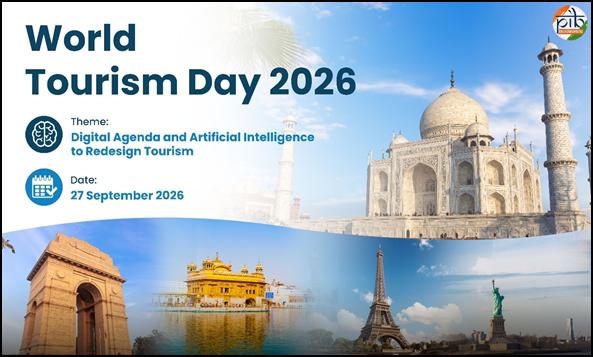
This changing landscape will take center stage on World Tourism Day 2026, observed on 27 September in El Salvador, under the theme “Digital Agenda and Artificial Intelligence to Redesign Tourism”. The theme highlights how digital innovation and AI can reshape the future of tourism while improving the way destinations are experienced and managed.
India will mark World Tourism Day through a nationwide showcase of the country’s diverse tourism, culture, and experiences. As part of the central celebration at Bharat Mandapam in New Delhi, Union Minister for Tourism Shri Gajendra Singh Shekhawat will unveil a series of key new initiatives. These initiatives will seek to strengthen India’s tourism ecosystem and enhance opportunities for sustainable and inclusive tourism development. These include the launch of the National Digital Tourism Stack, an open digital public infrastructure initiative aimed at making tourism offerings more discoverable, accessible and trustworthy, and Dekho Apna Desh 2.0, focused on promoting tourism-ready, lesser-known destinations and enabling a more balanced distribution of tourist footfall.
The Ministry will also enter into strategic partnerships through MoUs with leading industry organisations to support destination visibility, digital outreach, experiential and sustainable tourism, and greater community participation under the Incredible India framework.
Expanding this vision regionally, Telangana will host a vibrant array of cultural programmes, workshops, tourism film screenings, concerts, and artisanal stalls showcasing food, handlooms, and handicrafts. The Telangana State Tourism Awards will also recognize contributions from travel agents, tour operators, classified hotels, restaurants, independent hotels, and other recognized segments of the travel industry.
The Delhi Government will mark the occasion with “RANG • RAS • ROOH”, a two-day celebration at Baansera, the bamboo park at Sarai Kale Khan on the banks of the Yamuna, on 26-27 September, bringing together art, culture, food, entertainment and experiences, including a special Qawwali evening by the Nizami Brothers.
|
World Tourism Day: Connecting Tourism with Sustainable Development
World Tourism Day is an initiative of the United Nations World Tourism Organisation (UNWTO). It commemorates the adoption of the UNWTO statutes in 1970. First celebrated in 1980, the day highlights the contribution of tourism to socio-economic development and its role in advancing the Sustainable Development Goals (SDGs).
|
Tourism in India: From Journeys to Economic Opportunities
Tourism is much more than a journey from one destination to another. It connects people with India’s diverse cultures, heritage and communities while creating opportunities for businesses and livelihoods. It also contributes to economic activity, employment and foreign exchange earnings, strengthening tourism’s role in India’s growth story.
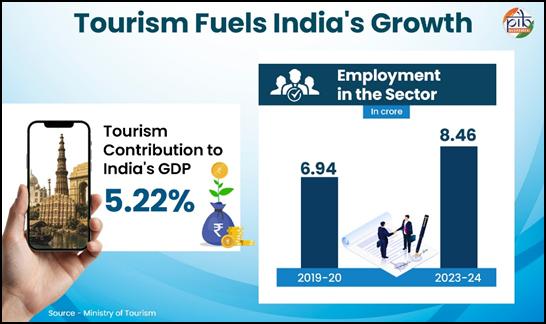
The sector has gained significant momentum in recent years. The tourism sector’s contribution to India’s economy is measured through the Tourism Satellite Account (TSA). TSA is the official accounting framework used to measure the tourism sector's direct and indirect economic contributions. According to the latest TSA estimates cited by the Ministry of Tourism, the sector contributes 5.22% to the national Gross Domestic Product (GDP). Employment in the sector rose from 6.94 crore in 2019-20 to 8.46 crore in 2023-24, reflecting its growing role as a source of livelihoods.
Travel on the Rise
India has also witnessed strong growth in tourist movement. Domestic Tourist Visits reached 428.55 crore in 2025, up from 67.7 crore in 2021. Foreign Tourist Visits rose from 0.1 crore to 2.53 crore during the same period.
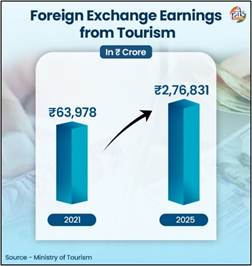
The sector’s contribution to foreign exchange has also grown. Foreign Exchange Earnings from tourism increased from ₹63,978 crore in 2021 to ₹2,76,831 crore in 2025.
Redefining the Tourism Experience
From Physical Journeys to Digital Experiences
The way we travel is changing. Once, a map and a guidebook were enough to navigate a journey. Today, a smartphone helps us discover, plan, and experience a destination. Tomorrow, travellers may simply describe the journey they want, and Artificial Intelligence could help plan the rest.
As traveller expectations evolve, tourism must evolve too. Convenience, personalization, and seamless digital experiences are becoming an important part of the journey. India is responding by making travel easier, strengthening digital tourism platforms and harnessing technology and AI to transform how travellers discover and experience the country.
e-Visa: Making Travel Easier
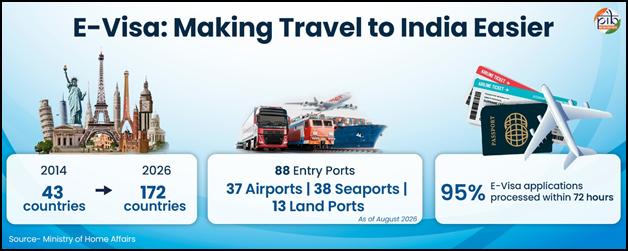
India has steadily simplified international travel through the e-Visa facility, introduced in 2014 with Electronic Travel Authorisation for nationals of 43 countries. The facility has since expanded significantly and is now available to nationals of 172 countries. Entry is permitted through 88 international ports, including 37 airports, 38 seaports and 13 land ports. It is pertinent to mention that India now issues roughly 78% of all visas as electronic visas. India also processes approximately 95% of e-Visa applications within 72 hours, making travel more convenient and accessible for international visitors.
Incredible India Digital Platform: Bringing Destinations to the Digital World
The revamped Incredible India Digital Platform takes digital tourism a step further. It offers virtual experiences across India's cultural, heritage, adventure, gastronomical, wellness, art and craft, and rural attractions. Its AI-powered tool personalises visitor experiences through features such as real-time weather updates, city exploration, and essential travel services.
The platform also connects travellers with Online Travel Agents (OTAs)and other tourism stakeholders for booking flights, hotels, cabs and buses, as well as tickets for ASI monuments. Its integration with NIDHI provides information on registered tour operators and travel agents, bringing several parts of the travel journey together on one platform.
NIDHI+: Building a Digital Tourism Ecosystem
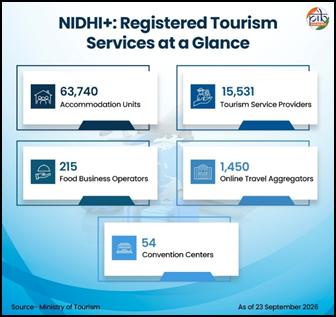
Digital platforms are also reshaping how tourism services are accessed and managed. NIDHI+, the National Integrated Database of Hospitality Industry, provides a unified digital platform for the registration, recognition, and classification of tourism service providers.
It enables end-to-end online processing, integrated payments and transparent approvals, while improving ease of doing business. As of 23 September 2026, NIDHI+ lists 63,740 accommodation units, 54 convention centres, 215 food business operators, 1,450 online travel aggregators and 15,531 tourism service providers. The platform is helping build a more connected digital ecosystem for India's tourism sector.
Google India Partnership: Advancing AI in Tourism
India's digital tourism journey is also expanding through partnerships. In June 2026, the Ministry of Tourism signed an MoU with Google India to strengthen the digital promotion of Indian tourism through digital technologies, artificial intelligence, data-driven insights and capacity building.
The collaboration will draw on insights into global travel trends, traveler behavior and digital engagement patterns to support evidence-based tourism promotion. It also includes training for Ministry officials in digital marketing, campaign optimization, content creation and emerging technologies, including AI.
Innovation Beyond Major Cities
Technology is also creating new opportunities for tourism entrepreneurs. As of 17 April 2023, the travel and tourism sector had 1,497 DPIIT-recognised startups across 262 districts, generating employment for nearly 13,919 people. Notably, 58% were based in Tier II and Tier III cities.
These startups are working across travel technology, online booking, homestays, rural and experiential tourism, smart mobility, and AI-enabled travel planning. Notable initiatives include Highway Delite, which has created a digitally connected highway amenities network; VilloTale, which promotes rural tourism through homestays and community-based experiences; and udChalo, which provides technology-enabled travel services to over 2.8 million defence personnel, veterans, and their dependents through digital platforms and a network of more than 70 booking offices.
Multilingual Tourist Helpline: Support Around the Clock
The Ministry of Tourism provides a 24×7 toll-free multilingual Tourist Helpline to assist domestic and international visitors. Available on 1800111363 or short code 1363, the service offers travel information in 12 international languages, including Arabic, French, German, Italian, Japanese, Korean, Chinese, Portuguese, Russian, and Spanish. It also assists tourists during distress and alerts concerned authorities when required.
India’s Diverse Tourism Landscape
India’s tourism strength lies in its diversity. From pilgrimage and heritage to wellness, wildlife, rural experiences and business events, each segment offers a distinct reason to travel. This diversity also creates opportunities for destinations, local communities and tourism businesses across the country.
Spiritual and Pilgrimage Tourism
India is home to some of the world’s most important pilgrimage and spiritual destinations associated with Hinduism, Buddhism, Jainism and Sikhism. Destinations such as Ayodhya, Kashi, Bodh Gaya, Amritsar, Tirupati and Puri attract pilgrims and visitors from across India and abroad. Government initiatives such as PRASHAD and Swadesh Darshan are supporting the development of infrastructure and visitor amenities at religious destinations.
Buddhist Circuits and Cultural Linkages
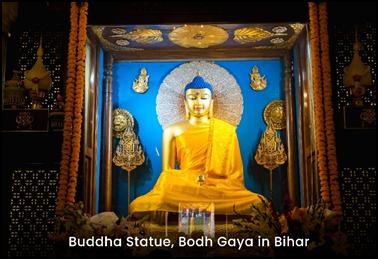
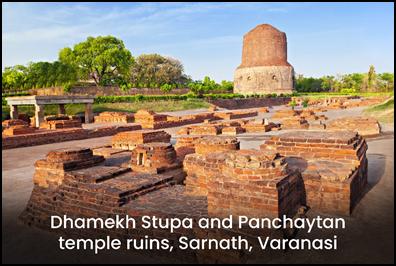
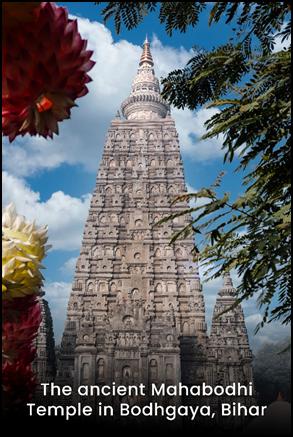
India’s Buddhist heritage connects it with communities and travellers across Asia. Bodh Gaya in Bihar, Sarnath and Kushinagar in Uttar Pradesh, along with other sites associated with the life of the Buddha, form an important part of India’s Buddhist tourism landscape. These destinations also highlight the country’s deep historical and civilizational links with the wider Buddhist world.
Heritage and Cultural Tourism
India’s heritage is reflected in its forts, palaces, temples, archaeological sites, museums and historic cities. Its cultural appeal extends beyond monuments. Classical dance and music, festivals, handicrafts and regional cuisines allow visitors to experience traditions that continue to thrive across generations.
Wellness, Yoga and Medical Tourism
India’s longstanding traditions of Yoga, Ayurveda and other traditional systems of medicine give the country a distinctive place in wellness tourism. These traditions are complemented by modern healthcare facilities and medical services. Together, they create opportunities for visitors seeking wellness, preventive care and medical treatment.
Eco Tourism and Wildlife Tourism
India’s diverse landscapes offer experiences ranging from wildlife safaris and birdwatching to trekking and nature trails. National parks, tiger reserves, wetlands, mangroves, forests and Himalayan landscapes provide opportunities to experience nature while supporting conservation. Responsible tourism can also create livelihood opportunities for communities around these destinations.
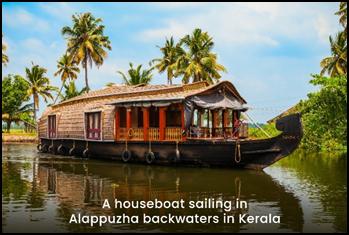
Rural, Homestay and Community Based Tourism
Tourism is increasingly taking travellers beyond conventional destinations. Homestays, village experiences, local cuisine, handicrafts, agriculture and community-led activities offer a closer connection with local life. They can also create additional income opportunities for rural households, artisans and local enterprises. The Ministry of Tourism has also introduced initiatives to support homestays in rural and tribal areas.
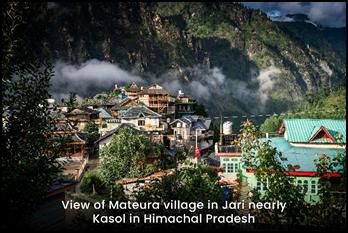
Coastal, Cruise and Experiential Tourism
India’s coastal and inland waterways are opening new avenues for tourism. Sea cruise passenger traffic increased from 1.08 lakh in 2014-15 to 4.62 lakh in 2025-26, recording a 328% growth. International cruise terminals at Visakhapatnam, Mumbai and Chennai have been upgraded and operationalised. The East Coast Cruise Circuit has also been expanded with the addition of Puducherry.
Technology is further improving the cruise experience. A QR-based immigration clearance system has reduced immigration clearance time to about 30 seconds per passenger. Digitised customs procedures and e-Group Visit Visas are also helping facilitate smoother entry for international cruise groups.
Lighthouse Tourism
Lighthouses have long served as Marine Aids to Navigation, ensuring safe and efficient maritime navigation. Today, they are also being developed as unique tourism destinations. Under Section 23 of the Marine Aids to Navigation Act, 2021, the Government is promoting the use of lighthouses for educational, cultural and tourism purposes while preserving India’s maritime heritage.
Lighthouse Museums at Chennai, Mahabalipuram, Alappuzha, Kannur, Muttom, Dwarka and Gopnath showcase the evolution of lighthouse technology and India’s maritime history. Tourism facilities have been developed at 75 lighthouses across the country, helping preserve their historical and architectural significance while opening them to visitors.
MICE Tourism: Building India’s Business Events Ecosystem
Meetings, Incentives, Conferences and Exhibitions, or MICE tourism, is an important part of India’s tourism strategy. The Ministry of Tourism has formulated a National Strategy and Roadmap for the MICE Industry to support the sector's growth. India is strengthening its MICE infrastructure through major venues such as Bharat Mandapam, Yashobhoomi at Delhi and Jio World Centre at Mumbai. The Government has also identified the potential to develop at least 10 Indian cities, particularly in South India, as global MICE destinations.
The global MICE industry is projected to grow from USD 870 billion to more than USD 1.4 trillion by 2030. With India currently holding a 5% global market share, the country is well-positioned to capitalize on this expanding market.
|
BRICS: Strengthening Tourism Cooperation
India’s BRICS Chairship in 2026 also placed tourism cooperation on the international agenda. The BRICS Tourism Ministers’ Meeting, held in Jaipur in August 2026, concluded with the adoption of the Jaipur Declaration. The declaration focuses on four priorities: Artificial Intelligence and Tourism, sustainable and responsible tourism, tourism skilling and capacity building, and tourism exchanges with seamless travel facilitation. It also supports cooperation in tourism planning, destination management, visitor services, multilingual communication and travel facilitation.
|
|
G20: Taking India’s Tourism Story Across the Country
India's G20 Presidency brought international attention to destinations beyond the traditional metropolitan centres. More than 200 meetings were held across 60 cities, creating an unprecedented geographic footprint for the G20 events.
The meetings brought together India’s heritage, local crafts, regional cuisines and cultural experiences with a global audience. They also demonstrated the country’s capacity to host major international events across diverse destinations.
|
Infrastructure-Led Destination Development
India's tourism development is increasingly focused on creating integrated destination ecosystems, rather than developing attractions in isolation. Under Swadesh Darshan 2.0, the Ministry of Tourism is following a destination- and tourist-centric approach focused on sustainable and responsible tourism, tourism experiences, and amenities.
Connectivity remains an important part of this approach. Since its inception, A total of 687 RCS UDAN routes connecting 95 airports have been operationalized. The Modified UDAN scheme for 2026-27 to 2035-36 has an approved outlay of ₹28,840 crore, with plans that include the development of 100 airports and 200 modern helipads. These measures are intended to improve regional and last-mile access to tourist destinations, particularly in underserved areas.
Together, these efforts are widening the tourism map of India. They are connecting more destinations, creating new experiences and bringing tourism closer to communities across the country.
Government Initiatives to Boost Tourism
Swadesh Darshan was launched by the Ministry of Tourism in 2014–15 to develop tourism circuits around identified themes across the country. Under the scheme, the ministry has sanctioned 76 projects with an investment of over ₹5,295.24 crore across 15 thematic tourist circuits. Of these, 75 projects have been physically completed. The programme has developed infrastructure across the Buddhist, Coastal, Desert, Eco, Himalayan, North East, Ramayana, Rural, Spiritual, Tribal and other thematic circuits.
Building on this, Swadesh Darshan 2.0 adopts a destination-centric approach, focusing on sustainable and experience-based tourism. 53 projects, worth ₹2,207.08 crore, have been sanctioned to develop destinations through better planning, infrastructure, and visitor experience.
Challenge Based Destination Development (CBDD)
The Challenge-Based Destination Development (CBDD) initiative is a sub-scheme of Swadesh Darshan 2.0. It focuses on undertaking the holistic development of tourist destinations, enhancing visitor experiences, and promoting sustainable and responsible tourism.
So far, 37 projects worth ₹687.99 crore have been sanctioned for destinations with high tourism potential, covering spiritual and eco-tourism categories.
The Pilgrimage Rejuvenation and Spiritual, Heritage Augmentation Drive (PRASHAD) was launched in 2014-2015 to develop tourism infrastructure at identified pilgrimage and heritage destinations. The scheme provides financial assistance to States and Union Territories for integrated development of these destinations, with interventions focused on visitor facilities, accessibility, cleanliness, safety, and local livelihoods.
Since the launch of the scheme, the Ministry of Tourism has sanctioned 54 projects worth ₹1,726.18 crore under PRASHAD. The scheme has supported interventions such as tourist facilitation centres, sound and light shows, parking facilities, ghats, solid waste management systems, solar panels and CCTV installations to improve the visitor experience, sustainability and safety at pilgrimage destinations.
Special Assistance to States for Capital Investment (SASCI)
The SASCI scheme for tourism supports the development of iconic tourist destinations to global standards. It focuses on better tourism infrastructure, connectivity and visitor facilities. The scheme also seeks to create employment and support local economic growth. Under the scheme, 40 projects across 23 States have been approved. The scheme received ₹3,295.76 crore in FY 2024–25, with 100% Central funding.
For FY 2025–26, the amended guidelines allow eligible States that did not avail funds under Part III of SASCI 2024–25 to receive up to ₹250 crore for tourism projects under Part II. Under these provisions, ₹250 crore each has been sanctioned and released to Nagaland, Mizoram, and Himachal Pradesh for tourism projects.
Investing in the People Behind Tourism
India’s tourism sector is strengthened by investing in the skills of people who serve visitors. Under Capacity Building for Service Providers (CBSP), the Ministry of Tourism provides short-term training for skilling, upskilling, and reskilling. It covers local communities, tribal areas and youth from underprivileged backgrounds. Hunar Se Rozgar Tak is also implemented under the scheme.
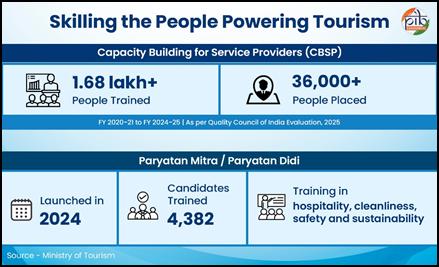
Training is delivered through government and empaneled private institutes, including Institutes of Hotel Management, Food Craft Institutes and the Indian Culinary Institute. A Quality Council of India evaluation in 2025 found that CBSP trained over 1.68 lakh people and placed more than 36,000 between FY 2020–21 and FY 2024–25.
The Paryatan Mitra/Paryatan Didi initiative, launched in 2024, trains local service providers in hospitality, cleanliness, safety, and sustainability. Around 4,382 candidates have been trained. Training covers cab and auto drivers, transport staff, hotel and restaurant workers, homestay owners, guides, police personnel, street vendors, shopkeepers, and students. Women and marginalized communities are also included.
The Ministry is also revising the CBSP curriculum and adding tourist destinations based on industry needs. Partnerships with 21 Central Institutes of Hotel Management and eight leading hospitality groups further strengthen professional training.
The Next Destination is Digital
The future of tourism will not be shaped by technology alone, but by how effectively it is used to make journeys more personalized, destinations more sustainable, businesses more competitive and tourism more inclusive. The World Tourism Day 2026 theme reflects this changing landscape, where Technology, Data and Artificial Intelligence are becoming integral to the tourism experience.
India’s expanding digital platforms, AI-enabled services, destination development, connectivity and skill-building efforts are helping create a more seamless and connected tourism ecosystem. As India continues to strengthen this tourism architecture, the next destination is not only digital, but also inclusive, sustainable, people-centered, and world-class.
References
Ministry of Tourism
https://www.pib.gov.in/PressReleasePage.aspx?PRID=2238965®=3&lang=1
https://www.pib.gov.in/newsite/archiveContent.aspx?lang=2®=48&relid=290678&
https://sansad.in/getFile/annex/271/AU1415_IsY7tu.pdf?source=pqars
https://nidhi.tourism.gov.in/home/
https://sansad.in/getFile/annex/271/AU630_f8JTnR.pdf?source=pqars
https://www.pib.gov.in/PressReleasePage.aspx?PRID=2292601®=48&lang=2
https://www.pib.gov.in/PressReleasePage.aspx?PRID=2171731®=48&lang=2
https://sansad.in/getFile/lsapps/loksabhaquestions/annex/188/AU3612_CschGg.pdf?source=lsapps
https://www.pib.gov.in/PressReleaseDetail.aspx?PRID=2299072®=1&lang=1
https://www.pib.gov.in/PressReleasePage.aspx?PRID=2113287®=3&lang=2
https://www.incredibleindia.gov.in/en/festivals-and-events/telangana/world-tourism-day
https://www.pib.gov.in/PressReleasePage.aspx?PRID=2297248®=48&lang=2
https://sansad.in/getFile/lsapps/loksabhaquestions/annex/188/AU3233_R4EsOl.pdf?source=lsapps
https://www.pib.gov.in/PressReleasePage.aspx?PRID=2302067®=3&lang=1
Embassy of India
https://www.eoidjibouti.gov.in/page/tourist-helpline-by-india/
Ministry of Home Affairs
https://www.pib.gov.in/PressReleasePage.aspx?PRID=2297227®=48&lang=2
Ministry of Civil Aviation
https://www.pib.gov.in/PressReleasePage.aspx?PRID=2245099&lang=1®=1&utm
https://sansad.in/getFile/loksabhaquestions/annex/185/AS76_zHwlre.pdf?source=pqals&utm
https://www.pib.gov.in/newsite/erelcontent.aspx?lang=2®=48&relid=295100&utm
Delhi Development Authority
https://x.com/official_dda/status/2101267875516363224
World Bank
https://www.worldbank.org/ext/en/topic/tourism
UN Tourism
https://www.untourism.int/world-tourism-day-2026
https://pre-webunwto.s3.eu-west-1.amazonaws.com/s3fs-public/2026-07/WTD2026_Concept%20Note_EN.pdf?VersionId=pTOzM9q85HxXgEa8r8K1EC3EzEU0g4SB
PIB Backgrounder
https://www.pib.gov.in/PressReleasePage.aspx?PRID=2171731®=48&lang=2
https://www.pib.gov.in/PressReleasePage.aspx?PRID=2292601®=48&lang=2
Click here to see pdf
PIB Research
(Release ID: 2315270)
Visitor Counter : 356