NITI Aayog
Shri Rajiv Gauba Calls Electric Mobility a "Strategic Imperative" for Viksit Bharat as NITI Aayog Launches Second Edition of India Electric Mobility Index
Posted On:
16 SEP 2026 2:50PM by PIB Delhi
Shri Rajiv Gauba, in his address at the NITI Aayog Workshop on State EV Policies, where the second edition of the India Electric Mobility Index (IEMI) report was launched, highlighted that the global transition to electric mobility is well underway.
In 2025, he noted, electric cars accounted for around one-tenth of new car sales in the US, more than a quarter in the EU, and over half in China and that these shares are expected to rise significantly across the world in the years ahead. He pointed to the recent West Asia crisis, noting that it could become a major inflection point for electric mobility, much as the oil crises of the 1970s accelerated the global push towards greater fuel efficiency.
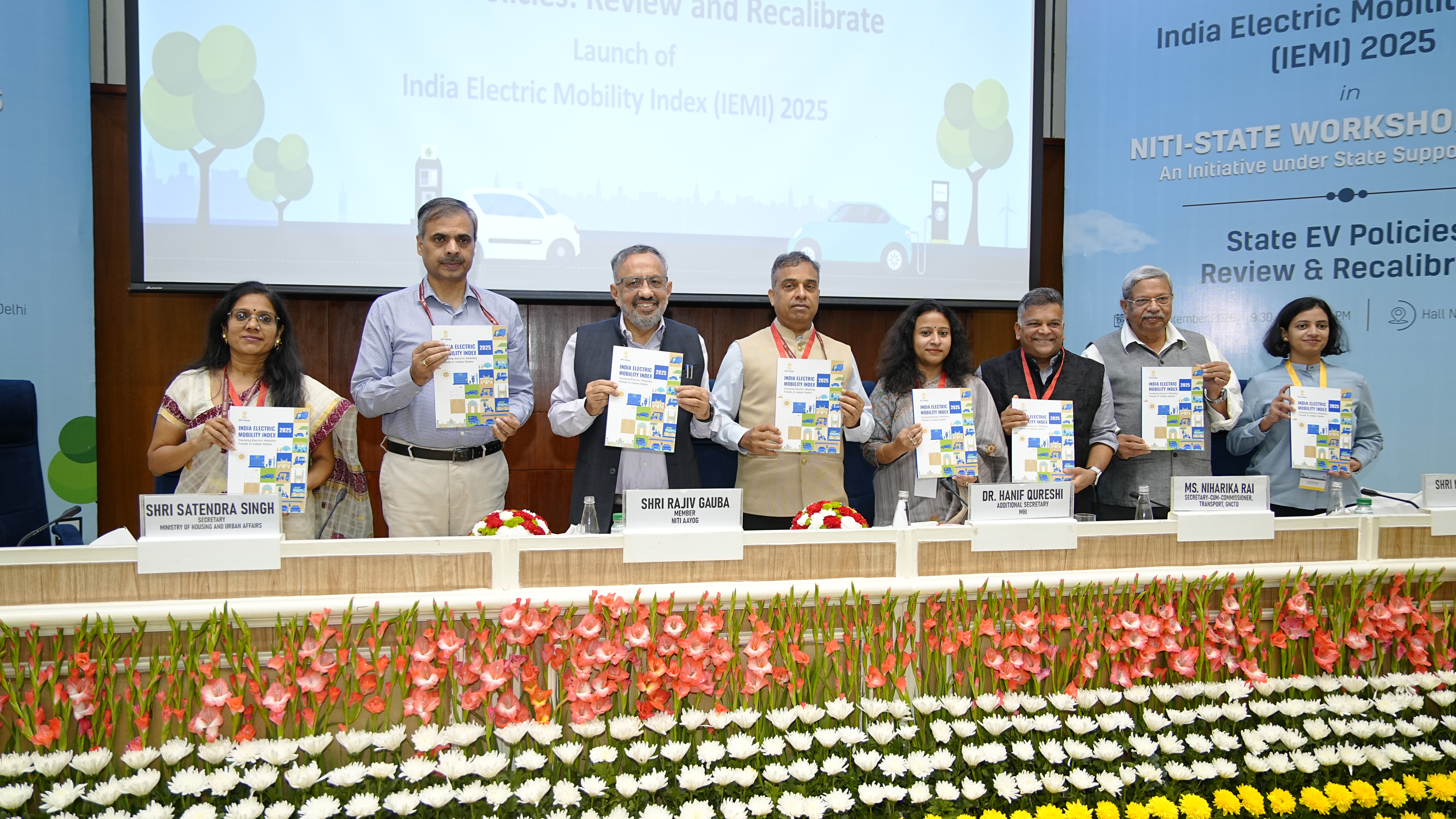
Describing the shift as “an economic, environmental, and strategic imperative” for the Viksit Bharat 2047 vision, he highlighted India’s dependence on imports for nearly 89% of its crude oil requirements, a dependence that is likely to increase as car ownership rises from current levels if EVs are not adopted more widely. He noted that the automotive sector contributes around 7.1% of GDP and supports nearly 1.9 crore jobs, underscoring the importance of keeping the sector aligned with the global transition to electric vehicles. He also highlighted the significant public health costs of vehicular emissions in cities such as Delhi, making the transition to cleaner mobility an urgent priority.
He outlined the scale of government support already in place, totalling over ₹92,000 crore, through schemes such as FAME, PM E-DRIVE and PM E-bus Sewa, as well as two production-linked incentive schemes for Automobiles & Auto Components and for Advanced Chemistry Cell battery storage.
He also highlighted the rapid expansion of the EV charging ecosystem, with oil marketing companies and private players driving the development of charging infrastructure. The newly launched Unified Bharat e-Charge app is expected to further strengthen this ecosystem by making charging infrastructure more accessible and convenient for users.
Turning to States, he noted that 29 of India's 36 States and Union Territories have now notified EV policies, with IEMI scores showing broad-based improvement; the highest State score rising from 77 to 84 and the median score from 36 to 40 over the past year.
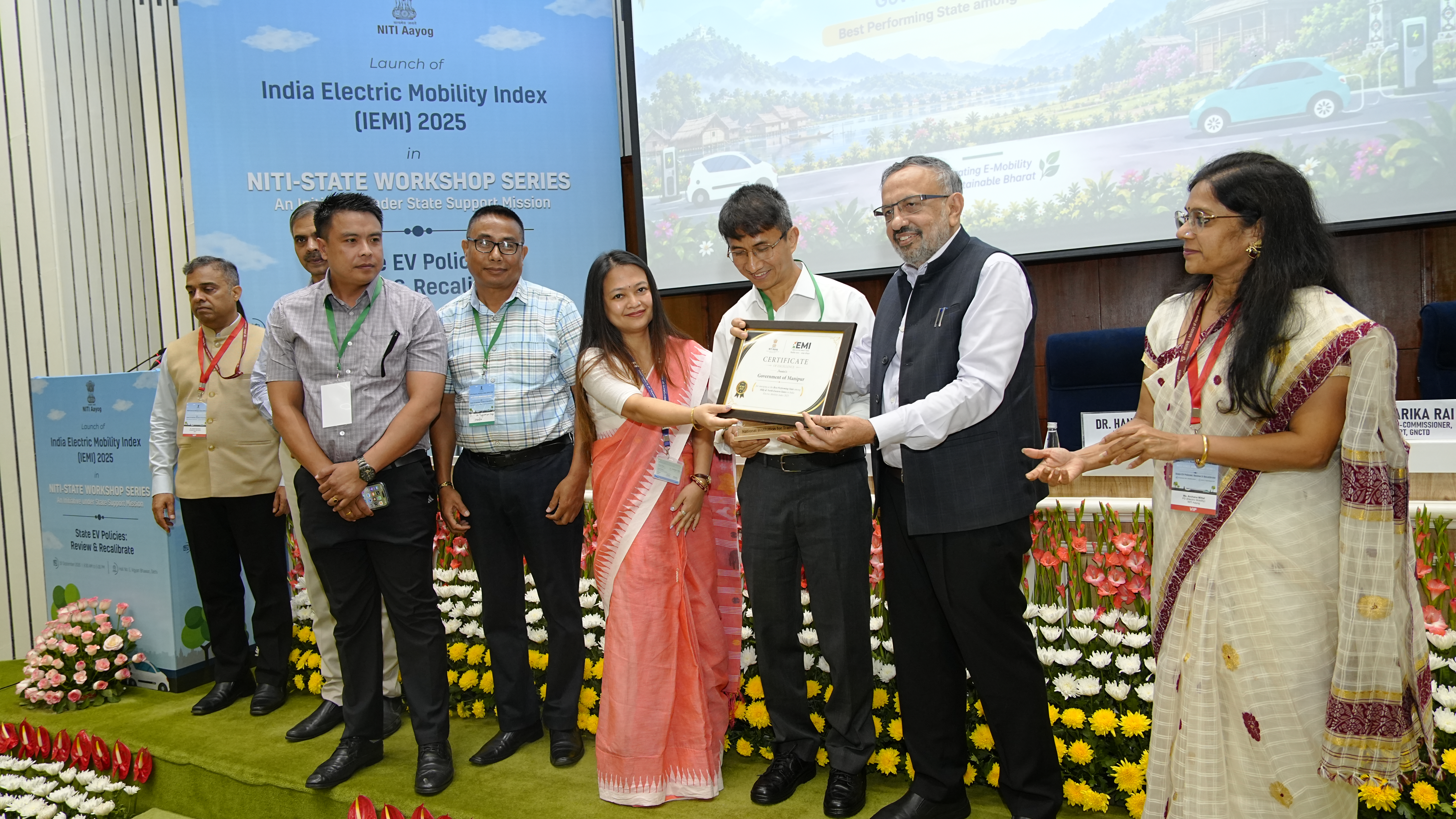
He noted that the Index offers a data-driven framework to help states monitor their progress and formulate evidence-based policies. He also emphasized that the differences between States experience in E-Mobility due to differing strategies, shaped by their own industrial base, fiscal capacity and geography are not a complication, but a strength, provided states learn from each other. He urged States to prioritise electrifying public transport in select cities, ensure charging infrastructure is spatially well-distributed and reliable, and promote investments in research and innovation.
*Access the full report here:* https://www.niti.gov.in/sites/default/files/2026-09/India-Electric-Mobility-Index-IEMI-2025.pdf
****
MJPS/PRK
(Release ID: 2310804)
Visitor Counter : 340