Ministry of Chemicals and Fertilizers :
Department of Fertilizers
Integrated Fertilizer Management System (iFMS) Enters a New Phase of Data-Driven Fertilizer Management
iFMS Integration with Meri Fasal Mera Byora (MFMB) Strengthens Data-Driven Fertilizer Management
iFMS Connects More Than 14 Crore Aadhaar-Linked Buyers, Over 2.5 Lakh Retailers and Around 7 Crore Metric Tonnes of Annual Fertilizer Sales Transactions
Posted On:
30 AUG 2026 4:21PM by PIB Delhi
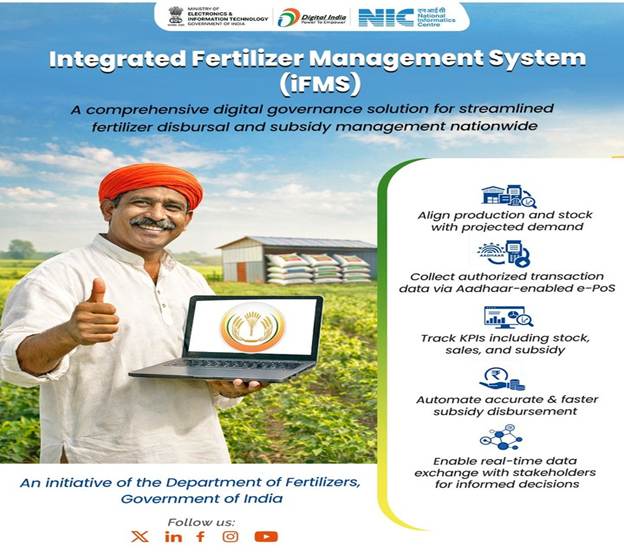
The Integrated Fertilizer Management System (iFMS), the digital backbone of fertilizer management in India, has entered a new phase with the introduction of a series of digital initiatives aimed at strengthening transparency, improving fertilizer availability and enabling more effective, data-driven monitoring of the fertilizer supply chain.
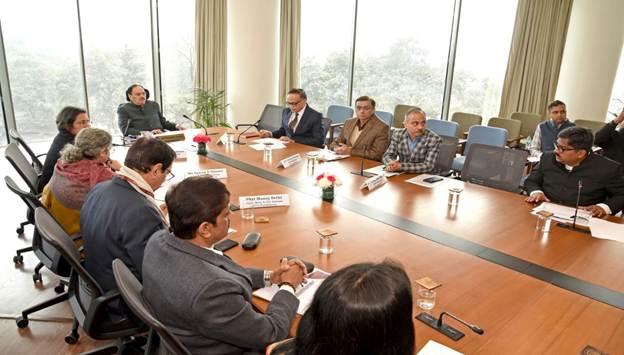
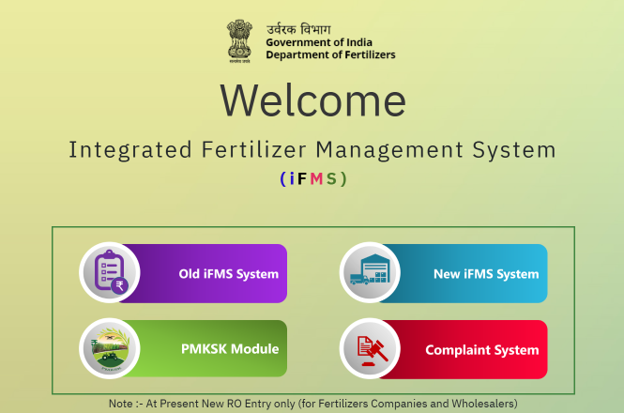
Developed and technically supported by the National Informatics Centre (NIC) for the Department of Fertilizers, iFMS connects key stages of the fertilizer ecosystem, including production, imports, movement, stock availability, retail sale and subsidy processing. Operating at a national scale, the system covers more than 14 crore Aadhaar-linked fertilizer buyers, over 2.5 lakh retailers and around 7 crore Metric tonne fertilizer sale transactions annually, while supporting the administration of fertilizer subsidy of nearly ₹2 lakh crore annually.
iFMS Expands Beyond Transaction Monitoring
In recent years, the Department has expanded the role of iFMS beyond recording fertilizer transactions, with a focus on developing it into an integrated monitoring and decision-support platform.
New dashboards and analytical tools have been developed to provide officials with a consolidated view of fertilizer production, imports, dispatches, movement, stocks and retail sales. These tools enable monitoring at the national, State, district and retailer levels, helping identify unusual trends and emerging supply situations at an early stage.
The increasing use of analytics has also enabled examination of fertilizer purchases across buyer categories, landholdings, crops, districts and fertilizer types. The large volume of transactional information available through iFMS can therefore be used not only to record sales but also to identify consumption patterns and support more targeted monitoring and informed decision-making.
Integrating Farmer, Land and Crop Information
An important step towards data-driven fertilizer management has been the integration of iFMS with farmer, land and crop databases maintained by States and other Government platforms.
Integration with Meri Fasal Mera Byora (MFMB) in Haryana and subsequent work towards integration with AgriStack established mechanisms for linking fertilizer transactions with farmer and agricultural information.
These initiatives provided valuable experience in matching fertilizer buyers with farmer and land records and highlighted practical issues relating to the availability, completeness and quality of land and crop information. They also demonstrated the potential of combining fertilizer transaction data with agricultural data to develop a better understanding of fertilizer requirements and consumption.
The experience gained through these integrations has laid the foundation for a more structured approach towards linking fertilizer purchases with farmer requirements.
Framework for Fertilizer Sale Introduces an Additional Digital Layer
Building upon this experience, the Framework for Fertilizer Sale (FFS) has emerged as an important initiative aimed at integrating a Mobile App-based fertilizer booking system with the existing iFMS Point of Sale (PoS) ecosystem.
Under the framework, a farmer can book the required fertilizer based on his ID created in AgriStack, following verification of land and ownership details. A QR-based booking is subsequently generated, and the booking information is accessed at the PoS device, enabling verification between the fertilizer required and the quantity ultimately purchased.
The framework is being implemented in a phased manner, allowing the Department and participating States to study booking behaviour, land and crop information, fertilizer consumption and operational issues before wider implementation. The pilot has also created an important new verification and analytical layer between AgriStack and iFMS.
The framework enables analysis of parameters such as fertilizer consumption per hectare, consumption across different landholding categories, product-wise and crop-wise fertilizer use, and the relationship between fertilizer requirement indicated at the time of booking and actual purchase.
More importantly, the framework enables genuine farmers to access and purchase fertilizer in accordance with their assessed requirements, while bringing greater transparency and data-driven oversight to the fertilizer sale process. Such analysis represents a significant progression from monitoring individual transactions towards understanding fertilizer consumption in its agricultural context.
Digital Monitoring of Fertilizer Movement Strengthened
Digital monitoring of fertilizer movement has also been strengthened during this period through the Vehicle Location Tracking System (VLTS) initiative.
VLTS is intended to provide greater visibility into fertilizer movement across the supply chain. By linking dispatch information with vehicle-location data, the system enables monitoring of fertilizer consignments while they are in transit and can assist in identifying delays and unusual movement patterns.
When combined with Goods-in-Transit, dispatch and stock information already available in iFMS, vehicle tracking provides administrators with a more complete digital view of fertilizer movement from the point of dispatch to its destination.
This strengthens the ability of the Department to monitor not only the quantity of fertilizer dispatched but also its movement through the supply chain and its eventual availability at the intended destination.
Electronic Subsidy Processing Enhances Transparency and Auditability
iFMS continues to play a central role in fertilizer subsidy administration, with subsidy payments linked to actual fertilizer sales recorded through the PoS network.
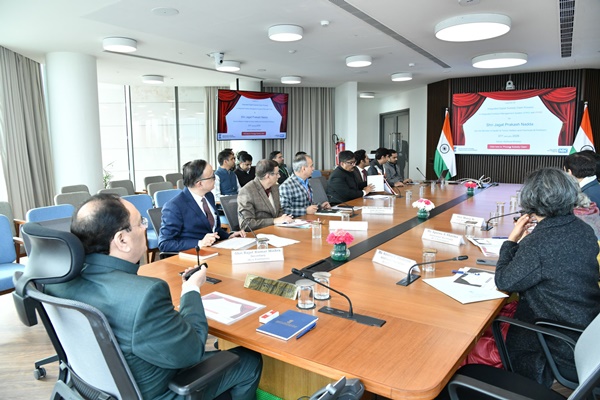
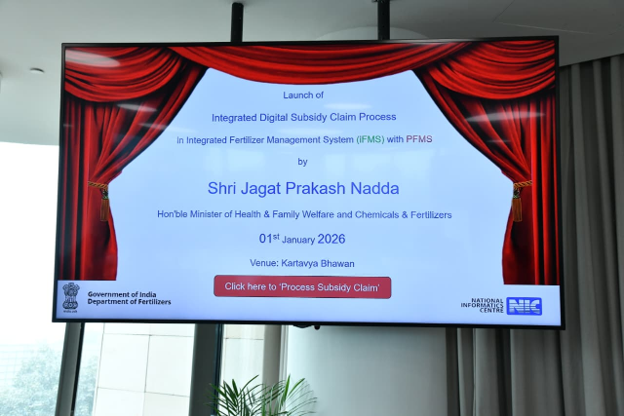
On 1 January 2026, further work was undertaken towards electronic processing of subsidy bills and integration with financial systems, including PFMS/e-Bill processes. Digitization of the workflow reduces manual intervention, improves traceability and enables different stages of subsidy claims and payments to be monitored electronically.
Random verification mechanisms and additional analytical checks are also being introduced to strengthen scrutiny of DBT-related bills and transactions. Together, these initiatives are intended to make subsidy processing more efficient while providing stronger digital controls and auditability.
iFMS Evolves into an Integrated Digital Platform for Fertilizer Management
The developments undertaken represent an important evolution of iFMS. What began primarily as a system for managing fertilizer movement, sales and subsidy-related transactions is increasingly becoming an integrated digital platform connecting multiple stakeholders and datasets across India's fertilizer ecosystem.
The growing integration of production, imports, logistics, stocks, farmer and land information, fertilizer booking, retail transactions and subsidy processing, together with improved dashboards and analytical capabilities, is providing decision-makers with a more comprehensive and timely view of the fertilizer situation.
The progression from farmer and land-data integration through MFMB and AgriStack to the Framework for Fertilizer Sale, along with vehicle tracking, enhanced analytics and electronic subsidy processing, reflects a broader shift in the role of iFMS.
Technology is increasingly being used not only to record transactions, but also to understand where fertilizer is available, how it is moving, who is purchasing it, how much is being consumed and how these patterns relate to agricultural requirements.
This evolution is strengthening the use of reliable digital information for ensuring timely fertilizer availability, improving transparency and enabling more informed management of one of India's most important agricultural inputs.
***
Neeraj Kumar Bhatt/Shatrughna Prasad
cmc.fertilizers[at]gmail[dot]com
(Release ID: 2304690)
Visitor Counter : 5487