Ministry of Agriculture &
Farmers Welfare
National Advisory Board on Management of Genetic Resources Charts Roadmap for Strengthening India's Agrobiodiversity Conservation and Sustainable Utilization
Board calls for integrated management of plant, animal, fish, microbial and insect genetic resources to support Viksit Bharat and climate-resilient agriculture
Posted On:
30 JUL 2026 5:57PM by PIB Delhi
Recognising the strategic importance of genetic resources for ensuring India's food, nutrition, environmental and livelihood security, the newly reconstituted ‘National Advisory Board on Management of Genetic Resources (NABMGR)’ held its first meeting on July 29, 2026 at the ICAR–National Bureau of Plant Genetic Resources (ICAR-NBPGR), New Delhi.
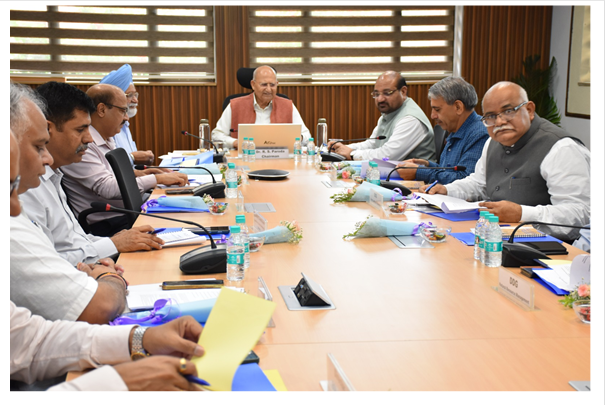
The NABMGR was first constituted by the President of the Indian Council of Agricultural Research (ICAR) in 2011, under the chairmanship of Padma Bhushan Dr R.S. Paroda, Former Secretary, Department of Agricultural Research and Education (DARE), and Director General, ICAR. In 2026, ICAR reconstituted the Board again under the chairmanship of Dr Paroda and the co-chairmanship of Dr M.L. Jat, Secretary, DARE, and Director General, ICAR. The reconstituted Board brings together experts and key stakeholders to recommend national policies and strategies on agrobiodiversity, to promote coordinated management of plant, animal, fish, microbial, and insect genetic resources and advise on emerging national and international issues related to genetic resources.
The meeting of NABMGR held on July 29, was attended by senior representatives from the National Biodiversity Authority (NBA), Department of Biotechnology (DBT), Ministry of Environment, Forest and Climate Change (MoEF&CC), Department of Agriculture and Farmers Welfare, Department of Animal Husbandry and Dairying, Botanical Survey of India (BSI), National Medicinal Plants Board (NMPB), National Seed Association of India (NSAI), Bioversity International, Deputy Directors General of ICAR, Directors of the six ICAR National Bureaux managing genetic resources, farmer representatives and other eminent experts.
In his opening remarks, Dr. Paroda observed that India's rich diversity of plant, animal, fish, microbial and insect genetic resources is a national strategic asset that underpins long-term food and nutritional security, climate resilience and sustainable agricultural development. He emphasised the need for strategic prioritisation by each National Bureau so that conservation and management efforts are closely aligned with emerging national needs. He highlighted the importance of enhancing the use of conserved germplasm, including wild relatives/species, in crop, livestock and fish improvement programmes to broaden the genetic base and accelerate the development of climate-resilient and high-performing varieties and breeds.
Dr Paroda recalled the successful organisation of the first International Agrobiodiversity Congress (IAC) in 2016, inaugurated by the Hon'ble Prime Minister, Shri Narendra Modi. He urged the effective implementation of the recommendations of the Delhi Declaration on Agrobiodiversity adopted during the Congress. He called for a review of the progress made so far and the preparation of a clear roadmap for future action. Further, he underscored the importance of strengthening international collaboration, particularly with countries in Central Asia and South-East Asia, to facilitate access to valuable genetic resources. He emphasised the need to reinforce existing Memoranda of Understanding and promote strategic exchange of germplasm, especially for crops such as cotton, rambutan, avocado, mangosteen etc. and livestock species such as sheep from these regions. The development of an appropriate legal framework to protect the rights of breeders and farmers for animal and fish genetic resources, on the lines of the Protection of Plant Varieties and Farmers' Rights Act (PPV&FRA) was also advocated by Dr Paroda. He observed that such a framework would encourage innovation while safeguarding the interests of livestock keepers and fish farmers.
Dr M.L. Jat highlighted that effective management of genetic resources must be closely integrated with advances in soil science, digital agriculture and crop improvement. He stressed that identifying crop accessions best suited to specific soil types and agro-ecological regions would accelerate the development of climate-resilient and location-specific production systems. He noted that India has built a strong and unparalleled National Agricultural Research, Education and Extension System (NAREES), led by ICAR, that significantly facilitated the conservation, characterization and sustainable use of genetic resources, ensuring their availability for both present and future generations. He expressed confidence that the reconstituted NABMGR with representation from relevant Ministries, Departments and ICAR Bureaux, would strengthen inter-agency coordination and provide strategic guidance for the conservation, sustainable use and equitable sharing of benefits arising from India's genetic resources.
During the meeting, the Directors of the six ICAR National Bureaux presented the major achievements of their respective institutes during the period 2021–2026 and outlined their roadmaps for 2026–2031, focusing on initiatives aligned with national priorities and the Sustainable Development Goals (SDGs).
The Board deliberated on several strategic issues relating to the conservation and sustainable utilization of agricultural genetic resources. It recommended strengthening pre-breeding programmes to facilitate greater use of conserved germplasm in crop improvement, identifying unexplored regions for systematic germplasm collection during 2026–2031, and enhancing collaboration among the ICAR National Bureaux to develop an integrated national genetic resources management framework. A full-fledged inter-institutional program was recommended for mainstreaming traditional/ opportunity crop varieties/breeds/species of plants, microbes, insects, animals and fishes which was endorsed by the Padma Shri Mr Sunda Ram Verma, a progressive farmer. The Board also reviewed the status of delegation of responsibilities relating to agrobiodiversity from the National Biodiversity Authority to DARE/ICAR under the Biological Diversity Act, 2002, and discussed measures to strengthen the implementation of Access and Benefit Sharing (ABS) provisions. Members deliberated on mainstreaming traditional and underutilised crop varieties, animal breeds, fish species, microorganisms and insects through an inter-institutional programme, and reviewed the progress made in establishing the National Safety Genebank (NSG). Chairman of NBAMGR suggested that efforts be made to complete the NSG in a timely manner so that it can be dedicated to the nation during the centenary celebrations of ICAR (2028-29)
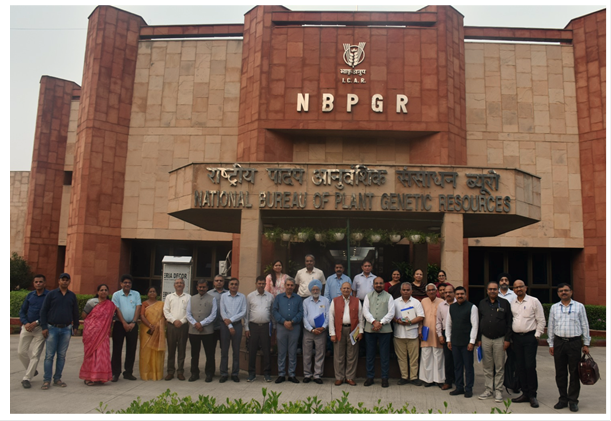
The meeting reaffirmed the Board's commitment to providing strategic policy guidance for conserving and sustainably utilizing India's invaluable genetic resources through greater scientific collaboration, institutional convergence and evidence-based decision-making. The recommendations are expected to strengthen the country's agrobiodiversity governance and contribute significantly to the vision of Viksit Bharat by enhancing agricultural resilience, food security and sustainable development.
*****
RC/MS
(Release ID: 2291907)
Visitor Counter : 2181