PIB Backgrounder
Third India-Nordic Summit
Advancing Green Technology and Innovation Strategic Partnership
Posted On:
26 MAY 2026 12:10PM by PIB Delhi
Introduction
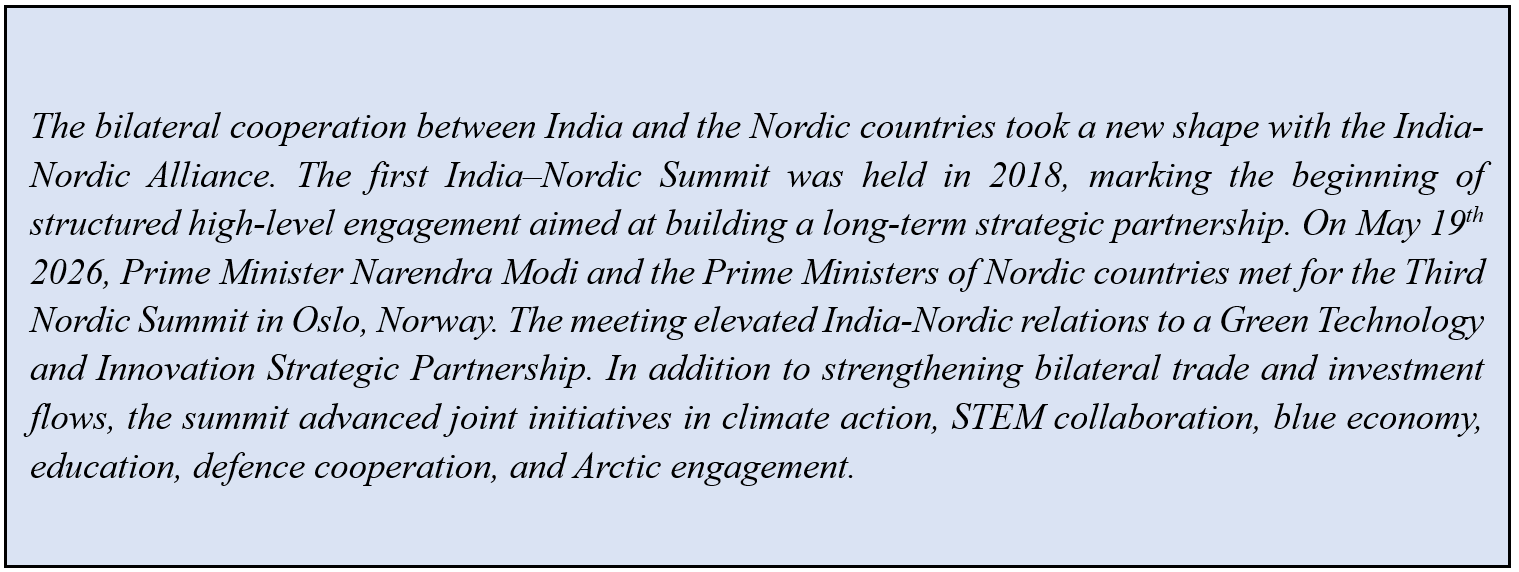
India and the Nordic countries launched a multidimensional partnership during the First India-Nordic Summit in 2018. The partnership focuses on innovation, green technologies, clean energy, and sustainable development. It aims to support India’s economic growth, promote sustainable development pathways, strengthen skilling and talent development, and foster a vibrant innovation ecosystem. India can also leverage Nordic expertise and technology transfers through cooperation in renewable energy and climate action initiatives. The Third India-Nordic Summit, held in Oslo, on 19 May 2026, further advanced this strategic partnership. The summit strengthened cooperation in trade, investment, digital innovation, and emerging technologies. Both sides also expanded collaboration in the blue economy, maritime cooperation, STEM research, resilient supply chains, and defence partnerships. Besides economic partnerships, India engages Nordic countries through the soft power tool of diplomacy.
|
India’s Arctic Policy
Alliance with the Nordic nations is an essential component of India’s Arctic Policy. Climatic changes in the Arctic, especially the melting of Arctic ice, can hugely impact weather conditions and rainfall patterns including the monsoons. These changes can be highly disruptive for India's economic, food and water security, and the sustainability of over 1300 island territories and maritime features.
India's Arctic policy titled 'India and the Arctic: building a partnership for sustainable development’ is structured around six pillars: strengthening India's scientific research and cooperation, climate and environmental protection, economic and human development, transportation and connectivity, governance and international cooperation, and national capacity building in the Arctic region.
|
India’s Evolving Engagement with Nordic Countries
India’s engagement with the Nordic region has evolved beyond traditional diplomacy into a future-oriented strategic partnership. Shared priorities in green growth, clean technologies, innovation, and sustainable development are driving this transformation. Nordic countries bring advanced technological expertise, while India offers scale, markets, talent, and manufacturing capabilities. Together, the partnership is emerging as a key pillar of India’s green transition, digital expansion, Arctic engagement, and resilient economic growth strategy.
- The bilateral trade in goods between India and Denmark was USD 2.05 billion in 2025.
- India’s exports in goods to Denmark was valued at USD 1.06 billion and imports at USD 0.98 billion in the same year. Bilateral trade in services reached USD 4.25 billion; exports from India reached USD 1.9 billion and imports USD 2.3 billion in 2025.
- The total value of Indian investments in Denmark is about USD 560 million.
- Around 40 Indian companies are present in Denmark in various sectors, including IT, renewable energy and engineering. And around 200 Danish companies have invested in India in sectors such as shipping, renewable energy, environment, agriculture, food processing and smart urban development.
- The cumulative direct investment inflows from Denmark to India till 2024 was USD 1.413 billion.
- India and Denmark strengthened cultural cooperation through a Cultural Exchange Programme (2022) and initiatives such as the “Silver Treasures from India and Denmark” exhibition.
- Major cultural outreach activities during Azadi Ka Amrit Mahotsav included flag-hoisting, festivals, school programmes, sports workshops, and wide diaspora participation across Denmark reflect the soft power approach.
- The International Day of Yoga is widely celebrated across Danish cities, with large-scale participation and flagship events like “Yoga for All” in Copenhagen.
- The Indian community of around 21,000 in Denmark actively contributes across professions.Public spaces like Gandhi Plaene (Gandhi Park), Indiakaj (road named after India) and Nehru Road near Aarhus University in Aarhus symbolise the strong people-to-people and cultural ties between the two countries.
- In 2026, leaders of India and Denmark discussed strengthening the mobility, partnership and expanding people-to-people exchanges.
- The volume of bilateral trade in goods with Finland was USD 1.017billion in 2024-25. India’s exports to Finland were valued at USD 356.37 million and imports at USD 660.70 million in the same year.
- Bilateral trade in services was USD 1.9 billion in 2025. Investment flows from India to Finland is over USD 2 billion, driven by several significant acquisitions and partnerships. Over 100 Finnish companies have operations in India.Finland’s Investments in India has increased to USD 4 billion.
- Indian culture has strong visibility in Finland, with yoga centres, performing arts, Indian dance schools, and cultural associations promoting regular events in music, dance, and festivals, supported by the Embassy of India. The Embassy holds regular interaction with Indian students under ‘Terve-Namaste’ series.
- The Indian community in Finland is around 33,000, with a strong presence in the IT sector and around 2,400 students engaged in higher education.
- Tourism and travel links are growing, with Finnish tourists increasingly visiting destinations like Goa, Kerala, and the Golden Temple, supported by e-visa facilities and direct flights between Helsinki and New Delhi.
- In 2026, India and Finland acknowledged the significant contribution of Indian professionals to its technology and innovation ecosystem.
- The volume of bilateral trade with Iceland was USD 77.06million in 2024-25.
- India’s exports to Iceland were valued at USD 66.01 million and imports at USD 11.05 million in the same year.
- Indian culture especially in yoga, classical music, dance, paintings, films and food is popular in Iceland. There are around 600 Indian nationals in Iceland.
- In 2026, India and Iceland reviewed cooperation and emphasised strengthening people-to-people contacts, expanding cultural and tourism exchanges and enhancing cooperation in Arctic research.
- Bilateral trade between India and Norway was USD 1.05 billion in 2024-25.
- India exported goods worth US$ 630 million and imported goods worth US$ 420 million in the same period.
- Trade in services has been around USD 1 billion.
- The Government Pension Fund Global (GPFG) of Norway has invested close to USD 28 billion (till December 2025) in Indian capital market
- In addition, FDI inflows from Norway during April 2000 to September 2025 was USD 764 million.
- India and Norway share close people-to-people ties through an Indian community of around 30,000 people.
- Indian students, researchers, and over 40 Indian associations contribute actively to cultural and social life in Norway.
- Events like Turbandagen and Oslo Colour Festival reflect the growing influence of Indian culture and soft power in Norway.
- Bilateral trade between India and Sweden was USD 6.96 billion in 2024.
- The cumulative FDI equity inflows from Sweden from April 2000 to December 2024 was USD 2.596 billion.
- Around 280 Swedish companies have business presence in India while number of Indian companies with business presence has increased to 75 in 2024.
- Indian cultural traditions like Indian classical music and dance, Yoga, Ayurveda, Indian festivals and cinema, are widely appreciated in Sweden.
- The celebration of the International Day of Yoga across Swedish cities demonstrates India’s growing cultural influence.
- The annual cultural festival Namaste Stockholm attracts thousands of visitors and promotes Indian arts and intercultural exchange.
- There are active partnerships between Indian and Swedish universities. Indology studies at Uppsala date back nearly 200 years, showing deep scholarly engagement with Indian civilization.
- Sports and cinema also contribute to bilateral ties. In 2021, Indian women’s football team visited Sweden, Indian Davis Cup team visited in 2024, Swedish filmmaker Levan Akin received the ICFT-UNESCO Gandhi Medal at International Film Festival of India in 2024.
- The Indian diaspora of around 88,000 people plays a major role to help preserve and promote Indian culture.
India and the Nordic countries are building a partnership shaped by innovation, sustainability, and strategic trust. The relationship now extends across clean energy, digital transformation, resilient supply chains, research, and maritime cooperation. Nordic expertise combined with India’s scale and talent creates strong opportunities for long-term collaboration. With growing institutional, economic, and cultural linkages, the partnership is gradually emerging as an important model for inclusive, technology-driven, and sustainable global cooperation.
Third Nordic Summit: Future Steps towards a long-term strategic partnership
The Third Nordic Summit, witnessed discussions between India and the Nordic countries. Acknowledging the quadrupling of bilateral trade flows during the last decade, a nearly 200 % increase in investment inflows and the positive impact on India’s economic growth, India and the Nordic countries have agreed to transform their relationship into a Green Technology and Innovation Strategic Partnership. Under the initiative, India plans to,
- Collaborate with Iceland in geothermal energy and fisheries,
- Partner with Norway in the blue economy and Arctic cooperation, and
- Engage with Nordic nations in maritime and sustainability sectors.
Besides this, cooperation in advanced manufacturing, defence, telecom, digital technologies, cyber security and health-tech, research and innovation and Arctic and Polar research was also discussed. The partnership supports sustainable development while creating opportunities for economic expansion, technological advancement, and job creation in both India and the Nordic region. The countries also underlined the need for urgent reforms in multilateral institutions and reiterated a united stand against terrorism. The recent India - European Free Trade Association (EFTA)Trade and Economic Partnership Agreement (TEPA) would usher in a “new golden era” in India-Nordic relations.
Key Outcomes of the Summit
At the Summit, India and the Nordic countries agreed to elevate their ties into a Green Technology and Innovation Strategic Partnership focused on renewable energy, green hydrogen, digital innovation, sustainable manufacturing, and climate action. They also committed to expanding trade, investment, research collaboration, resilient supply chains, and people-to-people exchanges while supporting a rules-based international order and sustainable development goals.
Outcome 1: India–Nordic Green Technology and Innovation Strategic Partnership
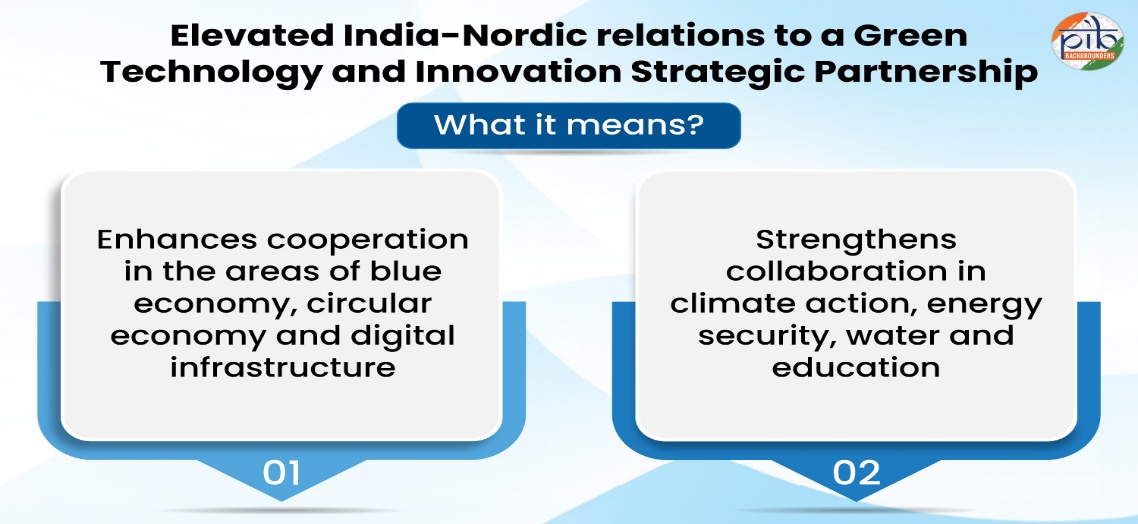
TheGreen Technology and Innovation Strategic partnership will pave way for the use and adoption of sustainable technologies in future, sustainable growth and management, resource use optimisation, and innovation. A strengthening of digital infrastructure will further impact governance and the seamless delivery of services. The outcome will have apositive impact on climate change mitigation and the energy security of the country. Besides this, it will also create green jobs, strengthen governance, and enhance trade and investment linkages with Nordic countries. Collaboration in the sustainable use of water, its recycling and better water management will increase the quality of life and support long-term economic growth. Collaborative research and education will also give greater exposure to Indian students, researchers and faculty, as well as enhance the quality of research.
Outcome 2: India-EFTA TEPA: Impact on India-Nordic Relations
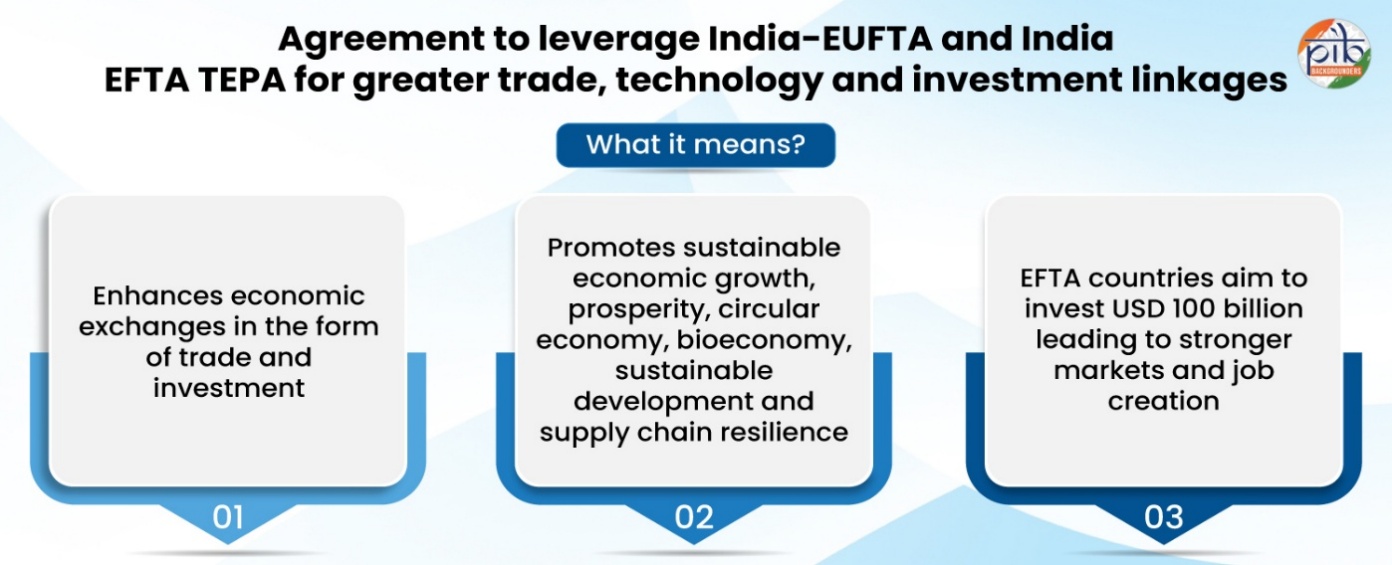
The India EFTA TEPA will help to improve market access, reduce trade barriers, encourage trade and investment flows and integrate value chains. The FTA, along with a strong alliance with the Nordic countries, will support employment creation, innovation and sustainable development.
Outcome 3: Initiatives in Climate Action
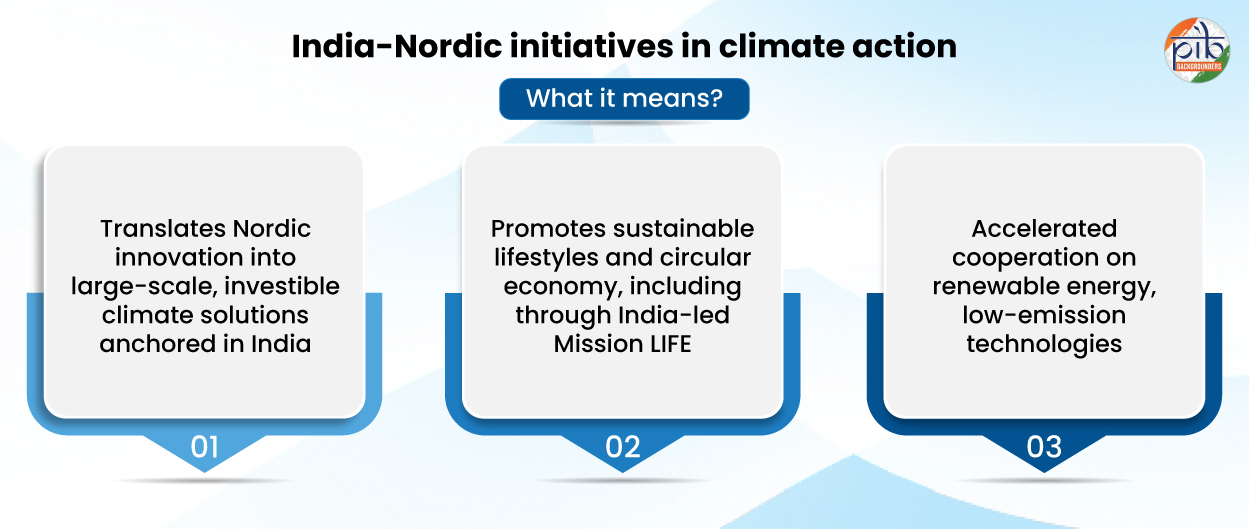
The initiative in the space of climate change, is centred on mitigation. Cooperation in this field will not only help address climate-related challenges but also generate green employment opportunities, enhance bilateral trade, and attract greater investment. As a result, it will contribute to building a more sustainable economy and support long-term economic growth.
Outcome 4: India-Nordic Cooperation in the Arctic
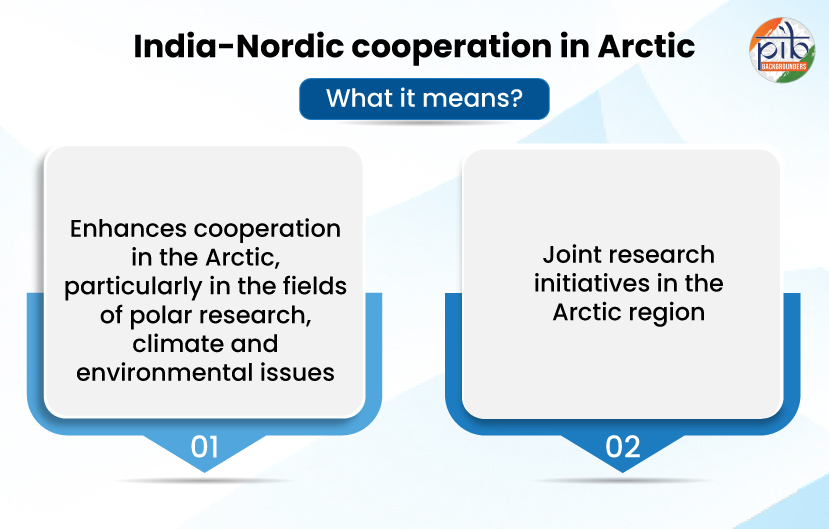
The cooperative initiative forms part of India’s Arctic policy. Collaboration in polar research has long-term implications for climate systems, environmental protection, sustainability, and on the islands. Addressing climate change and ensuring a stable Arctic are crucial for safeguarding India’s monsoon patterns, environmental balance, sustainability, and, most importantly, agricultural productivity.
Outcome 5: Research Collaboration in STEM Areas
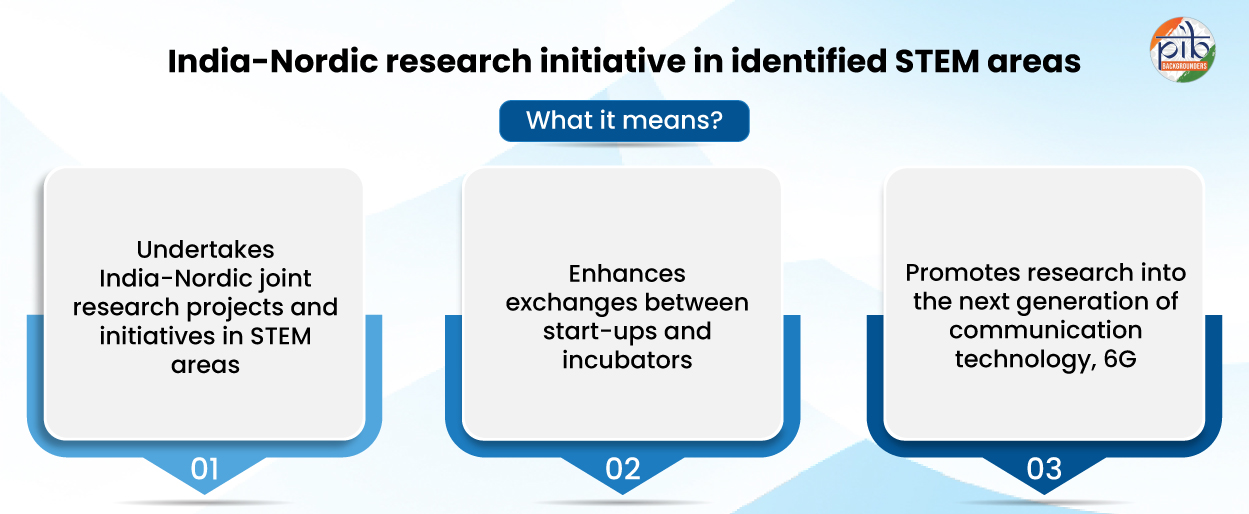
The research initiative will contribute to the creation of new employment opportunities, expansion of research and development (R&D), promotion of technology transfer, and strengthening of academic cooperation and research quality. Advancing research in next-generation communication technologies, including 6G, will further boost the digital economy and enhance the country’s digital infrastructure.
Outcome 6: Cooperation in Blue Economy
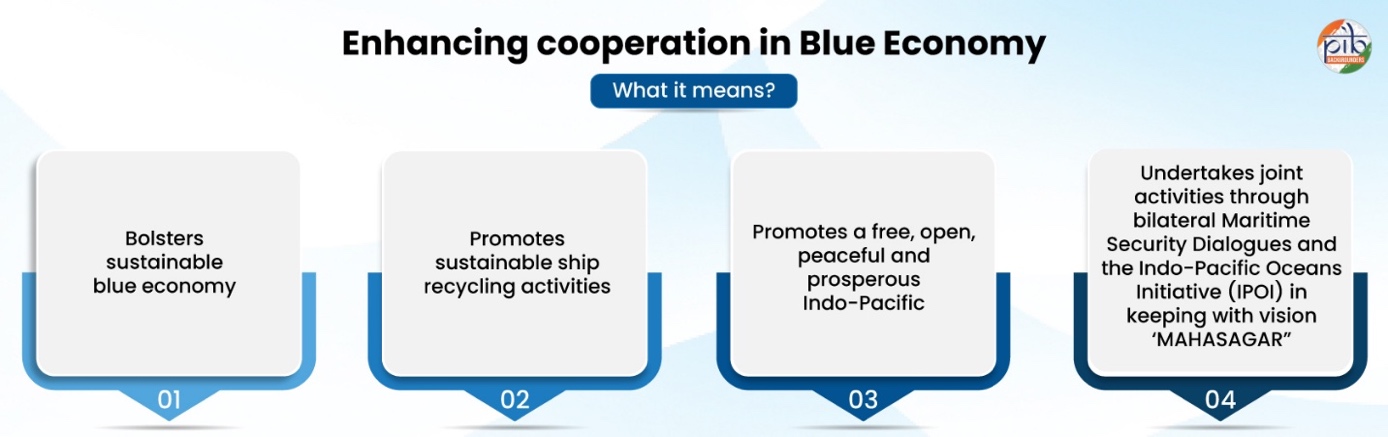
Cooperation in a strong blue economy strengthens economic growth while ensuring sustainability, creating jobs, enhancing trade, and supporting long-term environmental and climate resilience. Blue economy focuses on the sustainable use of ocean and marine resources. Cooperation in the blue economy also contributes to ensuring a stable and secure Indo-Pacific region by promoting sustainable use of ocean resources, strengthening maritime connectivity, and enhancing regional maritime security among partner countries.
Outcome 7: Mobility of Talent:
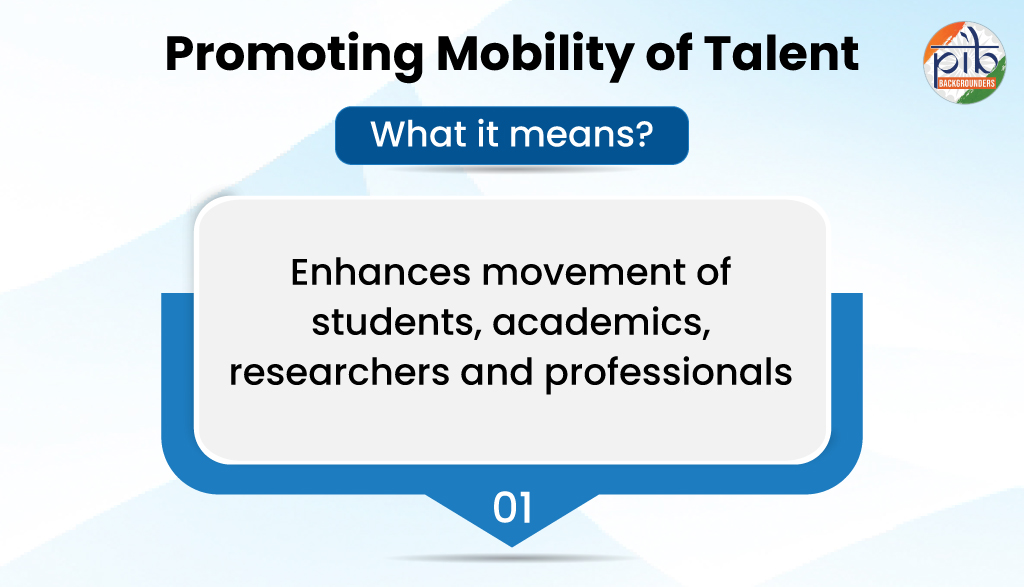
Collaboration in research and education will provide Indian students, academics, students and researchers with new perspectives and greater exposure to global learning environments. Increased cooperation in research will also enhance the quality and quantity of research output. It will also help to enhance skills, boost economic growth, encourage innovation and businesses and start-ups.
Outcome 8 Collaboration in Defence Production

Developing Defence Industrial Collaboration by allowing 100% FDI in the Indian Defence Industrial Sector will help in technology transfer, research and innovation, will boost domestic defence production, create more employment, increase exports and efficiency of defence production. Moreover, it will help to strengthen defence preparedness.
Towards a Stronger India–Nordic Partnership
The relationship between India and the Nordic countries is evolving and strengthening steadily. It has been reinforced through several bilateral initiatives in recent years. The outcomes of the Summit aim to further elevate this partnership into a Green Technology and Innovation Strategic Partnership. The Summit has provided a strong impetus to deepen cooperation in areas such as long-term energy partnerships, climate change mitigation, trade and investment linkages, digital innovation, the blue economy, maritime cooperation, STEM collaborations, and defence. This growing engagement is further strengthened by the India–EFTA Trade and Economic Partnership Agreement (TEPA), which is expected to enhance two-way economic relations between India and the Nordic region while also promoting sustainable economic development. Besides initiatives to strengthen economic partnerships, the soft power approach has further helped in deepening and reinforcing ties.
References:
- Ministry of External Affairs
- Press Information Bureau
- Ministry of Earth Sciences
- DD News
See In PDF
***
PIB Research
(Release ID: 2265299)
Visitor Counter : 8654