Ministry of Jal Shakti
Department of Drinking Water and Sanitation hosted the 7th edition of Sujal Gram Samvad
Community Participation, Local Ownership and O&M of Rural Water Supply Assets are Emphasised at the Multilingual dialogue
Posted On:
20 MAY 2026 7:17PM by PIB Delhi
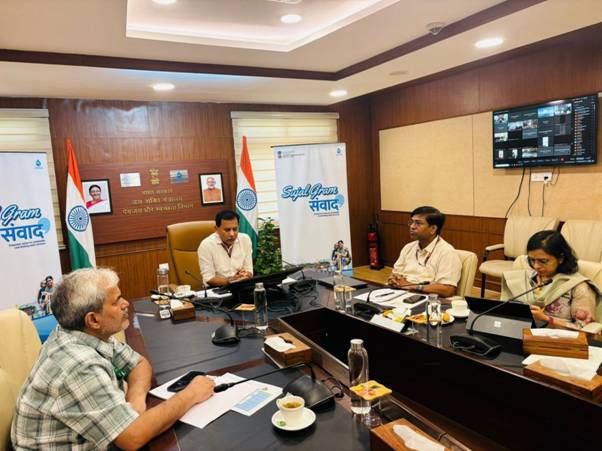
The Department of Drinking Water & Sanitation (DDWS), Ministry of Jal Shakti, successfully organised the seventh edition of the multilingual ‘Sujal Gram Samvad’ today, reinforcing the government’s commitment to community-led water governance under the Jal Jeevan Mission 2.0.
The virtual Samvad witnessed a diverse range of participants including Gram Panchayat (GP) representatives, members of Village Water and Sanitation Committees (VWSCs), community participants, Jal Sahiyas, Jal Bahinis, Jal Sakhis, Anganwadi workers, students, teachers, and frontline functionaries from the GPs, along with JJM State Mission Directors, District Collectors/District Magistrates/Deputy Commissioners, DWSM officials, and senior officers from the States.
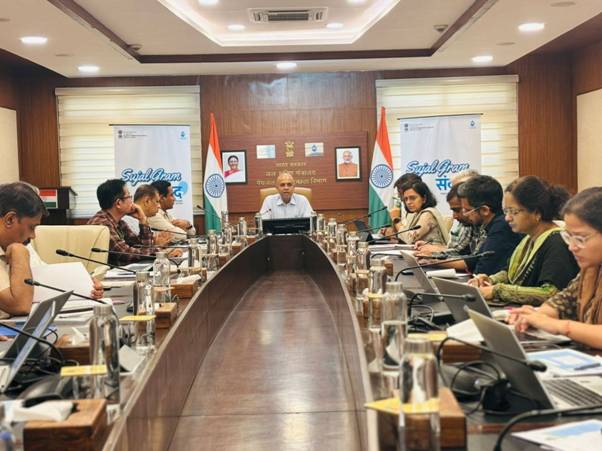
The Samvad was chaired by Shri Ashok K.K. Meena, Secretary, DDWS, in the presence of Shri D Senthil Pandiyan, Joint Secretary, NJJM, along with Senior officers from the Department of Drinking Water and Sanitation.
In his opening remarks, Secretary, DDWS, Shri Ashok K.K. Meena, emphasised Sujal Gram Samvad as a platform to learn from Gram Panchayat’s experiences and challenges. He said the best practices shared during the interaction can help other Gram Panchayats strengthen their own systems.
Shri Ashok K. K Meena highlighted that under Jal Jeevan Mission 2.0, the focus has shifted towards community-led and sustainable management of rural drinking water systems. He noted that traditionally, rural communities themselves managed their drinking water resources, and reiterated that reviving this spirit of local ownership is essential for long-term sustainability. He asked the GPs and local communities to take ownership of Operation and Maintenance (O&M) of village water supply systems to ensure sustainable delivery of safe drinking water and mentioned that the district administrations should continue supporting villages in managing increasingly engineering-oriented rural water infrastructure.
The Seventh edition of ‘Sujal Gram Samvad’ featured village‑level interactions across 6 Gram Panchayat headquartering villages. The initiative recorded around 4000 digital participations, including women, children, youth, and elderly community members, reflecting strong engagement from both communities and officials. This featured participation from the 6 state GPs, in languages such as Rajasthani, Mizo, Garhwali, Kannada, Punjabi and Hindi. The Samvad proved to be unique as it brings a communicative engagement in regional tone.
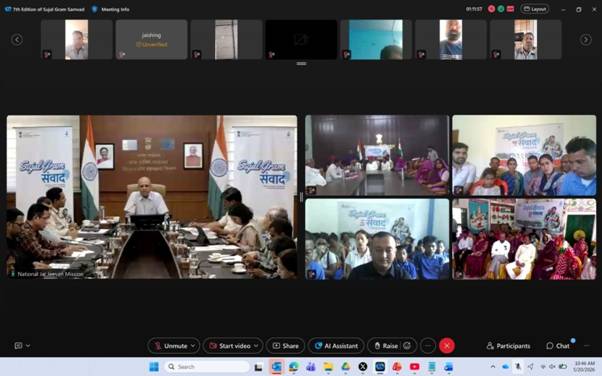
Voices from the Gram Panchayats
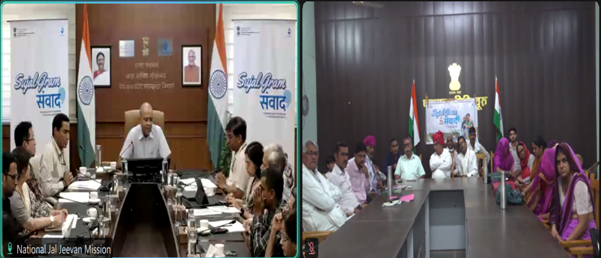
GP-Khandwa Patta, District-Churu, Rajasthan: Gram Panchayat representatives from Khandwa Patta shared their experiences regarding the implementation of Jal Jeevan Mission. They informed that tap water is being supplied to households and the Village Water and Sanitation Committee (VWSC) is fully functional, with active participation of women members in maintaining in-village water supply assets. The Panchayat also highlighted the construction of traditional ‘Kund/ Tanka’ for rainwater harvesting. They mentioned that women from the village have been trained to conduct water quality testing at schools, Anganwadi centres and households.
Further, the district officials stated that efforts are being undertaken to address leakages in water supply systems and strengthen O&M activities in coordination with GPs and the PHED. It was also highlighted that the state is undertaking extensive water conservation and source sustainability efforts under the State’s ‘Jal Sanchay’ campaign and regular meetings of the District Water and Sanitation Mission (DWSM) are being conducted to review implementation and sustainability measures.
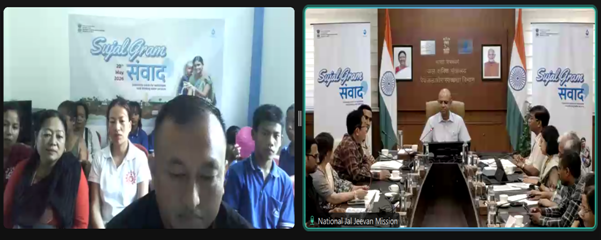
GP-Khamrang, District-Kolasib, Mizoram: The village representatives shared their experiences in the Mizo language, highlighting the strong community-led approach adopted for sustainable implementation of Jal Jeevan Mission in the village. The villagers informed that they remain connected through a dedicated WhatsApp community, which is being actively used for communication regarding water supply schedules, maintenance issues, community meetings and awareness activities related to drinking water management. They also informed that regular chlorination, community-led monitoring and Jal Seva Aankalan activities are being undertaken to ensure safe and sustainable drinking water supply.
Officials highlighted that both the district have achieved 100 percent household tap water coverage under JJM and they are continuously working for the maintenance of the scheme by community ownership.
GP-Ghulekh, District-Pauri Garhwal, Uttarakhand: During the interaction with the village representatives of GP Gulekh, it was informed that regular meetings are conducted at the community level. Monthly ₹20 is collected as user charge by VWSC for purchasing repair materials and ensuring quick maintenance of the system. Beneficiaries also shared that the availability of household tap connections has significantly reduced the burden of fetching water from distant locations.
Shri Ashok Joshi, Chief Development Officer, Pauri Garhwal informed that the district has completed multiple sanctioned schemes under JJM, despite challenging mountainous terrain and difficult water source conditions. He further highlighted that through Spring and River Rejuvenation Authority (SARRA) and solar supply-based schemes, water supply is ensured in the State. He also mentioned that continuous DWSM is held both at district and state level.
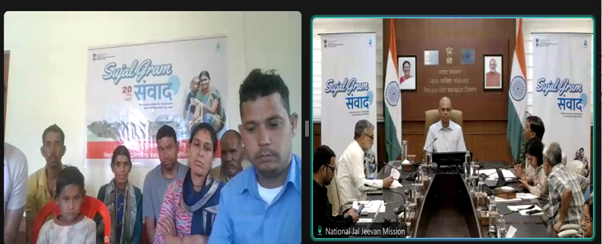
GP-Inahalli, District-Chitradurga, Karnataka: While interacting with the DDWS officials in the state language Kannada, the village representatives shared their experiences regarding the successful implementation of JJM. The scheme beneficiary mentioned that prior to implementation of JJM, the village experienced irregular water supply and inequitable distribution due to direct pump usage and unauthorised pipeline connections. Later, with meticulous planning, the Panchayat identified dependable water sources and executed the construction of a new borewell, an overhead storage tank and a dedicated pipeline network. They also mentioned that user contributions of ₹70 per household is being collected and utilized for operation and maintenance.
The DWSM and SWSM officials highlighted that stable water sources, elimination of leakages and proper utilization of JJM infrastructure have contributed significantly towards sustainability. It was further emphasised that nearly 260 villages in the state have been declared as 24x7 water supply villages, with a target of expanding the initiative to 1,000 villages during the year.
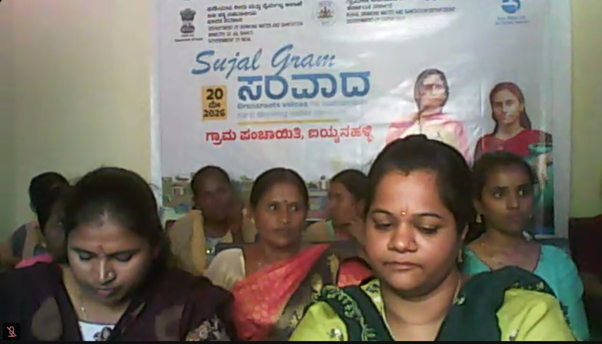
GP-Gill Kalan, District-Bathinda, Punjab: The village representatives shared their experiences in Punjabi language, highlighting that regular and safe drinking water is being supplied to households and that water quality in the village has significantly improved under the Mission. They also highlighted that monthly review meetings are being conducted at the Gram Panchayat level to discuss water supply management, O&M activities and issues related to service delivery.
Officials from the district and Dr. Syed Sehrish Asgar, Mission Director, JJM-Punjab highlighted the community-led efforts being undertaken by the panchayat to ensure sustainable and reliable drinking water service delivery under JJM in Bhatinda. They further highlighted that GP Gill Kalan shows active woman participation under the scheme implementation and commended that the village will soon become a ‘Model Village’ in the state.
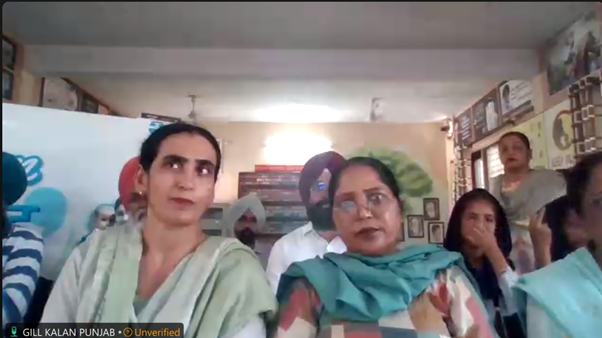
GP-Tinhari Mafi, District-Banda, Uttar Pradesh: During the Samvad, the village representatives stated that under the Mission, household tap connections have now been provided across the village, with regular water supply being ensured during morning and evening hours. Beneficiaries shared that the availability of tap water has substantially reduced the burden on women and improved overall convenience in daily life.
The CEO-ZP, Banda informed that surface water from the Yamuna and Ken rivers is being supplied through large-scale schemes to villages across the district. He further highlighted that regular VWSC meetings, district-level reviews and water conservation initiatives, including ponds, bunding and farm ponds under various schemes, are being undertaken to strengthen sustainability.
Shri Pravash Kumar, Executive Director, State Water and Sanitation Mission (SWSM), Uttar Pradesh informed that several villages in Banda district have already achieved ‘Har Ghar Jal’ certification and highlighted the development of source sustainability plans, river rejuvenation efforts and the launch of the ‘Jal Sarthi’ mobile application for real-time water supply monitoring and grievance redressal across the State.
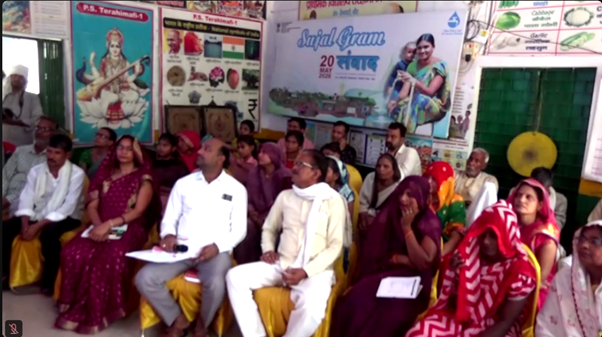
In his concluding remark and way forward, AS & MD, NJJM, Shri Kamal Kishore Soan, expressed appreciation to Gram Panchayat representatives, district administrations and State governments for their continued efforts towards strengthening community-led rural drinking water management under JJM 2.0.
He encouraged continued efforts to expand such best practices and bring more Panchayats on board, so that similar models of transparency, community engagement and accountability can be replicated at gram panchayat level.
The Samvad started by setting the context and sharing objective by Shri D Senthil Pandiyan, Joint Secretary, NJJM. He said that the Samvad aims to listen village communities, understand their experiences and learn local practices on O&M, and source sustenance.
***
AMK/AK
(Release ID: 2263392)
Visitor Counter : 2362