Ministry of Jal Shakti
DDWS Organises 8th District Collectors’ Peyjal Samvad, Districts Showcase Innovative Practices
Posted On:
15 MAY 2026 5:25PM by PIB Delhi
The Department of Drinking Water & Sanitation (DDWS), Ministry of Jal Shakti, organised the 8th edition of the District Collectors’ Peyjal Samvad today through video conferencing, bringing together senior officials, District Collectors/ Deputy Commissioner, and Mission Directors of State/UTs JJM to deliberate on accelerating the implementation of Jal Jeevan Mission (JJM) 2.0 and sharing of best practices.
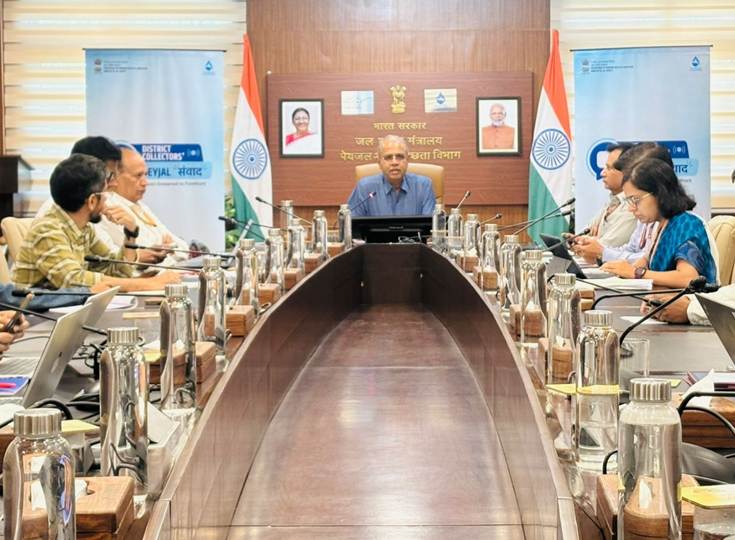
The Samvad was chaired by Shri Ashok K.K. Meena, Secretary, DDWS, in the presence of Shri Kamal Kishore Soan, Additional Secretary & Mission Director, National Jal Jeevan Mission (NJJM), along with Senior Officers from DDWS.
In his address, Secretary, DDWS highlighted the significant progress made under JJM since its launch in 2019, transforming rural water supply from dependence on handpumps and common sources to household-level tap water connections. He said that despite challenges during the COVID period, the Mission has progressed substantially and has now been extended till December 2028 under JJM 2.0, with around 81% rural households having tap water connections.
Emphasising sustainability, he stated that while infrastructure has been created through the joint efforts of Centre and States, its long-term functionality depends on strong local governance. Under JJM 2.0, in-village infrastructure is to be handed over to Gram Panchayats, while bulk infrastructure will continue to remain with States. He stressed that Gram Panchayats should function as local service providers, community participation through Gram Sabhas to be ensured for accountability and transparency.
Further he emphasised the importance of DWSM meetings in strengthening service delivery at the district level. District Collectors were urged to conduct regular monthly DWSM meetings, review the status of drinking water supply and sanitation services, and upload proceedings on the DWSM dashboard. It was noted that while a large number of districts are regularly conducting these meetings, compliance needs to be strengthened in some States.
The Secretary also highlighted the increasing responsibility of District Collectors/ Deputy Commissioner in the implementation of solid waste management rules effective from 1 April 2024, which are being monitored by the Supreme Court.
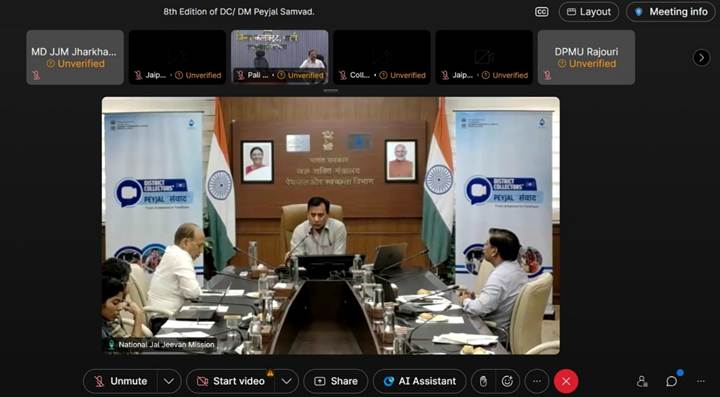
Shri Kamal Kishore Soan, AS&MD, NJJM said that the active participation of all district-level leadership is essential in view of the ongoing reforms under Jal Jeevan Mission 2.0 and other key governance interventions and its being monitored at the highest levels. He underscored that District Collectors play a pivotal role in ensuring effective implementation, coordination, and monitoring of mission objectives at the grassroots level. Highlighting the significance of administrative accountability and inter-departmental convergqence, he urged all District Collectors and State Mission directors to ensure full participation in the forthcoming meeting with DCs scheduled for 22nd May 2026. The meeting is expected to provide clear guidance to districts on priority actions under JJM 2.0 and SBM-G, particularly in reform linked Operational Guidelines of JJM 2.0 and greywater management issues.
DDWS Presentation on Project Monitoring Module on the Sujalam Bharat PM Gati Shakti mobile application and CIRP
The session featured a presentation on the Project Monitoring Module on the Sujalam Bharat PM Gati Shakti mobile application, which enables asset-wise and stage-wise tracking of Jal Jeevan Mission schemes, including construction, testing, commissioning and handover. The module integrates a structured workflow involving the Designated Implementing Agency (DIA), Third Party Inspection Agency (TPIAs) and field engineers, ensuring transparency, accountability and real-time monitoring. States were requested to onboard agencies and actively utilise the module. The presentation was made by Dr. Ankita Chakravarty, Deputy Secretary, NJJM.
A presentation was also made by Shri Y.K Singh, Director, NJJM on the Comprehensive Implementation and Reform Planning (CIRP) framework, which integrates scheme implementation and reform measures into a structured monitoring system covering physical progress, financial tracking, governance reforms, water quality monitoring, source sustainability, digital systems and capacity building. The framework aims to ensure timely completion of schemes, transparent fund utilisation, and improved service delivery.
Innovative Best Practices Shared by Districts Through Presentations
During the Peyjal Samvad, a total of six districts presented their progress and best field practices which will further help other State’s districts to develop better under JJM 2.0. Each presentation was delivered by the respective District Collector/ District Magistrate/Deputy Commissioner/ District Officials.
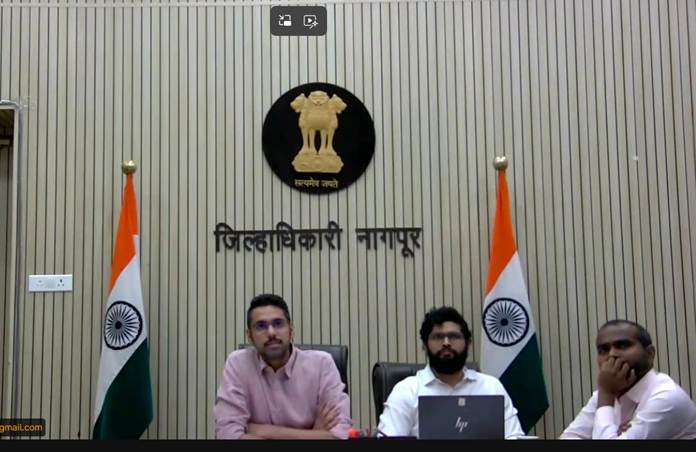
- Nagpur, Maharashtra: Shri Kumar Ashirwad, District Collector showcased a community-led and cost-effective intervention in tribal Ladgaon village, where water scarcity due to declining groundwater was addressed through rainwater harvesting-based recharge of an existing handpump. A solar-powered system with storage and household connections ensured 24/7 piped water supply, reducing project cost from about ₹90 lakh to nearly ₹14 lakh. The model demonstrated strong community participation, low-cost design, and sustainable O&M.
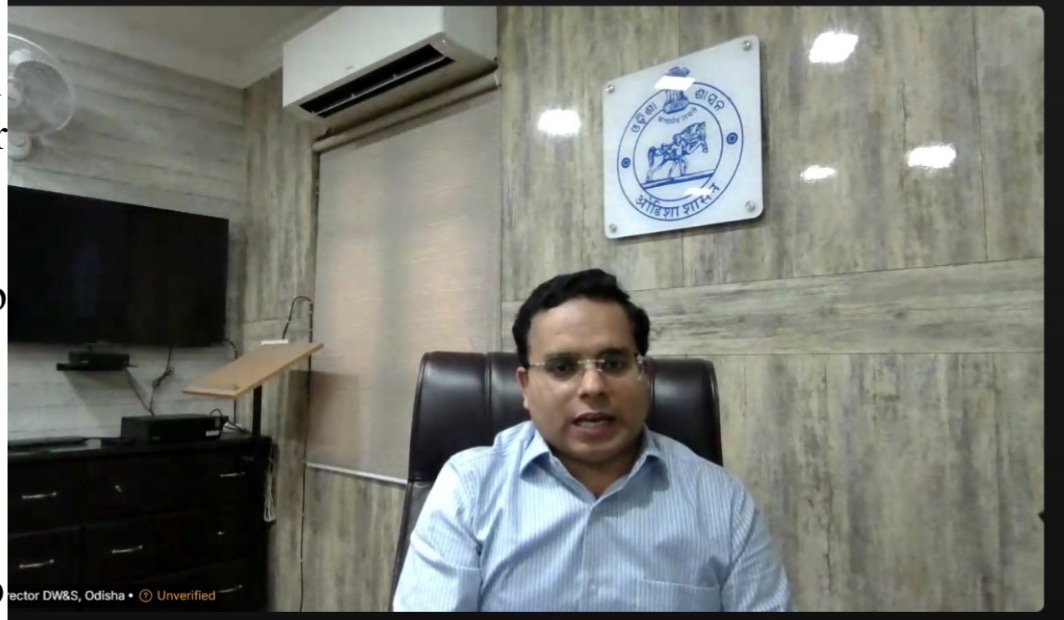
- Koraput, Odisha: Shri Manoj Mahajan, District Collector highlighted challenges of hilly terrain, dispersed tribal habitations and low population density, and presented a mix of solutions including spring-based gravity systems, solar-powered schemes and Mega Piped Water Supply schemes (Basudha). The district has strengthened digital monitoring, water quality testing involving Self Help Groups and through laboratories. He also mentioned about the strong grievance redressal systems, along with pre-monsoon disinfection and sustainability measures. Koraput is also using a data-driven monitoring approach. Through portal-based stock and work validation, the district tracks the daily progress of ongoing works. The Collector noted that earlier, some completed works were not updated on the portal, creating monitoring gaps. Now, the district has strengthened its system so that every activity is properly reflected on the portal before it is considered complete.
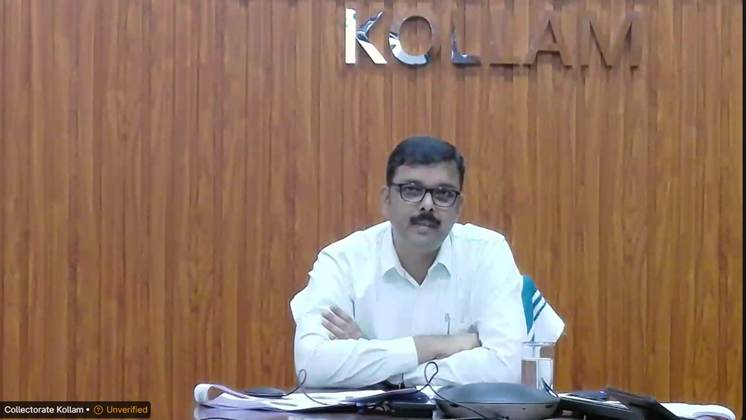
- Kollam, Keralam: Shri Devidas. N, District Collector demonstrated progress of JJM through automation of pump operations, online monitoring systems and a 24/7 grievance redressal mechanism, with complaints typically resolved within 24 hours. The district has achieved 100% metering of connections and uses Kudumbashree units for billing and collection, besides ensuring institutional coverage in schools and Anganwadi centres, supported by strong water quality monitoring systems. The Collector also presented a case study of Munroe Island, a panchayat consisting of eight small islands with around 9,599 people. Earlier, the area faced severe shortage of potable drinking water and was dependent on tube wells. Before JJM, around 2,600 connections existed and around 500 additional connections were provided under the mission. With JJM intervention, the drinking water situation has improved and the area has now been declared as Har Ghar Jal.
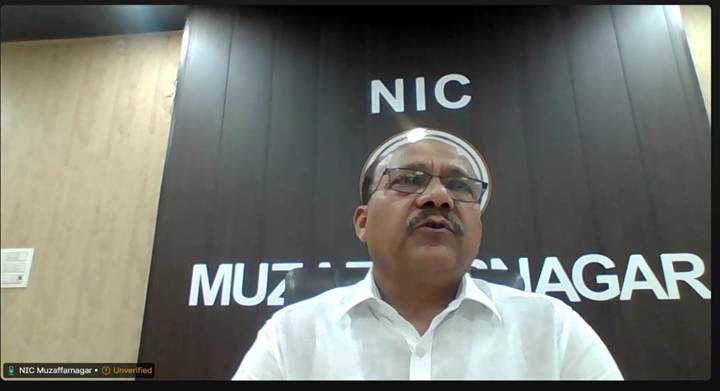
- Muzaffarnagar, Uttar Pradesh: Shri Umesh Mishra, District Magistrate presented a comprehensive model combining Jal Jeevan Mission implementation with water conservation initiatives, including river rejuvenation, pond restoration, and community-driven campaigns such as Pani ki Pathshala. Regular Gram Sabha-based monitoring, Jal Seva Aankalan, and women-led water testing were highlighted, along with improvement in groundwater levels and increasing community ownership. The district launched the “Dhara se Dharohar Tak” campaign. Through community participation, the Ban River was excavated and revived across nearly 42 kilometres and the Sot River was revived across around 17 kilometres. As a result, the groundwater level in Amroha improved. This work was also mentioned by the Hon’ble Prime Minister in Mann Ki Baat. After Amroha, similar river conservation work was taken up in Bijnor, where the Malan River, which has historical reference in Kalidasa’s Abhigyan Shakuntalam, was cleaned and linked with local employment and community efforts. In Kushinagar, the Hiranyavati river, associated with the Mahaparinirvana of Lord Buddha, was conserved after it had nearly disappeared. In Muzaffarnagar, work was started on the Solani River, which is linked to the historic Shukratal area. This work was also carried out with strong public participation, including support from media, teachers, employees, traders and local citizens.
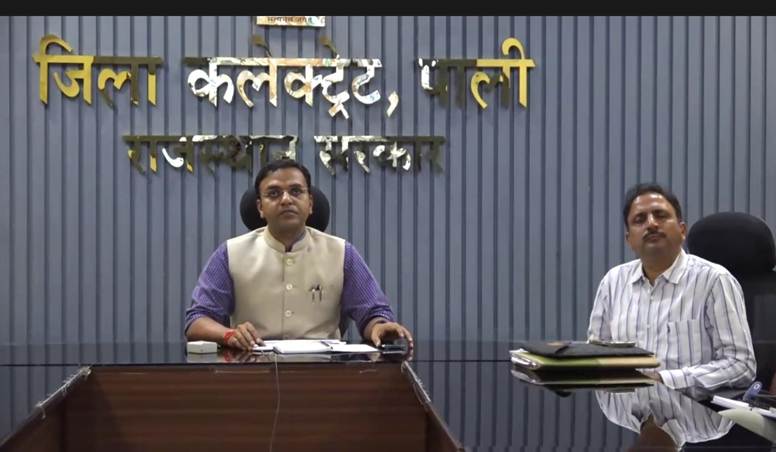
- Pali, Rajasthan: Shri Ravindra Goswami, District Collector highlighted its transition from a water-scarce district dependent on water trains to improved service delivery through conjunctive use of groundwater and surface water, rainwater harvesting and large-scale recharge structures. The district has focused on community capacity building for operation and maintenance, buffer storage creation, and reduction of non-revenue water, while addressing challenges such as salinity and long transmission pipelines. The district is working to build community awareness and capacity for this. The Collector also shared that the State Government has empowered districts by releasing ₹25 lakh every summer season for completed schemes so that their functionality can be maintained. This has helped ensure that already created infrastructure remains functional during the difficult summer months.
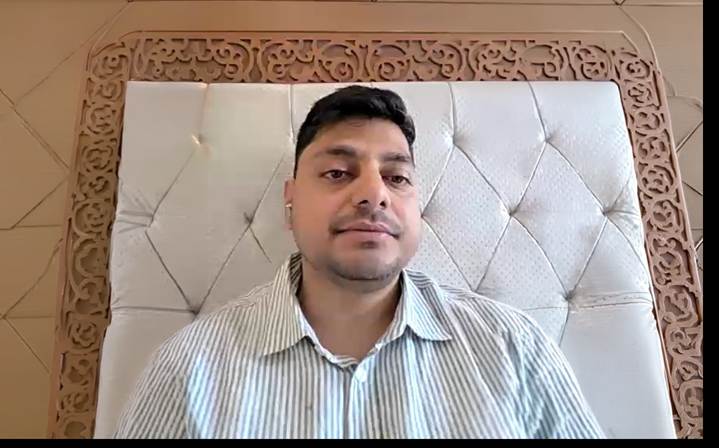
- Dhanbad, Jharkhand: Shri Aditya Ranjan, Deputy Commissioner presented a data-driven approach to bridge gaps in water availability, including large-scale pond rejuvenation, revival of dry borewells, greywater management and rainwater harvesting in institutions. A locally developed Jal Seva App enables real-time tracking of assets and grievance redressal, supported by trained Jal Sahiyas and decentralised repair systems, improving efficiency and service delivery. The district also worked on reviving dry boreholes. Around 104 dry boreholes were identified across Single Village Schemes, old Jal Minars and schemes created through 14th and 15th Finance Commission funds. Around 300 nearby water bodies were tagged to these dry boreholes. For each dry borehole, low-lying areas and existing ponds within a 500-metre radius were identified and rejuvenation work was taken up using eight different funding sources.
These presentations showcased achievements, ongoing challenges, and best practices under JJM underlining the diversity of approaches adopted to accelerate progress under Har Ghar Jal.
In his concluding address, Shri Kamal Kishore Soan, Additional Secretary & Mission Director, NJJM, praised the innovative approaches shared by districts and underscored that the success of JJM 2.0 depends on the proactive leadership of District Collectors.
The 8th edition of District Collectors’ Peyjal Samvad was attended by participants across the country including District Collector/ Deputy Commissioner/ District Officials, Mission Directors, and State Mission Teams, from State/UTs.
***
AMK/AK
(Release ID: 2261459)
Visitor Counter : 1306