Posted On:
22 MAR 2026 8:10PM by PIB Delhi
A Regional Workshop on Tele-Law Programme Activities under the Designing Innovative Solutions for Holistic Access to Justice, (DISHA) Scheme of the Department of Justice, Ministry of Law and Justice, Government of India, was held today i.e. on 22.03.2026 at Kurukshetra University Auditorium, Kurukshetra, Haryana.
The workshop was part of the Department’s continuing efforts to strengthen access to justice through technology-enabled services and deepen stakeholder engagement with institutions involved in last-mile justice delivery. The event brought together members of the judiciary, government officials, advocates, representatives of Common Service Centres (CSCs), law schools, students, field functionaries, and civil society representatives.
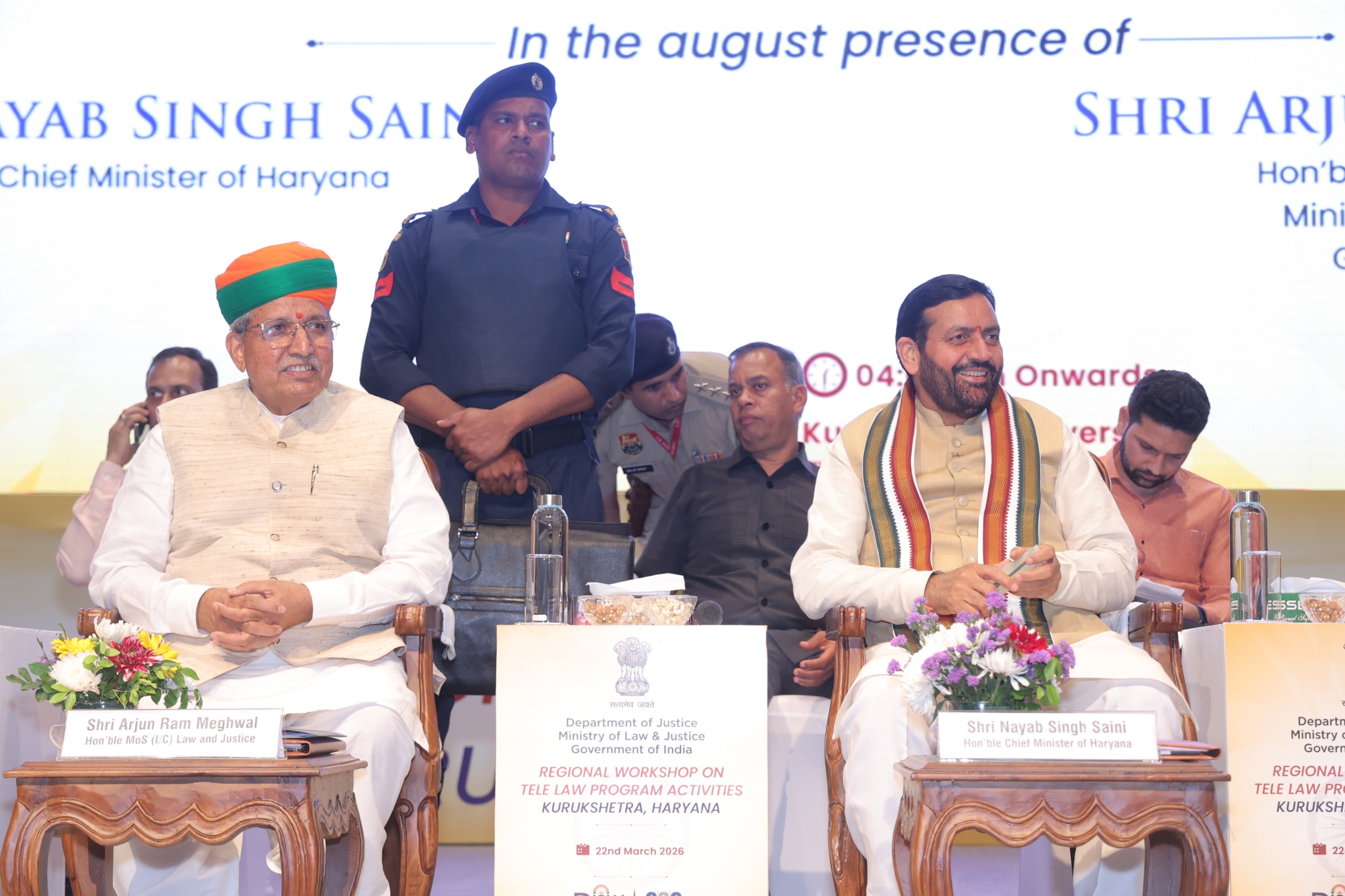
The event was graced by Union Minister of State (Independent Charge) for Law and Justice, Shri Arjun Ram Meghwal, Chief Minister of Haryana Shri Nayab Singh Saini and Minister for Haryana Government, Shri Rao Narbir Singh along with senior officials of the Department of Justice and the Government of Haryana.
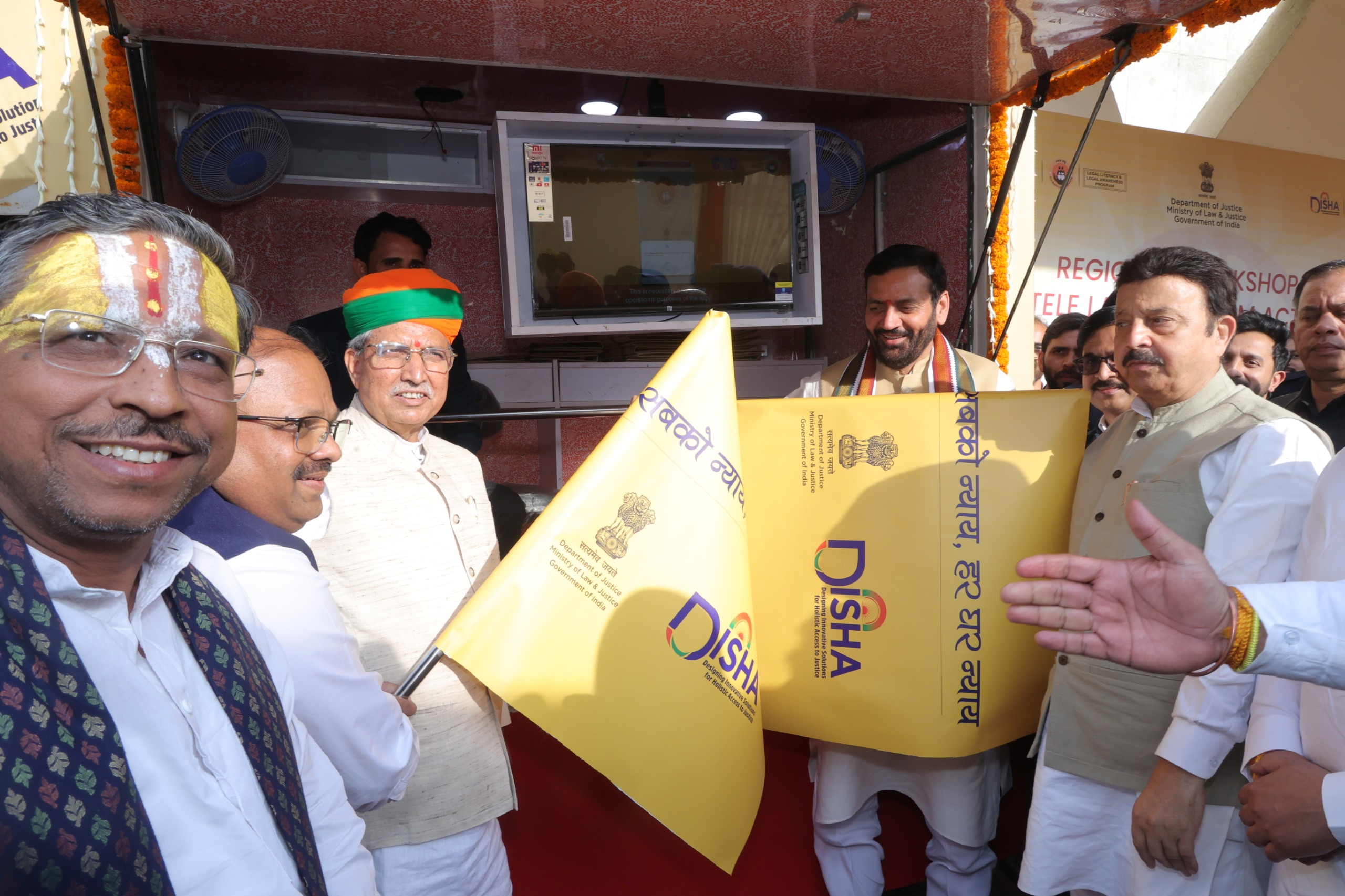
Chief Minister of Haryana, Shri Nayab Singh Saini and Hon’ble Union Minister of State (Independent Charge) for Law and Justice, Government of India, Shri Arjun Ram Meghwal flagged off the DISHA Awareness Van marking a significant step towards promoting awareness and outreach under the initiative. The flag-off ceremony symbolized the commencement of a dedicated effort to engage communities, disseminate vital information, and strengthen public participation.
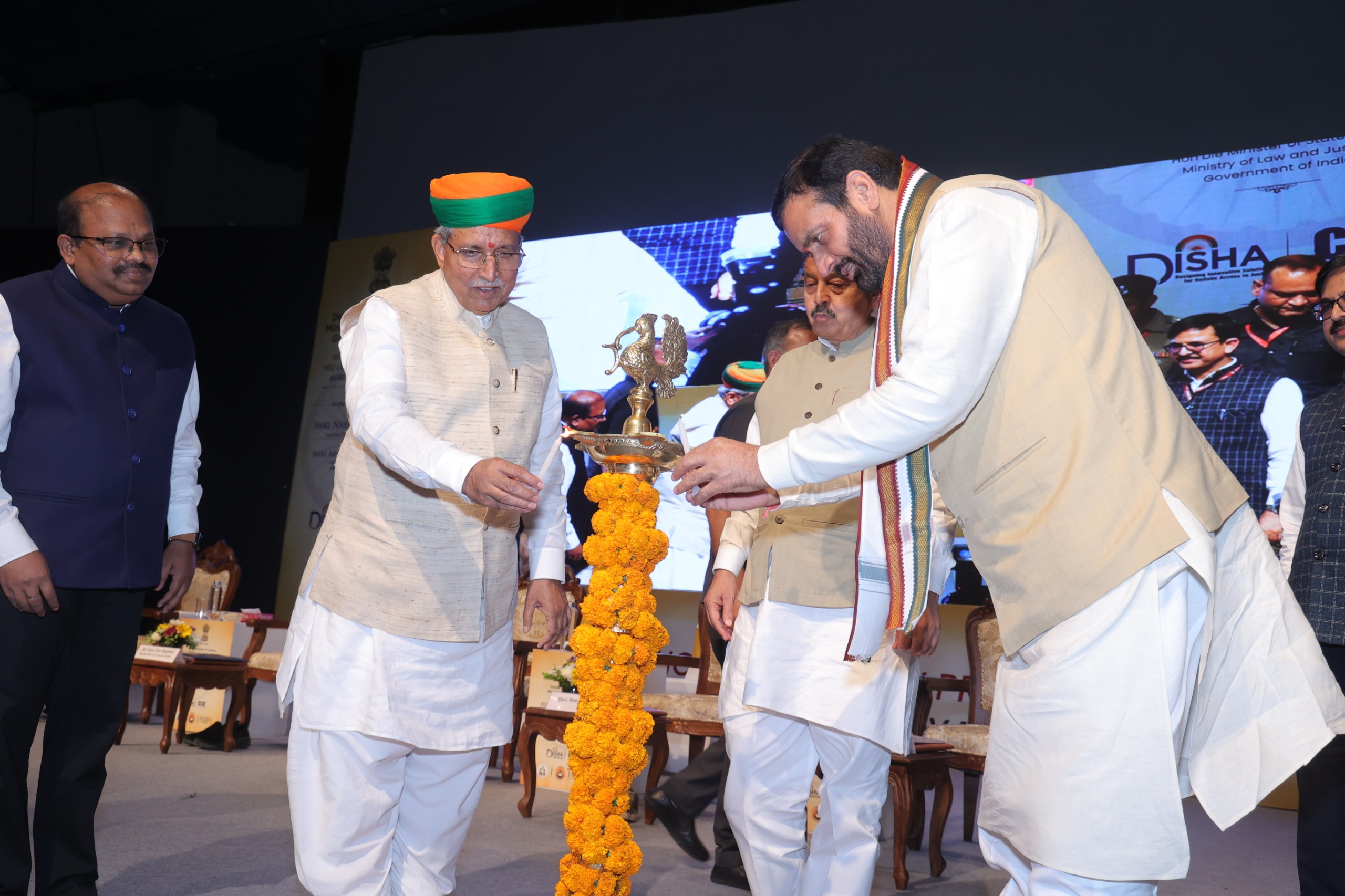
The programme commenced with the lighting of the ceremonial lamp, symbolising the triumph of knowledge and justice.
The celebration of 150 years of the National Song ‘Vande Mataram’ was marked by captivating performance from local artists, who paid a heartfelt tribute to this timeless symbol of patriotism, followed by National Anthem
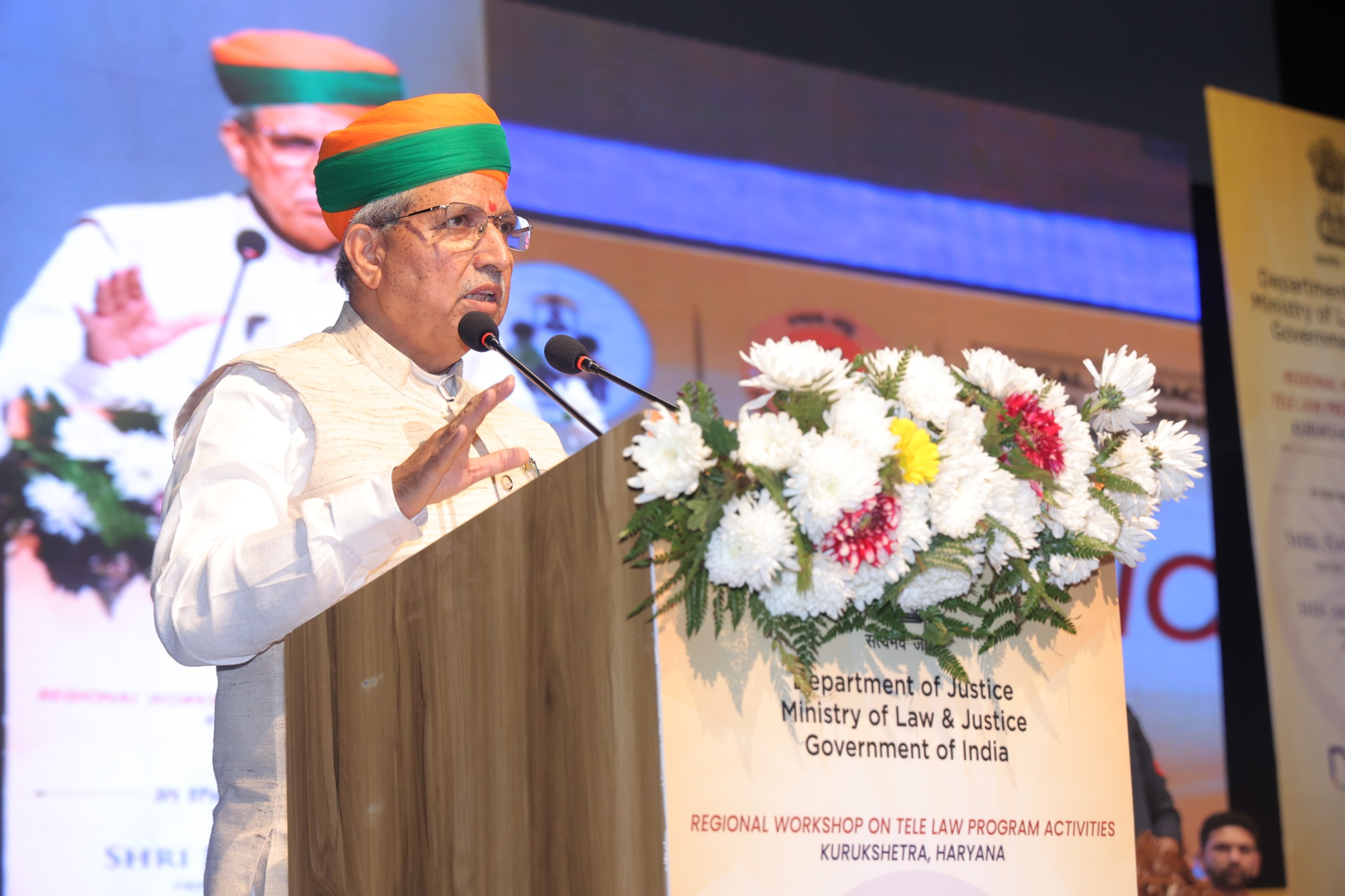
Addressing the gathering, the Union Minister of State (Independent Charge) for Law and Justice, Shri Arjun Ram Meghwal, underscored the importance of leveraging technology to make justice more accessible, affordable, and citizen-centric. He emphasized that initiatives such as Tele-Law, Nyaya Bandhu, and legal literacy programmes are central to the Government’s efforts to strengthen the justice delivery ecosystem and empower citizens through awareness and timely legal advice, in line with the vision of Hon’ble Prime Minister, Shri Narendra Modi ji to expand awareness so that more people can benefit from such schemes. Highlighting the significance of pro bono service, he referred to the inspiring legacy of Chittaranjan Das and Shri Arvind Ghosh in the historic Alipur Dwar Case before the Calcutta High Court, where C.R. Das selflessly appeared to defend Shri Arvind Ghosh and powerfully argued for justice, leading to his acquittal. He noted that this spirit of service continues through the Nyaya Bandhu initiative and described pro bono advocates as playing a role akin to guardians of justice. He called for increasing the number of pro bono lawyers in Haryana to further strengthen access to justice. The Minister also interacted with Village Level Entrepreneurs (VLEs), students, and other participants, appreciating their contributions to expanding legal services at the grassroots level, and encouraged all to join Nyaya Bandhu and contribute towards ensuring that the cause of justice continues to prevail.
Delivering the welcome address, the Secretary, Department of Justice, Government of India, Shri Niraj Verma, highlighted the constitutional vision of equal justice and free legal aid under Article 39A of the Constitution of India and emphasised the transformative role of the DISHA framework, which integrates initiatives such as Tele-Law: reaching the unreached, Nyaya Bandhu Pro Bono Legal Services, and Legal Literacy and Legal Awareness programmes to ensure that legal assistance reaches every citizen of the country, particularly in remote and underserved regions. He also stated that awareness is the first step towards empowerment and initiatives like DISHA schemes, deepen last mile justice delivery. In his address, the Secretary (Justice) emphasized the importance of leveraging technology-driven platforms such as Tele-Law to ensure affordable and timely legal assistance, particularly for citizens at the grassroots level. Highlighting the role of the Nyaya Bandhu programme and legal literacy initiatives, he underscored the need for an inclusive, responsive, and citizen-centric justice delivery system. He further noted that as India moves towards the vision of a developed nation by 2047, the focus must remain on ensuring that justice is accessible to all, empowering every citizen with awareness, support, and the confidence that the legal system stands by them.
A presentation on the progress of the DISHA Scheme in Haryana was also made during the programme, highlighting the expanding outreach of pre-litigation legal advice through the extensive network of Common Service Centres (CSCs), the Tele-Law mobile application, and the toll-free helpline 14454, covering all 22 districts of the State in an accessible and citizen-centric manner. It was noted that Tele-Law was initially introduced in the Aspirational District of Nuh (Mewat) with 317 CSCs and has since expanded significantly, with 6,197 CSCs delivering services across all districts during FY 2024–2025 and FY 2025–2026, including outreach to seven Aspirational Blocks. The presentation emphasized that equal access to justice is fundamental to a democratic society and that Tele-Law plays a vital role in bridging the gap between citizens and the justice system. An interactive session followed, where the Hon’ble Chief Minister of Haryana, Nayab Singh Saini, engaged with beneficiaries, panel lawyers, Village Level Entrepreneurs (VLEs), and Nyaya Sahayaks, with VLEs highlighting how Tele-Law is reaching the unreached and enabling doorstep delivery of legal services; the Chief Minister reiterated the vision of “Har Ghar Nyaya, Sabko Nyaya,” as participants shared their experiences and success stories.
Moving further, a dedicated segment highlighting the Nyaya Bandhu (Pro Bono Legal Services) Programme, an initiative of the Department of Justice under the DISHA (Designing Innovative Solutions for Holistic Access to Justice) Scheme was conducted. A video showcasing the key achievements and initiatives of the programme was screened, followed by an interactive discussion with pro bono lawyers registered under Nyaya Bandhu, along with faculty members and students from various law schools. The session underscored the vital role of pro bono legal services in strengthening access to justice, emphasizing how such efforts give a voice to the voiceless and bridge the gap between legal awareness and legal empowerment. It also highlighted how Pro Bono Clubs are transforming theoretical legal education into practical experience for students.
In the event, two e-books documenting customary laws of tribal communities from the North-Eastern region of India were launched. The publications, developed in collaboration with the Law Research Institute of the Gauhati High Court. The initiative aims to preserve indigenous legal traditions and contribute to a deeper understanding of customary governance systems within India’s broader legal framework.
Doordarshan documentary on the DISHA Scheme was launched which marked a significant highlight of the programme, showcasing the transformative impact of the initiative in enhancing access to justice across the country. The documentary vividly captured success stories, grassroots outreach, and the role of Tele-Law, Nyaya Bandhu, and legal literacy efforts in empowering citizens. It provided a compelling narrative of how technology-enabled platforms and community participation are bridging the gap between people and the justice delivery system. The launch was well received by the audience and served as an inspiring reflection of the scheme’s achievements and its continued commitment to ensuring inclusive and accessible justice for all.
Delivering the keynote address, the Chief Minister of Haryana, Shri Nayab Singh Saini, expressed his pleasure that Haryana had been chosen to host the regional workshop in the sacred land of Kurukshetra, revered as the “Gita Ki Bhoomi,” out of the 5 regional workshops that were to be held under DISHA Scheme Pan India, where Lord Krishna imparted the message of justice and duty. He described the workshop under the DISHA initiative as meaningful and inspiring, emphasizing that justice must not remain confined to courts but reach the doorsteps of common citizens through citizen-centric efforts such as awareness vans, e-books, and outreach initiatives. Highlighting that true development is achieved only when its benefits reach the last person, he referred to constitutional guarantees under Articles 14, 21, and 39A, noting that access to timely justice was being strengthened at the grassroots level through tele-law services. He underscored that DISHA promotes accessible, transparent, and efficient justice delivery, supported by technology and initiatives like helpline 14454, especially for those facing financial or geographical barriers. Stressing the importance of pro bono culture, inspired by Chittaranjan Das, and the need for legal awareness in regional languages, he noted that over 10,000 advocates had registered under the Nyaya Bandhu programme with Pro Bono Clubs in 109 law colleges as of February 2026. He further highlighted the effective implementation of new criminal laws in Haryana with the support of Union Minister of Law and Justice (I/C) Shri Arjun Ram Meghwal, stating that these reforms have enhanced ease of justice, aligned with the vision of Digital India and Sustainable Development Goal 16, and concluded that justice must become an accessible right for every citizen rather than the privilege of a few.
The workshop provided an important platform for experience-sharing, consultation, and policy dialogue among stakeholders, including government officials, legal professionals, CSC representatives, law students, and grassroots field functionaries. The discussions focused on strengthening coordination, improving implementation mechanisms, and expanding the reach of technology-enabled justice initiatives.
The Regional Workshop at Kurukshetra University, Haryana, concluded with closing remarks by Shri Suresh Kumar, Joint Secretary, Department of Justice, Government of India, Ministry of Law and Justice, expressing sincere appreciation to all dignitaries, participants, and partner institutions for their valuable contributions and active engagement. The session underscored the collective commitment to strengthening access to justice as a fundamental pillar of democracy, emphasizing that equality before the law must reach every citizen. Gratitude was extended to the Union Minister of State (I/C) for Law and Justice Shri Arjun Ram Meghwal , Chief Minister of Haryana and other distinguished leaders for their guidance and support. The role of the Department of Justice, Government of Haryana, CSC e-Governance Services India Limited, NALSA, SLSAs, and Kurukshetra University was acknowledged in successfully organizing the workshop. Special appreciation was conveyed to field-level functionaries, including Nyaya Sahayaks, Village Level Entrepreneurs, Para Legal Volunteers, and panel lawyers, whose efforts continue to bridge the gap between citizens and the justice delivery system. The workshop concluded with a renewed resolve to translate deliberations into actionable outcomes and to further strengthen technology-enabled, inclusive, and citizen-centric justice delivery under the DISHA framework.
The workshop concluded with National Anthem, reaffirming the collective commitment to ensuring that justice becomes accessible, affordable, and inclusive for every citizen.
*****
Samrat/