Ministry of Jal Shakti
Reform Linked MoUs signed with Gujarat, Haryana, Chhattisgarh, Himachal Pradesh and Goa under Jal Jeevan Mission 2.0
Centre-States partnership advances reforms for sustainable rural water delivery for an accountable and community-driven water governance
Posted On:
20 MAR 2026 8:47PM by PIB Delhi
As a significant step towards strengthening rural drinking water service delivery, reform-linked Memoranda of Understanding (MoUs) under Jal Jeevan Mission (JJM) 2.0 were signed today with the States of Gujarat, Haryana, Himachal Pradesh, Chhattisgarh and Goa following the approval of JJM 2.0 by the Union Cabinet on 10 March 2026.
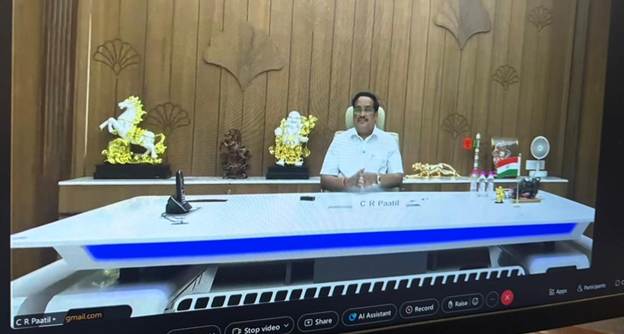
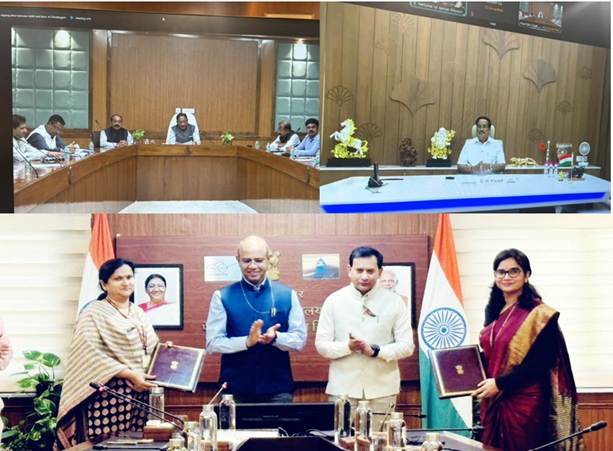
The MoUs were signed during separate scheduled meetings held via video conference, in the presence of the Union Minister of Jal Shakti, Shri C.R. Patil, who joined each meeting virtually.
The MoU with Gujarat was signed in the presence of the Chief Minister of Gujarat, Shri Bhupendrabhai Patel, and Shri Ishwarsinh Patel, Minister of State, Water Supply and Water Resources, Gujarat; who joined the event virtually along with senior officials from the Government of Gujarat.
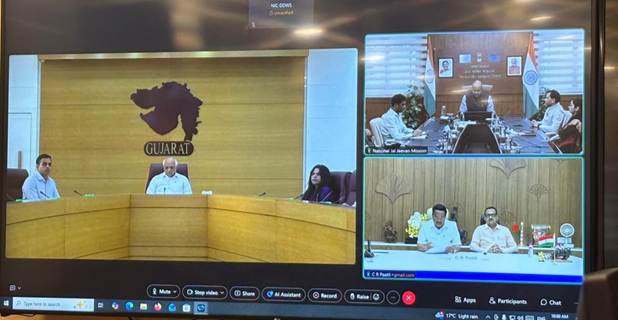
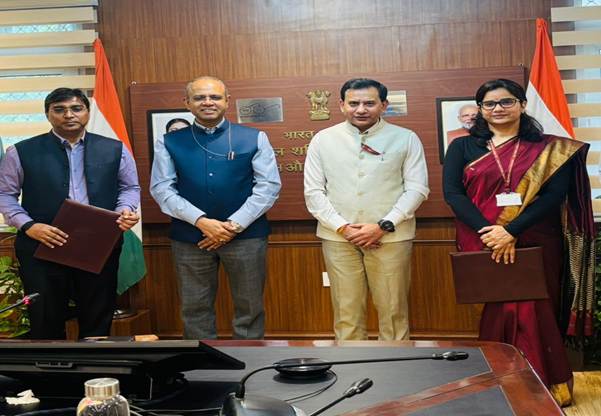
For Gujarat, the MoU was signed between Smt. Swati Meena Naik, Joint Secretary (Water), DDWS, and Ms. Shahmeena Husain, Principal Secretary, Water Supply Department, Gujarat.
Dr. Vikrant Pandey, Additional Principal Secretary, CMO Gujarat &Resident Commissioner to Govt. of Gujarat exchanged the MoU.
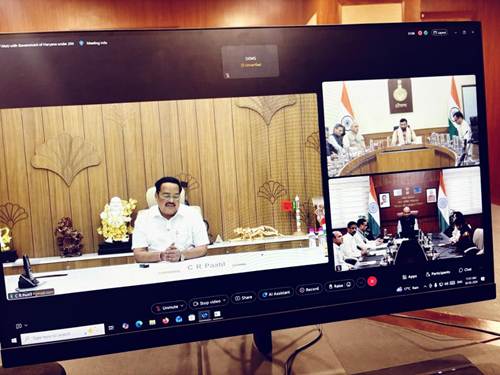
Marking a key step in Centre-State collaboration, the MoU with the State of Haryana was formally signed at 11 a.m. in the virtual presence of Chief Minister Shri Nayab Singh Saini, Shri Ranbir Gangwa, PHED Minister and other senior officials from the State.
The MoU was signed and exchanged between Smt. Swati Meena Naik, Joint Secretary (Water), DDWS, and Shri Mohammed Shayin, Commissioner & Secretary to Government of Haryana, PHED.
For the States of Chhattisgarh and Himachal Pradesh, the MoU signing took place at 11:35 a.m. and 12:15 p.m., respectively.The MoU with Chhattisgarh was signed between Smt. Swati Meena Naik, Joint Secretary (Water), and Shri Rajesh Sukumar Toppo, Secretary, PHED, Government of Chhattisgarh, and was exchanged by Smt. Shruti Singh, Resident Commissioner, in the virtual presence of the Chief Minister of Chhattisgarh, Shri Vishnu Deo Sai, Deputy Chief Minister Shri Arun Sao and other senior officials from the State.
The MoU with the State of Himachal Pradesh was signed and exchanged between Smt. Swati Meena Naik, Joint Secretary (Water), DDWS, Ministry of Jal Shakti, and Dr. Abhishek Jain, Secretary (JSV), Government of Himachal Pradesh, in the virtual presence of Chief Minister Shri Sukhvinder Singh Sukhu, Deputy Chief Minister Shri Mukesh Agnihotri, Er. Anju Sharma, Engineer-in-Chief, Jal Shakti Vibhag, and other senior officials.
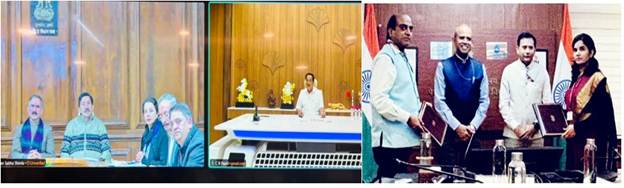
Senior officials from the Department of Drinking Water and Sanitation (DDWS), including Shri Ashok K. K. Meena, Secretary, DDWS, Shri Kamal Kishore Soan, Additional Secretary & Mission Director, National Jal Jeevan Mission (NJJM), along with officers from DDWS were present during the MoU signing.
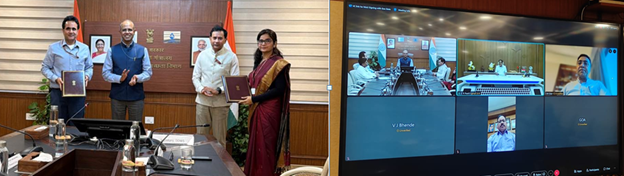
The MoU with the State of Goa was signed and exchanged between Smt. Swati Meena Naik, Joint Secretary (Water), DDWS, Ministry of Jal Shakti, and Shri Sarpreet Singh Gill, Commissioner Cum Secretary (Water Resources), Govt. of Goa, in the virtual presence of Chief Minister of Goa, Dr. Pramod Sawant and Shri. Subhash Phal Dessai, Minister of Social Welfare, Drinking Water, Empowerment of Persons with Disabilities, River Navigation, Government of Goa.
Addressing the gathering, Union Minister of Jal Shakti, Shri C. R. Patil, said that under the visionary leadership of Prime Minister Shri Narendra Modi, the goal of “Har Ghar Jal” is today becoming a powerful instrument of transformation in the lives of people across rural India. With the objective of “Har Ghar Jal, Har Gram Sujal”, Jal Jeevan Mission has emerged as a people‑centric movement aimed at enhancing dignity, health and empowerment in rural areas. The provision of tap water supply has not only made daily life more convenient but has also freed women from the drudgery of fetching water, enabling them to access time and opportunities for self‑development. Access to clean and safe drinking water strengthens health outcomes, improving sanitation and reinforcing social dignity across communities.
Referring to recent Parliamentary deliberations, reiterated that the Union Government follows a zero-tolerance policy towards corruption and emphasized that quality, transparency and accountability must guide all works undertaken under Jal Jeevan Mission and urged both States to ensure strict adherence to quality standards so that assets created remain functional and sustainable over the long term.
While addressing state‑specific contexts, Shri Patil acknowledged Gujarat's consistent execution and leadership, Haryana's exemplary administrative coordination and technology‑driven transparency, Himachal Pradesh’s drinking water services in challenging hilly terrain and freezing climatic conditions, and Chhattisgarh's focus on accelerating coverage in lagging districts such as Jashpur, Sukma and Bijapur, while strengthening recharge systems and multi‑village schemes.
He also appreciated Goa for effectively implementing the programme and ensuring safe drinking water access across the State through the Jal Jeevan Mission. The leadership of the Chief Minister and the efforts of state officials were acknowledged. In a coastal State like Goa, surrounded by ocean waters, the provision of clean drinking water despite saline conditions demonstrates a strong commitment to reliable service delivery.
Shri Patil further stated that Jal Jeevan Mission is not merely a scheme, but a life‑impacting mission that is bringing about fundamental improvements in health, dignity and quality of life, particularly for women and rural communities. Thus, regular and continuous drinking water supply must be ensured in every village, and public grievances should be addressed promptly.
Chief Minister of Gujarat Shri Bhupendrabhai Patel stated that the Government of Gujarat has always worked in cooperation with the Central government. He committed that the state government will abide by all the points of MoU and assured that Gujarat would uphold the confidence placed in it through timely execution and strict adherence to the structural reforms envisaged under JJM 2.0, with a focus on quality works, institutional strengthening and long‑term sustainability of rural drinking water systems.
Chief Minister of Haryana, Shri Nayab Singh Saini, highlighted that Jal Jeevan Mission 2.0 marks an important step in strengthening the partnership between the Central and State Government. He stated that under the leadership of the Prime Minister, water security has been accorded the highest priority, recognising water as essential for life, health and dignity and assured that the state will ensure last mile connectivity with functionality.
Shri Vishnu Deo Sai, Chief Minister of Chhattisgarh, highlighted that Chhattisgarh is a tribal‑dominated State with geographically remote and challenging rural habitations, and reaffirmed the state’s strong commitment to provide every rural household with safe and adequate drinking water. He stated that the signing of the MoU will further strengthen long‑term sustainability of drinking water supply systems, with special emphasis on source augmentation and recharge. Emphasising on last‑mile connectivity in tribal and left‑behind regions, he assured that the state is working with focused efforts to ensure inclusive coverage under Jal Jeevan Mission, while expressing gratitude for the continued guidance, support and partnership of the Central Government.
Chief Minister of Himachal Pradesh, Shri Sukhvinder Singh Sukhu, expressed his sincere appreciation to Union Minister of Jal Shakti, Shri C. R. Patil, for the continued support extended to the State in advancing drinking water infrastructure. Highlighting Himachal Pradesh’s unique geographical and climatic conditions he emphasised the need for context‑specific design and implementation of water supply systems, noting that costs and technical complexities vary significantly across regions such as the Shivalik Hills, the mid‑Himalayan belt and the higher Himalayan areas, particularly in freezing conditions. On the institutional front, he underscored that the State has already enabled the involvement of Panchayats across most regions and is consistently working towards empowering gram panchayats to levy user charges and locally manage operation and maintenance (O&M) expenditures. He noted that these efforts are strengthening community ownership, financial self‑reliance and the long‑term functionality of rural drinking water systems in the State.
The Chief Minister of Goa, Dr. Pramod Sawant, emphasised the importance of service delivery beyond infrastructure creation. He highlighted the need to ensure reliability, water quality and long-term functionality of systems. He further stated that the signing of the MoU will strengthen last mile connectivity, institutional accountability and convergence at the local level. Underscoring the role of Panchayats, he highlighted ongoing efforts to empower local bodies in managing operation and maintenance, promoting community ownership and ensuring financial sustainability of rural water supply systems.
The reform‑linked MoU mandates a Gram Panchayat‑led, service‑based and community‑centered model of rural water governance, aligned with the objectives of Jal Jeevan Mission 2.0.
The extension of Jal Jeevan Mission up to December 2028, with enhanced financial outlay, seeks to restructure and reorient the programme towards assured service delivery, with a focused emphasis on functionality, water quality, source sustainability and community ownership, thereby establishing JJM 2.0 as a robust and sustainable national model for rural drinking water services.
The reform‑linked MoU seeks to ensure that every rural household has access to drinking water supply in adequate quantity and of prescribed quality on a regular basis, through strengthened community participation (Jan Bhagidari) and bringing in structural reforms for sustainable operation and maintenance of rural water supply systems, thereby enhancing the living standards of rural communities contributing to long‑term water security aligned with the national vision of Viksit Bharat @2047.
ND
***
(Release ID: 2243182)
Visitor Counter : 1610