Ministry of Jal Shakti
International Conference on Dam Safety 2026 Successfully Concludes in Bengaluru
Highlights Technology, Accountability, Risk-Informed Decision Making, and Climate-Resilient Approaches to Dam Safety
Posted On:
16 FEB 2026 2:33PM by PIB Delhi
The two-day International Conference on Dam Safety (ICDS) 2026, which commenced on 13th February 2026 with a high-level inaugural and plenary programme, followed by technical and industrial sessions that set the strategic context for the conference deliberations, concluded successfully after extensive discussions and knowledge exchange.
The first day of the Conference brought together senior government leaders, regulators, international experts, and practitioners to emphasize India’s advancing dam safety framework under the Dam Safety Act, 2021 and the Dam Rehabilitation and Improvement Project (DRIP). Deliberations highlighted climate resilience, coordinated reservoir operations, and institutional capacity-building as critical priorities for strengthening dam safety governance in the country.
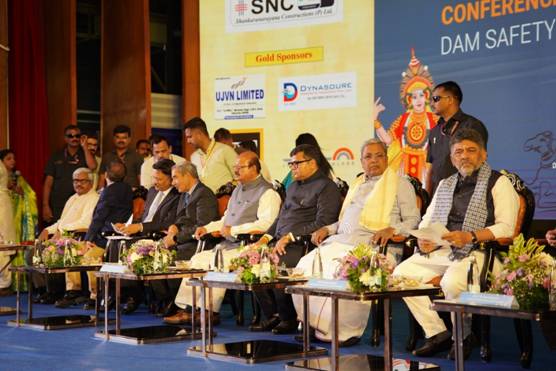
The second day of the Conference featured a series of intensive technical and industrial sessions that highlighted global and national best practices in dam rehabilitation, sediment management, risk-informed assessment, and climate resilience. Experts from government agencies, international organisations, academia, and industry shared evidence-based approaches and field-tested solutions aimed at strengthening the safety and sustainability of ageing water infrastructure.
- Technical Session on Ageing Dams: State-of-the-Art Rehabilitation
Practices emphasised that as many dams approach or exceed their design life, scientific and risk-informed rehabilitation supported by strict quality assurance and sound governance has become a critical priority.
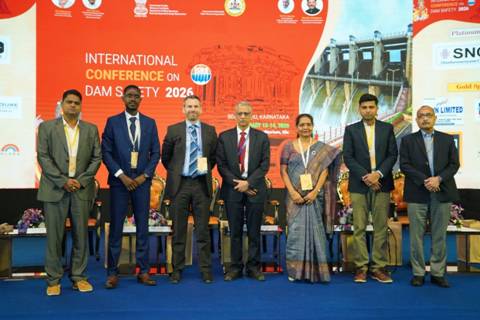
- Technical Session on Sediment Management in Reservoirs highlighted reservoir sedimentation as a long-term threat to dam safety and water security. The session reinforced the need to move from reactive interventions to integrated, preventive sediment management supported by catchment treatment, remote sensing, and policy-backed implementation.
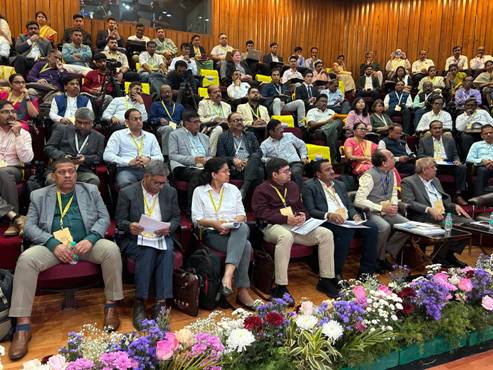
- Technical Session on Risk-Informed Decision-Making for Safer Dams focused on strengthening dam safety regulation and emergency preparedness through structured risk frameworks. The session highlighted that simplified risk screening, dam-break assessment tools, and climate-aware methodologies are essential for prioritisation and evidence-based decision-making across large dam portfolios.
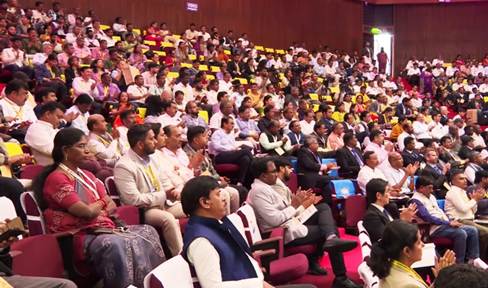
- Technical Session on Hydrological Safety of Dams and Coordinated Reservoir Operations for Flood Management underscored the importance of forecast-informed and basin-level coordinated reservoir operations. The discussions highlighted that dynamic rule curves, real-time data sharing, and decision-support systems are indispensable for managing floods and droughts under increasing climate variability.
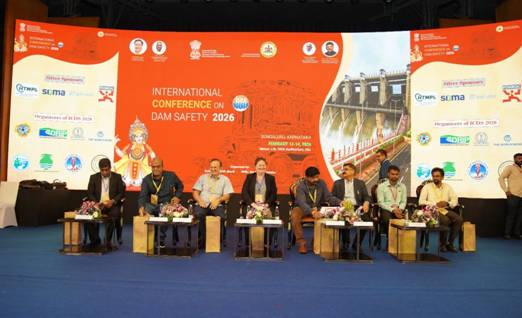
- Technical Session on Lessons from Dam Distress and Failures reaffirmed that dam distress and failure events consistently point to the need for engineering diligence, strict adherence to design and construction standards, effective Emergency Action Plans, and strong institutional accountability.
- Industrial Session on Advances in Dam Safety Monitoring Systems highlighted how validated real-time data, digital platforms, and advanced sensing technologies are transforming dam safety monitoring and enabling more reliable, risk-informed operational decisions.
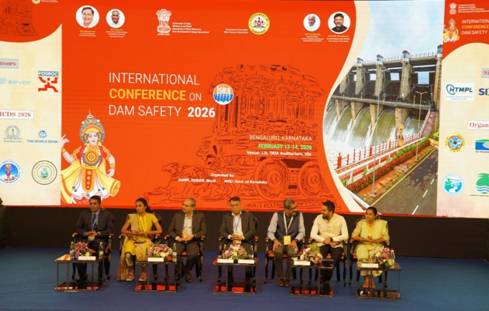
The Valedictory Session saw the august presence of Shri V. Somanna, Minister of State, Ministry of Jal Shakti. It was also graced by Mr. Paul O’Connor, Chair, Dam Safety NSW, Australia; Mr. Thomas Edward Bryant, Water Resources Management Specialist, World Bank; Shri Subodh Yadav, IAS, Additional Secretary, Department of Water Resources, Ministry of Jal Shakti; Shri Anupam Prasad, Chairman, Central Water Commission; Shri Pradeep Kumar Agarwal, IAS, Joint Secretary, Department of Water Resources, River Development & Ganga Rejuvenation, Ministry of Jal Shakti; and Shri Satyam Suwas, Chairman, Department of Materials Engineering, Indian Institute of Science, Bengaluru., Sri Krishnamurthy B. Kulkarni, KES (A/C), Secretary to Government, Water Resources Department, Government of Karnataka;
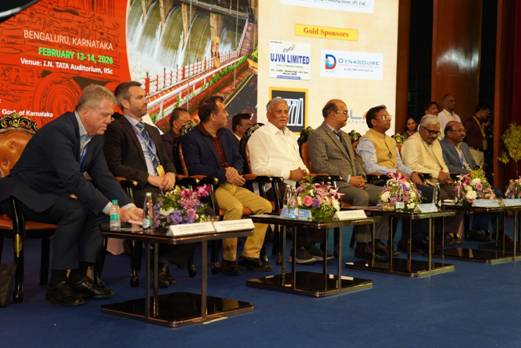
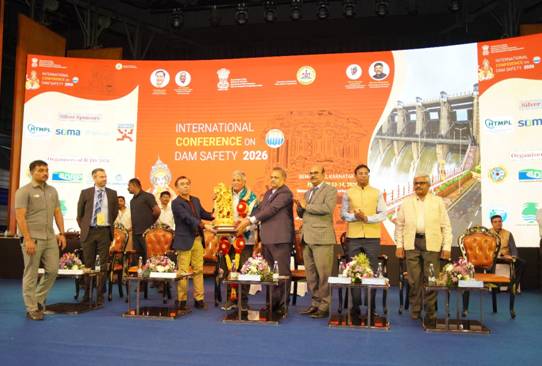
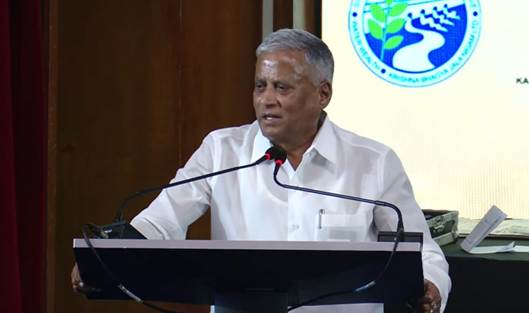
Delivering the welcome address, Shri Sri Kulkarni noted that dam safety has moved beyond routine inspections to become a multidimensional challenge encompassing climate resilience, emerging technologies, regulatory frameworks, data-driven decision-making, emergency preparedness, and institutional strengthening. He highlighted that these critical themes were effectively addressed through the conference’s technical sessions, case studies, and policy deliberations.
Presenting the conference recommendations, Shri Subodh Yadav emphasised that with over 85 per cent of India’s dams being earthen, there is an urgent need for innovative and cost-effective armouring solutions to prevent catastrophic failures due to overtopping. He highlighted the importance of simplified dam break analysis and hazard assessment tools to support rapid, first-level planning across India’s large dam portfolio.
He stressed strengthening emergency preparedness through enforceable Emergency Action Plans, public awareness, and coordination with disaster management authorities. He underscored the role of non-structural measures such as updated EAPs, O&M manuals, floodplain zoning, inflow forecasting systems, and flood early warning systems. He further highlighted the need for a phased, data-driven approach to dam rehabilitation, sustainable reservoir sediment management using remote sensing, desilting through revenue-neutral models, and applied research involving industry for the commercial utilisation of dredged material.
In his valedictory address, Shri V. Somanna, Minister of State, Ministry of Jal Shakti, expressed appreciation to engineers, policymakers, experts, and stakeholders for their role in strengthening India’s dam safety framework. Recalling Sir M. Visvesvaraya, he observed that engineering guided by vision and integrity remains central to safe and sustainable national development.
He noted that under the leadership of Prime Minister, Shri Narendra Modi, India has steadily reinforced its dam safety architecture, with the Dam Safety Act standing out as a landmark reform for accountability and governance. Highlighting the Dam Rehabilitation and Improvement Project, he stated that hundreds of dams have been strengthened through transparent reporting, real-time monitoring, and advanced technological interventions to enhance resilience.
Reflecting on the two-day conference, the Minister highlighted deliberations on dam safety, risk mitigation, climate resilience, and operational excellence, reiterating that “a dam is a monument of public trust” and that safety must remain paramount. He further laid stress on sediment management of reservoirs on priority through strategic interventions. Proposing the vote of thanks, Shri Pradeep Kumar Agarwal described ICDS 2026 as a valuable and enriching forum, and expressed gratitude to the Government of Karnataka, the World Bank, the Indian Institute of Science, and all organisers, experts, and delegates whose contributions ensured the successful conclusion of the conference.
The valedictory session concluded with a strong reaffirmation that the knowledge shared, partnerships forged, and commitments strengthened at ICDS 2026 will guide India towards safer dams and a more resilient water future.
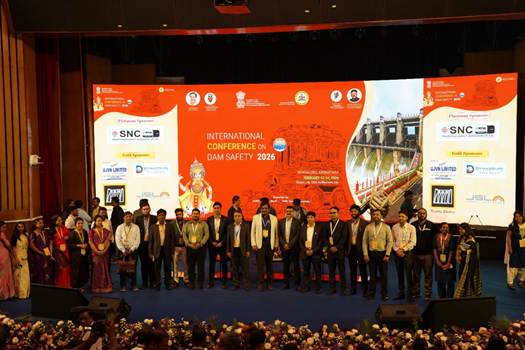
With the conclusion of its two-day deliberations, ICDS 2026 marked a significant step forward in strengthening India’s dam safety ecosystem. The discussions reaffirmed that dam safety extends beyond engineering considerations to encompass governance reforms, climate resilience, technological innovation, risk-informed decision-making, and community preparedness.
The exchange of practical insights, global experiences, and policy perspectives over the course of the Conference provided clear directions for advancing safer and more resilient water infrastructure. ICDS 2026 thus reinforced a shared commitment among stakeholders to ensure robust dam safety practices and sustainable reservoir management in the face of evolving climate and developmental challenges.
***
ND
(Release ID: 2228649)
Visitor Counter : 2708