Ministry of Road Transport & Highways
Union Minister Nitin Gadkari highlights regular consultations are essential to ensure policy alignment, strengthen cooperative federalism, and deliver efficient, safe, and citizen-centric transport solutions nationwide.
Union Minister Nitin Gadkari, chairs Annual Meeting of Transport Ministers from all States and Union Territories
Posted On:
08 JAN 2026 8:40PM by PIB Delhi
Union Minister Shri Nitin Gadkari Ji, today chaired the Annual Meeting of Transport Ministers from all States and Union Territories in New Delhi. The meeting focused on critical issues such as road safety, passenger and public convenience, ease of doing business, and automobile regulations.
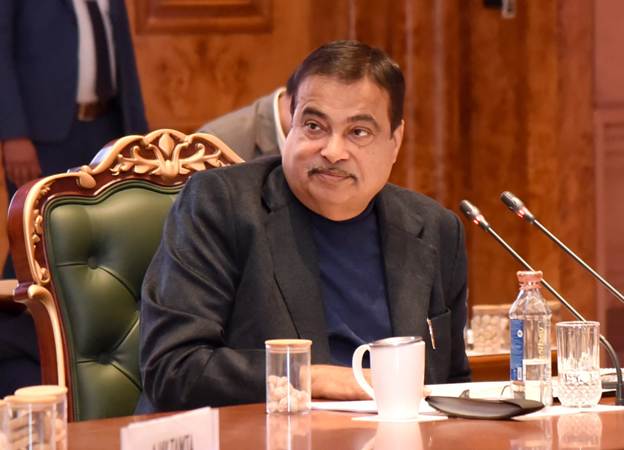
Addressing the gathering, Shri Gadkari Ji stated that transport being a Concurrent Subject under the Constitution necessitates close and continuous coordination between the Union and State Governments. He highlighted that regular consultations are essential to ensure policy alignment, strengthen cooperative federalism, and deliver efficient, safe, and citizen-centric transport solutions nationwide.
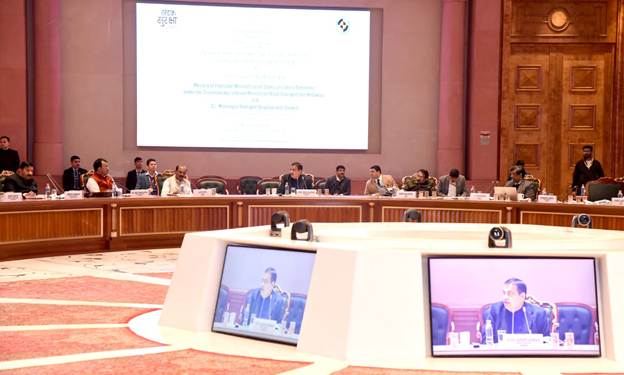
Two-day workshop on 7th January 2026 and 8th January 2026 at Bharat Mandapam to holistically deliberate issues, solutions and next steps to help drive transformation in India’s road transport sector. The 1st day of the workshop on 7th January was conducted with Transport Secretaries of all States / UTs, and was chaired by Secretary RT&H, Shri V Umashankar. Additional Secretary Transport, Shri Mahmood Ahmed opened the session and set the themes for the brainstorming workshop on this day.
Following the 7th January workshop with the Government officials, the 8th January workshop was conducted with Hon’ble Transport Ministers of all States / UTs, and was chaired by Hon’ble RT&H Minister, Shri Nitin Gadkari Ji, where key ideas from the 7th January workshop were further expanded and aligned between Central and State Government stakeholders of the Road Transport sector with a dedicated focus on Road Safety including the Road Safety Pledge. The day concluded with the 43nd Transport Development Council (TDC) meeting where suggestions from the country’s transport organizations (e.g., AIMTC, BOCI and others) were deliberated with the Hon’ble Transport Ministers and Government officials.
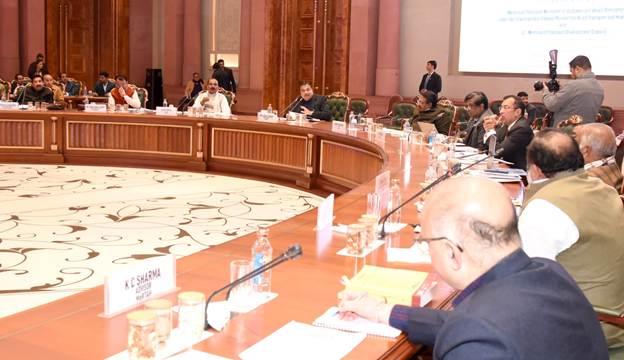
During the two-day workshop, the following topics were deliberated, and specific actions for respective stakeholders were aligned, to help propel the road transport sector forward:
1. Digitization and Standardization of Transport Services
States reviewed progress on online transport services under Vahan and Sarathi, with emphasis on uniform implementation, reduction of physical visits, and standard workflows to improve ease of living and ease of doing business.
Further, States reviewed data quality, vehicle data classification framework on Vahan, and data-sharing protocols to ensure accurate, reliable, and secure transport databases for planning and enforcement.
2. Motor Vehicle Reforms and Legislative Amendments
Proposed amendments to the Motor Vehicles Act, including Jan Vishwas 2.0 provisions, were discussed to improve ease of living and doing business, strengthen regulatory clarity, enhance road safety, and decriminalize minor offences.
3. Road Safety and Post-Crash Care
Comprehensive deliberations were held on reducing road fatalities through safer infrastructure, improved enforcement, and strengthened emergency care, along with scaling up digital systems such as e-DAR and reviewing launch readiness of the cashless treatment scheme for road accident victims. Emphasis was also placed on nomination of State-level points of contact (PoCs) and improved coordination among police, hospitals, and emergency services at the district level for successful implementation of cashless treatment scheme.
4. Vehicular Safety and Engineering Standards
Enhanced safety norms for buses, sleeper coaches, and passenger vehicles were discussed, including bus body codes, BNCAP ratings, and phased introduction of Advanced Driver Assistance Systems (ADAS).
5. District-Level Road Safety Initiatives
Initiatives such as Zero Fatality Districts, strengthening District Road Safety Committees.
6. Sustainable Transport and Vehicle Scrapping
Progress on the Vehicle Scrapping Policy was reviewed, including expansion of Automated Testing Stations (ATS), Registered Vehicle Scrapping Facilities (RVSFs), and incentives to promote fleet modernization.
7. Emissions and PUCC 2.0 Norms
Implementation status of PUCC 2.0 was reviewed, with focus on improving compliance, audit mechanisms, and adoption across all States and UTs.
8. Intelligent Transport Systems and e-Enforcement
States discussed strengthening e-Enforcement, e-challan systems, VLTD deployment, and command-and-control centers to improve compliance, women safety, and real-time monitoring of transport operations.
9. Driver Training and Capacity Building
The importance of expanding Driver Training Institutes (DTIs), Institutes of Driving Training and Research (IDTRs), and regional training centers was emphasized to improve driver skills and overall road safety.
10. Sadak Suraksha Mitra program
To address the rise in road fatalities and empowering young people to implement and support life-saving road safety measures in their local areas, MoRT&H in collaboration with MoYA&S has launched this program. Under this initiative, motivated youth volunteers, including graduate engineers, are systematically trained and certified in road safety principles, Safe System approaches, accident hotspot identification, data collection, and basic post-crash assistance, while clearly avoiding legally sensitive roles.
The workshops concluded with an address from Hon’ble Union Minister, Road Transport and Highways, Shri Nitin Gadkari reinforcing the need to bring together all of these themes into a cohesive, forward-looking vision. Our collaborative efforts will lay the foundation for a transport system that serves the needs of every citizen, contributes to our national development, and ensures a sustainable and safe future for all citizens.
Key takeaways from the 2 days of workshop
|
S. No
|
Discussion topic
|
Key Takeaways
|
|
1
|
Online Transport Services
|
- Government to standardize 100+ online transport services, including inter-State services such as NOC and ownership transfer
- Steps to strengthen Aadhaar-based authentication, including name standardization and phonetic matching
- Standardized workflows to be rolled out for reducing state-level customizations
|
|
2
|
Vehicle, Classification, Data Sanitization and Data Sharing
|
- Large-scale data sanitization of vehicle and driving licence records to improve accuracy and ensure data driven policy making
- Creation of a central digital data-sharing framework across all stakeholders to ensure ease of doing business, compliant with DPDP act
|
|
3
|
Voluntary Vehicle Fleet Modernization Program
|
- Stronger regulatory oversight of vehicle scrapping and automated testing facilities to prevent malpractices
- Promotion of private-sector participation to accelerate deployment of testing and scrapping infrastructure
- Exploration of graded tax incentives to encourage phasing out of older and polluting vehicles
|
|
4
|
Cashless Treatment scheme
|
- Statutory Cashless treatment scheme will take precedence and existing State emergency response systems / schemes may extend further benefits
- On-boarding of all states on TMS 2.0 and integration with 112 to strengthen ambulance ecosystem
|
|
5
|
Road Safety: Utilization of e-DAR
|
- Adoption of e-DAR as single accident data reporting system
- Police/ resource capacity gaps to be addressed for timely completion of accident data entry on e-DAR
|
|
6
|
Road Safety: Sadak Suraksha Mitra, District Road Safety Committee and District Road Safety Fund
|
- SSM to be implemented as district-led, bottom-up volunteer initiative
- Reputed State-level institutes to be identified who will act as training and mentoring partners for SSM
- DRSC meetings, reporting, and knowledge sharing to be improved
- Guidelines for DRSF to be created and socialized
|
|
7
|
MV Act Amendment
|
- Proposed amendments to improve ease of living and doing business, strengthen regulatory certainty, and enhance road safety
- Introduction of a points-based system for tracking traffic violations
- Enabling digital and automated issuance of permits for all goods vehicles upto a certain gross vehicle weight
|
|
8
|
e-Challan and e-Enforcement
|
- Strengthening of e-enforcement through workshops, Vahan integration with state system, and guidance on implementation
- States to submit revised, accurate SASCI-aligned proposals promptly for e-enforcement incentive
|
|
9
|
VLTD
|
- Issues related to implementation and operation of VLTD were reviewed
|
|
10
|
PUCC 2.0
|
- Onboarding of PUCC 2.0 to ensure uniform emission enforcement nationwide
- Strengthening data security and authenticity of emission testing systems
|
|
11
|
HSRP
|
- HSRP affixation to be 100% on vehicles registered before 01.04.2019 through OEMs or license plate manufacturers as decided by states
- Enforcement actions under section 192 of the act to be strengthened
|
***
GDH/SJ
(Release ID: 2212635)
Visitor Counter : 2717