Ministry of Information & Broadcasting
“Feeling” Before Story: Aquí and The Huntress Carry Human Emotions Across Borders at IFFI 2026
Directors Tiago Guedes and Suzanne Andrews Correa discuss films that explore human relationships, emotions and the pursuit of justice
Goa, 23 November 2026
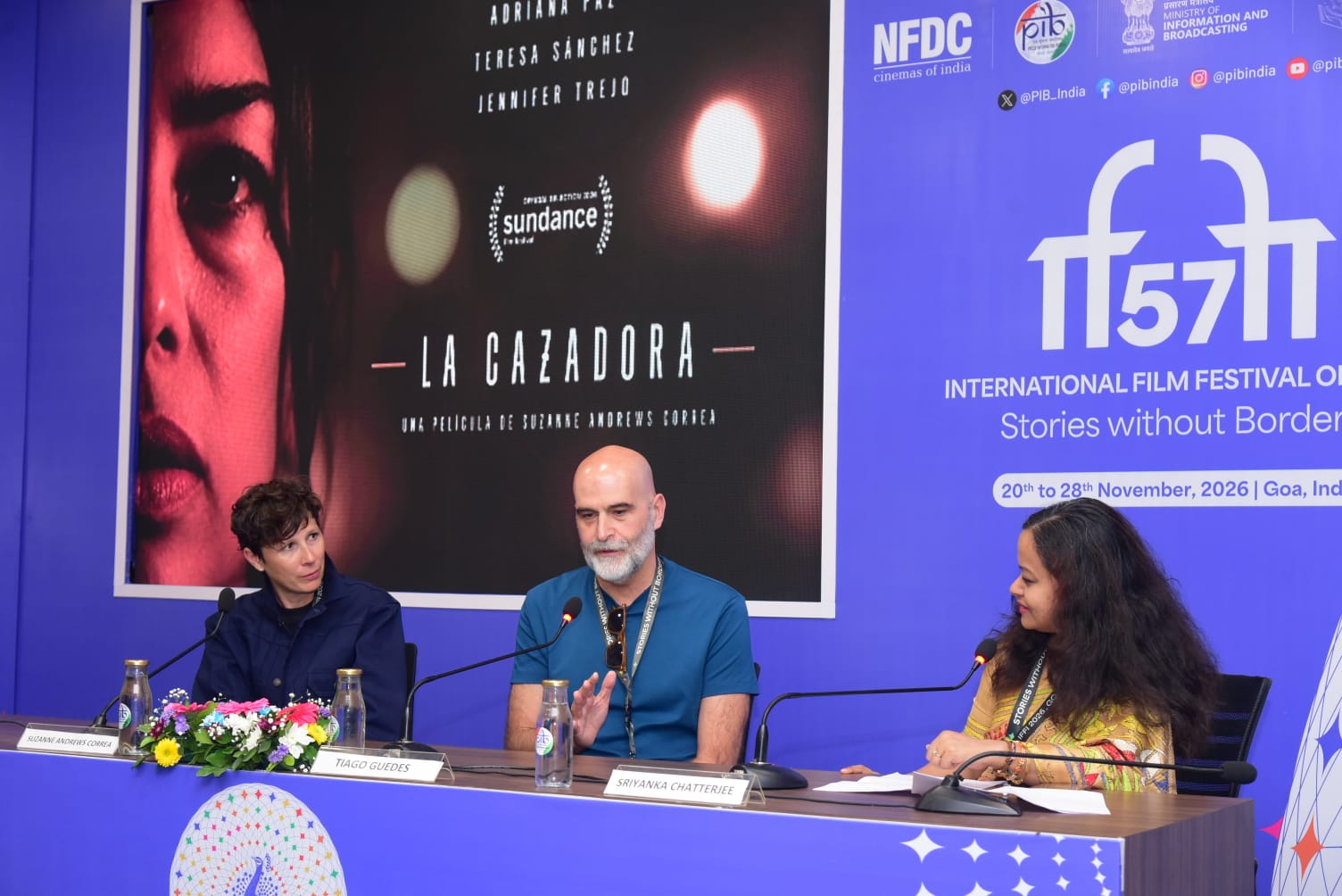
Two very different films at the 57th International Film Festival of India (IFFI) in Goa have one thing in common: both aim to make the audience feel before they understand, placing human emotions at the centre of storytelling. Filmmakers Tiago Guedes and Suzanne Andrews Correa addressed the press during the festival today, sharing insights into their respective films, Aquí and The Huntress (La Cazadora).
Aquí, directed by Tiago Guedes, is a dystopian drama adapted from J. M. Coetzee’s Jesus trilogy, screening in the International Competition section. The Huntress (La Cazadora), the debut feature of Mexican-American filmmaker Suzanne Andrews Correa, is a Spanish-language drama thriller inspired by real-life violence against women in Ciudad Juárez, Mexico.
Aquí: A Family Built on Choice
Aquí, a 2026 film that premiered at the Cannes Film Festival on 18th May 2026, is being screened in the International Competition at IFFI 2026, being held from November 20th to 28th in Goa. Adapted into a single film from Coetzee’s Jesus trilogy, it is set in a society where people begin their lives with no memory of the past, memories are erased and conformity is enforced.
The story follows Simón, who takes in a young boy named David, whom he meets on the journey to this new world. Believing the boy needs a mother, Simón seeks out Inés, who agrees, and the three slowly form an unconventional family. But a society that expects everyone to follow its rules cannot easily accept David, who refuses to fit in. Through his imagination and his desire for freedom, he challenges the world around him. Simón and Inés realise that raising a child is an uncertain journey, full of questions and without easy answers.
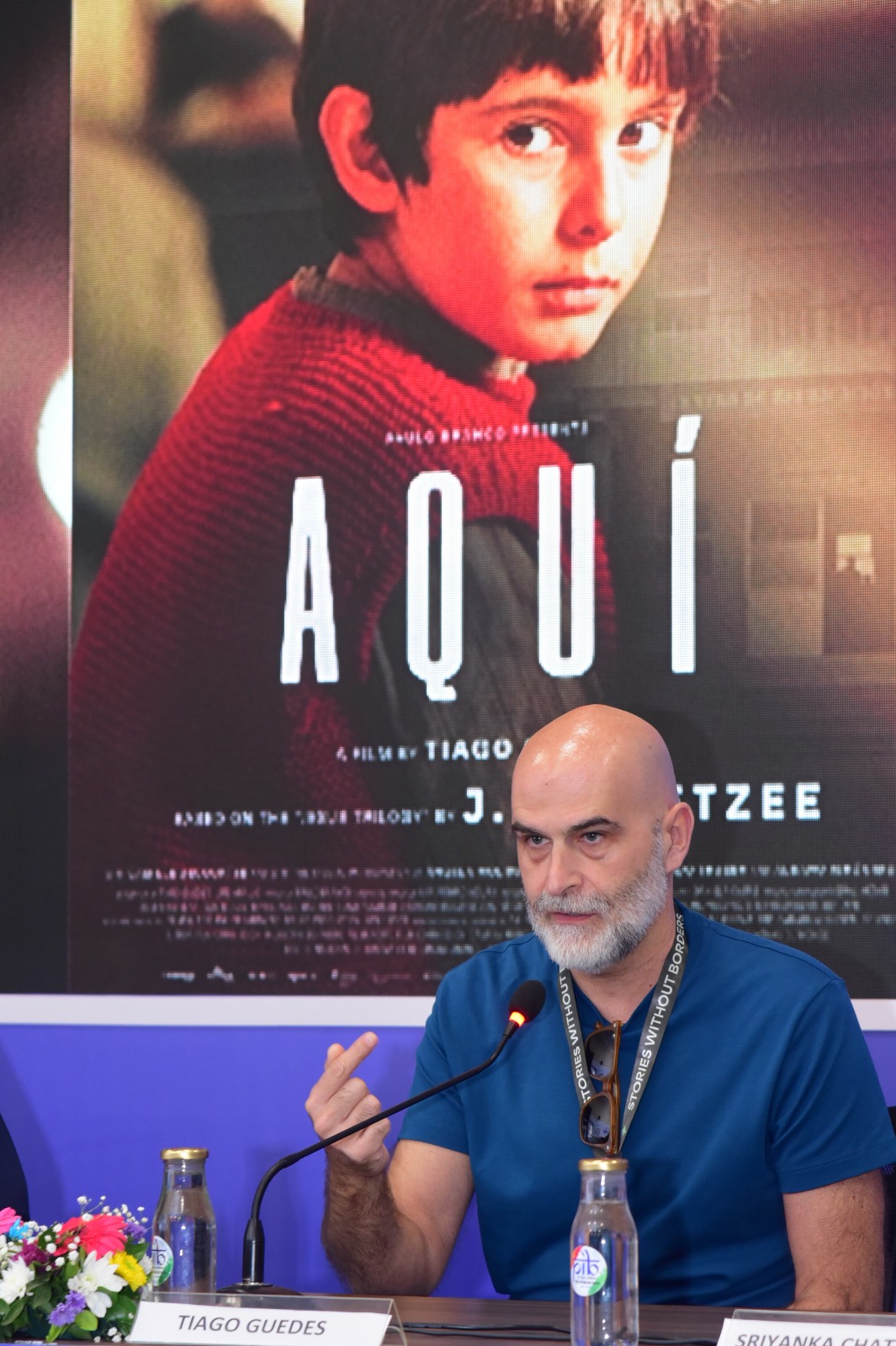
Director Tiago Guedes said the film seeks to explore what it means to be human, raising philosophical questions that he believes everyone should reflect upon. On adapting Coetzee’s books, he explained that while reading them, he focussed more on the feelings the story evoked than on the plot itself. This, he said, helps the intensity of the book’s essence reach the screen as a visual experience.
Guedes also explores the idea that family is not always defined by blood relations, but by choices made through a deeply human experience, without turning to religion or gods. The title, which means ‘Here’ in Spanish and Portuguese, reflects this too. As the characters make their choices, the camera subtly shifts from wider to tighter shots, drawing the audience closer to understanding them. Guedes also leaves silences and some ambiguity in the film, so that viewers can form their own interpretations of the story. Aquí is scheduled to be screened in Portugal, Spain and France in January.
The Huntress: A Cry for Justice
The Huntress (La Cazadora) is a 2026 Spanish-language drama thriller written and directed by Suzanne Andrews Correa. Adriana Paz stars as a factory worker and assault survivor in Ciudad Juárez, who turns to vigilante justice. The film draws upon the real-life incidents of violence against women and the 2013 case of “Diana, Hunter of the Bus Drivers”, an unidentified vigilante who fatally shot bus drivers amid widespread impunity.
Set in the border region between Mexico and Texas, the film portrays the experiences of women working in factories who faced sexual violence and exploitation. The story unfolds over 24 hours, focusing on the protagonist's experiences and her pursuit of justice.
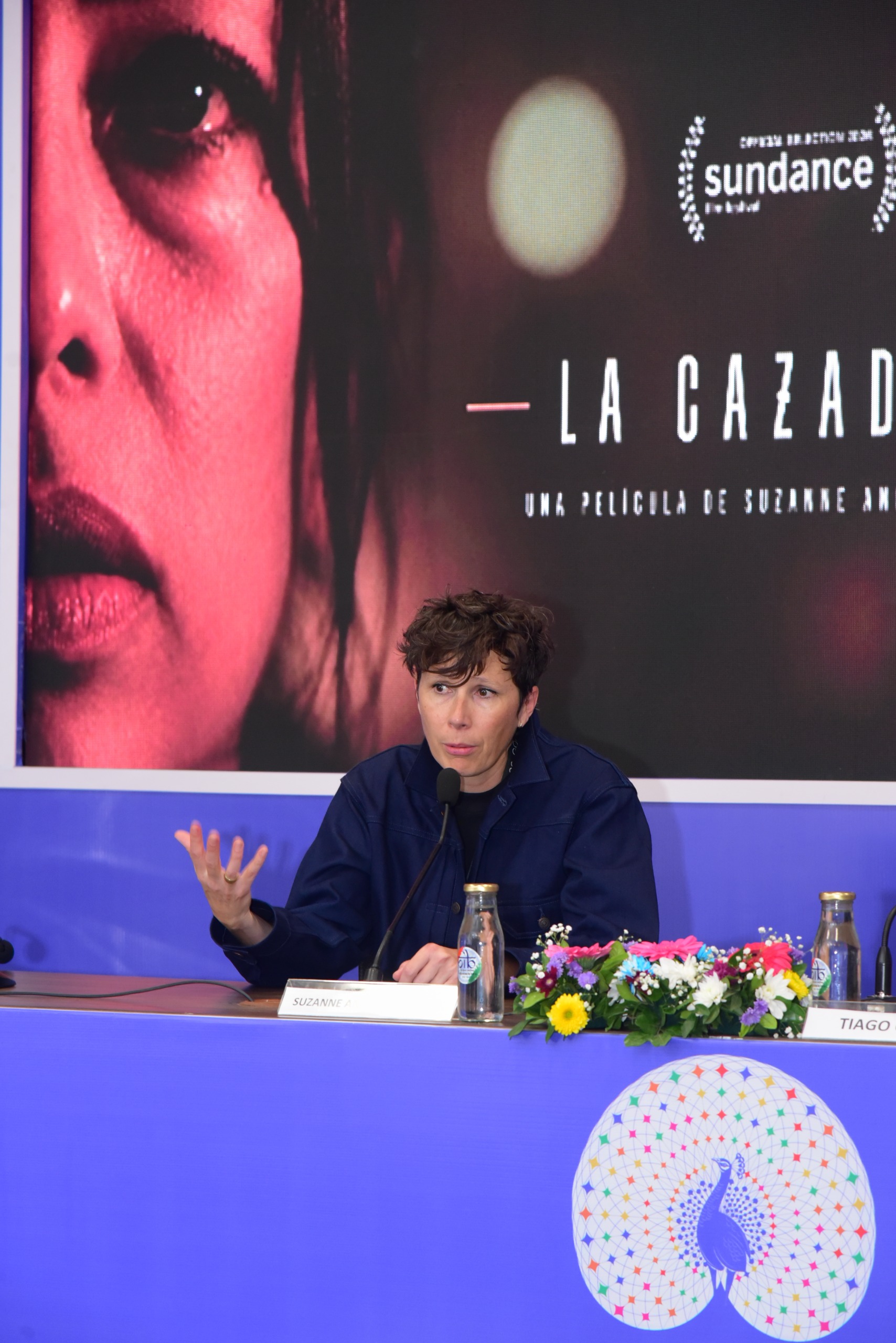
Correa said her objective was to give viewers a sensory experience of the protagonist’s powerlessness and desperation, so that they can empathise with why she took justice and revenge into her own hands when calls for help went unanswered. The film is also a call for change towards justice and against the crimes against women that continue to prevail.
Correa said the film took her ten years to make, alongside other projects. The journey showed her that filmmaking combines persistence and dedication with the vision to “stay with the story”, and with finding ways to communicate well with the crew, the actors and the audience. Like Guedes, she said her intention was to communicate “feeling” to the audience, rather than focus solely on the story. Although she had initially worried that the story might not appeal to international audiences without the real-life context, but she was both saddened and humbled to see the protagonist’s fear and emotions resonate with audiences across cultures and borders.
The session was moderated by Ms. Sriyanka Chatterjee.
Stories Without Borders
Though one is set in an imagined world without memory and the other in a very real border city, Aquí and The Huntress meet at the same place: they speak to the heart before the mind. Both directors chose to place feeling ahead of plot, and both use that feeling to ask difficult questions, about human relationships, the meaning of family, personal freedom and the pursuit of justice. Their films illustrate how stories rooted in specific cultural and social contexts can connect with audiences across languages and borders, reflecting the spirit of this year's IFFI theme, ‘Stories Without Borders’.
Read IFFILOID here: https://www.pib.gov.in/iffi/57/iffiLoid.aspx?yr=2026&lang=1®=48
* * *
PIB IFFI Team | Rabeehashmi/ LekshmiPriya/ Anushka/ Darshana | IFFI 57 - 077
(रिलीज़ आईडी: 2340559)
आगंतुक पटल : 97