Ministry of Environment, Forest and Climate Change
Union Environment Minister launches Inception Workshop for 6th Cycle of Management Effectiveness Evaluation of Tiger Reserves in India; Technical Manual for MEE-TR 2026 released
Need for Site-specific Landscape Management and Adaptive Conservation Practices that incorporate local Socio-economic Considerations: Shri Bhupender Yadav
MEE-TR 2026 to introduce ‘Solid Waste Management’ as a separate Evaluation Criterion of Tiger Reserves
प्रविष्टि तिथि:
25 SEP 2026 2:00PM by PIB Delhi
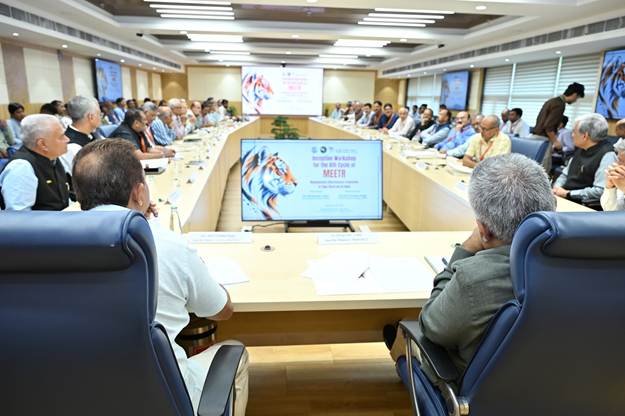
Union Minister for Environment, Forest and Climate Change Shri Bhupender Yadav today launched the Inception Workshop for the 6th Cycle of Management Effectiveness Evaluation of Tiger Reserves in India (MEE-TR), organised by the National Tiger Conservation Authority (NTCA) in collaboration with the Wildlife Institute of India (WII), in New Delhi.
The inception workshop marked the commencement of the 6th Cycle of MEE-TR, which will cover all 58 Tiger Reserves in the country. The workshop brought together representatives of NTCA, WII, State Forest Departments, Tiger Reserve management teams and experts to discuss the framework, methodology and implementation of the 6th Cycle.
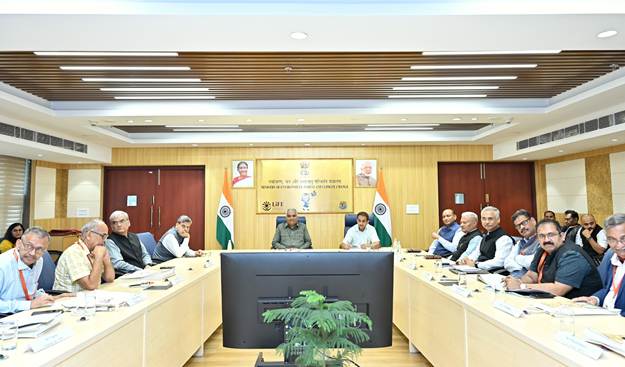
In his inaugural address, Shri Bhupender Yadav highlighted that India has demarcated over 85,000 sq km for tiger conservation. He emphasized the need to continuously integrate evolving scientific processes and technologies into wildlife conservation and evaluation. At the same time, he stressed that a science-based approach must be guided by compassion, values and vision to ensure harmonious engagement between forest departments and local communities. He acknowledged the contribution of generations of forest officials in fostering a sense of belongingness towards wildlife conservation in the society.
The Minister suggested that local ecological and sociological experts should contribute to the evaluation of MEE reports, besides local youth being involved in the MEE exercise. He emphasized that evaluation outcomes should reflect the specific needs and challenges of individual Tiger Reserves, with ecosystem preservation and sociological balance informing policy interventions.
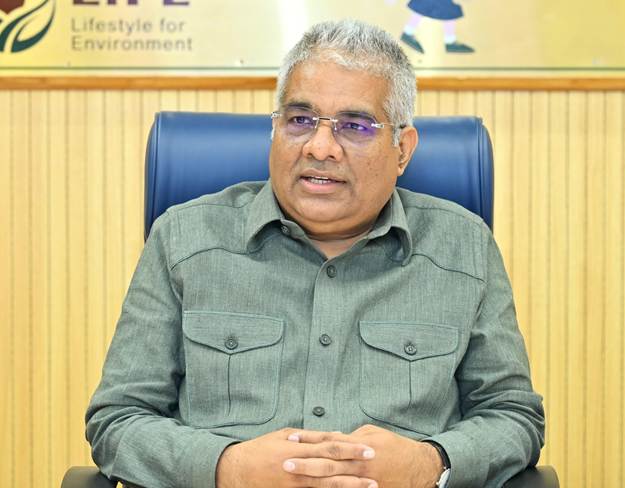
Shri Yadav called for area-based assessment of human-wildlife conflict and measurable conservation outcomes. He further emphasized the need for site-specific landscape management and adaptive conservation practices that incorporate local socio-economic considerations. He stressed that professionalism and objectivity should remain central to the MEE exercise, ensuring that assessments provide a robust basis for strengthening conservation management.
Addressing the session, Union MoS (EFCC) Shri Kirti Vardhan Singh appreciated the dedication of senior forest officers bringing decades of administrative and conservation experience to the on-ground MEE exercise. He noted that their extensive knowledge and field experience constitute a valuable repository of institutional learning for future generations of wildlife conservationists.
MEE-TR is a systematic and evidence-based assessment of how effectively a Tiger Reserve is being managed to achieve its conservation objectives. It examines management actions as well as the adequacy of planning, resources and management systems and whether these efforts are translating into desired conservation results. In India, MEE is undertaken using a framework adapted from the IUCN World Commission on Protected Areas (WCPA) Framework for Assessing Management Effectiveness. The framework assesses six elements: Context, Planning, Inputs, Processes, Outputs and Outcomes.
MEE was initiated in India in 2006. Five assessment cycles have been completed in 2006, 2010, 2014, 2018 and 2022, covering 28, 39, 43, 50 and 51 Tiger Reserves respectively. The 6th Cycle builds on the experience of previous assessments while strengthening the focus on field-based evidence, management outcomes, emerging threats, digital and spatial information and continuous improvement. A significant new feature of MEE-TR 2026 is the introduction of ‘Solid Waste Management’ as a separate evaluation criterion. The criterion will focus on sustainable waste management practices within Tiger Reserves, with particular attention to waste generated at forest chowkis, waste arising from tourism activities and biomedical waste generated at wildlife rescue centres.
The assessment will cover major components of Tiger Reserve management, including tiger and prey conservation, habitat management, protection and wildlife crime, wildlife monitoring and health, fire and disaster management, human-wildlife coexistence, community engagement, tourism management, landscape connectivity and management planning and resources. The assessment will be undertaken by independent multidisciplinary evaluation teams, and will seek to identify management strengths, gaps and areas requiring improvement, while providing a basis for prioritising management actions and resources.
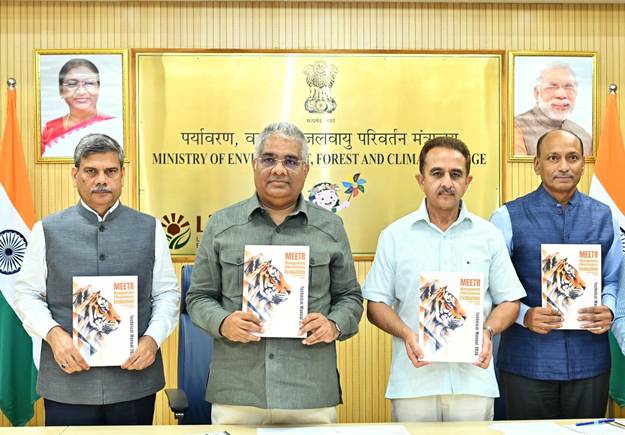
The technical sessions of the workshop covered perspectives and insights on MEE-TR, its genesis and evolution, criteria and indicators of the MEE-Tiger Reserves framework and operational modalities and logistics for field visits. The Technical Manual of MEE 2026 was also released during the inaugural session, providing the framework for the sixth-cycle evaluation.
*****
VM/GS
(रिलीज़ आईडी: 2314795)
आगंतुक पटल : 133