Ministry of Fisheries, Animal Husbandry & Dairying
Department of Fisheries Organized National Workshop on Promotion of Deep-Sea Fishing and Interaction with Access Pass and Letter of Authorization Holders
Major Focus on Technology, Financing, Skill development and Market Linkages promoting Harnessing of High-Value Marine Resources and Seafood Exports
प्रविष्टि तिथि:
17 SEP 2026 5:52PM by PIB Delhi
The Department of Fisheries, Government of India organized a National Workshop on Promotion of Deep-Sea Fishing and Interaction with Access Pass Holders on 17th September 2026 in Gandhinagar, Gujarat. The National workshop aims to promote deep-sea fishing by encouraging fishers to harness high-value fisheries resources, while also providing a platform to understand on-ground challenges and gather stakeholder suggestions for further strengthening the sector. Department of Fisheries, Government of India has given special thrust to strengthening fisheries farmer producer organizations (FFPO) and fisheries cooperatives while also focusing on digitization of the fisheries sector through various initiatives.
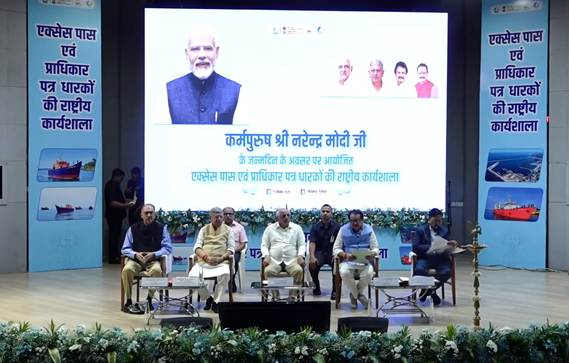
The National workshop was graced by presence of Shri Bhupendrabhai Patel, Hon’ble Chief Minister of Gujarat; Shri Rajiv Ranjan Singh, Hon’ble Union Minister for Fisheries, Animal Husbandry & Dairying and Panchayati Raj; along with Prof. S. P. Singh Baghel, Hon’ble Minister of State for Fisheries, Animal Husbandry & Dairying and Panchayati Raj. The event also witnessed participation form fishers including women fishers in person, along with officials from the Department of Fisheries, GoI, Government of Gujarat, ICAR, INCOIS, CIFNET, ASCI, NABARD, NCEL, NCDC, SEAI, MPEDA, EIC and other fisheries stakeholders.
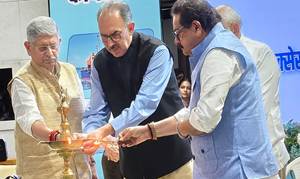
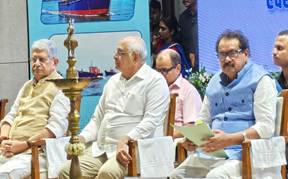
Shri Bhupendrabhai Patel, Hon’ble Chief Minister of Gujarat, highlighted Gujarat’s unique advantage of having the country’s longest coastline and urged fishers to fully leverage the opportunities being created through the Government of India’s deep-sea fishing initiatives. He emphasized that Gujarat stands to benefit significantly from investments in deep-sea fishing, training, infrastructure and market access, and assured the fishing community of the State Government’s full support in facilitating participation in training and capacity-building programmes. The Chief Minister encouraged fishers to proactively avail themselves of the benefits being offered by the Central and State Governments, particularly in areas such as skill development, cold-chain infrastructure and cooperative-led initiatives. He noted that the State Government is ready to support the establishment of cold storage facilities and facilitate training opportunities to help fishers enhance value realization from marine resources. Stressing the importance of collective efforts, he called upon all stakeholders to work together to harness Gujarat’s vast marine potential, strengthen the fisheries sector and contribute to the vision of a developed Gujarat and a developed India by 2047.
Shri Rajiv Ranjan Singh, Hon’ble Union Minister for Fisheries, Animal Husbandry & Dairying and Panchayati Raj, highlighted the transformative growth of India's fisheries sector under the leadership of Prime Minister Shri Narendra Modi through various schemes and initiatives. He noted that fish production has increased to a record 197.75 lakh tonnes in 2024-25, while seafood exports have more than doubled. The Minister pointed out that despite global trade barriers and increased tariffs in key markets, India’s seafood exports rose by ₹11,400 crore to a record ₹73,890 crore, reflecting the sector’s growing resilience and global competitiveness.
The Minister emphasized that the objective of issuing Access Passes for fishing in the EEZ and Letters of Authorisation for High Seas Fishing is to enable fishers to tap the vast untapped potential of high-value resources such as tuna and other oceanic species, increase exports and enhance incomes. He urged fishers to move beyond traditional fishing grounds, target high-value species in the EEZ and high seas, and adopt modern fishing practices supported by onboard processing, cold-chain infrastructure, value addition, branding and export-oriented market linkages. Stressing the importance of skill development and technology adoption, he called upon states to prepare structured training roadmaps for fishers and encouraged stakeholders to leverage concessional financing available under FIDF. He also noted that the fee for obtaining a Letter of Authorisation for High Seas Fishing has been reduced from ₹25,000 to ₹5,000 for cooperative societies, making it easier for fisher collectives to participate in deep-sea fishing and contribute to the growth of India's Blue Economy.
During the event Prof. S.P. Singh Baghel, Minister of State for Fisheries, Animal Husbandry and Dairying and Panchayati Raj, highlighted that the workshop had provided a valuable platform for deliberations on deep-sea fishing, covering issues such as technology adoption, cold-chain infrastructure, value addition, processing, market access and export opportunities. He shed light on the transformative impact of the Government’s initiatives in the fisheries sector, particularly the creation of a dedicated Department of Fisheries, the launch of PMMSY, and the promotion of the Blue Revolution and Blue Economy, which have contributed to increased fish production, productivity, exports and employment generation. He noted that the issuance of access passes is enabling fishers to venture into deeper waters and tap high-value resources, particularly tuna, thereby creating new opportunities for income enhancement and export growth. He emphasized that strengthening the entire fisheries value chain, including infrastructure, processing, value addition and market linkages, would be key to realizing the full potential of India’s marine fisheries sector and advancing the vision of a vibrant Blue Economy.
Dr. Abhilaksh Likhi, Secretary (Fisheries), Department of Fisheries, emphasized that India's deep-sea fisheries potential can only be fully realized through the active participation of fishers, cooperatives, FPOs, self-help groups and women stakeholders. He highlighted the immense opportunities in high-value oceanic resources such as tuna and stressed the need for modern fishing vessels, advanced technologies, sustainable fishing practices, capacity building and skill development to enhance fishers' incomes and strengthen the competitiveness of the marine fisheries sector. Reflecting on the discussions held during the workshop, he identified training and capacity building, improved access to finance, and the strengthening of cooperative institutions as the three key priorities for promoting deep-sea fishing. He assured the participants that the feedback and suggestions received from fishers and stakeholders would be incorporated into policy and programme implementation to accelerate the sustainable growth of India's deep-sea fisheries sector and improve livelihoods across fishing communities.
During the interaction with Letter of Authorisation (LoA) and Access Pass holders, fishers widely appretiated the Government’s decision to issue access passes, noting that it had enabled them to venture beyond traditional nearshore fishing grounds into the EEZ, opening up new opportunities to target high-value species such as tuna and other oceanic resources. Participants observed that access to deeper fishing grounds had improved livelihood prospects and created opportunities for higher incomes through export-oriented fisheries. The fishers also highlighted the need for enhanced support in the form of training on quality handling and value addition, cold-chain and cold storage infrastructure at fishing harbours, modernization of deep-sea fishing vessels, improved communication systems, and greater financial assistance for deep-sea fishing operations. They emphasized that strengthening these ecosystem enablers would help maximize the benefits of access passes, improve price realization, and unlock the full potential of India’s deep-sea fisheries sector.
The workshop featured five technical sessions covering the entire deep-sea fisheries value chain, including sustainable utilization of oceanic resources, modernization of fishing vessels, adoption of advanced technologies, capacity building, financing mechanisms, value addition, traceability systems, and export market access. The themes included Unlocking India’s Blue Economy: Deep-Sea Fishing Opportunities in the EEZ and High Seas for Enhanced Seafood Exports, Transforming India’s Deep-Sea Fishing Fleet- Modern Vessel Technologies and Global Best Practices, Building a Future-Ready Deep-Sea Fishing Workforce- Specialized Training, Skills and Capacity Development, Financing Mechanisms for Deep-Sea Fishing and From Deep-Sea Catch to Global Markets - Processing, Value Addition, Traceability and Export Compliance. Across five technical sessions, 19 speakers comprising experts from government, research institutions, financial institutions, industry, international organizations and fisher representatives deliberated.
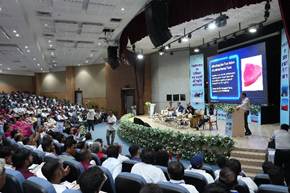
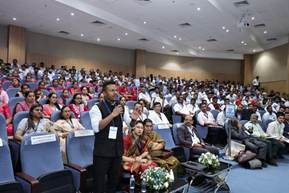
The speakers collectively emphasized that India has significant untapped potential in deep-sea fisheries, particularly for high-value species such as tuna, squid asnd other oceanic resources. They highlighted the need to shift fishing activities beyond nearshore waters through modern vessels, advanced fishing technologies, cold-chain infrastructure, scientific fish handling, traceability systems and international certification to improve fishers' incomes, seafood exports and overall value realization. Shri R. Ravindra, Ambassador of India to Iceland, shared Iceland's best practices in advanced fishing vessels, automated onboard processing, electronic monitoring and sustainable fisheries management, while advocating a "whole-of-fish" approach for maximizing value.
The discussions further underscored the importance of skill development, practical training, affordable financing, cooperative-led investments, modern harbour infrastructure, communication and safety systems, processing and value addition, digital catch documentation, export compliance and market access. Stakeholders and fisher representatives stressed that strengthening capacity building, improving access to credit, enhancing infrastructure, and adopting fisher-friendly digital traceability platforms would be critical for enabling fishers to successfully transition to deep-sea fishing and unlocking the full potential of India's Blue Economy.
The deliberations served as a significant platform for strengthening India’s deep-sea fishing ecosystem by bringing together policymakers, technical experts, financial institutions, industry stakeholders, cooperatives, and fishers for focused deliberations. The discussions and recommendations emerging from the workshop will help identify practical solutions to on-ground challenges, improve access to technology, skills, finance, and markets, and facilitate greater participation of fishers in deep-sea fishing.
*************
JP
(रिलीज़ आईडी: 2311518)
आगंतुक पटल : 86