Ministry of Social Justice & Empowerment
Occupational Safety Training under NAMASTE Scheme Inaugurated in West Bengal: First Batch Begins for Sanitation Workers of Durgapur Municipal Corporation
Five Day Programme to Promote Safe Practices and Mechanised Sanitation; West Bengal Profiles 7,630 Sewer and Septic Tank Workers
We need to provide sanitation workers with a safe, dignified and mechanised working environment: Smt. Agnimitra Paul
प्रविष्टि तिथि:
03 SEP 2026 5:46PM by PIB Delhi
The Occupational Safety Training Programme under the National Action for Mechanised Sanitation Ecosystem (NAMASTE) Scheme was inaugurated in West Bengal, with the first batch commencing for sanitation workers of the Durgapur Municipal Corporation.
The programme was organised under the NAMASTE Scheme of the Ministry of Social Justice and Empowerment, Government of India, with technical support from the CSIR-Central Mechanical Engineering Research Institute (CSIR-CMERI).
The programme was inaugurated in the presence of Smt. Agnimitra Paul, Minister-in-Charge, Urban Development and Municipal Affairs, Government of West Bengal.
Senior officials and representatives from CSIR-CMERI, the State Urban Development Agency, Asansol Municipal Corporation, Durgapur Municipal Corporation and the National Safai Karamcharis Finance and Development Corporation (NSKFDC) also attended the programme.
Addressing the gathering, Smt. Agnimitra Paul highlighted the importance of providing sanitation workers with a safe, dignified and mechanised working environment. She reiterated the commitment to eliminating hazardous cleaning practices through training, appropriate safety equipment and increased adoption of mechanised sanitation solutions.
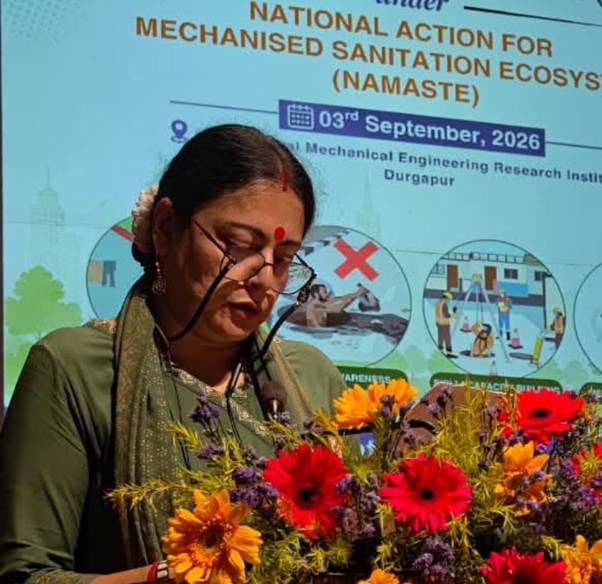
Smt. Agnimitra Paul appreciated the support extended by the Ministry of Social Justice and Empowerment, NSKFDC and CSIR-CMERI in strengthening the safety and capacity of sanitation workers in West Bengal. She emphasised that sanitation workers perform an essential role in keeping cities clean and healthy, and that safeguarding their dignity, safety and well-being is a collective responsibility.
West Bengal has completed the profiling of 7,630 Sewer and Septic Tank Workers. Personal Protective Equipment kits have also been distributed among identified workers. Awareness workshops on preventing hazardous sanitation practices have been conducted across 124 municipalities and three cantonment boards in the State.
To strengthen emergency preparedness, the blood-group details of sanitation workers have been collected and an emergency database has been created to facilitate timely assistance during critical situations.
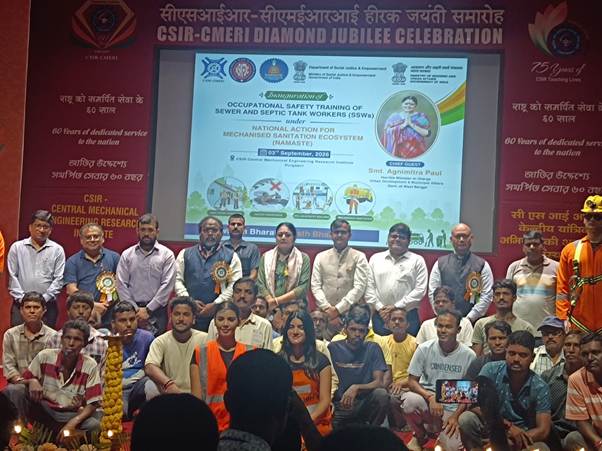
Identity Cards were also distributed to sanitation workers during the programme. The initiative recognises sanitation workers as an integral part of the urban sanitation ecosystem and reinforces the dignity and importance of their work.
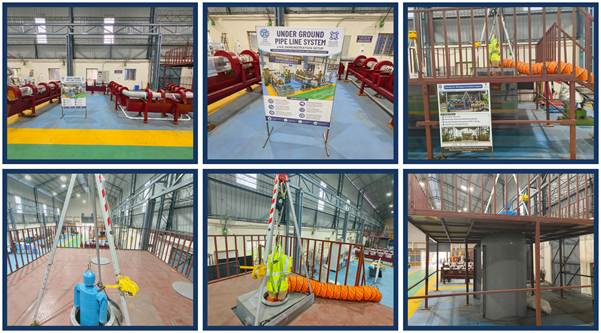
Safaimitras from the Durgapur Municipal Corporation participated in the programme. An audio-visual safety walk demonstrating the importance and correct use of Personal Protective Equipment was presented. The dignitaries also visited the Swachh Bharat Test Bed and the training facility for Safaimitras developed by CSIR-CMERI.
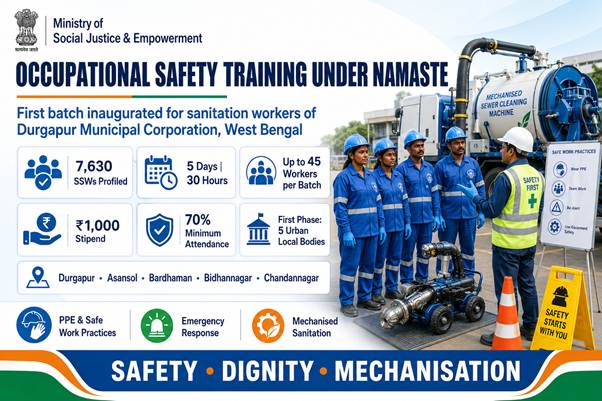
The Occupational Safety Training programme will be conducted over five days and comprise 30 hours of instruction. Each batch will accommodate a maximum of 45 sanitation workers.
An assessment will be conducted after completion of the training. Participants maintaining at least 70 per cent attendance will receive a certificate and a stipend of Rs 1,000.
The training will enhance the knowledge and practical skills of sanitation workers in occupational safety, appropriate use of Personal Protective Equipment, safe working practices, emergency response and mechanised sanitation operations.
In the first phase, the training programme is being implemented in Durgapur Municipal Corporation, Asansol Municipal Corporation, Bardhaman Municipality, Bidhannagar Municipal Corporation and Chandannagar Municipal Corporation. It will subsequently be expanded to other municipalities in the State in a phased manner.
As part of the initiative, CSIR-CMERI is proposed to serve as a one-stop institutional centre for sanitation-worker safety and mechanisation. It will provide an integrated platform for occupational safety training, testing and assessment of safety equipment, and verification of equipment and devices used in sanitation operations.
The institutional mechanism will promote the adoption of appropriate and reliable safety equipment by facilitating systematic testing against relevant technical and safety requirements. It will also support the capacity-building of sanitation workers and other stakeholders through structured technical and practical training.
By bringing together training, technology, testing and equipment verification under one institutional framework, the initiative will help Urban Local Bodies make informed decisions concerning safety equipment and mechanised sanitation solutions.
The NAMASTE Scheme promotes the safety, dignity and socio-economic well-being of sanitation workers while supporting the mechanisation of sanitation work and elimination of hazardous cleaning practices.
The Scheme seeks to ensure that sanitation workers are not required to undertake hazardous manual entry into sewers or septic tanks. Urban Local Bodies, government and private organisations, contractors and other agencies engaged in sanitation operations are expected to follow prescribed safety procedures and adopt mechanised solutions.
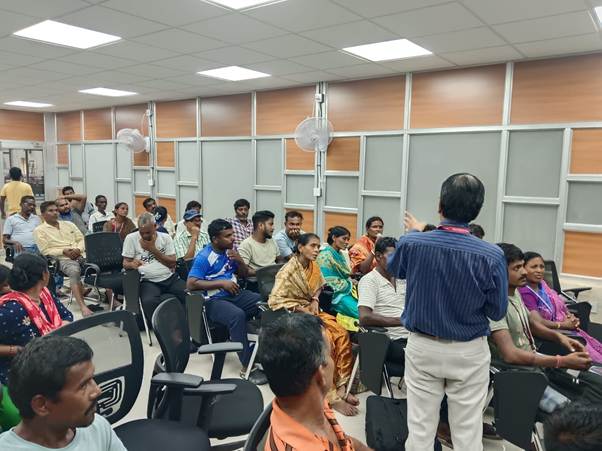
The programme reaffirmed the commitment of the Government of India and the Government of West Bengal to building a safer, mechanised and dignified sanitation ecosystem.
Safety, dignity and mechanisation remain the three foundational pillars of the NAMASTE Scheme.
****
PR-98 TAR/KV/GA/RK
(रिलीज़ आईडी: 2306424)
आगंतुक पटल : 847