PIB Backgrounder
India’s Makhana Sector: Traditional Crop to Global Superfood
प्रविष्टि तिथि:
19 AUG 2026 10:24AM by PIB Delhi
Makhana: India’s Superfood Sector on the Rise
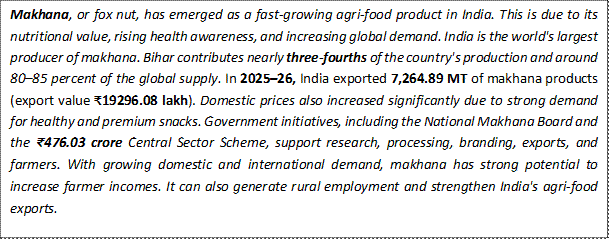
Makhana, scientifically known as Euryale ferox, is an aquatic crop grown mainly in shallow ponds, lakes, and wetlands. The edible part of the plant is its seed. After roasting or processing, the seed is popped and consumed as a fox nut. India is the world’s largest producer of makhana. This position is supported by suitable agro-climatic conditions and long-standing cultivation practices, mainly in Bihar, West Bengal, and Assam.
Over the years, makhana has evolved from a traditional food of Bihar into a widely consumed health food across the country. This transformation has been driven by rising health awareness and supportive government policies. The growth of startups producing value-added makhana products and the increasing role of Farmer-Producer Organizations (FPOs) have also contributed to the sector's expansion. In line with the sector’s growing importance, the Government announced the establishment of the National Makhana Board in the Union Budget 2025-26. The Board was formally launched in Bihar on 15 September 2025. This initiative marks a significant step towards strengthening and modernizing the makhana value chain.
To further support the sector, the Government has approved a Central Sector Scheme for the Development of Makhana with a total outlay of ₹476.03 crore for the period from 2025-26 to 2030-31. The scheme focuses on promoting research and innovation, improving the availability of quality seeds, and strengthening farmers’ skills. It also aims to upgrade harvesting and post-harvest practices, promote value addition, branding, and marketing, enhance exports, and reinforce quality control systems. Under the Central Sector Scheme for the Development of Makhana, ₹30 Crore was approved for 2025-26 and ₹90 Crore for 2026-27.
India continues to be the clear global leader in makhana production. Bihar accounts for nearly three-fourths of India’s Makhana production and contributes around 80-85% of the global supply. Makhana cultivation is mainly concentrated in North Bihar.
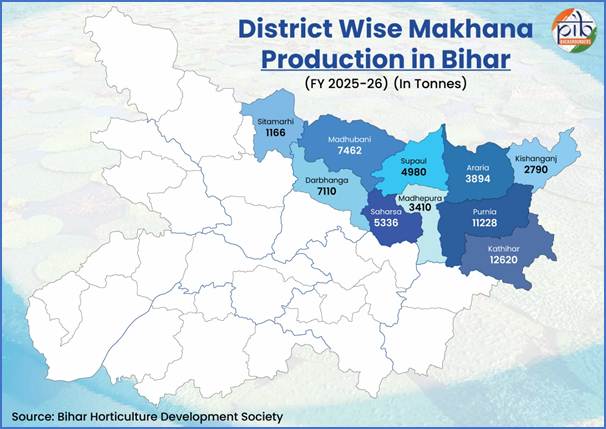
It is especially prominent in the Kosi basin districts of Supaul, Saharsa, and Madhepura, as well as in nearby areas of the Mithila and Seemanchal regions. This makes the state the central hub of the makhana sector.
In 2024-25, as per final estimate of Horticulture Statistics Unit, DA&FW, the total production of makhana in India was 63,910 Metric Tonnes (MT), with an average productivity of 2.03 MT per hectare. As per the Second Advance Estimates (2025–26), total production of makhana in India is 80,590 MT, with an average productivity of 2.34 MT per hectare. Bihar is the leading producer of makhana in the country, with a production of 60,000 MT in 2025–26 and average productivity of 2.00 MT per hectare.
Traditionally grown in ponds, modern techniques like field-system farming and improved varieties such as Swarna Vaidehi and Sabour Makhana-1 have helped increase productivity. The growth has been driven by an increase in cultivated area, improved productivity, and reduced cultivation risks.
Domestic Production and Consumption Dynamics in Makhana Market
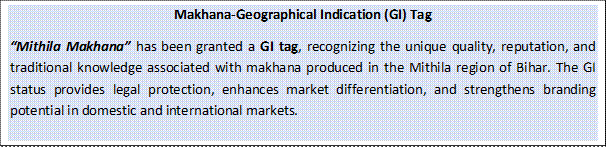
India produces more than 0.6 lakh metric tonnes of makhana each year. About 40 percent, or nearly 0.23-0.25 lakh metric tonnes, is exported, while the remaining quantity is consumed domestically. With growing global demand for clean-label and plant-based superfoods, India’s strong production base places makhana as a premium snack in international markets.
The domestic makhana market recorded annual growth of 17-18 percent between 2021-22 and 2024-25. This growth has been driven by rising health awareness, premiumization, and the expansion of branded players. Strong domestic demand has also helped shield the sector from fluctuations in export markets.
The market is expected to reach ₹11,000-12,000 crore by 2029-30. Production volumes increased by only 4 to 5 percent during the period from FY 2022 to 2025. Average prices increased from about ₹500 per kilogram during 2020-2022 to nearly ₹1,250 per kilogram in 2025. This increase is linked to higher demand for health-focused snacks, premium branding, and limited supply response.
Estimated Monthly Domestic Consumption (Popped)
India’s monthly domestic consumption of popped makhana is estimated at 3,000-3,500 metric tonnes. During festive periods, when demand for snacks peaks, consumption rises to around 5,000 metric tonnes.
Within domestic consumption, branded Fast-moving consumer goods (FMCG) and organized snack players account for 1,800-2,000 metric tonnes per month. This is driven by the rapid premiumization of the category and the expansion of retail penetration. Loose and unorganized retail contributes 1,200-1,400 metric tonnes per month, remaining significant in Tier-2 and Tier-3 markets, even as packaged formats gradually gain popularity.
Local Fields Serving Global Shelves: Export Journey
Prior to 2025, makhana was classified under general Harmonized System of Nomenclature (HSN) codes. This resulted in the non-availability of product-specific export data. To address this gap, the Directorate General of Foreign Trade (DGFT) introduced a separate HSN code for popped makhana and other makhana products in 2025. In 2025–26, India exported 7,264.89 MT of makhana products (export value 19296.08 lakh).
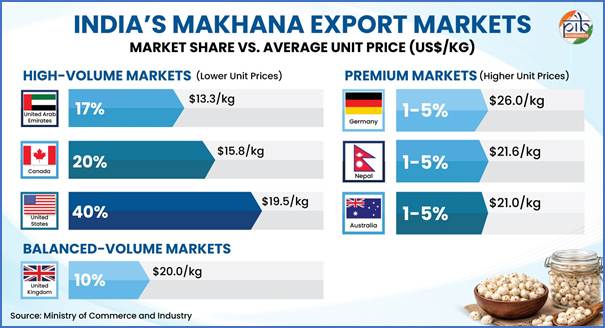
India’s export markets are highly concentrated. The United States (40%), Canada (20%), and the United Arab Emirates (17%) together account for 77% of total makhana exports. However, these high-volume destinations offer relatively lower unit prices, US ($19.5/kg), Canada ($15.8/kg), and the UAE ($13.3/kg). In comparison, smaller markets such as Germany ($26.0/kg), Nepal ($21.6/kg), and Australia ($21.0/kg) command premium prices despite limited volumes (1–5%). The United Kingdom presents a balanced profile, with a 10 percent market share and average price realizations of $20/kg. This indicates an opportunity to diversify beyond the US and Gulf markets by targeting premium-paying regions to enhance overall realizations.Local
Expanding Makhana Cultivation and Strengthening Farmer Support
Under the scheme, an additional area of 1,010 hectares has been brought under Makhana cultivation across the states, while 73 hectares have been covered under seed production programme. A total of 89 Front Line Demonstrations (FLDs) were conducted to demonstrate improved production technologies of makhana. Capacity building of farmers was undertaken through seminars, exposure visits and training programmes organized at State Agricultural Universities (SAUs), Central Agricultural Universities (CAUs), Indian Council of Agricultural Research (ICAR) institutes etc. Under the Central Sector Scheme for Development of Makhana, a total of 8159 farmers in the country have benefited in 2025-26.
The Science Behind the Crunch: Makhana’s Nutritional Edge
Makhana is nutrient-rich, containing carbohydrates, high-quality protein, dietary fibre, and essential micronutrients such as magnesium, potassium, phosphorus, and iron. Its low-sodium and cholesterol-free composition makes it suitable for a wide range of dietary needs.
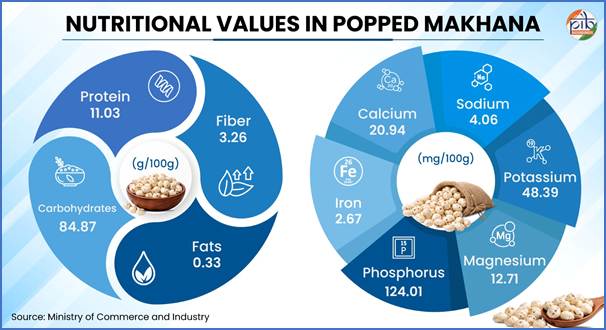
Makhana is valued for its nutritional and health benefits and is increasingly recognized as a global superfood. It has a low glycaemic load, making it suitable for people managing diabetes. It also supports heart health, aids digestion, and is known for its anti-aging properties. Studies indicate that makhana’s nutrient profile is superior to that of many commonly consumed nuts such as almonds, walnuts, and cashews.
It contains very little fat (0.33 g per 100 g), is rich in fibre, provides various essential amino acids and has about 95 percent protein digestibility. Its essential amino acid index and chemical score are comparable to those of fish.
Making of the Superfood: From Seed to Snack
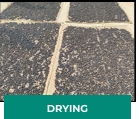
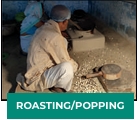
Makhana production involves several stages that together form the value chain. Harvesting and seed collection take place at the farm level. Cleaning and drying are part of primary processing. Activities such as roasting or popping, grading, polishing, and packaging fall under secondary processing and value addition.
Farm-Level Production
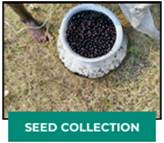

Farm-level production includes pond preparation, seed broadcasting, crop management, and manual harvesting from water bodies. This stage is highly labor-intensive and depends on skilled manual work. Seed collection is particularly demanding as it is carried out underwater. Traditional cultivation practices continue to dominate the sector, and the level of mechanization remains limited.
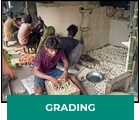
Primary processing of makhana is mostly carried out at the household or village level using traditional tools and methods. The process begins with drying and cleaning the raw seeds, followed by high-temperature roasting. The heated seeds are then popped, expanding into the light, crunchy form commonly consumed as a snack. After popping, the makhana is polished, sorted, and graded according to size and quality. Larger, higher-quality makhana fetch higher prices in the market.

Secondary Processing and Value Addition


The final product, which is popped makhana, is polished and packed. In recent years, secondary processing has expanded beyond traditional forms. It now includes flavoured makhana, ready-to-eat snacks, makhana flour, and other products. This segment offers strong potential for value addition and employment generation.
National Research Centre for Makhana (NRCM)
The National Research Centre for Makhana (NRCM) plays a key role in modernizing India’s makhana sector through research and capacity building. It also promotes improved cultivation and processing practices across the sector. NRCM has developed high-yield makhana and thornless water chestnut varieties, introducing water-efficient and integrated farming systems, and launching Makhana-cum-fish farming. Over the years, NRCM has distributed 15,824.1 kg of high-yielding makhana seeds to farmers, Krishi Vigyan Kendras, and various organizations. Major beneficiaries include institutions such as NABARD, State Fisheries Departments, Bihar Horticulture Development Society, and others
Between 2012 and 2023, more than 3,000 farmers were trained in improved cultivation, processing, and marketing practices. The training focused on efficient water use, appropriate cropping systems, and balanced nutrient management. The Centre has also provided technical support to 24 enterprises, supporting rural livelihoods and the growth of makhana-based agro-industries.
Building on the capacity-building efforts, NRCM, with State Agricultural Universities and the Central Agricultural University, Bihar, has proposed a train-the-trainers approach. This approach aims to strengthen extension services across the makhana value chain. It covers cultivation, processing, grading, drying, popping, packaging, and branding.
Additionally, NRCM has developed several pieces of equipment and machinery for makhana popping and the production of value-added products. These technologies have been licensed to manufacturers for commercialization. Examples include the makhana seed washer, seed grader, primary roasting machine, popping machine, and popped makhana grader. Technologies for producing various value-added products have also been transferred for commercial use.
The Crop Connecting Nutrition, Farmers, and Global Markets
Makhana has emerged as one of India’s fastest-growing agri-food sectors, driven by rising health awareness, expanding domestic demand, and strong export potential. Backed by favourable agro-climatic conditions, traditional expertise, and continuous technological advancements, India remains at the forefront of global makhana production.
The establishment of the National Makhana Board reflects a strong commitment to strengthening the sector across the entire value chain. At the same time, institutions such as the National Research Centre for Makhana are advancing research, enhancing farmer skills, and supporting value addition.
Global demand for healthy, plant-based, and premium food products continues to rise. In this context, makhana is well-positioned to contribute to higher farmer incomes, rural employment, and agricultural exports.
Ministry of Agriculture & Farmers Welfare
https://horticulture.bihar.gov.in/HORTMIS/BAIPP/Downloads/ModelDPRMakhana.pdf
https://horticulture.bihar.gov.in/MainSite/Documents/Publication/Makhana.pdf
https://www.pib.gov.in/PressReleasePage.aspx?PRID=2203165®=3&lang=2
https://www.pib.gov.in/PressReleasePage.aspx?PRID=2099490®=3&lang=2
Ministry of Commerce & Industry
https://apeda.gov.in/sites/default/files/study_reports/Makhana_Report_English.pdf
https://apeda.gov.in/sites/default/files/2026-01/MIC_November_Monthly_dashboard_Makhana_311225.pdf
https://icrier.org/pdf/SBrief_Makhana.pdf
Ministry of Food Processing Industries
https://pmfme.mofpi.gov.in/pmfme/newsletters/enewsmakhanaspecial6.html
PIB Backgrounder
https://www.pib.gov.in/FactsheetDetails.aspx?Id=150318®=3&lang=2
See PDF
PIB Research
(रिलीज़ आईडी: 2301052)
आगंतुक पटल : 1164