PIB Backgrounder
Journeys of Grit, Pathways of Growth
RSETIs Empowering Rural Aspirations through Enterprise
प्रविष्टि तिथि:
21 JUL 2026 11:51AM by PIB Delhi
Vishnu Bai reflects on a belief that has shaped her journey: that those who rise find the world lifting them further. She was born into a modest farming family, where dreams rarely stretched beyond daily survival. Her schooling stopped after eighth standard, cut short by an early marriage and new responsibilities. Within eighteen months, she returned home, as her marital household sank under financial strain. When her brothers refused to provide financial support, she chose self-reliance and began stitching clothes at home. Each small earning carried not just income, but a fragile sense of independence.
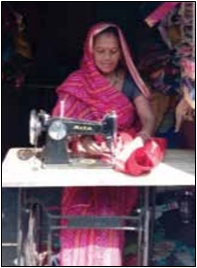
Her turning point came through the Shri Ram Self-Help Group, which introduced her to training opportunities at the Rural Self Employment Training Institute (RSETI) in Bhopal. She wanted to learn tailoring alongside other women, but social barriers stood firm. Facing mobility restrictions, she requested training in her village. The institute responded, and the Panchayat Bhawan became a classroom of hope. Women gathered there, learning stitching alongside the basics of running a small business. For many, it was their first step into a world beyond household boundaries.
After completing training, Vishnu Bai opened a modest tailoring shop in her village.
Her work slowly expanded to include men’s garments. A government order for school uniforms brought steady income and renewed confidence. Soon after, she owned industrial sewing machines and built a stable livelihood through her growing enterprise. Her journey reflects quiet courage, shaped not by sudden change but persistent determination. Stories like hers echo across rural India, where transformation often unfolds without noise or spectacle.
RSETIs: The Bridge from Aspirations to Enterprise
At the centre of this transformation are Rural Self Employment Training Institutes (RSETIs) under the Deendayal Antyodaya Yojana-National Rural Livelihoods Mission (DAY-NRLM), working steadily in the background to promote self-employment and nurture micro-enterprises. These district-level institutes offer free, short-term, practical, residential training to unemployed rural people between eighteen and fifty years of age. Through three-way partnerships linking the Ministry of Rural Development, State/UT governments, and sponsor banks, their role extends beyond classrooms, reaching into livelihoods through credit support and continued guidance.
Seventy-three courses span agriculture, manufacturing, services, and entrepreneurship and align with national skill standards. Sponsor banks play a crucial role, ensuring trainees have access to credit to build viable enterprises. This integrated approach ensures that skills do not remain theoretical but translate into real economic activity. For many, this support system becomes the turning point where possibility begins to take shape.
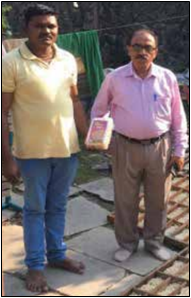
Another such journey of Umesh Shivaji Ingle from daily wager to employment generator reflects how RSETIs reshape lives with strength. Coming from a financially constrained family, he could study only up to the tenth standard. For nearly five years, he worked as a daily wager in a noodle factory. Despite long hours, his earnings barely sustained his household’s needs. A friend’s suggestion introduced him to the RSETI training programme, opening an unexpected door. He enrolled in an Entrepreneurship Development Programme, drawing on his factory experience to deepen his learning. After training, he started a small noodle unit with a second-hand machine and basic tools. At first, he produced around 1,000 to 1,200 kilograms of noodles daily. Gradually, demand grew, and his enterprise began earning a monthly profit of about thirty thousand rupees. He employed four women from vulnerable backgrounds, extending opportunity beyond his own family. A loan of eight lakh rupees from the bank helped him scale his operations. He shifted to a larger unit in MIDC Akola, expanding production to meet rising demand. From a daily wager to an employer, his journey had redefined purpose by creating livelihoods for others.
While some journeys begin with economic needs, others emerge from creative aspirations. In Dharwad, Sanjay Malagi’s story reflects how RSETIs help diverse dreams grow into enterprises. After completing a diploma in electrical engineering, he worked in a multinational company in Bengaluru. Over time, dissatisfaction grew, urging him to leave and return home in search of purpose. During this uncertain phase, he discovered a photography course offered by RSETI Dharwad. He enrolled, and what began as curiosity soon turned into a clear entrepreneurial vision. In 2019, he founded his company, Cinewinks, stepping into a world of storytelling. His work spans videography, editing, and direction, weaving narratives across multiple Indian languages. His films explore migration, politics, and technology misuse with striking emotional depth.
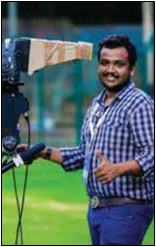
His film ‘Tamasoma Jyotirgamaya’ earned two international awards for portraying the struggles of weavers. Another work, ‘Hinnota’, brought him the Best Director award at Cochin International Short Film Festival in the year 2020-21. Over time, he won nearly ten awards, gaining recognition for his creative voice. His company began operating across multiple cities and undertaking diverse professional projects, while also generating local employment.
Together, these journeys reveal a larger story unfolding across the country.
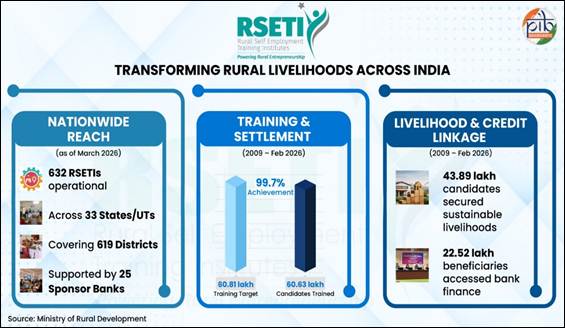
They reflect not isolated success, but a growing ecosystem of resilience and opportunity. As of March 2026, 632 RSETIs operate across 33 States/UTs. They cover 619 districts and are supported by 25 sponsor banks nationwide. Since inception in 2009 until February 2026, RSETIs have demonstrated sustained and impactful progress nationwide. Against a training target of 60.81 lakh, about 99.7% has been achieved, with 60.63 lakh candidates trained. Of these, 43.89 lakh candidates have secured sustainable livelihoods. Institutional support has further enabled 22.52 lakh beneficiaries to access bank finance. Recent years have witnessed considerable growth, indicating expanding outreach and improved institutional effectiveness. Notably, 2024-25 recorded the highest annual training achievement, with 6.21 lakh candidates trained.
These numbers tell a story, but the deeper narrative lies in human transformation.
RSETIs are not merely training centres, but spaces where aspiration takes root. Across villages, small enterprises are reshaping local economies and restoring dignity. With every success story, confidence replaces hesitation, and hope becomes tangible. In these quiet shifts, rural India moves steadily towards a future shaped by self-reliance and belief.
References
Ministry of Rural Development
NITI Aayog
Click here for pdf file
****
PIB Research
(रिलीज़ आईडी: 2286911)
आगंतुक पटल : 2473