Rural Prosperity
SARAS Mela 2026
Taking Rural Women’s Enterprises to the National Markets
Posted On:
21 OCT 2026 11:03AM
The SARAS Melas organized under the Centre's DAY-NRLM connect rural women entrepreneurs with wider markets, buyers, and business opportunities. The Vijayawada edition marks the first National SARAS Mela outside Delhi-NCR, bringing together women entrepreneurs from 34 states and UTs. The platform strengthens DAY-NRLM’s efforts to promote sustainable livelihoods and supports the Lakhpati Didi vision of income growth. Dedicated pavilions offer opportunities for business learning, institutional support, and enterprise development. Digital platforms like eSARAS extend market access beyond physical events, helping rural women take their products to wider markets.
Where Rural Enterprise Meets Opportunity
India’s rural economy is rich in traditional skills, crafts and entrepreneurial talent. Women’s Self-Help Groups (SHGs) help bring this talent into local economies. Their products range from handlooms and handicrafts to processed foods and other locally made goods. Yet making a product is only the first step. Rural entrepreneurs also need customers, market information, and opportunities to grow. SARAS Melas help bridge this gap by bringing women-led enterprises closer to consumers, buyers, and institutions. Organised by the government under the Deendayal Antyodaya Yojana - National Rural Livelihoods Mission (DAY-NRLM), SARAS Melas have evolved over nearly three decades. They are no longer only exhibitions. They offer a space to sell products, understand consumer preferences, build business connections, and explore wider markets.
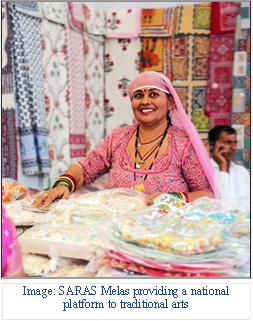
The National SARAS Mela in Vijayawada, Andhra Pradesh, marks a new step in this journey as it is the first National SARAS Mela to be organised outside the Delhi-NCR region. The event is running from 13 October 2026 to 31 October 2026 at Punnami Ghat, Vijayawada. Around 1,500 women SHG entrepreneurs and Lakhpati Didis from 34 States and UTs are showcasing their products through more than 650 stalls. The Mela features regional textiles, handicrafts, natural and processed foods, and other rural products. An India Food Court, cultural showcases, and dedicated learning spaces add to the experience.
The decentralisation of the National SARAS Mela reflects a wider development approach: taking national platforms closer to producers and consumers across India. It connects local skills with new markets while supporting the growth of women-led enterprises. This event paves the way for further decentralisation of other national events and is in line with the approach of conducting international events like BRICS and G20 meetings at regional levels.
From Rural Livelihoods to Market Access: The Role of DAY-NRLM
DAY-NRLM is the government’s flagship programme for reducing rural poverty and promoting women’s economic empowerment. It works through SHGs and their federations, while supporting financial inclusion and sustainable livelihoods. The Mission helps women access skills, finance, technology and livelihood opportunities. It also strengthens the market ecosystem around women-led enterprises through product visibility, branding and links with physical, digital and institutional markets.
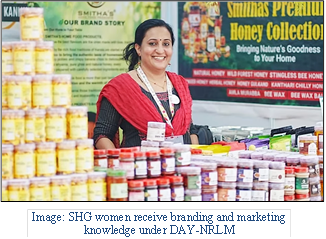
This market connection matters because enterprise growth depends on more than production. Women need opportunities to sell beyond their immediate communities. They also benefit from feedback, better product presentation, and connections with buyers. SARAS Melas provide a practical bridge between these needs and market opportunities. They bring SHG enterprises, consumers, institutional buyers and other stakeholders together. Entrepreneurs can sell directly, study customer preferences and explore partnerships that may continue after the event.
From 65 Beneficiaries to a National Marketplace
The SARAS journey began in 1999, when the first National SARAS Mela was organised in Delhi with around 65 beneficiaries. Since then, the platform has expanded to national, regional, state and district levels. As on date, a total of 117 National SARAS Melas and annual sales exceeding ₹200 crore have been recorded. States and Union Territories also organise a minimum of two State-level SARAS Melas a year, bringing the national average to around 50 events annually. Regional and district-level events bring selling opportunities closer to local producers. Together, these formats support market discovery, branding, buyer–seller linkages and enterprise development.
Lakhpati Didi: Making Livelihoods More Sustainable
The Lakhpati Didi initiative is an outcome-oriented livelihood initiative under DAY-NRLM. It builds on the network of women organised through SHGs and their federations. Its focus is to help women and their households achieve sustainable income through diversified livelihood opportunities. A Lakhpati Didi is an SHG member whose household earns at least ₹1 lakh annually on a sustainable basis. The assessment covers at least four agricultural seasons and/or business cycles. The initiative received national impetus in August 2023, when the government announced an ambition to create two crore Lakhpati Didis. The target was raised to three crore in the Interim Budget 2024-25. Subsequently, the initiative achieved the three-crore milestone by December 2025.
In February 2026, the government announced an enhanced target of six crore Lakhpati Didis. This next phase places greater importance on sustaining income gains and helping enterprises grow. Market access, product visibility, branding, and reliable sales channels are important to this effort. SARAS Melas support this transition from livelihood creation to enterprise growth. They can also create opportunities for bulk orders, institutional sales, and longer-term market connections. The Vijayawada Mela brings this connection to life through dedicated spaces for successful entrepreneurs, business learning, and institutional support. Women can share their experience, learn new practices, and explore ways to strengthen their enterprises.
Vijayawada: A National Marketplace with a Regional Reach
The Vijayawada Mela brings products and traditions from across India into one marketplace. Visitors can explore Phulkari from Punjab, Pashmina from Jammu and Kashmir, Ikat and Telia textiles from Telangana, and Paunchei from Mizoram. The stalls also feature Meenakari, Dokra, brasswork, woodcraft and traditional paintings.
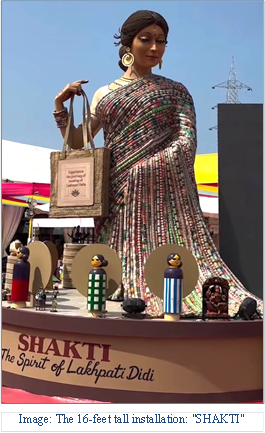
A 16-foot installation titled “SHAKTI - The Spirit of Lakhpati Didi” forms a signature feature of this Mela. It symbolises the collective strength of women who preserve traditional craftsmanship and turn their skills into livelihoods, independence and prosperity.
The Mela is supported by government partners, including the National Bank for Agriculture and Rural Development (NABARD) and the National Institute of Rural Development and Panchayati Raj (NIRDPR). Its design combines direct sales with learning, demonstrations, and connections to institutions. The aim is to make the event useful not only for visitors, but also for the entrepreneurs seeking to build sustainable businesses.
Spaces That Connect Products, Skills and Opportunity
The Vijayawada National SARAS Mela is going beyond a conventional exhibition and retail format by creating a series of dedicated thematic, knowledge and engagement spaces. These spaces are providing opportunities for enterprise showcasing, peer learning, knowledge exchange, convergence with government and market stakeholders, live demonstrations, and structured buyer–seller interactions.
Lakhpati Didi Pavilion: Learning from Enterprise Journeys
The Lakhpati Didi Pavilion showcases women who have built successful enterprises. It features entrepreneurs earning more than ₹10 lakh annually, including women earning over ₹1 crore. These women share their journeys, products, business models, and market strategies with other SHG members. Their stories highlight different routes to enterprise growth, including agriculture, non-farm livelihoods, food processing, handicrafts, handlooms and services. Peer learning can help women identify approaches suited to their own skills and circumstances.
Learning and Knowledge Pavilion: Building Business Skills
Strong products need strong business practices. The Learning and Knowledge Pavilion is designed for workshops, expert talks, masterclasses and experience-sharing sessions among SHG entrepreneurs, State Rural Livelihood Missions (SRLMs), buyers and other stakeholders. Topics include packaging, branding, preparing business proposals, e-commerce and social media marketing. Further, engagement with public institutions and private-sector organisations is also encouraged. These include NABARD, FICCI, CII, ITC, Hindustan Unilever, Amazon and Flipkart. Such interactions can expose entrepreneurs to practical tools for improving product presentation and reaching customers.
Convergence Pavilion: Connecting Women with Support
Growing an enterprise often requires more than market access. Entrepreneurs also need credit, skills, technology, quality certification, and government support. The Convergence Pavilion brings SHG entrepreneurs together with relevant departments, financial institutions, development agencies and technical institutions. These organisations and platforms include the Ministry of Tribal Affairs, Ministry of Micro, Small & Medium Enterprises, Ministry of Textiles, ONDC, Government eMarketplace (GeM) and TRIFED. The pavilion is intended to help women understand relevant schemes, services and support systems.
Demonstration Pavilion: Showing How Products Are Made
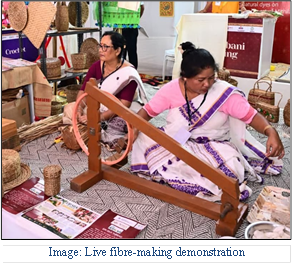
A finished product often carries a story of skill, time and technique. The Demonstration Pavilion lets visitors see that process directly. Women entrepreneurs and artisans are demonstrating live traditional and contemporary production methods. These activities include pottery, needlework, and mirror-work embroidery. Live demonstrations by the Lakhpati Didis create opportunities for practical learning and knowledge exchange. They also help visitors appreciate the craftsmanship behind handmade products, and the “Demo and Live Learning Area” offers a special experience.
India Food Court: Regional Flavours and Women’s Enterprise
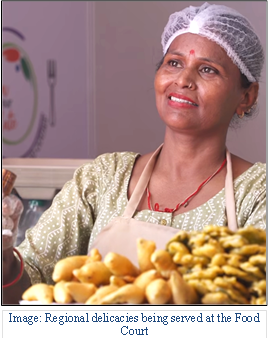
Food is another route through which rural enterprise reaches consumers. The India Food Court features 50 food stalls showcasing regional cuisines being prepared in traditional ways using pure spices. The event brings together more than 200 first-generation women food-service entrepreneurs from over 28 states and UTs. Visitors can explore street favourites such as Gol Gappe, Chaat and Kebabs. Regional dishes include Litti Chokha from Bihar, Hyderabadi Dum Biryani, Mushroom Pitha from Assam, and Makke Di Roti with Saag from Punjab. Other examples include Vana Sundari from Attappadi in Kerala and Chausela from Chhattisgarh. The food court gives women an opportunity to present regional culinary traditions in a national setting. It also brings the business of food preparation and service into the wider story of women-led entrepreneurship.
Cultural Showcases: Celebrating India’s Diversity
Cultural programmes feature traditional art forms, crafts, textiles, music and dance from participating regions, creating an immersive national experience for visitors. These showcases celebrate the heritage behind many of the products on display. They also facilitate participating states in presenting their distinct cultural identities.
Digital Integration: From Physical Stalls to Digital Markets
Digital payments are an important catalyst for business activities at the SARAS Mela. UPI transactions support convenient and transparent payments, and the food court primarily operates through cashless transactions. At the same time, keeping in view the convenience of elderly citizens and visitors who may prefer cash payments, coupon-based cash payment facilities are also available, ensuring an inclusive and seamless experience for all.
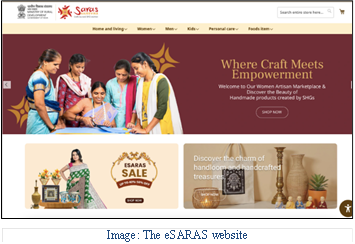
Further, A market opportunity should not end when a Mela closes. Digital channels can help enterprises reach customers beyond the event and across geographical boundaries. The SARAS ecosystem, therefore, combines physical Melas with the SARAS Gallery and e-commerce channels. The eSARAS platform provides an online route for customers to discover and purchase products made by SHG entrepreneurs. This extends the market-access approach beyond face-to-face sales and can help products remain visible after the Mela.
A dedicated SARAS Mela Digital App was introduced in 2025. It supports SHG nominations, attendance management, and the sharing of event-related information. Together, physical events and digital channels offer complementary routes to market. The SARAS Mela creates direct contact with customers and buyers. Online channels can help extend product discovery and sales beyond the event.
Taking National Market Access to the Regions
The Vijayawada National SARAS Mela represents an expansion of the market-access platform into a new region. Organising national events in different locations can bring them closer to local consumers, buyers and institutional partners. It can also help producers from different States gain exposure to wider markets. This approach supports the broader objectives of DAY-NRLM and the Lakhpati Didi initiative. Women need sustainable livelihoods, but they also need ways to improve product value and expand sales. Platforms that combine selling, learning, and institutional connections can contribute to that process.
This National SARAS Mela (outside the Delhi NCR region) is a landmark initiative taken by the Government during the SEVA Pakhwada beginning from 2nd October 2026. SARAS Melas also promote the vision of Vocal for Local and Atmanirbhar Bharat. They give consumers a direct way to discover rural products and meet the women entrepreneurs behind them. They create opportunities to preserve traditional skills while strengthening women-led enterprises. At its heart, the National SARAS Mela is about the women behind every product, craft, and enterprise, and the journey from skill to enterprise, enterprise to market, and market to sustainable livelihood.
References
Ministry of Rural Development
https://www.esaras.in/
https://x.com/esarasaajeevika?lang=en
https://www.pib.gov.in/PressReleaseDetail.aspx?PRID=2322458®=48&lang=1
Ministry of Electronics & Information Technology
https://play.google.com/store/apps/details?id=com.esaras&hl=en_IN
President’s Secretariat
https://www.pib.gov.in/PressReleaseIframePage.aspx?PRID=2323813®=48&lang=2
Government of Telangana
https://www.efms.serp.telangana.gov.in/Livelihoods/SARAS/Views/SarasHome.aspx
Click to see pdf
***
PIB Research
(Explainer ID: 160516)
आगंतुक पटल : 428
Provide suggestions / comments