Social Welfare
Adoption in India
Legal Framework, Procedures and Child Protection Mechanisms
Posted On:
16 DEC 2025 12:04PM
Key Takeaways
- India's adoption system operates under the Juvenile Justice Act, 2015 and Adoption Regulations, 2022, facilitated by CARA through Mission Vatsalya digital platform.
- CARA’s digital system (CARINGS) ensures transparent, secure and child-centred adoption, enabling prospective adoptive parents nationwide to register and adopt without geographical barriers.
- 60-day Home Study Reports, 48–96-hour referral windows, and mandatory 2-year follow-ups ensure child welfare.
|
Introduction
India is committed to ensuring that every child has the right to grow up in a loving family environment. The Government of India, through the Central Adoption Resource Authority (CARA) under the Ministry of Women and Child Development (MWCD), has established a comprehensive legal and institutional framework to facilitate in-country and inter-country adoptions while safeguarding the best interests of the child.
Legal adoption in India is governed by the Juvenile Justice (Care and Protection of Children) Act, 2015 (amended 2021) and the Adoption Regulations, 2022, which provide a transparent, child-centric mechanism for matching orphaned, abandoned, and surrendered children with prospective adoptive parents. The framework prioritises family-based care over institutional rehabilitation, recognising that permanent family placement ensures the emotional, social, and cognitive development of children.
India's adoption ecosystem—the legal provisions, procedural requirements, digital infrastructure, safeguards against exploitation, and special provisions for children with diverse needs, highlights the Government's ongoing efforts to promote adoption.
Legal and Institutional Framework
Central Adoption Resource Authority (CARA)
CARA is a statutory body under the Ministry of Women and Child Development that functions as the nodal body for adoption of Orphan, Abandoned and Surrendered Children through its associated/recognized adoption agencies. Additionally, Relative Adoption, Adoption by Step Parents and Foster Adoption are also being facilitated by CARA.
It promotes & facilitates in-country adoption and regulates inter-country adoption in accordance with:
- Juvenile Justice (Care and Protection of Children) Act, 2015 (amended 2021)
- Adoption Regulations, 2022
- Model Foster Care Guidelines, 2024
These frameworks ensure that the best interests of the child remain at the center of every adoption decision.
Digital Adoption System
CARA operates upon a centralized online adoption platform - Mission Vatsalya. The system ensures:
- Complete transparency in the adoption process
- Security and confidentiality of sensitive information
- Child-centric decision-making
- Equal access for prospective adoptive parents across all states
- Automated, preference-based matching of legally free children with Prospective Adoptive Parents
- Features like Special Needs and Immediate Placement tabs for direct child selection
- End-to-end application tracking with real-time SMS and email alerts for all stakeholders
Prospective adoptive parents (PAPs) can register online and adopt children from any state through this streamlined digital system, eliminating geographical barriers and reducing processing time.
The Adoption Process: Key Highlights
Who Can Adopt?
The eligibility criteria for prospective adoptive parents are clearly defined in Section 57 of the Juvenile Justice Act, 2015 and Regulation 5, 21 of the Adoption Regulations, 2022. Key provisions include:
· Resident Indians must register on CARA's website.
· Overseas Citizens of India (OCI) and foreigners residing in India require a No Objection Certificate (NOC) from their Embassy/High Commission before registering. The NOC confirms that the adoption complies with the laws and regulations of both India and the prospective adoptive parents' home country
· Non-Resident Indians (NRIs), OCIs and foreigners living abroad must follow a separate protocol and register through Authorized Foreign Adoption Agencies (AFAA), Central Authorities (CA), or Indian Diplomatic Missions (IDM). If there is no AFAA or CA in their country, they should contact the relevant government department or Indian diplomatic mission
· Single women may adopt a child of any gender; single divorced ladies can adopt a girl child; single men are not eligible to adopt a girl child as per Section 57(4) and Regulation 5(2)(c)
· Couples with two or more children can only adopt special needs or hard-to-place children unless they are relatives or step-children, as per Regulation 5(7). These PAPs are not eligible for seniority on CARINGS as they are only eligible for direct reservation of the child.
· Income: CARA guidelines do not specify a minimum or maximum income for PAPs. However, the income should be stable and sufficient to ensure the child's well-being and upbringing
· Differently-abled persons can adopt a child, depending upon the HSR agency's approval
Registration and Documentation
PAPs must apply online in the prescribed format as per Schedule VI of Adoption Regulations, 2022, and submit required documents including:
- Identity and address proof (Aadhar card, passport, voter ID, electricity bill, or postpaid telephone bill)
- Medical certificate from any licensed medical practitioner (MBBS degree minimum), certifying that PAPs do not suffer from any chronic, contagious, or fatal diseases and are fit to adopt
- Marriage certificate (for couples) or divorce decree (if applicable)
- Income proof
- Family photographs
A rent agreement cannot be submitted as proof of residence. PAPs must provide Aadhar card, electricity bill, postpaid telephone bill, voter ID card, or passport with the current address, or they must update the address on any of these documents.
In the "motivation of adoption" section of the registration form, PAPs should explain the reasons why they want to adopt. This is an opportunity to share personal feelings and aspirations for adopting a child.
Documents must be uploaded within 30 days after registration, or the application will be rejected and PAPs will need to re-register. There is no option to revive the previous application; PAPs must create a fresh registration.
For more details, please refer to the Adoption Regulations, 2022.
Home Study Report (HSR)
After registration and document submission, a social worker from a Specialized Adoption Agency (SAA) or District Child Protection Unit (DCPU) prepares a comprehensive Home Study Report within 60 days. This report assesses the suitability of prospective parents based on various parameters including emotional readiness, financial stability, and motivation to adopt. The HSR is valid for three years and must be revalidated before expiry.
The HSR agency must complete the Home Study Report within 60 days (two months) from the date of registration and submission of documents, and ensure revalidation prior to expiry of three years.
If the Home Study Report (HSR) of the PAPs is nearing its expiration date after reserving a child, the matching process should be completed in a timely manner before expiration of HSR.
Seniority and Matching
- Seniority is determined by registration date and governs child referrals
- PAPs can choose two states based on identity proofs or alternatively choose a cluster of states (as per Regulation 3(b)). PAPs who registered after November 2022 are not eligible to receive a child preference from three states or anywhere in India; they are limited to two states or a cluster.
- Referrals are executed based on seniority and child availability matching PAPs' preferences (age, gender, state). CARA executes the referral based on PAPs' preferences but does not consider or promote the child's caste, creed, or religion.
- Seniority may fluctuate when PAPs change preferences, but referrals are based on registration date, not seniority number. The seniority number is dynamic; when PAPs change their preferences for a child, their seniority number may fluctuate. However, this change typically won't have a significant impact, as referrals are being executed only on the date of seniority, not according to the amount of seniority.
- Delays in HSR re-validation will not impact seniority, but PAPs will not be eligible for child referral until re-validation is completed. During delays, PAPs' seniority will not be visible on the portal.
- Special provisions exist for PAPs who registered as couples but later divorced/widowed, or registered as single but later married (Regulations 44(6) and 44(7)).
- PAPs who have not received a single referral within three years of HSR approval: As per Regulation 5(9), seniority shall be counted from their date of registration except those who have crossed composite years of one hundred and ten years.
- Once PAPs receive referral and the HSR is revalidated, the PAPs' current age will be considered for the remaining referral(s). For clarification on age criteria, please refer to Regulation 5(4) of the Adoption Regulations, 2022.
RELOCATION SCENARIO
In-country PAPs moving abroad: The RI/NRI/OCI PAP must re-register for inter-country adoption when relocating to a foreign country, without withdrawing their previous registration. They can choose to continue their in-country registration or register afresh as an RI/NRI/OCI. Their seniority may be maintained based on the earlier registration upon re-registration. For further clarification, they should contact the relevant AFAA, Central Authority, or Indian Diplomatic Mission.
Inter-country PAPs relocating to India: The inter-country PAPs relocating to India must re-register on CARINGS as "RI" and complete the HSR. Upon registration, their seniority may be maintained based on their previous registration, as per their request.
Child Referral Process
- PAPs receive up to three child referrals based on their seniority and preferences (age, gender, state)
- There is a one-month interval between consecutive referrals
- For in-country PAPs: 48 hours to reserve a child after viewing the profile
- For inter-country PAPs: 96 hours to reserve a child
- Each referral includes the child's photographs, Child Study Report (CSR), and Medical Examination Report (MER)
- If PAPs do not accept the reserved child, they will be moved to the bottom of the seniority list (Regulation 11(14))
- If Resident Indian, Non-Resident Indian, or OCI prospective adoptive parents do not reserve a child after receiving three referrals, they will be debarred from the adoption process for one year. Similarly, foreign prospective adoptive parents will be debarred for a period of one year if they do not reserve a child after two referrals.
- After the debarred period, PAPs must register fresh with new credentials; seniority will be based on the new registration date. After completing the one-year debarred period, the entire process will be treated as a fresh application. PAPs cannot continue with their previous/old application.
- The waiting period of PAPs depends upon their seniority and availability of children as per the preference of children given by PAPs regarding age, gender, health, State/UT of child etc. However, the PAPs can access their seniority with their login ID and password.
- Children who are not reserved through a 7-day portal are referred to foreign PAPs. Up to two child profiles are referred with a one-month gap between referrals.
Child Study Report and Medical Examination
The Child Study Report is a detailed document prepared for children who are legally free for adoption. It includes general information about the child, such as name, age, sex, place of birth, and circumstances of surrender or abandonment. The report also provides insights into the child's development, including intelligence, behaviour, personality, play activities, and educational progress.
The Medical Examination Report (MER) is provided by a licensed medical professional, usually a pediatrician, after conducting a thorough health examination. It signifies the overall health and medical status of the child and ensures that prospective adoptive parents are fully informed about the child's physical and mental condition before proceeding with adoption.
The Chief Medical Officer (CMO) is required to file a report on the status of the child within 15 days.
Matching and Custody
The Specialized Adoption Agency obtains PAP details from the Designated Portal and schedules an appointment for matching. The Adoption Committee assesses the suitability of prospective adoptive parents and documents the process in meeting minutes. The District Magistrate issues the adoption order within 60 days.
Adoption Fees
For Resident Indians or OCI/Foreigners living in India:
- ₹6,000 during Home Study Report preparation
- ₹50,000 when the child is placed in custody (₹10,000 for each additional child)
- ₹2,000 for each of the four post-adoption follow-up visits (totalling ₹8,000)
For inter-country adoptions, HSR fees are based on the norms of the receiving country. The fee during Pre-Adoption Foster Care (PAFC) is ₹50,000 for a normal child and $5,000 for adopting a special needs child. Follow-up fees are also based on receiving country norms.
Important Note: Adoption fees once submitted to Specialized Adoption Agencies are non-refundable, as decided by the Steering Committee in its 36th meeting held on 02/01/2024.
Stringent measures such as a fixed fee structure, CARA's digital adoption process, a grievance redressal system, and legal penalties are in place to prevent local adoption agencies from exploiting prospective parents for money.
Post-Adoption Follow-Up
- In-country adoptions: 4 follow-up visits over 2 years
- Inter-country adoptions: 6 follow-up visits over 2 years
These visits ensure the child's well-being and smooth integration into the family. If one parent is working abroad, the family can move with the adopted child before completion of 2 years, with remaining follow-ups conducted by the authorized agency of their new location.
For in-country adoption, CARA issues a support letter for the child's passport only after at least one post-adoption follow-up report has been completed. If the 2 years of legal adoption is completed, a support letter is not required as per Regulation 42 of the Adoption Regulations, 2022.
Special Categories of Adoption
Step-Parent Adoption
Step-parents can adopt their stepchild by following the process provided on the CARA Website under the “Parents” section. After submitting the step-parent adoption registration form, the consent of the biological parent, the step-parent, and parent who has visitation rights is required. This consent must be given before the Child Welfare Committee.
In case the custody of the child is under litigation, the adoption process shall be initiated only after the finalisation of the case by the court concerned.
Relative Adoption
For relative adoption, a relative refers to close family members such as a paternal or maternal uncle or aunt, or a paternal or maternal grandparent.
PAPs cannot adopt a known child themselves, except in cases of relative or step-child adoption. The eligibility and procedure for adoption by relatives is available on CARA Website under the "Parents" main menu.
Sibling Adoption
The Sibling category refers to the referral of two or more siblings, which may include twins. It aims to place siblings together during adoption, with one child matching the preference and the others may be older. There is no specific minimum income requirement to adopt siblings; eligibility and suitability are assessed by the social worker during the Home Study Report.
Financial capability is assessed in a contextual manner through the HSR.
Immediate Placement Category
In the Immediate Placement (IP) category, older children between the ages of 6 to 18 are available for adoption. These children are often hard to place and can be selected directly through the Immediate Placement tab on CARINGS.
Special Considerations for Live-in Couples
As of now, child adoption can be done by either single PAPs or married couples with 2 years of stable marriage. A circular regarding registration of cases of single PAPs having a live-in partner in a long-time relationship and not married is available on the CARA website.
National Adoption Awareness 2025: #EveryChildMatters
November is annually observed as National Adoption Awareness Month across India to promote the fundamental principle that every child deserves a loving and caring family environment. The theme for Adoption Awareness Month 2025 was “Non-Institutionalised Rehabilitation of Children with Special Needs (Divyaang Children)”. This year’s focus was to sensitise the public and stakeholders to view children with special needs not through the lens of sympathy, but of inclusion, acceptance and equality. The campaign #EveryChildMatters emphasised that every child — regardless of physical or developmental challenges — has the right to family life, affection, and dignity.
Special Focus: Children with Special Needs
CARA prioritises adoption of children with special needs (Divyaang children), emphasising that special needs does not mean incapability, and many of those children have only mild or temporary health conditions.
Support for Special Needs Adoption:
- Prospective adoptive parents registered for adopting a normal child can reserve a special needs or hard-to-place child with the same registration
- If PAPs wish to drop out of this reservation, it would have no effect on their seniority
- For inter-country adoptions, the fee during PAFC for adopting a special needs child is $5,000
- SAAs facilitate additional photographs and video clips of children and arrange video calls with children after reservation from the Special Needs Portal
- NRI couples based abroad who want to adopt a special needs child can see or visit the child through these facilitated interactions
- Couples with two or more children can only adopt special needs children or hard-to-place children, unless they are relatives or step-children, as per Regulation 5(7) of Adoption Regulations.
In the case of direct reservation through the Special Needs Portal, the child will be automatically released from PAPs' profile after 30 days from the date of reservation, regardless of any impact on the PAP's seniority.
Fostering Stability: A Key Step Towards Adoption
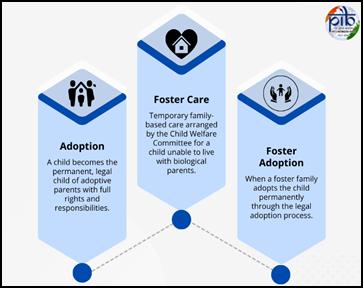
While adoption remains the central route for long-term family integration, foster care is recognized as a vital interim mechanism, especially for older children and those needing more time for careful placement.
Foster care provides children a nurturing, family-like environment while efforts for permanent adoption continue. This ensures they are not left in institutional care while helping them build emotional stability and normalcy. Foster care is available only to Indian citizens residing in India; persons living abroad cannot foster a child from India.
The Foster Care Process
The foster care process for Prospective Foster Parents (PFPs) involves several stages:
- Self-Registration: PFPs submit documents like family photo, ID proof, medical certificate, income proof, marriage/divorce certificate to DCPU
- Shortlisting & Matching: DCPU reviews and shortlists PFPs, then presents them to the Child Welfare Committee (CWC) for matching with a child based on needs
- Placement Process: Once approved, CWC issues a foster care order and PFP signs an undertaking. DCPU uploads necessary documents
- Monthly Inspections: CWC conducts regular home inspections to ensure the child's well-being and family standards
- Foster Adoption: After 2 years in foster care, if the child is legally free, the case may proceed to foster adoption
- Child Documents: DCPU uploads the child's care plan, social investigation report, medical exam results, and PFP's home study report for review
Foster Adoption Process
The process involves:
- Registration of Foster Parents by DCPU
- Registration of the Child by DCPU
- DCPU sends the proposal to State Adoption Resource Agency (SARA), which forwards it to CARA
- CARA issues a Pre-approval Letter, and the proposal returns to SARA, then DCPU
- DCPU submits the final application to the District Magistrate for the adoption order
Safeguards and Transparency: Strengthening Legal Trust
CARA ensures that every adoption—domestic or inter-country—follows a strict, regulated process:
- Adoption is conducted under the Juvenile Justice Act and the Adoption Regulations, 2022, ensuring legal sanction and child protection safeguards
- The adoption process via the digital platform CARINGS offers transparency, streamlined matching, and secure handling of sensitive information
- Prospective Adoptive Parents (PAPs) follow a regulated procedure including registration, Home Study Report, child referral, selection within designated time windows, and post-adoption follow-up
- All children available for adoption are legally free for adoption (OAS children - orphaned, abandoned, and surrendered), having been declared so by the Child Welfare Committee
- CARA does not consider or promote the child's caste, creed, or religion during matching; referrals are based on PAPs' preferences such as state, age, and gender
- The Child Management Officer files a report on the status of the child within 15 days
- The District Magistrate issues the adoption order within 60 days
Preventing Exploitation and Illegal Adoption
- Fixed fee structure prevents financial exploitation by agencies
- Digital process ensures transparency and accountability
- Grievance redressal system available for concerns
- Legal penalties for violations
- CARA processes only those children who are declared legally free for adoption. Any private adoption (directly amongst the parties) conducted outside CARA’s prescribed framework is treated as illegal, except in cases processed under the Hindu Adoptions and Maintenance Act (HAMA).
Additional Administrative Safeguards
- PAPs can update their address through the CARINGS portal Profile Update tab
- PAPs can track their seniority and application status through login credentials
- Real-time adoption data is accessible through CARINGS Dashboard at https://carings.wcd.gov.in/CARA_Dashboard.aspx
- Password reset facilities available for PAPs who have forgotten login credentials
Inter-Country Adoption: Facilitating Global Pathways for Families
CARA's mandate covers both in-country and inter-country adoption in line with international conventions, enabling Indian children, including those with special needs, to find homes abroad when suitable, while maintaining regulatory oversight to protect the child's best interests.
Key Process Elements
- NRIs, OCIs and foreigners living abroad must register through Authorized Foreign Adoption Agencies (AFAA), Central Authorities (CA), or Indian Diplomatic Missions (IDM)
- NRIs and OCIs are treated at par with Resident Indians as per Regulation 15 of Adoption Regulations 2022
- Foreign prospective adoptive parents have 96 hours to reserve a child after viewing the profile
- No objection certificate (NOC) is issued within 10 days of child acceptance subject to completion of all documents specifically Article 5/17 from the receiving countries.
- Six mandated post-placement follow-ups over 2 years ensure the child's well-being
- Strict adherence to the Juvenile Justice Act, 2015 and Adoption Regulations, 2022 protects children's best interests
Psychological Report Requirements
- The psychological report can be prepared by any recognized mental health professional, whether government or private
- There is no specific format, but the report must be detailed enough to analyze the suitability of the PAPs to adopt and care for a child
Inter-Country HAMA Process
- The procedure for inter-country adoption by non-resident Indians or OCI cardholders under the Hindu Adoptions and Maintenance Act, 1956 involves several steps
- First, the prospective adoptive parents contact the adoption agency in the receiving country, which sponsors their application to CARA
- CARA then shares the details with the DCPU, who prepares a family background report
- After completing the inquiry, the District Magistrate sends a verification certificate to CARA
- CARA then issues a No Objection Certificate or support letter depending on whether the receiving country is a Hague signatory
Custody Process
- Parents may take the child into pre-adoption foster care after the NOC, with an undertaking
- Final custody is granted after the adoption order, passport, and visa are issued
Please visit CARA for more details.
Conclusion: A Vision for Secure Futures and Strong Families
India's adoption framework represents a comprehensive, child-centric approach to ensuring that every orphaned, abandoned, and surrendered child has the opportunity to grow up in a loving family environment. Through the Central Adoption Resource Authority and the robust legal provisions under the Juvenile Justice Act, 2015 and Adoption Regulations, 2022, the Government has established a transparent, accountable system that balances accessibility for prospective adoptive parents with stringent safeguards for child protection.
Through continued awareness efforts, India is building an ecosystem where adoption is not just a process but a celebration of new beginnings, where every child matters, every family is strengthened, and every future is secured.
Click here to see pdf
****
PIB Research
(Backgrounder ID: 156517)
आगंतुक पटल : 169
Provide suggestions / comments