Rural Prosperity
Finding New Purpose in What We Discard
Rethinking Waste from Kitchen Scraps to City Spaces
Posted On:
01 OCT 2026 1:43PM
Swachh Bharat Mission (SBM), launched in 2014, has evolved into a broader movement for cleanliness, waste management, and behavioural change. The mission also created space for wider citizen participation through Swachhata Hi Seva (SHS), launched in 2017 as an annual campaign for collective cleanliness action. The campaign has expanded its focus to plastic waste management, visual cleanliness, and garbage-free public spaces.
Parallelly, the idea of Waste to Wealth is changing how waste is viewed and managed across India. It treats discarded material as a resource that can be recovered, reused, and converted into value. The Government has linked this approach with circularity, resource efficiency, and sustainable waste management. Under Swachh Bharat Mission - Urban 2.0, cities are encouraged to strengthen source segregation, waste processing, and recovery of value from waste. The change is visible not only in large processing plants, but also in homes, communities, and local institutions.
A Compost Bin Brings the Change Home
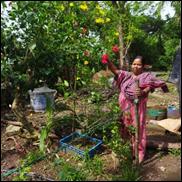
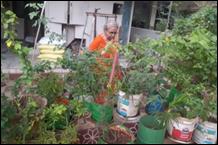
For many Indian households, turning kitchen waste into compost is not a new idea. It is a practice that is finding a fresh place in today’s waste management systems. In Vijayawada, Andhra Pradesh, senior citizen K. Subbalakshmi has shown how this familiar habit can be adopted at home. The municipal corporation recently shared her experience to encourage more citizens to take up home composting. The wet waste generated in her kitchen is converted into compost and used in her garden, returning what would otherwise be discarded to the soil.
A similar effort began in Chandigarh during the COVID-19 pandemic. Resident Kamaljeet Kaur Deol started composting wet kitchen waste at home. What began as a household practice gradually grew into awareness activities to encourage others to adopt home composting. Her efforts have since helped inspire citizens to contribute towards a cleaner and greener city.
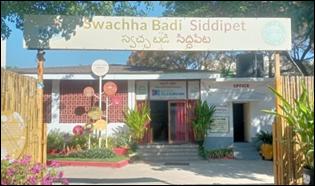
As these individual efforts began encouraging wider participation, the idea also found a place in organised community learning. In Siddipet, Telangana, the dedicated waste management learning centre ‘Swachh Badi’ is providing young people with hands-on exposure to practical waste management practices, from home composting to community-level composting. Building on this approach, similar centres are planned across 141 municipal areas, bringing awareness and practical learning on responsible waste management closer to communities.
What begins with a small compost bin can therefore have a wider effect. It gives new life to plants while keeping a regular stream of wet waste away from landfills. More importantly, it shows how waste management can begin where waste itself is generated.
When a Weed Becomes an Opportunity

Beyond household waste, communities are also finding uses for materials that have long been difficult to manage. In Borchila village of Assam’s Morigaon district, this approach is being applied to a plant that has become a persistent challenge for communities living around water bodies. Water hyacinth, locally known as ‘pani meteka’, is an invasive aquatic plant that spreads rapidly across water bodies. Despite its aesthetic appeal, water hyacinth has become a problematic weed, overcrowding freshwater bodies such as rivers, ponds, and lakes. Its overgrowth hampers activities like fishing, transportation, and recreation, making these water sources less viable.
However, the women of Borchila village have found a new way to turn water hyacinth into an opportunity. Instead of viewing the plant only as an unwanted growth in water bodies, they have begun transforming it into handicrafts. Supported under the Assam State Rural Livelihoods Mission, the initiative has created an additional source of income for the participating women, who earn at least ₹10,000 a month through this work. What was once seen as a problem for water bodies is thus being transformed into a resource for livelihoods and enterprise. The experience demonstrates that resource recovery can extend beyond waste management to create value and livelihood opportunities. By transforming materials that might otherwise remain a burden into useful products, such initiatives can support local enterprise while promoting more sustainable use of resources.
Coconut Waste Finds a New Market
From an invasive plant being transformed into a source of rural livelihood, the focus now shifts to another material contributing to the urban waste burden. In Patna, coconut shells, fibres and other residues are being recovered and processed into useful products. The city generates around 25–30 metric tonnes of coconut shell every day, which previously added to the volume of waste reaching landfill sites. To address this waste stream, the Patna Municipal Corporation has established a processing facility in the Danapur area, creating a pathway for converting discarded coconut residues into productive resources.
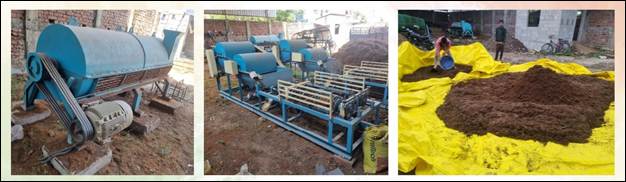
Coconut Waste Processing Plant in Patna
The initiative reflects the systematic approach to waste management promoted under the Swachh Bharat Mission, where waste is increasingly viewed as a resource rather than merely a material for disposal. The facility is designed to recover useful components from coconut waste and convert them into products with applications in agriculture, horticulture, and other commercial uses. With an initial processing capacity of 10 tonnes per day, the plant is planned to operate in multiple shifts and scale up to 30 tonnes per day.
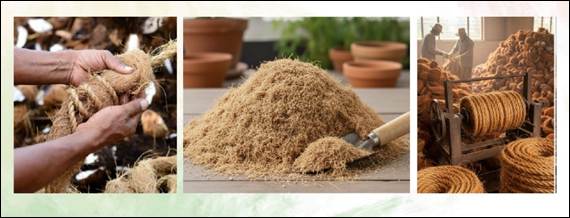
Ropes made from coconut waste fibers
Different components of coconut waste can be recovered and put to productive use. Wet residues are processed into high-quality organic compost, while coconut fibres are converted into coir ropes with applications in construction, packaging, mats, and handicrafts. Cocopeat is another valuable output, with applications in agriculture and horticulture, including nurseries and rooftop gardens, where its use as a growing medium is gaining importance.
By recovering and processing these materials, the initiative reduces the volume of coconut waste requiring disposal and enables waste-derived products to re-enter productive use. This approach advances circular economy practices while creating avenues for local livelihoods and employment.
When Waste Becomes a Public Space
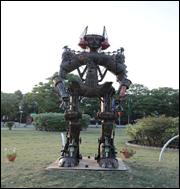
The idea of Waste to Wealth is also changing how cities look at discarded material. Instead of treating scrap only as waste, cities are finding ways to reuse it in public spaces and community facilities. One such approach is the creation of Waste to Wonder parks, where discarded material is given a new purpose as part of public spaces and attractions. The approach reflects the principles of a circular economy, which encourage materials to be reduced, reused, repaired, and recycled for continued use.
Chandigarh offers an early example of this approach. Its Rock Garden was created using industrial and household waste, demonstrating how discarded material can be creatively reused in a public space. The city has also developed a Waste to Wonder Park spread across 1.75 acres. Structures in the park have been created from discarded materials such as iron sheets, rods, fans, and automobile parts.
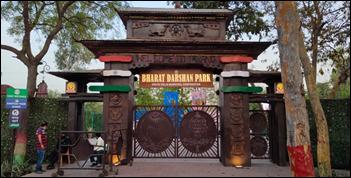
Delhi has adopted a similar approach through its Waste to Wonder Park, where industrial waste, scrap metal, and discarded automobile parts sourced from landfills are repurposed to create replicas and other structures. Beyond recreation and urban beautification, such spaces demonstrate how discarded materials can be integrated into productive and public-use infrastructure. Beyond urban beautification, the park integrates clean energy infrastructure, featuring solar trees and rooftop solar panels with a combined capacity of 50 KW. The electricity generated can be supplied to power distribution companies, creating an additional avenue for revenue generation while promoting the productive use of waste and renewable energy.
From Waste to Resource
These examples demonstrate how discarded materials can be recovered, repurposed, and returned to productive use rather than being sent directly for final disposal. Materials that would otherwise add to the waste burden can be transformed into components of public spaces, creative attractions and, in some cases, sources of economic value.
The Waste to Wealth approach begins with a shift in perspective, from viewing waste as something to be discarded to recognising its potential as a resource. Through proper segregation, recovery and processing, discarded materials can be converted into useful products, supporting cleaner communities, resource efficiency and the transition towards a circular economy.
References
Ministry of Housing & Urban Affairs
https://www.pib.gov.in/PressReleaseIframePage.aspx?PRID=2067772&lang=2®=3
https://www.pib.gov.in/PressReleasePage.aspx?PRID=2210020&lang=1®=6
https://www.pib.gov.in/PressReleasePage.aspx?PRID=2075883&lang=2®=3
PIB Backgrounder
https://www.pib.gov.in/PressNoteDetails.aspx?NoteId=160036&ModuleId=3®=48&lang=1
Click here to see pdf
***
PIB Research
(Features ID: 160268)
आगंतुक पटल : 171
Provide suggestions / comments