Farmer's Welfare
Celebrating Grassroots Innovation at the Micro Food Processing Bazaar
Posted On:
26 AUG 2026 11:43AM
Where India’s Flavours Find New Horizons
At the India Habitat Centre, a national showcase of India’s culinary diversity welcomed visitors. The stalls presented an impressive array of unique, ethnic, and traditional foods, each telling a story of grassroots entrepreneurship and regional heritage.
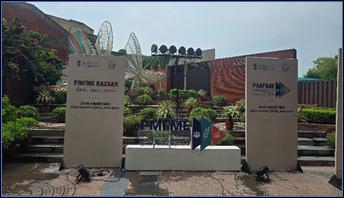
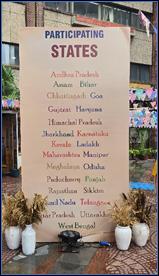
Against this vibrant backdrop, the Ministry of Food Processing Industries hosted the PMFME (Pradhan Mantri Formalisation of Micro Food Processing Enterprises) Bazaar on 24–25 August 2026. Bringing together exhibitors from 25 States and Union Territories, the Bazaar celebrated India’s rich culinary diversity. The event offered micro food enterprises, SHGs, FPOs, cooperatives, and entrepreneurs a platform to showcase their products, connect with buyers, and explore new markets. Featuring everything from millets and spices to pickles, snacks, beverages, and other value-added foods, the Bazaar demonstrated how local ingredients and traditional knowledge can be transformed into promising brands with broader reach. Launched on 29 June 2020, the PMFME Scheme supports micro food enterprises through financial, technical, and business assistance, enabling entrepreneurs to establish new units or strengthen existing ones.
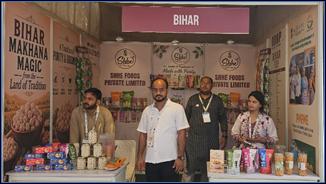
Faraz’s story is part of a larger transformation now underway across India’s micro food processing sector. Standing at the PMFME Bazaar, Faraz watched visitors pause at the SHHE Foods stall, as his team proudly shared their journey from Bihar. For Faraz, this was more than just a marketplace moment, it was a reminder of just how far their small enterprise had travelled.
SHHE Foods Private Limited began in 2021 with a simple idea: giving Bihar's beloved makhana a more modern identity. The team started experimenting with value-added products, including makhana-infused cookies and smaller, more convenient makhana packs designed for easy consumption. Association with the PMFME scheme in 2021 gave the enterprise a meaningful boost, strengthening its visibility, supporting brand building, and opening doors to new business opportunities. The PMFME Bazaar itself is becoming a valuable source of customer and business connections.
The scheme's impact went further, helping SHHE Foods upgrade its processing unit. Under PMFME's credit-linked capital subsidy, which offers 35 percent of the total project cost up to ₹10 lakh per unit, the company received over ₹3 lakh in subsidy against its ₹10 lakh loan. This support helped it become more competitive, formalise operations, and unlock new avenues for growth. With this support, they invested in better machinery and increased their production capacity, raising the output from processing just 100 kilograms a day to at least 1,000 kilograms a day. That growth is mirrored in their sales trajectory too: from ₹2.5–3 lakh in 2021, SHHE Foods has now crossed ₹14 crore in sales. For Faraz, these numbers tell a story of ambition, support, and a dream rapidly taking shape. As the scheme reaches deeper into India’s diverse food landscape, its impact takes on a different flavour in every region it touches.
In Udaipur, that impact is shaped by tradition, nature, and purpose. Since 2017, Tribalveda has brought two worlds together, tribal wisdom and Ayurveda, a fusion beautifully captured in its very name. Every jamun season breathes new energy into this journey, as 3,000–5,000 tribal women head into the forests to collect the fruit, then transform it into distinctive, preservative-free products such as jamun vinegar, cubes, and strips. For these women, the venture offers far more than income: it creates employment, strengthens livelihoods, and opens new possibilities for their communities.
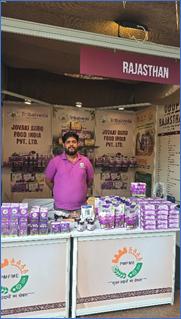
PMFME gave this journey a further push. Improved machinery strengthened operations, while wider market access helped Tribalveda's products travel farther than ever before. Today, orders arrive through Amazon, Flipkart, and the brand's own website, and the journey has even crossed Indian shores, reaching customers in Dubai and the USA. What began with a modest customer base now extends well beyond the forests of Rajasthan, carrying forward a simple idea: when tradition finds opportunity, both can flourish.
In Maharashtra, Mayur Hande's journey began with far less: a small setup and a big ambition. Started 13 years ago, Soya Rich works with soya and tofu, grinding soya into milk that is then fermented into tofu, and flavoured with variants like mint and smoked to create new products. But innovation demands the right machinery, and machinery demands investment; before PMFME, funding remained a persistent hurdle, with loan delays further slowing expansion.
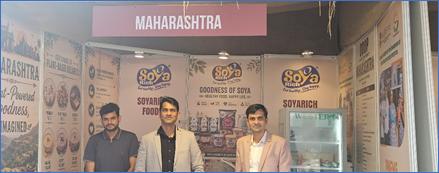
Soya Rich joined the PMFME scheme in 2021, and the support helped bring several pieces together at once. For a project costing ₹20 lakh, the enterprise secured a bank loan backed by a capital subsidy of 35 percent of the project cost under the Scheme. The support extended beyond machinery to strengthen branding, expand reach, and connect the business with government portals. The results speak for themselves: from a single small setup, Soya Rich now operates across eight cities, with monthly sales rising from around ₹2 lakh to nearly ₹35 lakh. It's a journey that carries a simple message: with the right support, small beginnings can travel much farther. While this story began small and grew wider, another began decades ago and continues to find new horizons.
For Piyush Mohanty, food processing is not just a business but a legacy that began in Odisha in 1995. At Malati Food Products, different varieties of millets undergo careful cleaning, grinding, processing, and packaging. For years, a lack of reliable machinery made it difficult to achieve the quality the enterprise envisioned. Its association with PMFME in 2024 opened up a new possibility: upgrading their facility through a capital subsidy of over ₹9 lakh, enabling investment in better processing machinery.
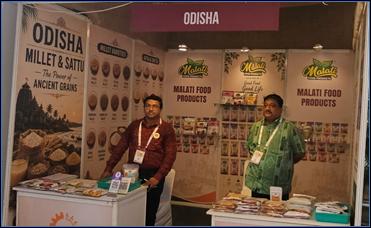
The difference showed quickly. Improved machinery lifted product quality, and sales grew by around 40 percent. Malati Food Products expanded its marketing to Amazon and Flipkart, while participation in trade fairs opened new doors, bringing exposure, knowledge, and valuable market connections. Perhaps the most meaningful change, though, isn't captured in sales figures or machinery upgrades: it's the confidence to look beyond what once seemed possible. With stronger capabilities and a growing market presence, Malati Food Products now plans to explore exports starting next year, a nearly three-decade-old legacy preparing to travel beyond Indian shores.
That is what these stories are really about, not simply businesses growing, but dreams finding the courage to grow bigger. Beyond its colours, aromas, and flavours, the Bazaar left behind something more enduring: the quiet reminder that a dream, once given a chance, can change a life.
References
Ministry of Food Processing Industries
https://www.pib.gov.in/PressReleaseDetail.aspx?PRID=2302922®=3&lang=1
PIB Backgrounder
https://www.pib.gov.in/PressNoteDetails.aspx?NoteId=155134&ModuleId=3®=48&lang=2
Click to see pdf
***
PIB Research
(Features ID: 159710)
आगंतुक पटल : 267
Provide suggestions / comments