Social Welfare
Waste Management Innovations in Himalayan States
Posted On: 16 DEC 2025 10:38AM
As the first light of the day touches the Himalayan ranges, life begins quietly across the majestic mountains. In hill towns, sanitation workers navigate narrow pathways to collect household waste. On school campuses, students segregate waste as part of routine practice, while at pilgrimage sites, visitors use designated collection points. These everyday actions reflect a growing emphasis on organised waste management in the Himalayan region, which is further shaped by high-altitude settlements, difficult terrain, climatic variability, and limited land availability.
Seasonal tourism and pilgrimage activities add to these operational demands, requiring locally adapted and decentralised solutions. Recognising these conditions, governments at all levels have strengthened waste management efforts under Swachh Bharat Mission–Urban 2.0, with a focus on source segregation, scientific waste management, and remediation of legacy dumpsites and active citizen and institutional participation.
Kedarnath Fights Plastic Waste With Digital Refund System
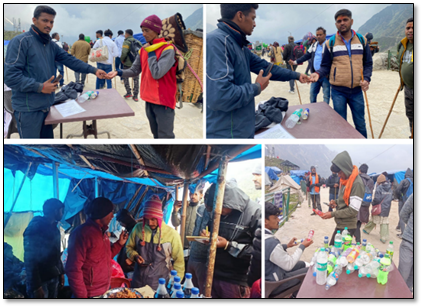
Kedarnath, a prominent pilgrimage destination in Uttarakhand, witnesses a seasonal influx of thousands of devotees, requiring structured arrangements for plastic waste management. To address the concern, the state government introduced a Digital Deposit Refund System (DRS) in May 2022 in collaboration with Recykal.
Under the system, plastic bottles and Multilayered Plastic (MLPs) items are issued with Unique Serialised Identification (USI) QR codes, against which a refundable deposit of ₹10 is collected. Pilgrims can return used items at designated points or at twoReverse Vending Machines (RVMs) installed at Gaurikund and the Kedarnath temple. The deposit amount is refunded digitally through UPI.
Collected plastic waste is channelled to Material Recovery Facilities (MRF)for processing and recycling. The initiative promotes responsible disposal practices and supports organised plastic waste management during the pilgrimage season.
|
Outcomes:
- DRS being employed at the other Chardham, including: Gangotri, Yamunotri, & Badrinath
- Over 20 lakhs bottles recycled
- Prevented 66 MT of CO₂ emissions
- Created 110+ jobs
|
Green Campus Framework: J&K Institutes Towards Responsible Waste Management
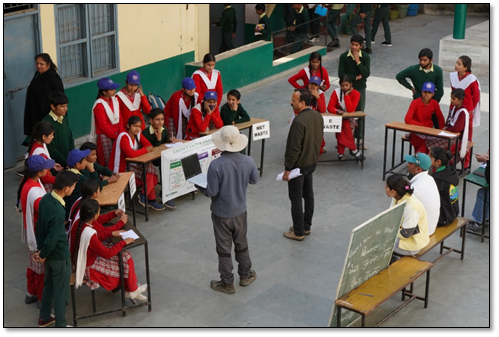
In Jammu & Kashmir, conversations around cleanliness and sustainability are increasingly becoming part of everyday institutional life. Across schools, offices, hospitals, and public spaces, simple practices like separating waste or choosing reusable alternatives are now being adopted as daily habits.
Led by the Housing and Urban Development Department, the initiative brought 1,093 campuses under a structured certification process, with support from 80 Urban Local Bodies across 20 districts. Institutions progressed through a three-stage process: identification, preparation, and declaration, focusing on waste segregation, on-site composting, and the reduction of single-use plastics. Students, staff, and visitors were encouraged to shift towards reusable alternatives, reinforcing everyday behavioural change.
Improvements in sanitation facilities, along with creative initiatives such as ‘Wasteto Art’ spaces and green corners, added to the programme’s impact. Anantnag became the first urban local body to declare all its campuses Green.
Waste into Impact: Dharamshala Reflects on Innovation & Collaboration
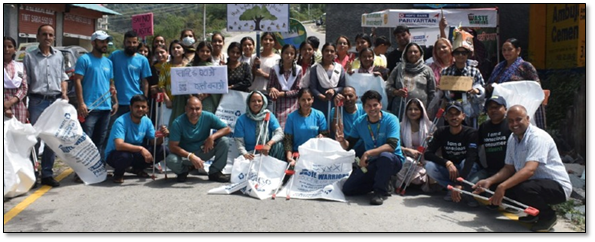
Set in the hills of Himachal Pradesh, Dharamshala has been strengthening its waste management systems through a series of coordinated initiatives led by the Municipal Corporation since 2021. As the city responds to the demands of urban growth and tourism, the municipal corporation introduced a slew of measures that encourage participation across businesses, neighbourhoods, and institutions.
The Clean Business Programme supports local establishments through regular training and certification, helping them integrate sustainable practices. At the community level, the Model Ward Programme enables residents to improve segregation and cleanliness in their neighbourhoods, supported by a dedicated Material Recovery Facility (MRF) that enhances recycling across the city.
An innovative element of Dharamshala’s approach is the “Waste Under Arrest” initiative at the Lala Lajpat Rai District Correctional Home, where inmates participate in waste processing while gaining practical skills. Together, these initiatives reflect a multipronged, collaborative approach to urban waste management in a hill city.
|
Impact of Urban Waste Management Initiatives:
- 25% increase in waste segregation
- 30% reduction in road littering
- 40% reduction in landfill waste through the “Waste Under Arrest” initiative
- Recycling strengthened through a dedicated MRF
|
Technology and Innovation Strengthen Waste Management in Leh
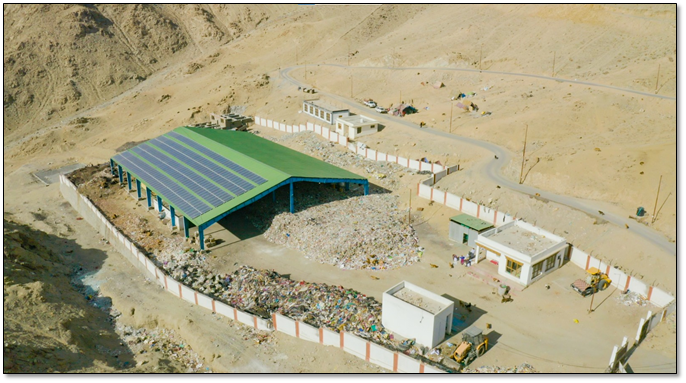
In Leh, managing waste in a high-altitude and remote setting requires solutions that are reliable and locally suited. To address this, the Ladakh Autonomous Hill Development Council (LAHDC) introduced a solar-powered solid waste management initiative in 2020.
The facility, designed to process up to 30 tonnes of waste per day, uses solar energy to support waste operations with reduced dependence on conventional power. Emphasis is placed on source segregation, with collected waste directed towards recycling and composting. The initiative aims to achieve 100 per cent source segregation and a 90 per cent material recovery rate, with recovered waste repurposed into products such as compost and pavement tiles for local use.
Revenue generated from the sale of recyclables and compost contributes to ongoing operations. The initiative reflects an approach to waste management that aligns renewable energy use with Ladakh’s geographic and climatic conditions.
Why Leh’s Model Is Distinct
- The initiative follows a circular economy approach
- Operates in a remote, high-altitude setting
- Uses renewable energy to support waste operations
- Integrates recycling, composting and reuse
- Supports local use of recovered materials
|
Women of the Himalayas: SHG Drive Sustainable Waste Solutions
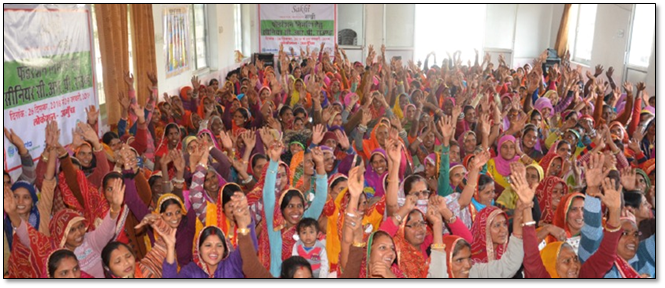
In Bageshwar, a hill town in Uttarakhand with limited road access and challenging terrain, waste management has been strengthened through a community-led approach anchored by women’s participation. In 2017–18, under the National Urban Livelihood Mission (NULM) and in partnership with Nagar Palika Parishad Bageshwar, the Sakhi Autonomous Cooperative Society took responsibility for door-to-door waste collection across 11 wards.
Members of the Sakhi SHG carry waste along narrow and steep pathways where conventional vehicles cannot operate, while also engaging households on the importance of segregating wet and dry waste. Over time, this approach contributed to improved cleanliness and greater awareness at the household level.
The initiative expanded from 18 to 47 women, with two members assuming supervisory roles. Participants earn ₹100 per day, supporting financial independence whilecontributing to municipal service delivery. The initiative received recognition under Swachh Survekshan 2019 and from the National Institute of Urban Affairs, highlighting the role of women-led collectives in strengthening waste management systems in small hill towns.
Conclusion
These initiatives in Himalayan states point towards a future where waste management systems evolve in step with India’s development priorities. By integrating community participation, institutional responsibility, and technology suited to local conditions, Himalayan states are contributing to the national vision of a developed and sustainable India. Anchored under Swachh Bharat Mission–Urban 2.0, these efforts reflect a gradual shift towards resource efficiency, circular economy practices, and citizen-led stewardship.
References
Ministry of Housing & Urban Affairs
Click here for pdf file.
****
PIB Research
(Features ID: 156516)
आगंतुक पटल : 89
Provide suggestions / comments