Ministry of Environment, Forest and Climate Change
Posted On:
28 OCT 2026 4:01PM by PIB Delhi
Union Minister for Environment, Forest and Climate Change, Shri Bhupender Yadav, today emphasised the need to translate global biodiversity commitments into effective implementation, sustainable financing and lasting conservation outcomes at a side event of the 17th Conference of the Parties (COP-17) to the Convention on Biological Diversity (CBD) in Yerevan, Armenia. The event was organized by the Ministry of Environment, Forest and Climate Change, Government of India, in partnership with India’s National Biodiversity Authority (NBA) and United Nations Development Programme (UNDP). The event was also graced by Mr. Hambardzum Matevosyan, President of CBD COP17 and Minister of Environment of the Republic of Armenia, besides Dr. Taukondjo Shikongo, Head of Access and Benefit-sharing (ABS) unit, Secretariat of the CBD.
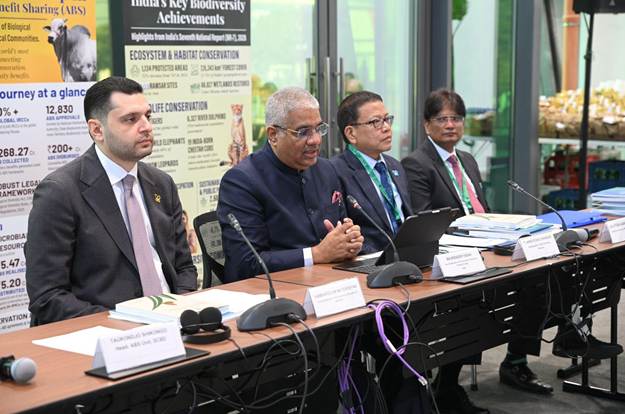
Delivering the keynote address at the side event titled - From Policy to Practice: Advancing India's Biodiversity Commitments through Innovation, Finance, ABS and OECMS - Shri Yadav highlighted the importance of building implementation capacity, sustaining finance and ensuring that biodiversity conservation and sustainable use contribute to human well-being and intergenerational equity. Referring to the Kunming-Montreal Global Biodiversity Framework, the Minister said that the responsibility of countries extends beyond adopting targets to building the capacity and mobilising the resources necessary to implement them.
Shri Yadav highlighted that biodiversity in India is inseparable from people's lives, knowledge and livelihoods. He emphasised that environmental protection and development must reinforce each other. The Minister also highlighted the principle of LiFE (Lifestyle for Environment), noting the importance of sustainable choices and responsible consumption in maintaining a harmonious relationship with nature.During the event, the dignitaries released four publications, that are as follows:
- Guidelines for the Designation of India's Other Effective Area-Based Conservation Measures (I-OECMs) 2026: The guidelines would support the recognition of conservation outcomes beyond conventional protected areas, subject to appropriate criteria and governance. They recognise that effective conservation can take place across diverse landscapes and management systems.
- 5th National Report on Cartagena Protocol on Biosafety: The report reflects the importance India attaches to transparent reporting and responsible biosafety governance.
- The Convention on Biological Diversity Handbook: Reference Guide and Indian Perspective: The handbook aims to strengthen informed participation and continuity in implementation by providing accessible reference material on an increasingly complex international process.
- India's ABS Success Story: The book highlights India's position as a Globally acknowledged leader in Access and Benefit Sharing (ABS).
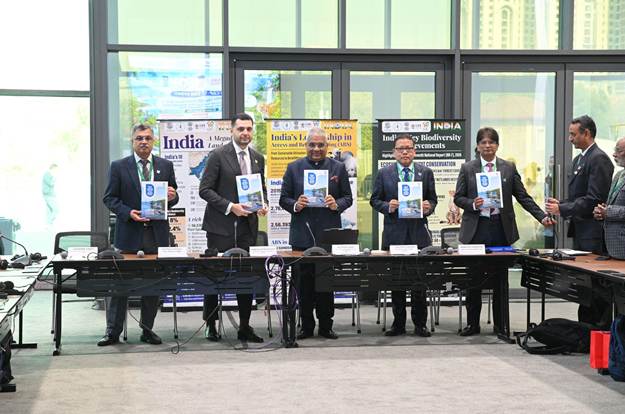
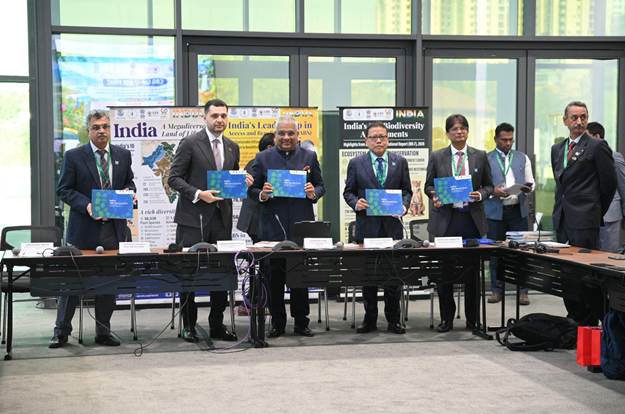
The Minister noted that these publications address interconnected priorities, including identifying conservation contributions, strengthening institutional understanding and reporting on implementation. He emphasised that ambitious biodiversity goals require sound guidance, reliable information and public accountability. The Minister called for measuring progress not merely by announcements or resources mobilised and areas identified, but by implementation, benefits delivered and sustained conservation outcomes.
Highlighting the importance of Access and Benefit Sharing, Shri Yadav said that the Nagoya Protocol provides a basis for the fair and equitable sharing of benefits arising from the utilisation of genetic resources. He stressed the need to translate this principle into workable, transparent and equitable procedures. India's experience, he noted, demonstrates the importance of complementing policy reforms with capable institutions, digital innovation and engagement with communities and responsible businesses.
Shri Yadav emphasised that no country can achieve the objectives of the Global Biodiversity Framework in isolation. He welcomed international cooperation that respects national priorities, promotes the exchange of practical knowledge and expands access to appropriate finance and technology. The Minister reaffirmed India's commitment to constructive dialogue, including South-South learning, and to approaches that enable countries to adapt successful ideas to their respective contexts. He expressed India's commitment to working with all Parties and partners in advancing the implementation of the Kunming–Montreal Global Biodiversity Framework and to translate shared biodiversity ambitions into lasting results.
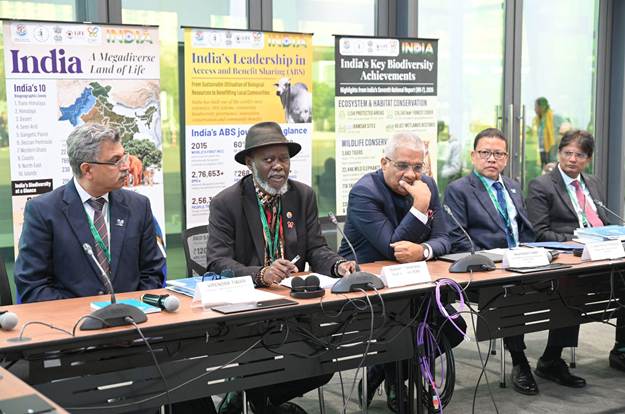
During the event, Mr. Hambardzum Matevosyan, Armenia’s Minister of Environment, and Dr. Taukondjo Shikongo, Head of the ABS Unit, SCBD, appreciated India's efforts in advancing biodiversity conservation and Access and Benefit Sharing. Their remarks underscored the importance of international cooperation and continued partnership in translating global biodiversity commitments into effective implementation.
*****
VM/SK