PIB Backgrounder
Beyond Cleanliness: The Women and Transgender Changemakers of Swachhata
Posted On:
30 SEP 2026 1:18PM by PIB Delhi
A clean city is often noticed through what is no longer visible. Waste no longer lies on the street. Drains no longer remain clogged. Sanitation facilities are available when they are needed. But behind this visible change are journeys that deserve to be seen too. They are the journeys of women creating livelihoods from waste, leading cleanliness efforts in their communities and turning everyday challenges into opportunities. Alongside them are transgender community members finding professional roles and recognition in sanitation services. Across cities, Swachhata is becoming more than a public service. It is becoming a space for dignity, enterprise, participation and opportunity.
This spirit of participation finds a national platform in Swachhata Hi Seva 2026, launched on 17 September 2026. Every year, the campaign brings citizens, institutions and leadership together to strengthen voluntarism and collective action for Swachhata.
With the theme “Swachhata Mein Sahbhag; Swachh Bharat, Viksit Bharat”, Swachhata Hi Seva 2026 places shared responsibility at the heart of the cleanliness movement. It underlines that the vision of a Swachh and Viksit Bharat calls for a Whole-of-Government and Whole-of-Society approach.
Such a collective spirit finds a meaningful expression in Loni, Uttar Pradesh, where something once treated as waste is becoming a source of livelihood.
When Waste Becomes a Livelihood
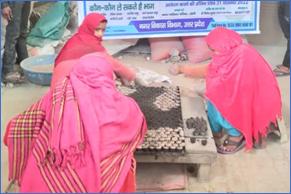
Around gaushalas and dairies, cow dung can become a difficult waste-management challenge, clogging drains and sewage channels. In Krishna Vihar Colony of Loni, however, a group of women saw a different way forward. They began using cow dung to make incense sticks and Loban cups.
What started with just 8-10 women grew into a livelihood opportunity for many more. A woman officer of the Loni Nagar Palika Parishad saw the potential in their work and helped connect the producers with gaushala owners for steady supply and utilization of cow dung. A simple idea began to take root: what if something treated as waste could be given another life?
During the summer months when incense production is at its peak, the initiative employs around 40-50 women. For these women, the work is more than making a product. It brings together livelihood, dignity, and the satisfaction of turning waste into something useful. The Nagar Palika Parishad also earns up to 25 per cent revenue from the sale of these products. This creates a link between waste management, local enterprise, and municipal revenue.
The products themselves carry the story of reuse. Traditionally, making incense products requires wood sawdust as the base material. Mixing around 30-35 per cent dry cow dung powder reduces the quantity of wood sawdust required. This has emerged as an environmentally sustainable solution that also ensures swachchta
What began in one colony has travelled much farther. The products are supplied to several parts of the country, including Delhi, Mumbai, Punjab, Gujarat and Hyderabad. During the COVID period, they were also produced for major brands, with orders reaching Mauritius and South Africa.
And the women are not stopping there. Plans are being explored to make combustible wood as fuel from cow dung for use in cremation grounds, havans, and other activities. The initiative is also exploring cow-dung flower pots that can eventually return to the soil as manure.
Here, the idea of cleanliness extends beyond removing waste. It means asking what else that waste can become.
From Waste Collectors to Waste Leaders
A similar spirit can be seen in Patna, Bihar, where women are breaking old conventions and giving cleanliness a new, inclusive face. At the city’s Pink Material Recovery Facility (MRF), women stand at the heart of the waste-management process. Operated primarily by women and led by a female supervisor, the facility processes dry and wet waste. It can manage 2 tonnes of dry waste and 1.5 tonnes of wet waste every day.
The idea for the Pink MRF emerged from an effort to create opportunities for women in the waste-management sector. The project team approached the Patna Municipal Corporation (PMC) with the idea of establishing a Pink MRF. PMC supported the idea, and the facility was set up in just three months. Its distinctive colour and design also drew the attention of local people, helping create awareness around the initiative.
The idea reaches the community through the ‘Cash for Waste’ initiative. Citizens can bring dry waste and receive payment at prescribed rates. Waste gains value, citizens gain an incentive to participate, and the city gains another set of hands in its cleanliness journey.
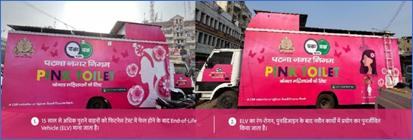
Patna’s Swachhta journey then takes an interesting turn. Old, unusable vehicles have been given a second life as mobile Pink Toilets. What once stood as scrap now serves a vital sanitation need. It is the spirit of the 3Rs: Reduce, Reuse and Recycle, made visible on the streets.
Together, the Pink MRF and mobile Pink Toilets reflect social justice, environmental awareness and economic opportunity. Above all, they carry a simple message: when women are given space in Swachhta, they do not merely become part of the system. They help reshape it.
Women Who Carry Cleanliness into Their Communities
The story of women and Swachhta does not end with the waste they handle. It grows through the communities they touch. In Bhopal, a group of 250 women brand ambassadors has worked with the municipal corporation on cleanliness and waste management. The group members have also established ‘Bartan Banks’ across 25 wards to eliminate the use of single-use plastic. By providing reusable utensil sets for community functions and events, these banks ensure that local gatherings are organized under zero-waste principles.
The 60-member ‘Swachhata Kitty Group’ has found another way to turn togetherness into action. Each woman contributes ₹100 every month, creating a shared pool for community cleanliness activities. Small contributions, carried by many hands, become a collective commitment to a cleaner neighbourhood.
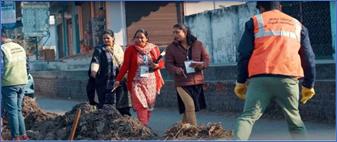
In Uttarakhand, this spirit has taken the name ‘Bainni Sena ’-the ‘Army of Sisters’. Across 57 groups, 570 women monitor cleanliness activities in their wards. They interact with citizens, help communicate complaints, conduct awareness programmes, and support coordination between the municipal administration and sanitation workers. Their work happens where a city’s cleanliness is truly decided. It takes shape in neighbourhoods, in conversations and in the small moments when someone chooses to care.
In Shillong, the Iynnehskhem Self-Help Group has found a new path to livelihood through waste. The women collect wet waste from homes and turn biodegradable waste into compost. Once involved in waste picking, they received training through a rehabilitation initiative and built a new livelihood around composting. Their unity earned them the affectionate name ‘Meri Maidens of Marton’.
Through their everyday efforts, the women are turning Swachhta from a responsibility into a shared culture of care.
When Inclusion Changes the Face of Sanitation
In Odisha, transgender persons are taking on roles that place them at the heart of urban sanitation systems. The change began in Cuttack, where the Municipal Corporation organised transgender persons into a Self-Help Group. They were trained and entrusted with the operation and maintenance of a Septage Treatment Plant.
It was a significant shift. A community that has often faced exclusion from formal opportunities was now taking responsibility for a technical sanitation facility.
The model subsequently expanded across Odisha. Urban Local Bodies began partnering with Self-Help Groups in Faecal Sludge and Septage Management (FSSM) and solid waste management.
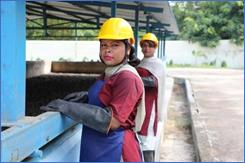
In Bhubaneswar, the Swikruti Self-Help Group took responsibility for operating and maintaining a 75-KLD Faecal Sludge Treatment Plant (FSTP) at Basuaghai. Members received orientation and technical and managerial training before taking up their responsibilities.
For Meghna Sahoo, President of Swikruti, the transformation is deeply personal. “Now, we can proudly embrace our identity and participate in the professional space,” she says. She speaks of the pride she feels when members of her group explain their work to students and visitors from national and international institutions. The significance lies not only in the job itself, but in what the job makes possible: professional identity, confidence and recognition.
The Bhubaneswar Municipal Corporation has also brought transgender groups into the operation and maintenance of seven cesspool vehicles. Drivers and helpers are to be engaged with minimum applicable wages. They will also receive training on health, hygiene, personal protective equipment, and desludging protocols. Odisha's pioneering move to expand livelihood options to transgenders has won many accolades. It has set the ball rolling for others to follow, showing how inclusive participation can pave the way for better sanitation.
The Deeper Meaning of Swachhata
These stories show that Swachhata can do more than create cleaner surroundings. It can open doors to livelihoods, participation, and recognition. The real transformation lies not only in what happens to waste, but in what becomes possible for the people who manage it. When people once pushed to the margins find a place at the heart of Swachhata, cleanliness takes on a deeper meaning. It becomes a shared effort, shaped by dignity, opportunity and a sense of belonging.
References
Ministry of Jal Shakti
https://www.pib.gov.in/newsite/erelcontent.aspx?lang=2®=48&relid=294881
Click here to see pdf
PIB Research
(Release ID: 2316883)
Visitor Counter : 170