PIB Backgrounder
Bharat Tex 2026: Where Every Thread Opens a New Opportunity
Posted On:
17 JUL 2026 7:04PM by PIB Delhi
A Global Platform for Indian Textiles
At Bharat Tex 2026, India's textile ambition comes alive through the diversity gathered under one roof. Manufacturers are exhibiting alongside handloom cooperatives, traditional artists and technology ventures. Indian enterprises are exploring global markets, while overseas companies are assessing opportunities in India.
Guided by the 5F vision, Farm to Fibre to Factory to Fashion to Foreign, it brings together India’s textile heritage, manufacturing strength and innovation on a unified global platform.
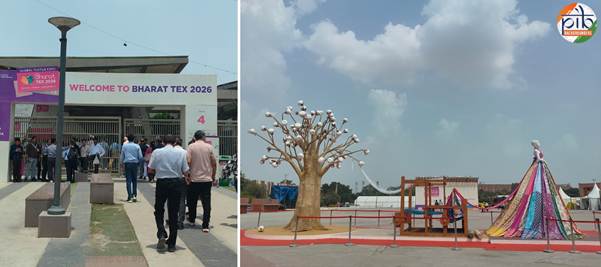
The 3rd edition is being held from 14 to 17 July at Bharat Mandapam in New Delhi. It covers the textile value chain across fibre, yarn, fabric, apparel, home textiles, technical textiles, handlooms and handicrafts. The event has attracted more than 6,000 buyers from over 130 countries and over 1.3 lakh trade visitors. Spread across 1.6 million square feet, the exhibition features over 20,000 textile products.
Beyond the scale of the exhibition, the significance of Bharat Tex is emerging through conversations around recognition, livelihoods and taking locally rooted enterprises to new markets. The event has emerged as a meeting point for heritage, enterprise, sustainability and global commerce.
Where the Making Becomes the Showcase
At the Weaves stall, visitors could watch fabric-making and block printing unfold in real time. Live demonstrations gave visitors a first-hand view at the craftsmanship behind each finished fabric.
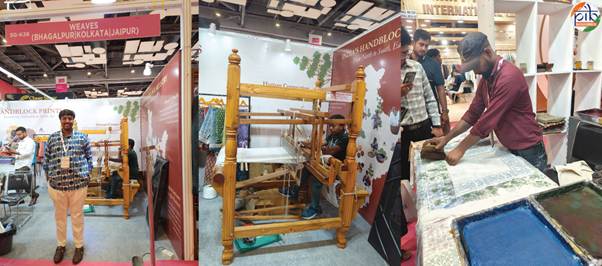
Kashyap Kedia, manager at Weaves, represents an enterprise built on six generations of textile experience. The enterprise works with around 200 artisans and reportedly produces nearly 2.5 lakh metres of block-printed fabric. The enterprise works with traditional printing styles including Dabu, Bagru and Batik. “Of our six printing styles, five can only be produced in India, particularly in Rajasthan, where the climate supports the process”, he mentioned.
"This year, the response has been tremendous because we have done live demonstrations," he said. "Potential customers from Qatar, Sri Lanka and Myanmar have come to see our work."
Introducing a Regional Tradition to New Visitors
Bharat Tex is also placing traditional art forms at the centre of global attention. Among them is Tikuli art from Bihar, recognised for its vibrant colours and intricate enamel work.
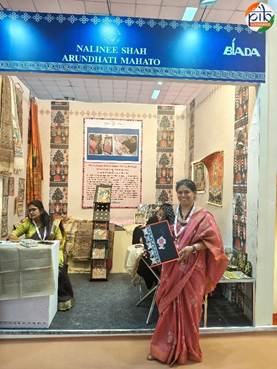
Arundhati Mahato, a Tikuli folk artist from Patna, is attending Bharat Tex for the first time. “Tikuli is an art form from Patna with a history of over 800 years,” she explained. “It has evolved from decorative tikulis into enamel painting on wood, fabrics and everyday products.”
The art is also creating flexible livelihood opportunities for women. “I have been providing free training to around 25 women who are directly or indirectly associated with me,” she said. “They can make these products from home and work at their own convenience.”
“I feel privileged to have this opportunity to promote Tikuli,” she added. “The response has been overwhelming because many people are still unfamiliar with the art.”
With its debut at Bharat Tex, the art form is gaining greater visibility among textile businesses, buyers and craft enthusiasts.
|
India’s Craft Traditions in Focus
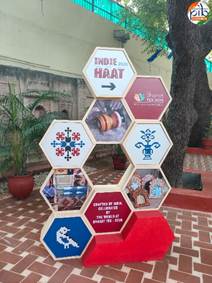
Running alongside Bharat Tex, Indie Haat 2026 at National Crafts Museum, Delhi presents India’s handloom and handicraft heritage. It has attracted 48 artisans and weavers, along with 12 design-led brands. The showcase places regional craftsmanship at the heart of the larger textile event. It is giving handmade traditions a prominent and contemporary setting.
It spans crafts such as Gulabi Minakari, Dokra, Usta Kala, Pichwai, Sozni embroidery, Blue Pottery, silver filigree, Cheriyal painting, Mata Ni Pachedi, papier-mâché, Bagru block printing, Jamdani sarees, Muga and Eri silk, and Odisha Ikat, among several others.
|
Contemporary Fashion, Rooted in Tribal Weaves
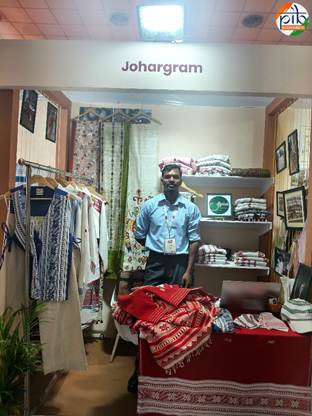
Johargram is bringing Jharkhand’s tribal textiles into contemporary fashion, transforming traditionally woven shawls into shirts, jackets and trench coats. Pawan Kumar, the brand’s creative and operations head, explained that the designs are drawn from traditional patterns associated with the Uraon and Munda communities.
"Around 80 weavers are now engaged as global demand has increased," he said. "The business-to-business experience has been very encouraging," he said. "We are connecting with many buyers and exporters."
Now in its third participation, the brand is presenting Jharkhand’s textile traditions beyond silk and highlighting their potential in contemporary design.
A Handloom Cooperative Meets a Wider Market
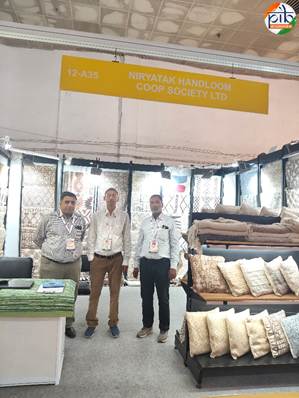
For Niryaatak Handloom Cooperative Society Limited, the event is bringing home-based handloom production to a wider circle of buyers. Mohammad Imran, president of the Kanpur-based cooperative, is presenting rugs, carpets and other home décor products made from cotton, wool and recycled PET yarn.
Around 120 weavers are part of the cooperative. Some work on looms at its premises, while others collect yarn and weave from home.
The cooperative has received good buyer interest and hopes to participate again. “We have had discussions with buyers from Iraq and Algeria, including a company that supplies to European markets.”
A subsidised stall facilitated by the Handloom Export Promotion Council has enabled the cooperative to access the trade event and begin further conversations with prospective buyers.
A Wider Stage for Textile Circularity
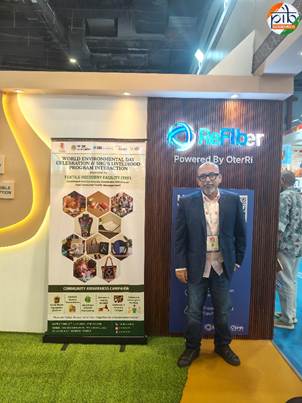
At one of the stalls, the textile journey began after a garment’s first use.
Manoj Wanvari, Chief Operating Officer of ReFiber, is presenting a technology-enabled system for collecting post-consumer textile waste. Once collected, the garments are sent to partner NGOs for recycling. ReFiber facilitates a marketplace where upcycled products can be sold.
Exhibiting for the first time, the exhibition is opening conversations with businesses and potential partners.
“The response has been very good—very phenomenal,” he said. “We have interacted with visitors from Bangladesh, Spain, the United States, Portugal and Sri Lanka.”
ReFiber now plans to expand its collection network across India and work with more organisations involved in textile reuse.
Bharat Tex: Bringing Every Strand Together
Bharat Tex brings textile sector’s many strands onto a common platform. Stories from across the exhibition floor illustrate how the event connects artisans, enterprises, institutions and buyers at different stages of the textile value chain.
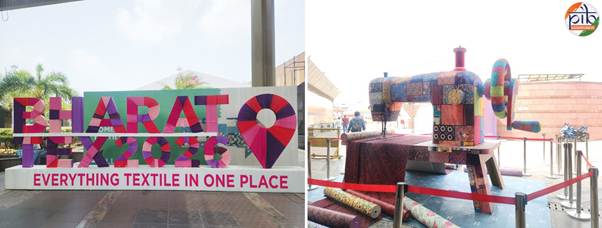
By bringing diverse products, processes and possibilities together, Bharat Tex captures the breadth of India’s textile ecosystem - everything textiles, in one place.
References:
Ministry of Textiles
https://www.pib.gov.in/PressReleasePage.aspx?PRID=2284603&lang=1®=3
https://www.pib.gov.in/PressReleasePage.aspx?PRID=2284286&lang=1®=3
Click to See In PDF
***
PIB Research
(Release ID: 2285881)
Visitor Counter : 3248