Ministry of Jal Shakti
Technology succeeds when it reaches people and is easy for communities to use: Shri C.R Patil
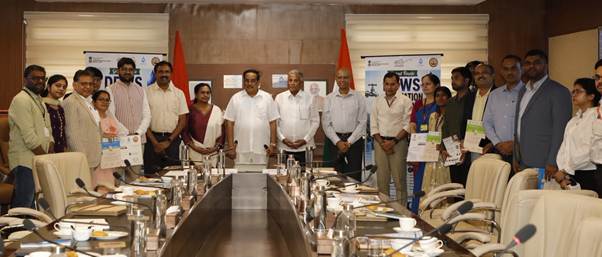
DDWS Innovation Challenge Grand Finale held in the august presence of Union Minister, Jal Shakti and Minister of States & Railways at New Delhi
Innovative solutions presented for safe drinking water and plastic waste management in rural India
Government calls for affordable, scalable and community-friendly innovations to be implemented at the grassroot level
Posted On:
30 JUN 2026 6:38PM by PIB Delhi
Union Minister of Jal Shakti Shri C.R Patil said that technology becomes truly successful only when it reaches people and is easy for communities to use. Addressing the Innovation Challenge Grand Finale of Department of Drinking Water and Sanitation (DDWS) held today in New Delhi, the Union Minister highlighted that the Jal Jeevan Mission, under the leadership of Prime Minister Shri Narendra Modi, has transformed the lives of rural families by taking tap water connections to crores of households. He said that the mission must now move forward with equal focus on water safety, ensuring that every household receives not only water, but safe drinking water. He encouraged start-ups, researchers and innovators to develop solutions that are affordable, sustainable, easy to deploy and suitable for rural conditions.
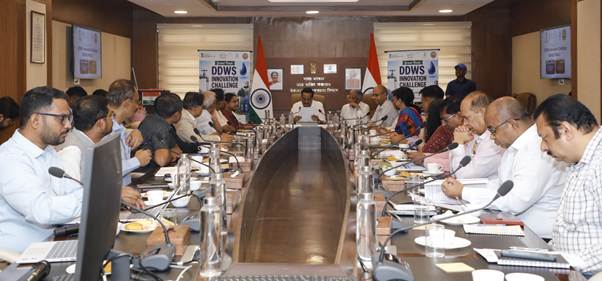
Shri C.R Patil emphasised that water quality is a key priority for the Government. In many remote villages, timely testing of drinking water is still a challenge. Union Minister pointed out that there is a need for potable, low-cost and easy-to-use technologies that can be used at the village level by Gram Panchayats, Village Water and Sanitation Committees (VWSCs), Self Help Groups and local youth.
Referring to plastic waste management, Shri C.R Patil noted that rural areas are also witnessing a rise in packaged products, leading to increased plastic waste, including Multi-Layer Plastic such as chips packets, biscuit wrappers and pouches. He said that transporting such waste to distant recycling plants is often costly and difficult. Therefore, village-level and block-level solutions are needed to process plastic waste locally and support the idea of Circular Economy by converting waste into wealth.
Shri C.R Patil further said that start-up-led technologies should support local needs, be easy for communities to use and create livelihood opportunities for village youth and local entrepreneurs. This, he noted, reflects the true spirit of Aatmanirbhar Bharat and contributes to the vision of Viksit Bharat.
The Grand Finale of the DDWS Innovation Challenge was held in the presence of Shri C.R. Patil, Union Minister of Jal Shakti; Shri V. Somanna, Union Minister of State for Jal Shakti and Railways; Shri Ashok K.K. Meena, Secretary, Department of Drinking Water and Sanitation; Shri Kamal Kishore Soan, Additional Secretary and Mission Director, NJJM and Ms Aishvarya Singh, Joint Secretary and Mission Director, Swachh Bharat Mission (Grameen). Senior officials of DDWS, representatives from IIT Madras, jury members, start-ups, innovators and finalists also attended the event.
The DDWS Innovation Challenge was held in collaboration with IIT Madras to identify practical and scalable solutions for two important national priorities: Safe drinking water under Jal Jeevan Mission (JJM) and small-scale, cost-effective and sustainable plastic waste management solutions under Swachh Bharat Mission (Grameen) (SBM-G).
A total of 348 applications were registered on the portal, while 90 applications under the Water Innovation Challenge and 66 applications under Plastic Waste Management are complete in all respect.
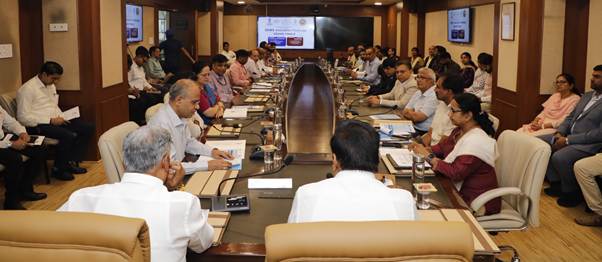
Three technologies each were selected under Jal Jeevan Mission and Swachh Bharat Mission (Grameen) in the Grand Finale by the selection committee chaired by Prof. Ligy Philip, IIT Madras.
Under JJM, Chembiosens Pvt. Ltd., Jaljyoti Process Pvt. Ltd. and Plastic Surge Industries Pvt. Ltd were selected for award. These solutions focused on portable water quality testing devices, chemical and bacteriological testing and field-testing kits. The technologies aim to make water quality testing faster, easier and more reliable at the village level.
Under SBM-G, Crosslinx Pvt. Ltd., BiGlyso Pvt. Ltd. and Vigya Crafts Pvt. Ltd were selected. These solutions focused on small-scale plastic waste management, affordable and sustainable processing models and local plastic waste management technologies.
The awards were presented to the winners by Shri C. R Patil, Union Minister of Jal Shakti.
The selected technologies will be further examined for their safety, practicality, scalability and suitability for rural areas. Based on their performance, the Department may explore pilot implementation in selected rural locations.
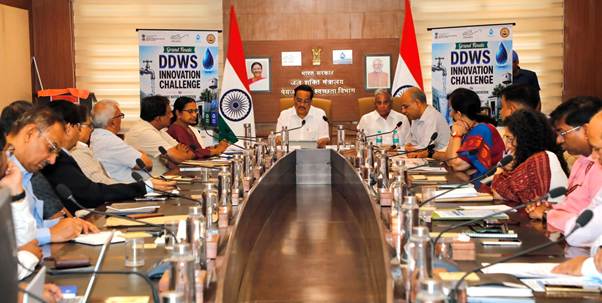
Setting the context of the event, Shri Ashok K.K. Meena, Secretary, Department of Drinking Water & Sanitation (DDWS), underscored the critical role of innovation in strengthening the sustainability of rural drinking water supply and sanitation systems. He stated that while Jal Jeevan Mission and Swachh Bharat Mission–Grameen have created substantial rural infrastructure, the next phase must focus on ensuring reliable, affordable and sustainable service delivery through technology-driven solutions.
Highlighting the objectives of the DDWS Innovation Challenge, organised in collaboration with IIT Madras, the Secretary said the initiative sought practical and scalable innovations in two priority areas: portable water quality testing technologies under JJM and small-scale, cost-effective plastic waste management solutions under SBM-G. He stressed that technologies designed for rural India must be simple, affordable, durable and suitable for field conditions to enable widespread adoption by Panchayats, VWSCs, field workers and eventually local citizens.
Emphasising the need to democratise water quality monitoring, Shri Ashok K.K. Meena observed that portable testing devices integrated with mobile applications could significantly improve the speed, transparency and reliability of water quality surveillance. Such technologies, he said, have the potential to enable real-time data capture, geo-tagging and rapid reporting, thereby strengthening local decision-making and enhancing public confidence in rural drinking water services.
On plastic waste management, the Secretary advocated a shift from conventional waste collection and disposal towards decentralised circular rural economy models. He noted that innovations promoting local recycling, reuse and resource recovery would not only reduce environmental impacts and transportation costs but also create livelihood opportunities while supporting sustainable rural waste management. He reiterated that DDWS remains committed to promoting innovations that are affordable, scalable, repairable, data-enabled and capable of improving the long-term sustainability of rural water supply and sanitation services across the country.
Congratulating the winners, the Secretary, DDWS expressed confidence that the innovations recognised through the challenge would extend beyond the competition and contribute meaningfully to improving service delivery, strengthening community institutions and enhancing the ease of living in rural India.
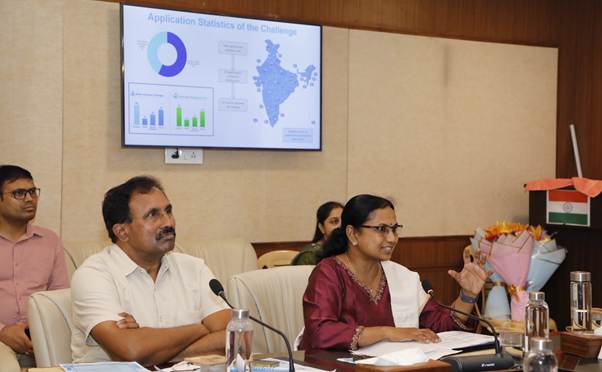
The event also included a presentation by IIT Madras on the Innovation Challenge process, selection methodology, evaluation criteria and the journey of the challenge till the final stage. The presentation was led by Prof. Ligy Philip from Department of Civil Engineering, IIT Madras.
***
AMK/AK
(Release ID: 2279485)
Visitor Counter : 1653