Ministry of Environment, Forest and Climate Change
National Workshop on “Tiger Reintroduction: Opportunities & Challenges” Concludes in Alwar, Rajasthan
12 Chief Wildlife Wardens and 18 Field Directors deliberated on a science-based national framework for tiger reintroduction, supplementation and recovery
Posted On:
29 JUN 2026 6:17PM by PIB Delhi
Union Minister for Environment, Forest and Climate Change Shri Bhupender Yadav on 28.06.2026 inaugurated the National Workshop on "Tiger Re-introduction: Opportunities & Challenges" at Alwar, Rajasthan, in the presence of Rajasthan Forest Minister Shri Sanjay Sharma; Director General of Forests and Special Secretary, MoEFCC, Shri Sushil Kumar Awasthi; Director General, International Big Cat Alliance (IBCA), Shri S.P. Yadav; and ADGF (Project Tiger) and Member Secretary, National Tiger Conservation Authority (NTCA), Shri Sanjay Kumar.
The workshop brought together 12 Chief Wildlife Wardens and 18 Field Directors from States and Tiger Reserves to deliberate on scientific, ecological and management strategies for tiger reintroduction, supplementation and recovery in tiger-deficient landscapes. The technical sessions focused on active management of tiger populations, prey augmentation, habitat restoration, landscape connectivity and lessons from tiger and cheetah reintroduction programmes.
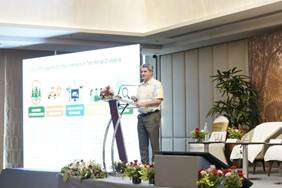
The technical session commenced with a presentation by the Wildlife Institute of India (WII) Tiger Cell on the "Road Map for Stocking Tiger-deficient Areas: Framework for Active Management of Tiger Reserves in India", outlining a scientific framework for restoring tiger populations in suitable landscapes. Based on the deliberations, certain Tiger Reserves were identified for focused recovery interventions by the National Tiger Conservation Authority (NTCA) in collaboration with the concerned State Forest Departments. A senior scientist from WII highlighted the importance of in situ prey augmentation and the role of gaur and barasingha translocations in strengthening prey populations and supporting long-term tiger recovery.
Chief Wildlife Wardens and Field Directors presented case studies on tiger reintroduction, recovery and supplementation programmes from Sariska, Mukundara Hills, Panna, Veerangana Durgavati, Satkosia, Simlipal, Rajaji, Sahyadri and Navegaon-Nagzira Tiger Reserves. The presentations highlighted field experiences, achievements, operational challenges and lessons learnt in translocation planning, post-release monitoring, habitat restoration, protection, community participation and adaptive management, providing valuable guidance for future conservation initiatives.
Representatives from low tiger-density reserves, including Buxa, Achanakmar, Udanti-Sitanadi, Indravati and Palamau, presented the preparedness of these landscapes for future tiger recovery. The recommendations emerging from the workshop provide a national framework for future tiger reintroduction, supplementation, habitat restoration and prey augmentation programmes, while strengthening collaboration among the National Tiger Conservation Authority, State Forest Departments, scientific institutions and conservation partners.
A special session on Project Cheetah showcased India's successful cheetah reintroduction programme – the world's first inter-continental large carnivore reintroduction – and highlighted the lessons it offers for future wildlife recovery and reintroduction initiatives.Following the workshop, participants visited Sariska Tiger Reserve to observe habitat management practices and review the conservation interventions that have enabled the successful recovery of the reserve's tiger population over the past eighteen years.
*****
VM/GS
(Release ID: 2279065)
Visitor Counter : 1973