Ministry of Statistics & Programme Implementation
Release of SDG Publications on the Occasion of 20th Statistics Day (29th June 2026)
Posted On:
29 JUN 2026 5:00PM by PIB Delhi
On the occasion of the 20th Statistics Day, on 29th June 2026, the Ministry of Statistics and Programme Implementation released the following publications on Sustainable Development Goals (SDGs):
- Sustainable Development Goals – National Indicator Framework Progress Report, 2026;
- Data Snapshot on Sustainable Development Goals – National Indicator Framework Progress Report, 2026;
- Sustainable Development Goals – National Indicator Framework, 2026 (along with metadata);
- Transforming Lives: India’s Achievements under the People Dimension of the SDGs.
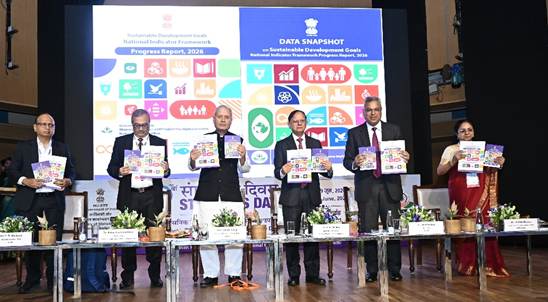
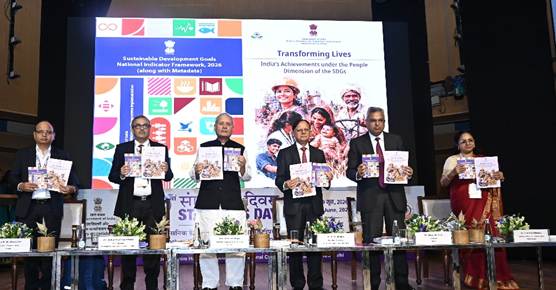
The Ministry of Statistics and Programme Implementation (MoSPI) has developed the National Indicator Framework (NIF) for Sustainable Development Goals (SDGs) in consultation with concerned Ministries and Departments, NITI Aayog, UN Agencies, and other stakeholders to facilitate the monitoring of SDGs at the national level. The NIF provides a comprehensive mechanism for tracking progress on the SDGs and serves as an important evidence base for policy formulation and programme implementation. The report is compiled based on the data for the indicators received from line Ministries/Departments. MoSPI has been releasing these reports on 29th June every year.
In this series, the Ministry released the following publications on 29th June 2026:
(i) Sustainable Development Goals – National Indicator Framework Progress Report, 2026
The report presents the latest available time series data on the SDG national indicators, which serves as an important tool for monitoring national-level progress towards the 17 Sustainable Development Goals. It also provides valuable evidence for policymakers, planners, researchers and other stakeholders.
(ii) Data Snapshot on Sustainable Development Goals – National Indicator Framework Progress Report, 2026
Data Snapshot on SDG-NIF Progress Report, 2026 is a derived publication in handbook form from the SDG-NIF Progress Report, providing national-level time series data on SDG indicators in a concise and user-friendly format.
(iii) Sustainable Development Goals – National Indicator Framework, 2026 (along with metadata)
A derived report, in handbook form, from the Sustainable Development Goals – National Indicator Framework Progress Report, 2026, encompassing all the national SDG indicators along with comprehensive metadata.
Alongside the Progress Report, MoSPI has also released a thematic SDG bulletin, ‘Transforming Lives: India’s Achievements under the People Dimension of the SDGs’. This bulletin is part of a series of thematic, data-driven SDG bulletin aligned with the five foundational pillars of the 2030 Agenda for Sustainable Development: People, Planet, Prosperity, Peace, and Partnerships. The bulletin on ‘People’ dimension of SDGs highlights India’s progress toward human well-being and social development, focusing on SDGs related to no poverty (SDG 1), zero hunger (SDG 2), good health and well-being (SDG 3), quality education (SDG 4), and gender equality (SDG 5). The bulletin outlines major national initiatives and policy frameworks supporting human development, along with India’s commitment to leaving no one behind in its SDG journey.
Highlights of the Sustainable Development Goals-National Indicator Framework Progress Report, 2026:
The National Indicator Framework (NIF), 2026 consists of 277 national SDG indicators, covering all 17 Sustainable Development Goals. Some of the major highlights of the progress report reflecting India's continued progress towards achieving the Sustainable Development Goals are:
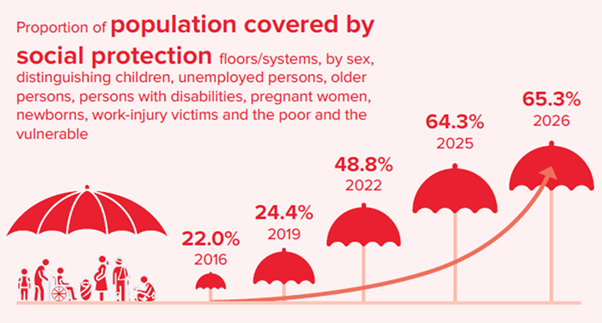
The proportion of population covered by social protection systems/floors increased from 22.0% in 2016 to 65.3% in 2026.
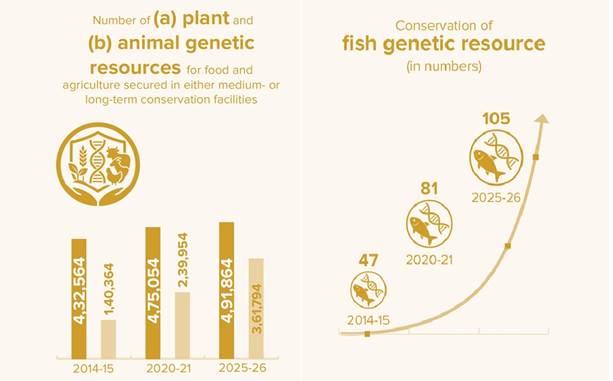
Plant genetic resources conserved increased from 4,32,564 in 2014–15 to 4,91,864 in 2025–26, animal genetic resources rose from 1,40,364 to 3,61,794, and fish genetic resources more than doubled from 47 to 105, reflecting sustained progress in the conservation of genetic resources for food and agriculture.
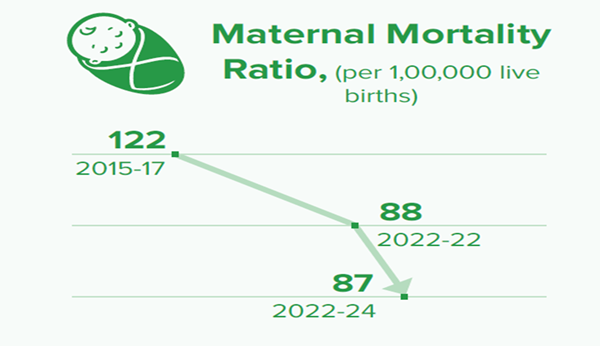
Maternal Mortality Ratio declined from 122 per 100,000 live births during 2015-17 to 87 during 2022-24.
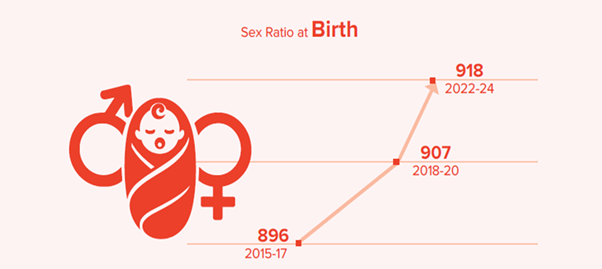
The Sex Ratio at Birth (in Per 1,000 male live births) improved from 896 females per 1,000 males in 2015–17 to 918 in 2022–24, reflecting a positive trend towards a more balanced gender ratio at birth.
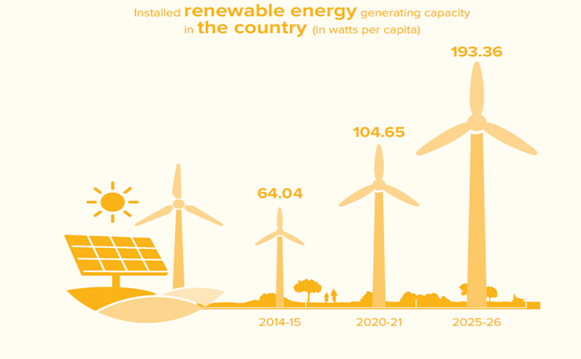
Installed renewable energy generating capacity in the country increased from 64.04 watts per capita in 2014-15 to 193.36 watts per capita in 2025–26, reflecting a threefold expansion in renewable energy capacity over the period.
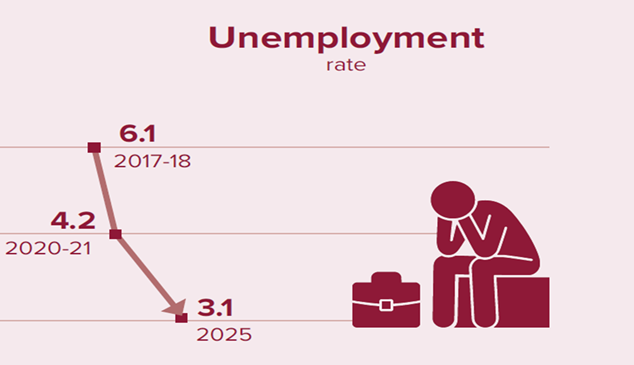
The unemployment rate declined from 6.1% in 2017-18 to 3.1% in 2025.
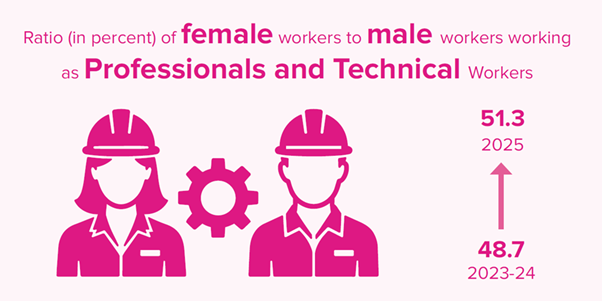
The ratio of female to male workers employed as Professionals and Technical Workers increased from 48.7% in 2023–24 to 51.3% in 2025.
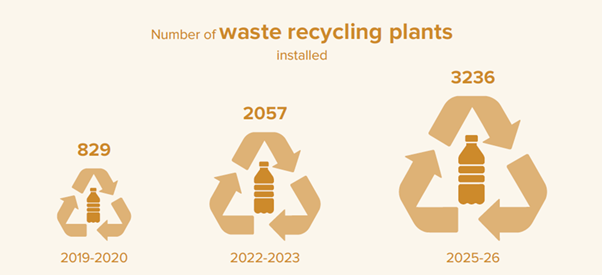
The number of waste recycling plants installed increased from 829 in 2019–20 to 3,236 in 2025–26 reflecting a strong expansion in waste management and recycling infrastructure over the period.
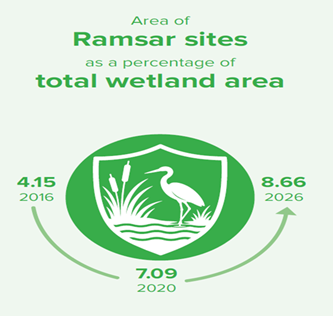
The area of Ramsar sites as a percentage of total wetland area increased from 4.15% in 2016 to 8.66% in 2026, indicating a substantial expansion in the extent of wetlands receiving international recognition and protection under the Ramsar Convention.
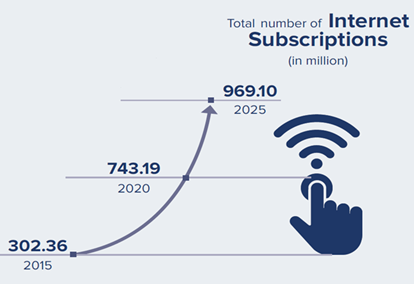
The total number of internet subscriptions more than tripled from 302.36 million in 2015 to 969.10 million in 2025.
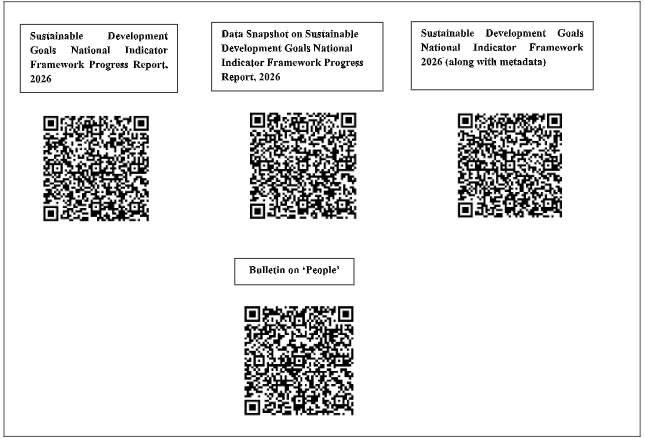
The reports are available on the official website of the Ministry (https://mospi.gov.in/) or scan the QR code as given below:
**
Samrat
(Release ID: 2279014)
Visitor Counter : 11952