Posted On:
03 JUN 2026 11:05AM by PIB Delhi
India’s socio-economic story is changing, and at the heart of it stands a growing, confident middle class. Once defined by careful spending and limited choices, middle-class families today are experiencing greater security, opportunity, and aspiration. Over the past 12 years, reforms in taxation, healthcare, housing, digital services, infrastructure, education, entrepreneurship have made everyday-life more affordable and convenient. Better connectivity, easier access to services, affordable homes, stronger social security, and digital empowerment have improved both comfort and confidence. As incomes rise and opportunities expand, India’s middle class is no longer just adapting to change- it is actively driving the nation’s growth, ambition, and future prosperity.
|
Empowered & Evolving: The New Indian Middle Class
Once upon a time, India’s middle class was defined by careful spending, limited choices, and modest aspirations. Today, that reality has shifted. With rising incomes, digital access, and expanding opportunities, aspirations are turning into achievements. This section of the Indian society has been steadily empowered by Government support- from record increases in tax exemption limits since 2014 to GST reforms that have boosted savings and enhanced disposable income. The middle class now stands more confident, empowered, and central to India’s growth story.
Who is the Middle Class?
What defines “middle class” varies across countries, shaped by factors like purchasing power, education levels, social services, perceptions of wealth. A widely used benchmark is from the World Bank. It classifies economies annually, based on Gross National Income (GNI) per capita, the value of primary incomes for all sectors. The updated country income classifications in US dollars for FY26 are-
Low income: ≤ $1,135
Lower-middle income: $1,136 – $4,495
Upper-middle income: $4,496 – $13,935
High income: > $13,935
These classifications provide a broad framework to situate income groups, including the middle segment, within the global economy.
|
The Changing Face of India’s Middle Class
In 2010, most of the world's middle-class lived in OECD economies, but this has shifted rapidly. Between 2009 and 2017, the middle-class population has expanded from 1.8 billion to 3.5 billion. About 40% are in Asia, driven significantly by India and China. India’s GDP per capita grew by 53% between 2011 and 2019. Meanwhile, Indian middle class also expanded at 6.3% annually (between 1995 to 2021). It comprises about 31% of the population in India.
This trend is poised to grow. Forecasts by the OECD predict that between 2030 and 2035, India will overtake China in terms of middle-class population in absolute terms. This reflects rising incomes, expanding economic opportunities and improving living standards for millions of Indians. It also signals stronger consumer demand, greater spending power and India’s growing influence in the global economy.
This growing segment is reshaping global demand. It is closely linked to urbanization and the rise of emerging cities driving global GDP growth. A strong middle class is vital for a healthy economy and a cohesive society. It drives consumption and invests in education, health, and housing. It also strengthens public systems through tax contributions and demand for better services. By prioritising education, the middle class builds human capital and supports long-term productivity and income growth. It also fuels entrepreneurship, innovation, and the growth of small businesses.
In this context, the World Economic Forum (WEF) has pointed to a structural shift in India’s middle-class consumption. 93% of urban consumer growth is expected outside the top five cities (New Delhi, Kolkata, Mumbai, Bengaluru and Chennai). Subsequently, ~nearly 500 “consumer cities” are likely to emerge, translating to rising incomes expanding the middle class. The WEF also opines that by 2036, India's middle class (and affluent consumers) will account for 93% of all spending. This would be a rise from 80% in 2026. Additionally, by 2035, 20%+ of key generations (baby boomers, Gen X, millennials, Gen Z) will spend $45 or more daily. Notably, this creates opportunities for businesses to develop products and services that appeal to a wide range of age groups.
Beyond economics, middle-class promotes trust, reduces inequality, and supports stable, well-governed societies. Overall, countries with a strong middle class tend to achieve more inclusive and sustained economic growth.
Strengthening the Middle Class: 12 Years of Transformative Governance
Over the past 12 years, the Government has empowered India’s middle class through wide-ranging reforms. Simplified taxation, and stronger banking, insurance, and pension systems have enhanced financial security. Expanding urban growth, better connectivity, and improved infrastructure have created new opportunities. Improved access to basic amenities, accessible healthcare, stronger education and skill development, along with seamless digital governance have improved everyday convenience. Together, these measures provide secure pathways for wealth creation and long-term stability.
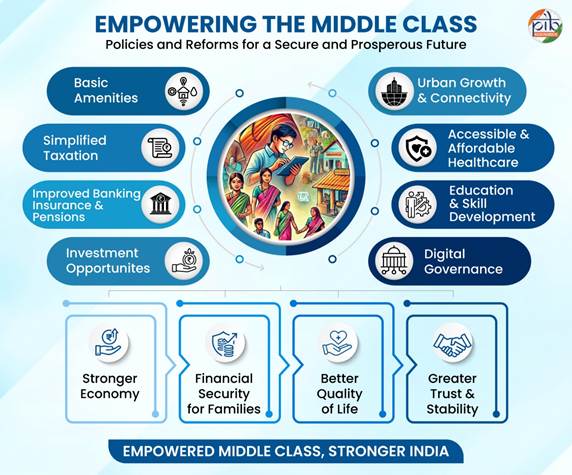
Reduction in Taxation, Improved Banking, Insurance, Expanded Pensions
The Government has strengthened financial security for India’s middle class, over the past twelve years. Reduction in taxation, improved banking access, wider insurance coverage, and expanded pensions have reduced financial stress. Subsidized loan rates and digital reforms have also made savings, borrowing, and financial planning more accessible and convenient.
Simplified taxation- In July 2024, the Government announced a comprehensive review of the Income Tax Act, 1961. This was completed in record time and the Income Tax Act, 2025 came into effect in April, 2026. Notably, these tax reforms have significantly eased the financial burden on the middle class. In 2014, individuals with income of up to 2.5 lakhs attracted zero tax. Now, individuals earning up to ₹12 lakh annually (₹12.75 lakh for salaried persons with standard deduction) pay zero tax under the new tax regime (introduced in 2023). This has increased their savings, disposable income, and overall financial choices.
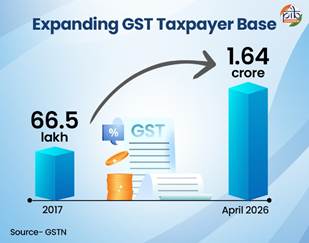
The Goods and Services Tax (GST)- GST, introduced in July 2017, is India’s most significant indirect tax reform since Independence. It unified multiple central and state taxes into a single system, creating a common national market. For the middle class specifically, GST has delivered several tangible benefits by simplifying taxes and lowering everyday costs. Lower rates on essential items and rationalised slabs made daily consumption more affordable. Over nearly nine years, it has evolved through rate rationalisation and digitalisation, becoming the backbone of indirect taxation.The GST taxpayer base grew from 66.5 lakh in 2017 to 1.64 crore by April 2026.
Unified Pension Scheme (UPS)- Effective since April 2025, UPS strengthens retirement security for central government employees in India- a significant segment of middle class.It combines employee and Government contributions under a contributory structure and offers assured, inflation-linked pension benefits after retirement. UPS guarantees a minimum pension of ₹10,000 per month after retirement (with at least 10 years of service). It reduces uncertainty about post-retirement income and financial stability, specifically supporting employees with lower salaries and shorter service periods. The scheme also provides Dearness Relief to pensioners. This helps retirees manage rising living costs and inflation. Additionally, family pension benefits support spouses after the pensioner’s death. This ensures continued financial protection for dependent family members.
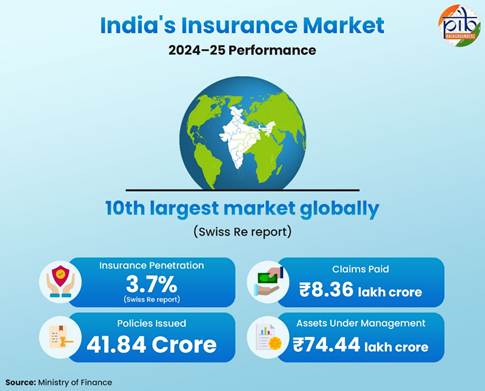
Insurance- India has emerged as the 10th largest insurance market globally by premium volume, reflecting expanding financial protection. Insurance broadly includes life insurance (covers death, disability, retirement risks) and non-life insurance (protects health, property, assets against unforeseen events).
The growing importance of insurance is visible in household finances. The share of insurance and pension funds rose from 28.6% in FY 2018–19 to 29.6% in FY 2024–25. This indicates increasing financial awareness and a shift towards long-term security among families.
From a middle-class perspective, the Insurance Regulatory and Development Authority of India (IRDAI) is committed to the vision of “Insurance for All by 2047”. It aims to ensure that every citizen has adequate life, health, property insurance; every enterprise has access to suitable risk protection.
Several Government-backed schemes have anchored this expansion. Pradhan Mantri Jeevan Jyoti Bima Yojana, launched in 2015, has recorded 26.88 crore enrolments, with over 10 lakh claims settled. Pradhan Mantri Suraksha Bima Yojana has seen 57.11 crore enrolments, providing affordable accident coverage. Meanwhile, Ayushman Bharat Pradhan Mantri Jan Arogya Yojana has enabled 43.52 crore health cards, expanding access to healthcare protection.
The Employees' State Insurance Scheme further strengthens social security by covering 3.24 crore employees, benefiting ~14.91 crore individuals, including families.
Reforms like Sabka Bima, Sabki Raksha amendments in 2025 have improved regulation, enhanced consumer protection, and increased foreign investment limits. Together, these efforts have deepened insurance penetration, improved financial resilience, and made risk protection more accessible for the middle class.
Lower loan rates- Between 2015 and 2025, home loan interest rates in India declined significantly. In 2015, rates ranged between 9.5% and 10.5% per annum. By 2025, they eased to around 7.35% to 8.75%, improving affordability and access to homeownership. This decline was driven by regulatory reforms and broader economic changes. A key factor was the policy stance of the Reserve Bank of India, India's central bank. The repo rate has seen a significant reduction-from 8% in 2015 to 5.25% in 2026. Banks gradually transmitted these benefits to borrowers, lowering lending rates.
Similar to home loans, personal loan rates dropped from 14.25% (2014) to 12.5% (2026). Education loan rates reduced from 14.25% to 9.4%. These lower rates make borrowing more affordable for the middle class. They reduce EMIs and ease financial pressure. They also support spending on homes, education, and personal needs.
Pradhan Mantri MUDRA Yojana (PMMY)- PMMY, launched in April 2015, provides collateral-free loans up to ₹20 lakh across manufacturing, trading, services & allied agricultural activities. It has evolved into a powerful instrument of empowerment, disbursing 57 crore+ loans amounting to ₹40.07 lakh crore (March 2026). It has strengthened grassroots entrepreneurship, deepened financial inclusion, and supported sustained growth of India’s local economies. For the middle class, PMMY enables small business creation, supports self-employment, and reduces dependence on informal credit, improving financial stability.
|
When Lavkush Mehra from Bhopal took his first MUDRA loan of ₹5 lakh in 2021, he did so with some hesitation. Within a few years, that single step was the beginning of a remarkable journey- his pharmaceutical business grew from a ₹12 lakh turnover to over ₹50 lakh, his income more than doubled, and he became a homeowner. His story reflects what the PMMY was designed to achieve-giving young entrepreneurs the financial foundation to build livelihoods on their own terms.
|
Expanding Urban Growth and Connectivity
Over the past 12 years, the Government has expanded urban infrastructure and connectivity across India. Better housing, faster transport, and modern public infrastructure have improved everyday urban life. Expanded metro networks, upgraded railways, and growing air connectivity have made travel safer, quicker, and more affordable for the middle class.
Pradhan Mantri Awas Yojana- Urban (PMAY-U) for Housing- Launched in 2015, it has transformed the lives of crores by providing them with secure housing. PMAY-U 2.0 scheme further builds upon the strong foundation. It was launched under ‘Housing for All’ Mission (w.e.f. September 2024). The aim is to support 1 crore additional eligible beneficiaries in next five years in urban areas. ₹ 8.76 lakh crore has been allocated to ensure a home for the middle class.
Out of a total 125.31 lakh sanctioned houses, 98.1 lakh are completed/delivered to beneficiaries across the country (May 2026). This is a significant growth of 1,120% against the 8.04 lakh houses built across (2005-14). The scheme reflects the Government’s continued commitment to ensure dignified, affordable housing for urban families of Middle-Income Group, amidst others.
Besides, the SWAMIH (Special Window for Affordable and Mid-Income Housing) fund is specifically designed for the middle class and lower-middle-class, aimed at completing stalled residential projects. Since its launch in 2019, over 58,000 homes have been completed across 146 projects. The Fund has unlocked over ₹49,500 crore of capital across these projects nationwide, covering more than 90 million square feet of development area. Out of this, 44% is dedicated to Low-Income Group and Middle-Income Group housing.
|
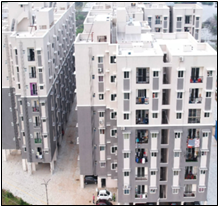
Families who invested in Elite Acres in Chennai waited years for their dream homes. Launched in 2017, the project faced repeated delays due to approvals and financial challenges. For many buyers, uncertainty kept growing as possession dates continued to shift.
SWAMIH stepped in during 2020 and revived the stalled project. Within two years, construction was completed and pending dues were cleared. More than 250 families finally received their homes, bringing relief, stability, and renewed confidence to homebuyers.
|
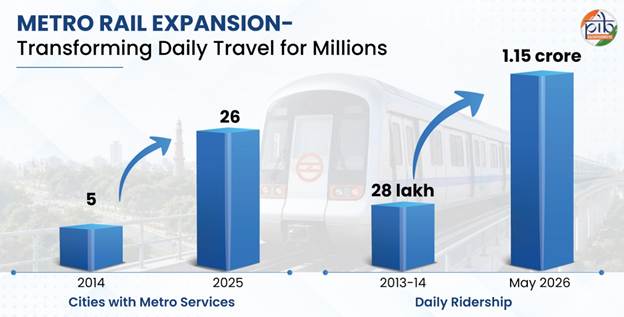
Metro Rail Expansion- India now has the world’s third-largest metro network, transforming daily travel for millions. Metro expansion has accelerated from 0.68 km per month before 2014 to nearly 6 km today. Over the last 12 years, nearly ₹3.7 lakh crore has been invested in expanding metro connectivity across the country. The number of cities with metro services grew from just 5 in 2014 to 26 in 2025, while daily ridership has increased from 28 lakh in 2013-14 to over 1.15 crore today. Under the Make in India initiative, over 2,100 metro coaches have been manufactured domestically by BEML by March 2026 for cities including Delhi, Jaipur, Kolkata, Bengaluru and Mumbai. For the middle class, metro expansion has resulted in faster commutes, lower travel costs, reliable public transport- making city life more affordable.
Railways expansion- In the past 12 years, train travel in India has become safer, faster, greener and more comfortable. Budgetary support for Indian Railways has increased from ₹32,000 crore in 2014-15 to ₹2.78 lakh crore in FY 2025-26. Safety has improved through Kavach, an indigenous system that prevents collisions through automatic braking. High-speed rail tracks supporting speeds above 130 kmph expanded from 5,036 km in 2014 to 23,713 km in 2026. India also launched its futuristic Vande Bharat sleeper service in January 2026, while 60 Amrit Bharat trains are now operational nationwide.
Rail usage continues to rise, with passenger journeys increasing from 716 crore in 2024-25 to 741 crore in 2025-26. Every day, Indian Railways carries over two crore passengers across the country. Meanwhile, 208 railway stations have been upgraded with modern passenger facilities as of April 2026. For the middle class, this translates to faster trains, improved safety, better stations- making long-distance travel more comfortable, dependable.
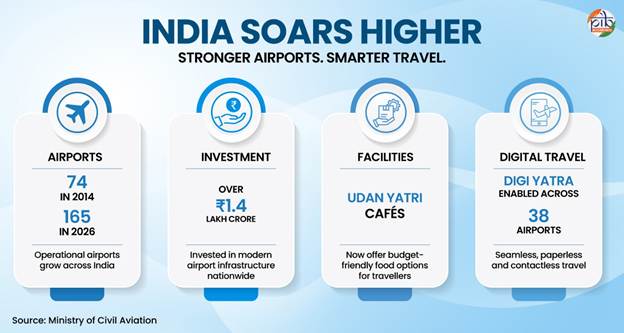
Airports expansion- Air travel in India has become more accessible and convenient for middle-class families. The number of operational airports increased from 74 in 2014 to 165 in 2026. Over ₹1.4 lakh crore has been invested in modern airport infrastructure nationwide. New airports, including Mopa, Kannur, Hollongi, Navi Mumbai and Noida (Jewar) have improved regional connectivity.
Passenger experience has also improved through faster grievance redressal and affordable airport facilities. UDAN Yatri Cafés now offer budget-friendly food options for travellers. Digi Yatra enables seamless, paperless and contactless travel across 38 airports. Since December 2022, over 9.3 crore passengers have used this digital facility. The e-BCAS platform has further strengthened aviation security through digitised monitoring and training systems.
The UDAN scheme has made air travel affordable for smaller cities and first-time flyers. Since 2016, 665 routes have connected 95 airports, heliports and water aerodromes. More than 3.45 lakh flights have served over 164 lakh passengers under the scheme. Over ₹4,800 crore has been invested in reviving underserved airports nationwide. The Modified UDAN Scheme, approved in 2026, will connect 120 new destinations over the next decade. All in all, affordable flights, better regional connectivity, modern airports are making air travel easier, more convenient for middle-class families.
Availability of Basic Amenities has Risen Exponentially
Expanded access to sanitation, electricity, tap water, clean cooking fuel has improved convenience and quality of life for India’s middle class. Additionally, over the past 12 years, stronger public infrastructure has enhanced living standards across both urban and rural India.
Tap water connections- Tap water connections in India increased from 3.23 crore in 2019 to 15.85 crore in May 2026, marking over 390% rise. This sharp expansion reflects the Government’s strong focus on improving basic amenities and ensuring wider access to essential services for households.
Management of garbage, waste and sewage- Rapid urbanisation has increased demand for effective waste, garbage, and sewage management. To address this, Government launched the Swachh Bharat Mission - Urban in October 2014. It aimed to make urban India free from open defecation and achieving 100% scientific management of municipal solid waste. This was further amplified by Swachh Bharat Mission-Urban 2.0. Waste processing rose from nearly negligible levels in 2014 to about 97% in 2026, marking a transformational improvement in urban sanitation.
Complementing this effort, the Government launched Atal Mission for Rejuvenation and Urban Transformation (AMRUT) in 2015 to strengthen water and sewage systems. It focuses on making cities self-reliant and water secure. Under AMRUT 2.0, launched in 2021, 583 projects have been approved, adding a sewage treatment capacity of 6,649 MLD. Over the last decade, 2.53 crore tap connections and over 1.50 crore sewer connections have been provided under AMRUT & AMRUT 2.0.
Power coverage and energy shortage- Significant additions in power generation and transmission have strengthened electricity availability across the country. As a result, energy shortages declined sharply from 4.2% in FY 2013–14 to just 0.03% in FY 2025–26, marking a major improvement. This progress has enhanced daily power supply for households. Rural areas now receive about 22.6 hours of electricity, up from 12.5 hours in 2014. Urban areas receive up to 23.4 hours, compared to 22.1 hours earlier. Together, these gains reflect more reliable and widespread electricity access.
Under the Deen Dayal Upadhyaya Gram Jyoti Yojana and the Integrated Power Development Scheme- both launched in December 2014, significant efforts have been made to strengthen and modernise energy distribution infrastructure. These were further complemented by the Pradhan Mantri Sahaj Bijli Har Ghar Yojana (Saubhagya), one of the world’s largest universal electrification initiatives. It focused on providing last-mile connectivity and electricity connections to all unelectrified households in the country.
Collectively, these initiatives involved investments of ~₹1.85 lakh crore. Consequently, the middle class has reliable electricity supply, fewer disruptions in daily life, greater convenience for households, education, and work.
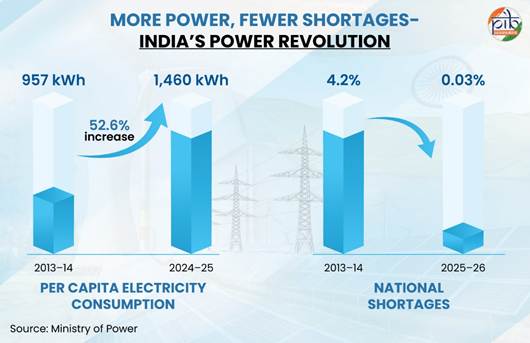
Per capita electricity consumption- Per capita electricity consumption in India rose from 957 kWh in 2013–14 to 1,460 kWh in 2024–25, a 52.6% increase. This reflects rising demand and wider access to reliable power. For the middle class, this has translated into greater everyday convenience, from increased use of home appliances and digital devices to better cooling, lighting, connectivity. Improved electricity access has also supported remote work, online education, small businesses, higher living standards across urban, semi-urban India.
Additionally, to meet future needs, the Government has finalised the National Electricity Plan for 2023–2032. It aims to support a peak demand of 458 GW by 2032. The plan will also enable renewable energy integration and support emerging needs like green hydrogen, strengthening the power system.
Accessible and Affordable Healthcare
Affordable healthcare access has expanded significantly for millions of families across the country. Lower medicine costs, wider insurance coverage, and improved treatment facilities have reduced healthcare burdens over the past twelve years. Preventive care, disease control, and stronger public health infrastructure have also enhanced health security for the middle class.
Eat Right India- Tackling obesity and diet-related disease requires action beyond hospitals. FSSAI- India's food safety regulator- has been working upstream, reshaping how food is produced, sold, and consumed. Launched in July 2018, the Eat Right India movement is promoting safe, healthy, and sustainable food. As of July 2025, 17.76 lakh food handlers have been trained and 179 Clean Street Food Hubs certified. There are 517 Certified Fruits and Vegetables Markets along with 406 Eat Right Stations certified at railway stations.This helps the middle class reduce diet-related health risks and medical costs. Wider certification of markets, street food hubs, and stations improves food quality and hygiene in daily life.
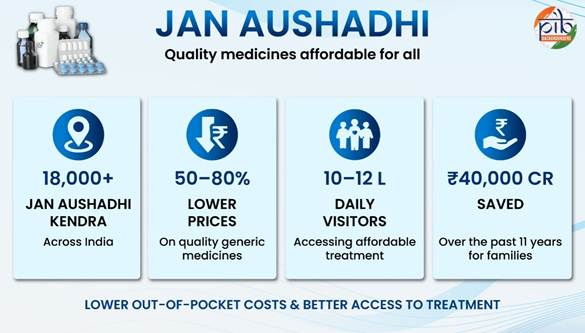
Pradhan Mantri Bhartiya Janaushadhi Pariyojana scheme- The scheme was substantially revamped after 2015. It seeks to provide quality-assured generic medicines at significantly lower prices via Jan Aushadhi Kendras (JAKs). Currently, 18,000+ Jan Aushadhi Kendras supply quality generic medicines at 50-80% lower prices.On average, about 10 to 12 lakh persons visit these Kendras daily. Subsequently, India’s middle-class benefits from significantly reduced healthcare expenses. The product portfolio of 2,110 medicines, 315 surgical items etc. improves access to treatment.Over the past 11 years, Janaushadhi products have helped save ₹40,000 crore by reducing out-of-pocket medicine expenses for families.
Pradhan Mantri Surakshit Matritva Abhiyan (PMSMA)- This scheme provides fixed-day, quality antenatal care to pregnant women (in 2nd, 3rd trimester) on the 9th of every month. A National Portal for PMSMA and a Mobile application facilitate the engagement of doctors from private/ voluntary sector.
Since its launch in 2016, over 7.46 crore pregnant women have been examined and more than 22,000 facilities are providing PMSMA services nationwide (as of May 29, 2026).
Ayushman Bharat- Pradhan Mantri Jan Arogya Yojana- Launched in September 2018, this is the world’s largest public healthcare scheme. The scheme provides cashless treatment across empanelled government-funded and private hospitals. It is benefitting senior citizens from across India, including middle-class families, with 86.51 lakh+ senior citizens over 70 offered Ayushman Vay Vandana Cards.
Ayushman Arogya Mandir (AAM)- This was a watershed moment in the history of public health, marking a transformative step toward achieving Universal Health Coverage (UHC) in India (launched in 2018). AAMs are primary healthcare centres across rural, urban and tribal regions that provide comprehensive, universal, and free services to people closer to where they live. They are one of the four components of Ayushman Bharat, the Government’s flagship healthcare initiative launched in 2018.
The programme has significantly improved access to affordable and quality healthcare services across India. Together, its four components aim to ensure quality healthcare at the primary, secondary, and tertiary levels. The other components include Ayushman Bharat Pradhan Mantri Jan Arogya Yojana, PM-Ayushman Bharat Health Infrastructure Mission, and Ayushman Bharat Digital Mission.
Reforms under AAM have strengthened progress toward universal health coverage. The UHC index rose from 57 in 2015 to 63 in 2021. Out-of-pocket spending declined from 60.6% (2014–15) to 39.4% (2021–22). There are 1,85,555 operational AAMs (as on April 28, 2026). The AAMs have recorded a cumulative footfall of over 540 crores (June 2026). Notably, over 60 crore screenings have been conducted for oral, breast and cervical cancers at AAMs.
Schemes for diseases such as Tuberculosis (TB), Malaria, Cancer- Through National TB Elimination Programme, TB incidence has fallen 21% from 237 to 187 cases per lakh population between 2015-2024. Treatment coverage has risen sharply- from 53% to 92%, well above the global average of 78%.
In 2016, the Government launched the National Framework for Malaria Elimination, which provides a roadmap for eliminating malaria by 2027. Building on this framework, the National Strategic Plan for Malaria Elimination (2023–2027) introduced enhanced surveillance and a "test, treat, and track" approach to case management. It also developed real-time data tracking.Malaria cases and deaths have dropped by around 80% from 2015-2023. India exited the World Health Organisation’s High Burden to High Impact Group for malaria in 2024.
Dengue diagnosis capacity has improved with Sentinel Surveillance Hospitals grown from 110 (2007) to 869 (2025). The National Viral Hepatitis Control Programme, launched in 2018, provides free diagnostics and treatment across 1,140 sites. 18.23 crore individuals have been screened cumulatively (2018-September 2025).
India is strengthening cancer care through expanded surveillance, tertiary infrastructure, and district-level treatment facilities. Since 2014-15, the Government implemented the Strengthening of Tertiary Cancer Care Centres Facilities Scheme in order to enhance the facilities for cancer care at tertiary level. Under this scheme, 19 State Cancer Institutes (SCIs) and 20 Tertiary Cancer Care Centers (TCCCs) have been approved. Under the scheme, there is provision of providing one time grant up to ₹120 crores for SCI and up to ₹45 crores for TCCC including State share. Currently, 20 SCIs, 19 TCCCs and 439 DCCCs are functional and offering patient care services.
Strengthened Education, Entrepreneurship & Skill Development
Education, skilling, and entrepreneurship opportunities have expanded significantly across the country over the past twelve years. Stronger institutions, wider access to loans, and industry-focused training have improved career opportunities. These efforts have supported innovation, encouraged self-employment, and strengthened upward mobility for India’s middle class.
School education- As India moves towards becoming a Viksit Bharat by 2047, quality education remains central to social and economic progress. India’s 14.71 lakh schools support over 24.69 crore students and 1.01 crore teachers (2024-25).
Further, the launch of Samagra Shiksha in 2018 created a unified approach to school education across all levels. It improved planning, resource allocation, and learning outcomes through an integrated framework. The National Education Policy (NEP 2020) further strengthened this vision by promoting holistic, skill-oriented, and future-ready learning. For middle-class families, these reforms expand access to quality education and better career opportunities. They also reduce educational gaps and strengthen pathways for upward mobility.
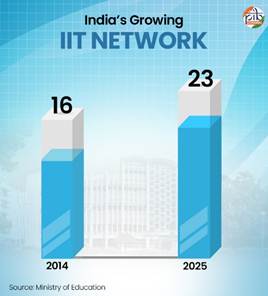
IIT Expansion-There were 16 Indian Institutes of Technology (IITs) in India in 2014. With the addition of 7 new IITs in the subsequent years, the total number rose to 23 (2025).Student strength has doubled from 65,000 to 1.35 lakh over the past decade (until 2025-26). Besides, the Government has approved to expand infrastructure in newer IITs to support 6,500 additional students. New capacity will be created in Tirupati, Bhilai, Jammu, Dharwad, and Palakkad. The addition of 130 senior faculty posts further strengthens academic quality.
For the middle class, this expansion improves access to quality education and top institutions. It opens pathways to better jobs, higher incomes, and upward mobility. It also reduces educational inequality and supports a more skilled, innovation-driven economy.
Vidya Lakshmi Scheme- This initiative, launched in 2024, supports meritorious students, ensuring finances do not block access to higher education. It offers collateral-free, guarantor-free education loans through a simple, transparent, digital process. Students from families earning up to ₹8 lakh receive a 3% interest subsidy. Admission must be secured on merit in one of 860 designated quality institutions. For middle-class families, this reduces financial stress and expands access to quality education. It enables students to pursue aspirations without heavy upfront costs or borrowing barriers. During February 2025- February 2026, 60,600+ loans have been sanctioned, amounting to ₹7,750+ crore, with ₹1,400 crore disbursed for first semester/year.
Influx of Foreign Universities in India- Leading global universities like Deakin University and University of Wollongong have opened campuses in GIFT City, Gujarat, while University of Southampton has set up in Gurugram. These campuses bring global curriculum, faculty, and teaching practices closer to Indian students. For the middle class, this reduces the high costs of studying abroad and limits foreign exchange outflow. It also expands access to internationally recognised degrees within the country. Overall, this improves affordability, widens choices, and strengthens India’s position as a global education hub. In 2025, the University Grants Commission (UGC) has issued letter of intent to 8 Foreign Higher Educational Institutions from Australia, Italy, United-Kingdom, USA. UGC has welcomed these institutes to open their campuses across Bengaluru, Mumbai, and Chennai.
Medical education- The expansion of medical infrastructure has made quality healthcare more accessible and affordable for the middle class. Over 2,045 medical colleges- including 818 Allopathy, 323 Dental, and 942 Ayush colleges have opened till 31 March 2026. The number of AIIMS has tripled- there are 23 AIIMS operational or approved across the country. This reduces travel costs, waiting times, and dependence on expensive private care.
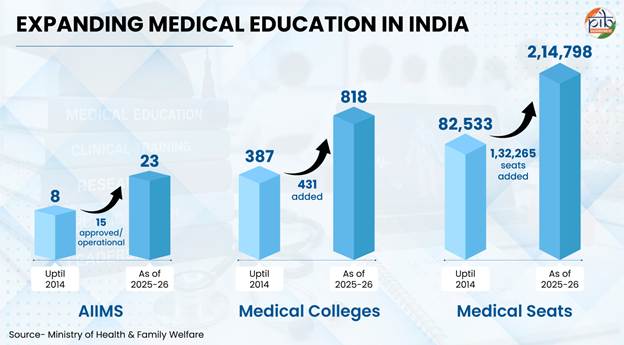
Nursing has received equal attention. 157 new nursing colleges are being established alongside the new medical colleges- adding ~15,700 nursing graduates annually. On mental health front, a NIMHANS-2(National Institute of Mental Health and Neuro Sciences) will be set up in north India, filling a longstanding gap in tertiary psychiatric care. Institutes in Ranchi and Tezpur will be upgraded as Regional Apex Institutions. Emergency and Trauma Care capacity in District Hospitals will be strengthened by 50%. In Budget 2026-27, customs duty has been exempted on 17 new drugs, with 7 additional rare diseases added to the duty-free personal import list. Besides, five Regional Medical Value Tourism Hubs will integrate medical, educational, AYUSH, and rehabilitation services—positioning India as a global destination for holistic care.
Besides, the Budget 2026-27 also proposed to reduce TCS (Tax Collected at Source) rate for pursuing education and for medical purposes under the Liberalized Remittance Scheme (LRS) from 5% to 2%. Reduced TCS on education and medical expenses abroad eases financial burden for the middle class.
Industrial Training Institutes (ITIs)- ITIs are the backbone of long-term vocational education in India. They have been set up with the objective to ensure a steady flow of skilled personnel to the industry.
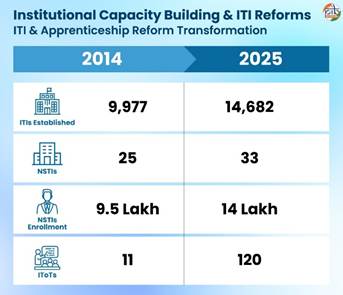
To further strengthen this ecosystem, PM–SETU (Pradhan Mantri Skilling and Employability Transformation through Upgraded ITIs) was launched in October 2025 as a Centrally Sponsored Scheme at an estimated cost of ₹60,000 crore.For the middle class, this improves access to quality vocational training and employability. It opens pathways to stable jobs, better incomes, and career growth without requiring expensive degrees.
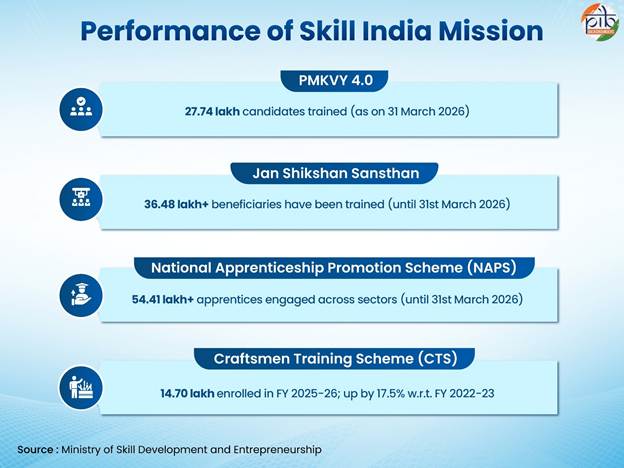
Skill India Mission- Launched in 2015, this mission is aligned with the Government’s vision to help India become ‘Aatmanirbhar’ (self-reliant). The initiative offers apprenticeship training, technical intern training programme, online skilling, etc. Key schemes include Pradhan Mantri Kaushal Vikas Yojana (PMKVY), Jan Shikshan Sansthan (JSS), Pradhan Mantri National Apprenticeship Promotion Scheme (NAPS)and Craftsmen Training Scheme (CTS). The initiative, restructured for 2022–2026, offers several avenues suitable for the middle class, focusing on industry-aligned, short-term, and digital-friendly skill upgrades to enhance employability in fields like AI, IoT, and high-end services. The programme is heavily anchored in the Skill India Digital Hub (SIDH), which provides access to courses, job opportunities, and apprenticeship programs.
As of March 2026, 27.74 lakh candidates have been trained under PMKVY 4.0, 36.48 lakh beneficiaries under JSS, and 54.41 lakh apprentices engaged through NAPS, strengthening employability across sectors.
Startup India- Under the Startup India initiative, the Government is implementing three flagship Schemes- Fund of Funds for Startups (FFS), Startup India Seed Fund Scheme (SISFS), and Credit Guarantee Scheme for Startups (CGSS). These provide funding opportunities for startups across sectors at various stages of their business cycle. In 2016, only 502 startups were recognised, creating 308 direct jobs. By March 2026, over 2.23 lakh startups have been recognised, generating 23.3 lakh direct jobs. This rapid growth has expanded employment and entrepreneurial opportunities for the middle class. Additionally, ~48% of these startups have at least one-woman director or partner, reflecting growing inclusivity.
Seamless Digital Governance for Greater Convenience
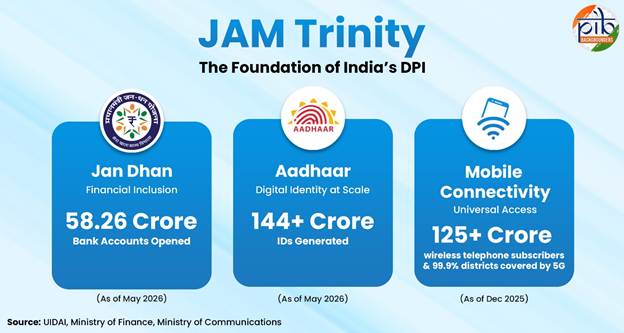
India’s digital public infrastructure (DPI) evolved through a deliberate integration of identity, banking, and connectivity. This took shape as the JAM trinity- Jan Dhan accounts, Aadhaar, and widespread mobile access. Together, they built the foundation for India’s digital transformation enabling direct and verifiable connections between citizens and the state.
JAM Trinity- The Pradhan Mantri Jan Dhan Yojana was launched in 2014 as the National Mission for Financial Inclusion. It aims to give every unbanked adult in India a bank account, a financial identity and access to essential services such as credit, insurance and pensions. Over the last 12 years, it has evolved into one of the largest financial inclusion initiatives in the world. The number of accounts grew from 14.72 crore in 2015 to 58.26 crore as of May 2026. Deposits increased from ₹15,670 crore in March 2015 to ₹3.01 lakh crore by May 2026. Middle class families benefit as they can securely save, receive benefits, and access credit, insurance, and pensions.
|
Nearly a decade ago, Rebecca Mathew from Goa struggled with delayed pension payments. When the money arrived, it felt uncertain and dependent on middlemen. Jan Dhan Yojana changed that experience completely. Today, her pension reaches directly into her bank account every month. There are no commissions, delays, or repeated visits to offices. A simple bank message now brings her dignity, confidence, and financial security. As Rebecca says, “I forget about it sometimes, but the pension doesn’t forget to come.”

|
Aadhaar introduced a biometric based digital identity platform for residents across the country. It enabled unique identification and secure authentication for efficient service delivery. As of May 2026, more than 144 crore Aadhaar numbers had been generated. Usage reflects deep integration into everyday systems. In 2024-25 alone, over 2,707 crore authentication transactions were carried out. Identity became portable. Verification became near instant. Access to services became more reliable and transparent.
With 85.5% of Indian households owning at least one smartphone, mobile phones are banks, classrooms and gateways to public services. Notably, the number of wireless telephone subscribers reached 125.87 crore at the end of December 2025, from 937 million in November 2014. Besides, production of mobile phones has increased 28 times (~₹0.18 lakh crore in 2014-15 to ~₹5.5 lakh crore in 2024-25).
For the middle class, JAM Trinity collectively means fewer intermediaries, faster service delivery, reduced leakages, and greater control over finances. It enhances ease of living, improves financial security, and supports participation in a digital economy.
DigiLocker- Launched in 2015, DigiLocker aims at ‘Digital Empowerment’ of citizen by providing access to authentic digital documents to citizen’s digital document wallet. It helps the middle-class store and access important documents digitally, anytime and anywhere. It reduces paperwork, eliminates the risk of losing physical documents, and speeds up processes like admissions, banking, and job applications. This improves convenience, saves time, and enhances everyday ease of living. It has 69.9 crore total users (2 June 2026), up from 9.98 lakh sign-ups (2015). 950+ crore documents have been issued (May 2026).
UMANG App- Launched in 2017, UMANG, the Unified Mobile Application for New age Governance, was designed to advance mobile governance in India. It provides a single window mobile and web platform to access services from central, state and local government bodies. Citizens use UMANG to access a wide range of services. These include EPFO balance and claims, PAN-Aadhaar services, DigiLocker access, utility bill payments, pension services, passport services, driving licence services, exam results, etc. Registrations on the UMANG app have steadily increased, from 0.24 crore in 2017 to 11.39 crore (2 June 2026).
Middle Class Empowerment: A Foundation for Growth
Over the past twelve years, the Government has remained committed to uplifting the middle class. Its policies and reforms have eased everyday challenges for millions of families. They have strengthened financial security, housing access, healthcare, and skill development opportunities. These efforts reflect the middle class’s important role in India’s growth story. By promoting fairness and accessibility, the government has built greater confidence among middle-income families. This sustained approach has improved lives and created a strong foundation for future progress.
References
Ministry of Finance
https://www.pib.gov.in/PressReleasePage.aspx?PRID=2098352®=3&lang=2
www.indiabudget.gov.in/doc/budget_speech.pdf
https://www.pib.gov.in/PressReleasePage.aspx?PRID=2212593®=3&lang=2
https://www.pib.gov.in/PressReleseDetailm.aspx?PRID=2221439®=6&lang=1
Ministry of Jal Shakti
https://ejalshakti.gov.in/jjmreport/JJMIndia.aspx
Ministry of Housing and Urban Affairs
sansad.in/getFile/loksabhaquestions/annex/187/AU2133_IaL9i8.pdf?source=pqals
Ministry of Power
https://www.pib.gov.in/PressReleasePage.aspx?PRID=2215187®=3&lang=2
Ministry of Housing and Urban Affairs
sansad.in/getFile/annex/270/AS325_mzQ0A3.pdf?source=pqars
https://pmay-urban.gov.in/
Ministry of Electronics & IT
https://www.myscheme.gov.in/schemes/pmbjp
Ministry of Chemicals & Fertilizers
https://janaushadhi.gov.in/
https://www.pib.gov.in/PressReleasePage.aspx?PRID=2242928®=3&lang=1#:~:text=for%20GLP%20compliance
Ministry of Health and Family Welfare
https://www.pib.gov.in/PressReleasePage.aspx?PRID=2189415®=46&lang=1
https://www.pib.gov.in/PressReleasePage.aspx?PRID=2165607®=3&lang=2
https://eatrightindia.gov.in/streetfoodhub/home
https://aam.mohfw.gov.in/
https://www.pib.gov.in/PressReleasePage.aspx?PRID=2236917®=3&lang=1
https://www.pib.gov.in/PressReleasePage.aspx?PRID=2124334®=3&lang=2
chrome-extension://efaidnbmnnnibpcajpcglclefindmkaj/https://ncvbdc.mohfw.gov.in/Doc/National-Strategic-Plan-Malaria-2023-27.pdf
https://www.pib.gov.in/PressReleasePage.aspx?PRID=2087878®=3&lang=2
https://aam.mohfw.gov.in/
Ministry of Skill Development and Entrepreneurship
https://www.pib.gov.in/PressReleasePage.aspx?PRID=2222122®=3&lang=1
Ministry of Commerce & Industry
https://www.pib.gov.in/PressReleaseDetail.aspx?PRID=2227597®=6&lang=1
Ministry of Science and Technology
https://dst.gov.in/anusandhan-national-research-foundation-anrf
Ministry of Education
https://sansad.in/getFile/annex/268/AU373_8QLBR4.pdf?source=pqars
Ministry of Ayush
https://www.pib.gov.in/PressReleasePage.aspx?PRID=2221485®=3&lang=2
Ministry of Communications
https://www.trai.gov.in/sites/default/files/2024-09/PR-TSD-Nov-07_01_15.pdf
Ministry of Electronics & IT
https://www.pib.gov.in/PressReleasePage.aspx?PRID=2224503®=3&lang=1
https://www.digilocker.gov.in/web/statistics
https://web.umang.gov.in/landing/dashboard
Cabinet
https://www.pib.gov.in/PressReleasePage.aspx?PRID=2127411®=3&lang=2
Cabinet Committee on Economic Affairs (CCEA)
https://www.pib.gov.in/PressReleaseIframePage.aspx?PRID=1919985®=3&lang=2
World Bank
https://blogs.worldbank.org/en/opendata/understanding-country-income--world-bank-group-income-classifica
World Economic Forum
https://www.weforum.org/stories/2026/02/massive-urban-shift-in-india-consumer-growth-decentralizing/
Niti Aayog
https://niti.gov.in/sites/default/files/2025-08/Electric-Vehicles-WEB-LOW-Report.pdf
https://niti.gov.in/sites/default/files/2026-01/Trade_Watch_Quarterly_April_June_Q1_FY26.pdf
www.niti.gov.in/sites/default/files/2023-02/Health-Insurance-for-India%E2%80%99s-Missing-Middle_08-12-2021.pdf
https://niti.gov.in/sites/default/files/2026-05/School-Education-System-in-India.pdf
SBI
sbi.bank.in/documents/13958/14472/19012026_India+to+become+Upper+Middle+Income+country+soon_SBI+Research.pdf/a7c2377b-b58f-0bb6-21e0-af032519e73f?t=1768802982522
OECD
www.oecd.org/content/dam/oecd/en/publications/reports/2019/05/under-pressure-the-squeezed-middle-class_f3fa7167/689afed1-en.pdf
https://oecd-development-matters.org/2019/05/07/look-east-instead-of-west-for-the-future-global-middle-class/
National Library of Medicine
https://pmc.ncbi.nlm.nih.gov/articles/PMC12975087/
IBEF
https://www.ibef.org/government-schemes/skill-india
Twitter
https://x.com/PIB_India/status/1930216032368767432
YouTube
https://www.youtube.com/watch?v=gc7WZkS7ObM
https://www.youtube.com/watch?v=HplYaTTWY78
Others
https://ddnews.gov.in/en/indias-health-insurance-premiums-cross-%E2%82%B91-2-lakh-crore-sector-grows-at-9/
https://ddnews.gov.in/en/a-decade-of-change-healthcare-access-improves-for-millions-in-the-middle-class/
https://ddnews.gov.in/en/inflation-tamed-unified-pension-scheme-launched-middle-class-sees-tangible-benefits/
https://ddnews.gov.in/en/indias-ev-sales-cross-2-3-million-in-2025-market-share-rises-to-8/
https://www.kotak.bank.in/en/stories-in-focus/loans/home-loan/home-loan-interest-rate-history-india.html
https://www.asianstudies.org/publications/eaa/archives/the-middle-class-in-india-from-1947-to-the-present-and-beyond/
chrome-extension://efaidnbmnnnibpcajpcglclefindmkaj/https://docs.iza.org/dp15410.pdf
https://www.price360.in/expertview/the-rise-of-indias-middle-class-a-force-to-reckon-with/
PIB Archives
https://www.pib.gov.in/PressNoteDetails.aspx?NoteId=157872&ModuleId=3®=3&lang=2
https://www.pib.gov.in/PressNoteDetails.aspx?NoteId=155151&ModuleId=3®=3&lang=2
https://www.pib.gov.in/PressNoteDetails.aspx?id=158466&NoteId=158466&ModuleId=3®=3&lang=2
https://www.pib.gov.in/PressReleasePage.aspx?PRID=2254950®=3&lang=1
https://www.pib.gov.in/PressReleasePage.aspx?PRID=2239597®=3&lang=1
https://www.pib.gov.in/PressNoteDetails.aspx?NoteId=157711&ModuleId=3®=5&lang=16
https://www.pib.gov.in/PressNoteDetails.aspx?NoteId=155855&ModuleId=3®=3&lang=2
https://www.pib.gov.in/PressReleasePage.aspx?PRID=2256476®=3&lang=2
https://www.pib.gov.in/PressNoteDetails.aspx?id=158056&NoteId=158056&ModuleId=3®=3&lang=2
https://www.pib.gov.in/PressNoteDetails.aspx?NoteId=154950&ModuleId=3®=3&lang=1
https://www.pib.gov.in/PressNoteDetails.aspx?NoteId=157296&ModuleId=3®=3&lang=1
https://www.pib.gov.in/PressReleasePage.aspx?PRID=2235812®=3&lang=2
https://www.pib.gov.in/PressNoteDetails.aspx?NoteId=154635&ModuleId=3®=3&lang=1
https://www.pib.gov.in/PressReleasePage.aspx?PRID=2239597®=3&lang=1#:~:text=Launched%20in%202019%2C%20SWAMIH%20provides,benefiting%20over%202.38%20lakh%20people
https://www.pib.gov.in/PressNoteDetails.aspx?NoteId=154588&ModuleId=3®=3&lang=2
PIB Research
Click here for pdf file
****
PK/KC/SK