Ministry of Science & Technology
Light-powered Nano catalyst offers sustainable, affordable way for producing Path for Manufacturing Medicines and Chemicals
Posted On:
29 MAY 2026 4:11PM by PIB Delhi
Researchers have developed a novel light-driven nano-catalyst that could obviate the use of toxic solvents, high temperatures, and energy-intensive processes in the manufacturing of medicines and industrial chemicals making the processes cleaner, faster, and far more energy efficient.
Globally, there is a need to reduce pollution, energy consumption, and the use of toxic chemicals in industrial processes.
A team of scientists from Institute of Nano Science and Technology (INST), Mohali, an autonomous institute of the Department of Science and Technology (DST) have developed a nanocomposite that works as a light-driven catalyst by combining gold and palladium nanoparticles, and a light-absorbing molecule BODIPY. This hybrid material uses light energy to speed up chemical reactions more efficiently than traditional catalysts.
As per the research published in journal Nanoscale, the nanomaterial was designed and synthesized by combining gold, BODIPY, and palladium. It works by allowing gold nanoparticles to absorb light energy, which is then transferred to the BODIPY molecule and finally to palladium, the active catalyst. Palladium uses this transferred energy to drive chemical reactions more efficiently, making the entire process faster and less energy-intensive.
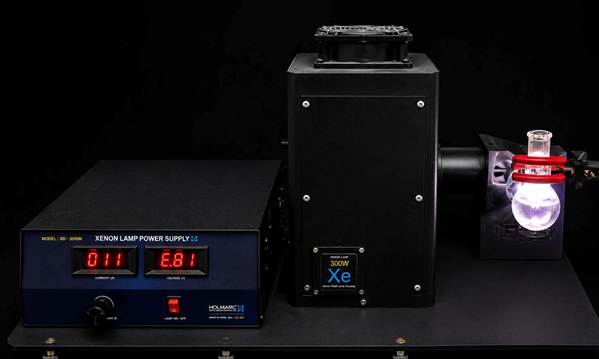
Fig: Experimental setup for photocatalysis consisting of the irradiation source and the reaction medium.
Combining the three different components - gold, BODIPY, and palladium - into one system where they work together to enhance performance beyond what each could achieve individually could help create a more powerful and sustainable catalytic process.
It can help improve upon existing technologies by allowing chemical reactions to occur under milder and more environmentally friendly conditions, such as using water instead of harmful solvents and light instead of high heat.
This technology developed by Dr. Prakash P. Neelakandan can enable cleaner and more cost-effective manufacturing of medicines and chemicals, reduce environmental pollution, and lower energy consumption. In the long term, it can contribute to more sustainable industrial practices and improved access to affordable green products.
Publication link: 10.1039/D5NR04898B.
*****
NKR/FT/NM
(Release ID: 2266607)
Visitor Counter : 2049