Ministry of Agriculture &
Farmers Welfare
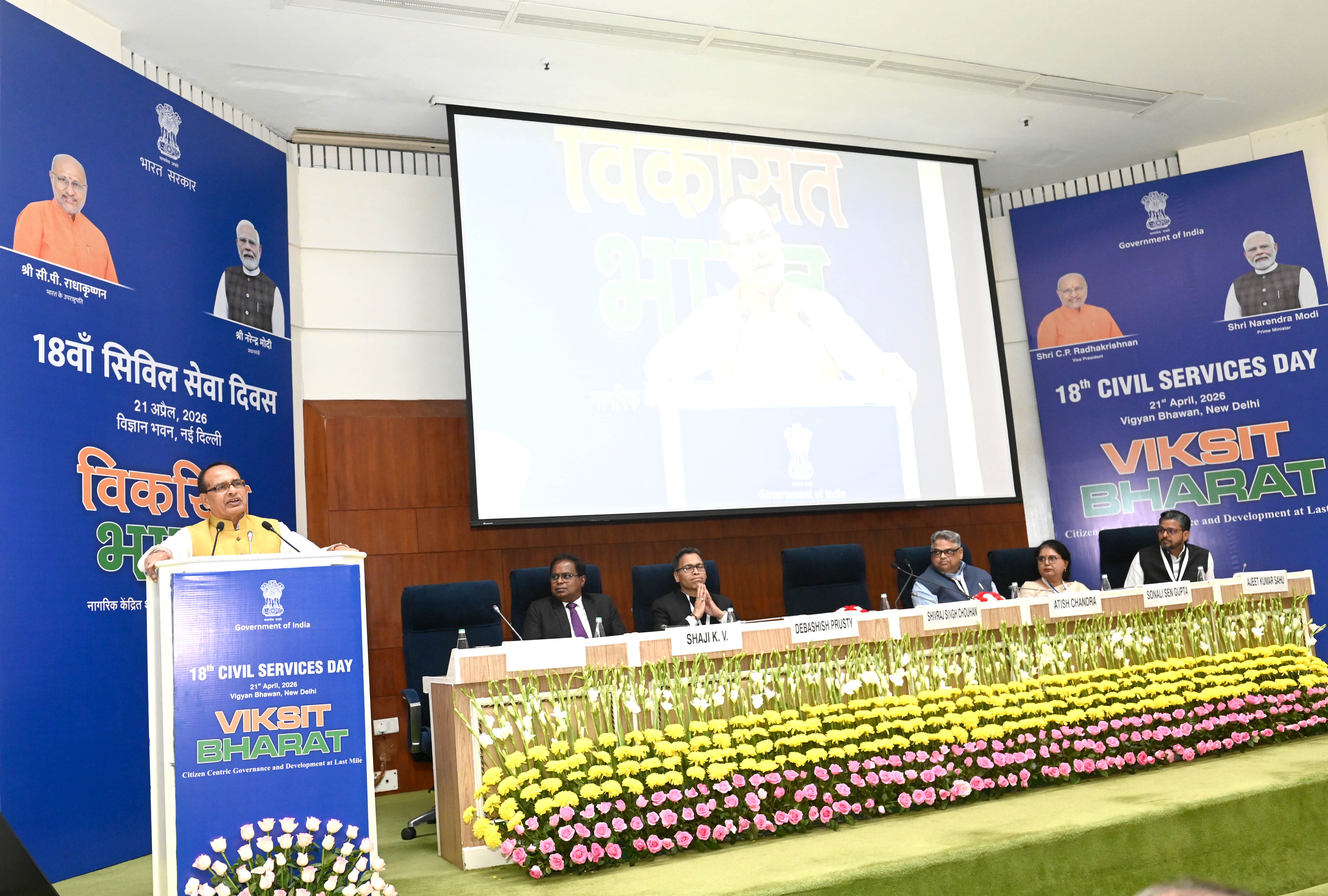
Shri Shivraj Singh Chouhan Participates in Agriculture Panel Discussion at Civil Services Day in New Delhi
Farmers Need Trust and Simpler Systems, Not Just Credit: Shri Shivraj Singh Chouhan
KCC Must Be Backed by Simpler Processes and Humane Approach: Shri Shivraj Chouhan
Technology is Useful, But Its Limitations Must Be Understood: Union Minister Shri Singh Chouhan
Shri Shivraj Singh Chouhan Stresses Integrated Farming to Boost Small Farmers’ Income
Schemes Succeed Only When Benefits Reach Farmers Simply and Effectively: Shri Chouhan
Posted On:
21 APR 2026 7:36PM by PIB Delhi
Union Minister for Agriculture & Farmers Welfare and Rural Development Shri Shivraj Singh Chouhan has emphasised the need to make the agricultural finance system more simple, practical, humane, and outcome-oriented to provide relief to farmers from moneylending practices, high interest rates, complex loan procedures, and insensitive systems. He stated that while the Kisan Credit Card scheme has provided significant relief to farmers, the next step is to ensure the prudent use of technology, strengthen the banking system in line with rural needs, ensure effective on-ground implementation of schemes, and promote integrated farming models to enhance the incomes of small farmers.
Simplification of Loan Processes is Essential
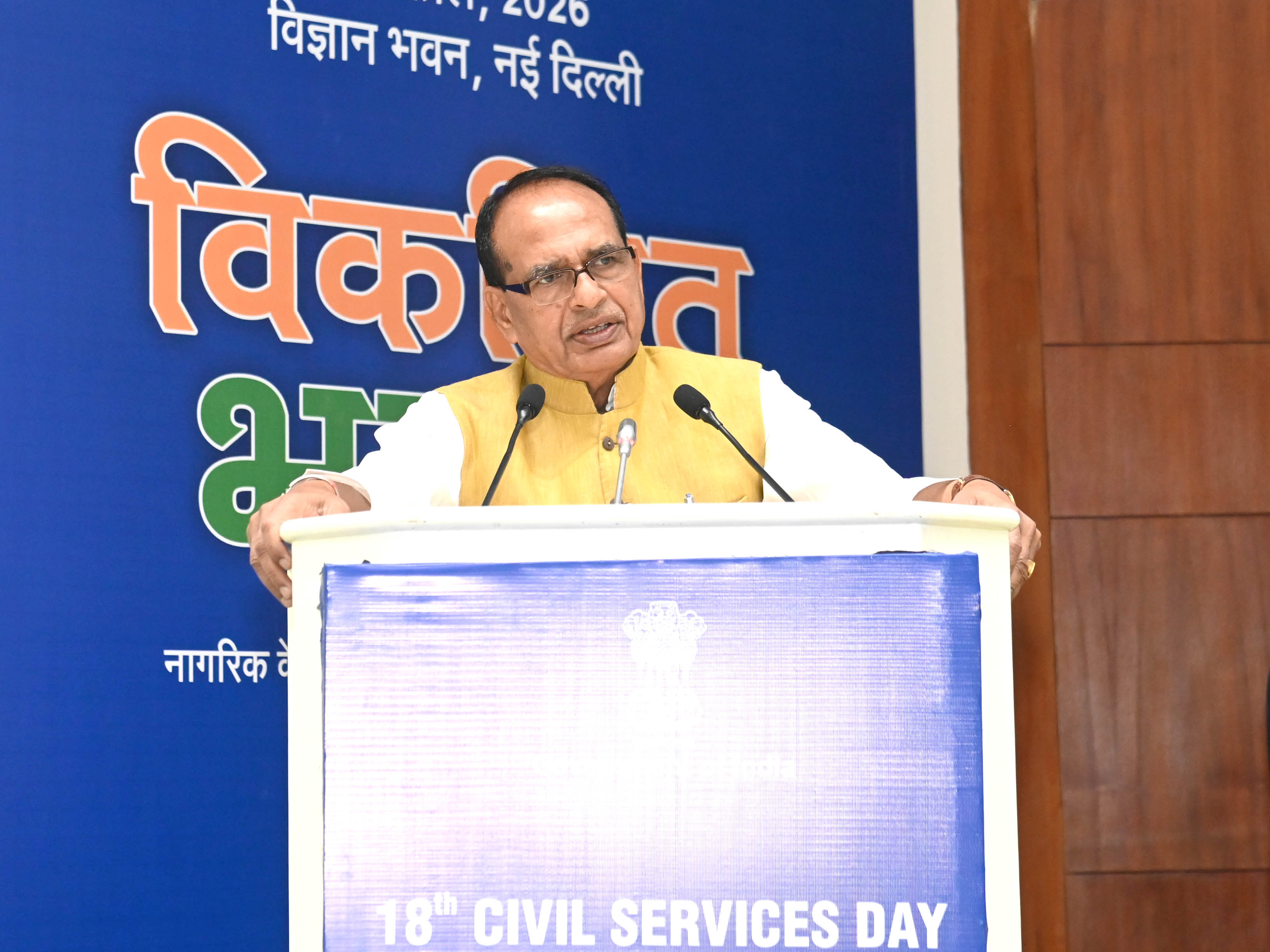
Speaking at a panel discussion on agriculture held at Vigyan Bhawan, New Delhi, on the occasion of Civil Services Day, Shri Chouhan said that having grown up in a village, he has closely witnessed how moneylending practices operated in rural areas, where people were forced to mortgage utensils, jewellery, land, or household items to secure loans, often at exorbitant and unregulated interest rates. He said that the need of the hour is to free farmers from this exploitative cycle. While KCC and institutional banking have improved access to credit for tractors, irrigation, seeds, and other agricultural needs, thereby boosting production, he pointed out that obtaining bank loans is still not easy in rural areas. Farmers often have to navigate multiple layers of paperwork, records, revenue offices, and administrative processes. Therefore, simplification of the loan process is crucial.
Sensitivity and Balance in the System
Shri Chouhan stressed that the system must incorporate both sensitivity and balance. He noted that sensitivity comes when one treats others as one’s own. He observed that individuals in positions of authority sometimes tend to look down upon farmers, whereas farmers are not supplicants, they approach the system with rights, needs, and dignity. Illustrating with an example, he referred to a farmer who had taken a loan of ₹18 lakh to build a house in a town for his children’s education, which eventually escalated to ₹40 lakh due to accumulated interest. The farmer later approached for help along with his children, prompting Shri Chouhan to suggest practical solutions such as One-Time Settlement with banks. He also emphasised that while the use of technology is essential, it must be applied judiciously. He cited instances during wheat procurement where satellite-based verification led to discrepancies, causing distress to farmers. He said that institutions such as the agriculture department, NABARD, RBI, and other stakeholders must work together to develop more practical and reliable systems, keeping in mind the limitations of technology.
Ensuring Adequate Human Resources in Rural Banking
Highlighting the shortage of staff in rural banks and branches, Shri Chouhan said that the workload in rural areas has increased significantly due to the expansion of direct benefit transfers, including MGNREGA wages, PM-KISAN payments, and other schemes. However, limited staff often struggle to provide efficient services. He pointed out that farmers sometimes travel 8-10 kilometres to reach a bank, only to face long queues and delays due to understaffing. This affects their time, labour, and livelihood. Therefore, a serious assessment is required to ensure adequate human resources in line with current demands.
Need for Greater Financial Support to Progressive Farmers
Shri Chouhan stated that KCC alone cannot address all challenges. Advanced farming practices such as horticulture, capsicum cultivation, polyhouses, greenhouses, drip irrigation, and sprinklers require higher investments. He noted that cultivating crops like capsicum may involve an investment of ₹1.5-2 lakh per acre, with potential earnings of ₹3-4 lakh per acre. However, the key issue is whether farmers have access to initial capital and adequate knowledge. While the government provides subsidies, these have limitations. Therefore, there is a need to explore ways to extend greater financial support to progressive farmers so that they can adopt modern technologies and high-value agriculture.
Promoting Integrated Farming for Small and Marginal Farmers
The Union Minister emphasised the importance of integrated farming models to enhance the income of small and marginal farmers. He stated that farmers with one to two-and-a-half acres of land cannot rely solely on food grains for their livelihood. They must diversify into allied activities such as fruits, vegetables, livestock rearing, goat farming, fisheries, and beekeeping to achieve sustainable income growth. He added that even for activities like dairy farming or fisheries, capital investment is required. Despite the extension of KCC to these sectors, the number of beneficiaries remains limited. Therefore, convergence of various schemes and resources is essential to make integrated farming both viable and practical.
Focus on Practical Implementation
Shri Chouhan also referred to the warehouse receipt financing scheme, stating that while it is a commendable initiative, it needs to be made more effective and practical. He explained that farmers often sell their produce at low prices due to immediate financial needs such as social obligations or debt repayment. If easy and timely credit is made available against stored produce, farmers can wait for better market prices and maximise their returns. He emphasised that while many schemes are well-designed, it is equally important to evaluate their processes, outcomes, and underlying challenges. Complexities must be identified and addressed. He urged stakeholders not to get lost in data alone, but to focus on practical aspects, including issues such as NPAs, coverage, access for small farmers, and actual benefits.
Call for Self-Reflection and Innovative Thinking
Shri Chouhan called upon civil servants to engage in self-reflection, improve implementation, and adopt out-of-the-box thinking. He said that for better service delivery and improved outcomes, officers must utilise their talent, capabilities, and ideas effectively. Practical and innovative ideas should be encouraged and translated into action for the benefit of farmers and the nation.
*****
RC/MS
(Release ID: 2254260)
Visitor Counter : 1149