Ministry of Agriculture &
Farmers Welfare
Preparations complete for national ‘Advanced Agriculture Festival’ in Raisen from April 11–13, says Union Agriculture Minister Shri Shivraj Singh Chouhan at press conference
Focus on food security, increasing farmers’ income and nutritional security through the fair : Shri Shivraj Singh Chouhan
Under Prime Minister Shri Narendra Modi’s leadership, India has surplus wheat and rice stocks; mission to achieve self-reliance in pulses and oilseeds: Shri Shivraj Singh
Integrated farming model offers solution to challenge of small landholdings: Shri Chouhan
Research to reach fields through regional conferences and ‘Lab to Land’ approach: Union Minister Shri Shivraj Singh
20 technical sessions and live demonstrations to be held at national agriculture fair: Shri Shivraj Singh Chouhan
Fertiliser subsidy, Farmer ID, crop insurance and weather-related relief measures highlighted: Shri Chouhan
Posted On:
10 APR 2026 5:37PM by PIB Delhi
Ensuring the country’s food security, providing nutritious food to every citizen among India’s population of more than 1.4 billion, and continuously increasing the income of the 46 per cent of the population dependent on agriculture remain the top priorities of the Central Government. With the objective of translating this vision into action on the ground, Union Minister for Agriculture and Farmers’ Welfare, and Rural Development, Shri Shivraj Singh Chouhan has described the upcoming national-level ‘Advanced Agriculture Festival’ to be held in Raisen, Madhya Pradesh, from April 11 to 13 as a major step towards transforming the face of farming in India.
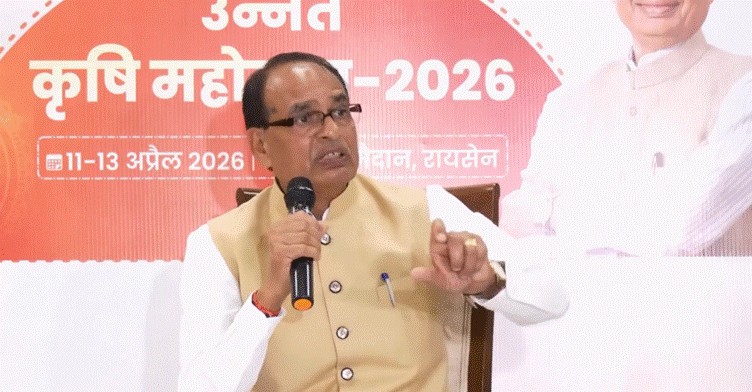
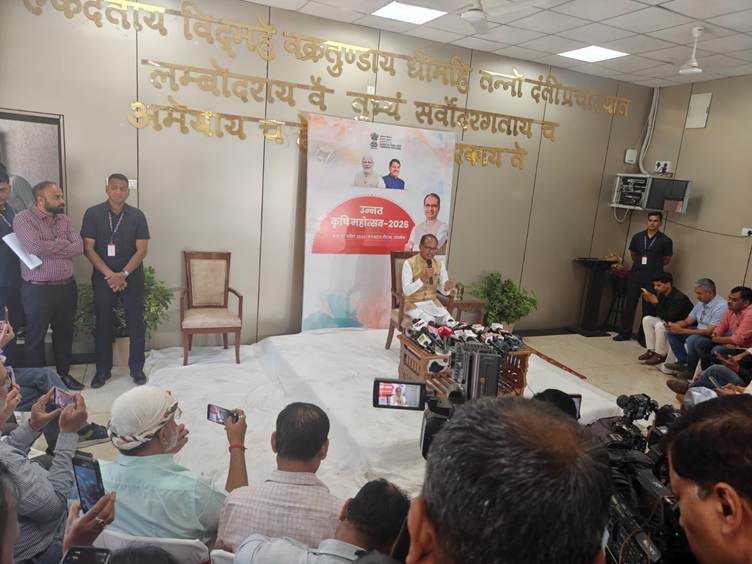
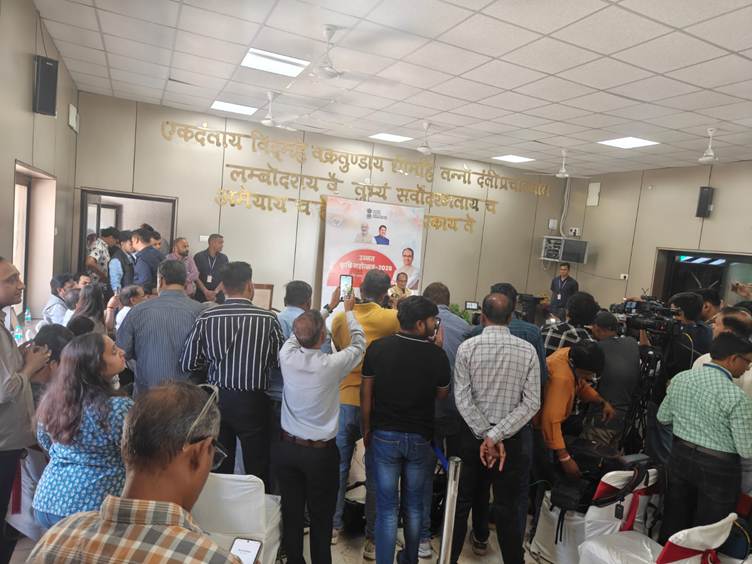
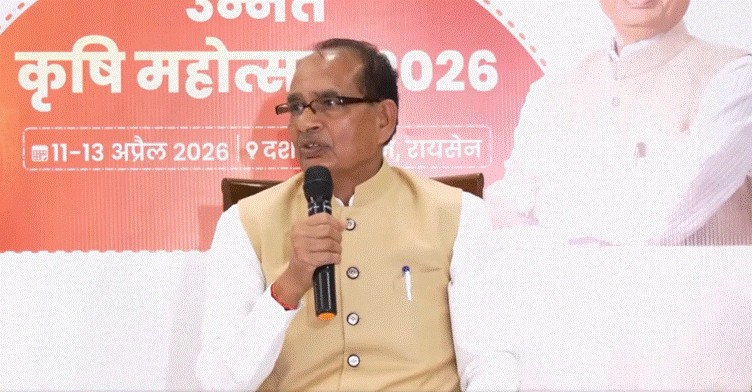
Addressing a press conference in Bhopal, Shri Shivraj Singh Chouhan stated that under the leadership of Prime Minister Shri Narendra Modi, the government’s core objective is to ensure food security, increase farmers’ incomes, and provide balanced nutrition to the population. He emphasised that out of India’s population of over 1.4 billion, nearly 46% are still directly dependent on agriculture. Therefore, securing farmers’ livelihoods and enhancing their incomes remains a central concern of the government.
Shri Shivraj Chouhan clarified that the goal is no longer limited to increasing the production of food grains alone. Rather, the focus is on ensuring adequate availability of fruits, vegetables, milk, coarse grains (Shri Anna), and pulses alongside cereals, so that proper nutrition can be guaranteed. He added that the government is simultaneously working on increasing production, reducing costs, raising farmers’ income, promoting crop diversification, expanding natural farming, and encouraging scientific agricultural practices.
Adequate stocks of wheat and rice; focus on self-reliance in pulses and oilseeds
The Union Minister stated that India currently has sufficient stocks of wheat and rice. However, in the case of pulses and oilseeds, the country still depends on imports. He pointed out that despite being the largest producer and consumer of pulses, India has not yet achieved complete self-reliance in this sector. Therefore, the policy focus is now on increasing both the area and productivity of pulses and oilseeds so that India can become self-sufficient in these crops as well.
Challenge of small landholdings; integrated farming as a solution
Shri Chouhan highlighted that the average size of agricultural landholding in India has declined to approximately 0.96 hectares. In contrast, countries such as Australia, Canada, the United States, and Brazil have farm sizes ranging from 10,000 to 15,000 hectares. He said that making agriculture profitable and increasing incomes on such small landholdings is a major challenge.
Recalling that cooperative farming experiments in the past did not yield the desired success, he said the ministry is now focusing on Integrated Farming Systems. He explained that models have been developed for one-hectare farms, where farmers can undertake multiple activities on the same piece of land, including cultivation of grains, fruits, and vegetables, along with livestock rearing, beekeeping, fisheries, and agro forestry.
He stressed that relying solely on grain production limits income potential. Therefore, integrating multiple agricultural and allied activities is key to enhancing the income of small and marginal farmers.
Regional conferences and ‘Lab to Land’ approach
Shri Shivraj Singh Chouhan noted that earlier, one or two national-level meetings were insufficient to address diverse agricultural challenges. Therefore, the country has now been divided into five regions, and regional conferences are being organised. The first regional conference has already been held in Jaipur, while the second is scheduled to take place in Lucknow on the 24th. Separate conferences are also planned for the Northeast and hill states.
He explained that each region has different agro-climatic conditions, and accordingly, crops, varieties, and farming methods must be tailored to suit local conditions.
The Union Minister further stated that while India has thousands of agricultural scientists whose research has contributed to increased production, often this research remains confined to laboratories and does not reach farmers. Therefore, the government has adopted a policy of taking research ‘from lab to land’, ensuring direct interaction between scientists and farmers so that innovations are implemented at the field level.
In line with this approach, the ‘Viksit Krishi Sankalp Abhiyan’, which was initiated last year, will now be conducted across all states at appropriate times based on local climatic conditions and cropping cycles. Under this initiative, teams of scientists and agricultural experts will visit farmers and provide hands-on training.
National ‘Advanced Agriculture Festival’ in Raisen from April 11–13
Shri Chouhan informed that the Ministry of Agriculture and Farmers’ Welfare will organise a national-level ‘Advanced Agriculture Festival – Kisan Mela’ in Raisen, Madhya Pradesh, on April 11, 12, and 13. He emphasised that this is not merely a fair but a training camp aimed at teaching modern agricultural practices. He said the event is being organised as a serious initiative rather than a ceremonial activity.
The festival will be inaugurated by Union Defence Minister Shri Rajnath Singh and Madhya Pradesh Chief Minister Dr. Mohan Yadav, while the closing ceremony on April 13 will be attended by Union Minister for Road Transport and Highways Shri Nitin Gadkari.
He added that senior officials from the Ministry, including the Secretary, the Director General of the Indian Council of Agricultural Research (ICAR), and leading agricultural scientists from across the country will participate in the event.
20 technical sessions, four halls, and live demonstrations
A total of 20 subject-based technical sessions will be organised during the festival across four seminar halls. These sessions will cover key topics such as post-harvest management, the use of artificial intelligence and modern technologies in agriculture, income enhancement through mechanisation, increasing productivity and area under pulses, opportunities in horticulture and high-value crops, integrated farming systems, and the convergence of natural and scientific farming practices.
Each session will feature four experts — agricultural scientists, specialists, progressive farmers, and officials — who will make presentations followed by interactive discussions where farmers can ask questions.
Shri Shivraj Singh Chouhan emphasised that these sessions will not be one-way lectures but interactive training programmes aimed at enabling farmers to understand the finer aspects and implement them in their fields.
To complement theoretical learning, live demonstrations will be conducted on various technologies and practices. Agricultural machinery such as reapers, power weeders, sprayers, seeders, balers, rotavators, and agricultural drones will be showcased. Demonstrations on micro-irrigation and precision farming, including fertigation, automation, solar pumping, and integrated irrigation systems, will also be conducted.
In horticulture, practical demonstrations will include polyhouses, greenhouses, mobile cold storage units, nurseries, beekeeping, and grafting techniques. Live models for livestock and fisheries will also be presented to showcase the possibilities of integrated farming on one hectare of land.
Processes related to natural farming, such as seed treatment and organic formulations like Jeevamrit and Beejamrit, will also be demonstrated live.
‘Farmer Welfare Year’ in Madhya Pradesh and district-level agricultural roadmaps
Shri Chouhan stated that Madhya Pradesh Chief Minister Dr. Mohan Yadav has declared the current year as ‘Farmer Welfare Year’. During the festival, state ministers and officials will participate in various sessions to provide information on both central and state government schemes, enabling farmers to understand how to benefit from them.
He emphasised that agriculture is a state subject, with the Central Government playing a supportive role. The Centre has decided to prepare agricultural roadmaps tailored to the climate, soil, and resources of each state. He further noted that conditions vary even within a state, and therefore, roadmaps will also be prepared based on agro-climatic zones.
During the Raisen festival, special agricultural roadmaps prepared by scientists will be presented for the districts of Sehore, Vidisha, Raisen, and Dewas. These will suggest suitable crops, varieties, and horticultural options based on factors such as soil type, temperature, rainfall, and water availability.
In the evenings, farmers will also be trained through folk media such as traditional performances and street plays.
Expansion of natural farming: Targets and progress
On natural farming, Shri Shivraj Singh Chouhan stated that the ministry has set a target to sensitize one crore farmers and bring at least 18 lakh farmers under natural farming this year. He noted that significant progress has already been made, with around 18 lakh farmers adopting natural farming practices on approximately 8 lakh hectares of land.
He added that scientific studies indicate that if natural farming methods are implemented correctly, input costs can be reduced without compromising production. This would also help reduce dependence on fertilizer imports.
Fertiliser subsidy and Farmer ID system
Addressing fertiliser availability, Shri Chouhan said that despite rising global prices of raw materials, the government has decided to keep the price of urea at ₹266 per bag and DAP (diammonium phosphate) at ₹1,350 per bag for farmers. To support this, the Cabinet has recently approved an additional allocation of ₹41,000 crore so that the increased cost burden is borne by the government and not passed on to farmers.
He acknowledged that subsidised fertilisers are sometimes diverted for non-agricultural uses. To address this issue, a Farmer ID-based system is being developed, which will link each farmer’s land, crops, and family data to a unified identification system. Based on this, the required quantity of fertiliser for each farmer will be determined, ensuring adequate supply while preventing hoarding, diversion, and black marketing.
He informed that more than 9.29 crore Farmer IDs have already been created, with a target to expand this to around 13 crore farmers. In states where sharecropping is prevalent, models implemented in Madhya Pradesh and Haryana allow tenant farmers to access fertilisers based on written consent from landowners. These models are being refined for nationwide implementation.
Weather-related crop damage and transparent surveys
Responding to questions on crop damage due to unseasonal weather and hailstorms, Shri Chouhan said that all state governments have been directed to assess losses promptly. He instructed that crop-cutting experiments be conducted scientifically and on time, and that joint surveys be carried out by the revenue, agriculture, and rural development departments.
Lists of affected farmers will be displayed at village panchayat offices to ensure transparency and allow farmers to raise objections or seek corrections. He noted that under the Pradhan Mantri Fasal Bima Yojana, teams are actively working, but due to the evolving nature of weather events, final loss estimates are still being compiled. He assured that farmers will receive all possible relief and insurance benefits.
Global situation, exports, and farmer protection
On the impact of global crises, including developments in West Asia, on agricultural exports and fertiliser supply, Shri Chouhan said that high-level meetings are being regularly held under the leadership of Prime Minister Shri Narendra Modi. While acknowledging that international conditions do affect exports, he reiterated that the government’s priority is to ensure fair prices for farmers’ produce, maintain fertiliser availability, and minimise the burden of global disruptions on farmers.
‘Lakhpati Didi’ initiative and women’s empowerment
Shri Chouhan stated that nearly 3 crore women have already become ‘Lakhpati Didis’, with a target to increase this number to 6 crore. He explained that the status is not based on a one-time increase in income but requires sustained higher income levels for at least six months, monitored regularly.
On women’s reservation, he reiterated the government’s commitment under the Nari Shakti Vandan Act to provide 33% reservation in the Lok Sabha and state legislative assemblies. He stated that the goal is to implement this provision by the 2029 elections through necessary legislative processes.
Response to opposition and appeal to farmers
Responding to opposition criticism, Shri Chouhan said that any individual or organisation working positively for farmers’ welfare is welcome. However, he cautioned against creating unnecessary disruptions for political purposes on serious agricultural issues. While acknowledging the democratic right to protest, he said that sudden demonstrations without prior notice, especially involving tractor processions, are not a healthy practice. He reiterated that the government believes in dialogue and is ready to discuss all issues in the interest of farmers.
The Union Minister appealed to farmers to participate in large numbers in the ‘Advanced Agriculture Festival’, interact with experts, learn new techniques, and adopt modern practices such as integrated farming and natural farming in their fields. He concluded by saying that his objective is not to create noise but to bring meaningful transformation in agriculture, and described the festival as a serious and significant step in that direction.
Detailed schedule of exhibition and training sessions at the festival
April 11 (Day 1):
From 2:00 pm to 3:30 pm, parallel technical sessions will be held in different halls. Hall 1 will host a session on “Post-harvest management: Advanced agriculture through utilisation of the Agricultural Infrastructure Fund”. Hall 2 will discuss “AI-based solutions in agriculture.” Hall 3 will focus on “Increasing agricultural income through beekeeping,” while the main hall will host a session on “Advancement in agriculture through mechanisation”.
From 3:45 pm to 5:15 pm, sessions will include “Increasing productivity and area of pulses” (Hall 1), “Natural farming” (Hall 2), “Increasing productivity and area of oilseeds” (Hall 3), and “Stubble management: Waste to wealth” (main hall), along with awareness through street theatre.
April 12 (Day 2):
From 11:00 am to 12:30 pm, sessions will include an “FPO meet” (Hall 1), “Soil health for green and safe agriculture” (Hall 2), “Protected cultivation of horticultural crops” (Hall 3), and a “Crop insurance awareness workshop” (main hall).
From 1:00 pm to 2:00 pm, a special programme on the agricultural roadmap will be held in the main hall in the presence of Union and state ministers.
From 2:30 pm to 4:00 pm, sessions will include “Integrated farming systems” (Hall 1), “Integrated nutrient management” (Hall 2), “Floriculture and vegetable cultivation” (Hall 3), and “Integrated pest management and use of bio-pesticides” (main hall).
From 4:15 pm to 5:45 pm, sessions will include “Nursery management and grafting techniques” (Hall 1), “Micro-irrigation and fertigation” (Hall 2), “Hydroponics, precision and vertical farming” (Hall 3), and “Quality and safe use of pesticides” (main hall), along with awareness programmes.
April 13 (Day 3):
From 10:30 am to 12:00 pm, sessions will include “KVK meet” (Hall 1), “Seed systems for self-reliance in paddy” (Hall 2), “Fisheries and pearl farming” (Hall 3), and “Agricultural credit and Kisan Credit Card” (main hall).
From 12:15 pm to 1:45 pm, sessions will include “Dairy development and animal husbandry” (Hall 1), “Direct seeding of rice” (Hall 2), “Poultry and goat farming for income enhancement” (Hall 3), and awareness through street theatre in the main hall.
From 3:00 pm to 5:00 pm, the closing session will be held in the main hall, reviewing the entire festival, presenting key outcomes and discussing the future course of action.
******
RC/MS/MK
(Release ID: 2250879)
Visitor Counter : 1215