Ministry of Electronics & IT
Industry Leaders Discuss Impact of AI Agents on SaaS and Enterprise Services at India AI Impact Summit
Panel Highlights Evolution of Business Models, Enterprise Readiness and Customer-Centric AI Adoption
AI Agents to Reshape Business and Operating Models; Agility and Customer-Centric Innovation Key to Success in AI Era
Posted On:
20 FEB 2026 8:51PM by PIB Delhi
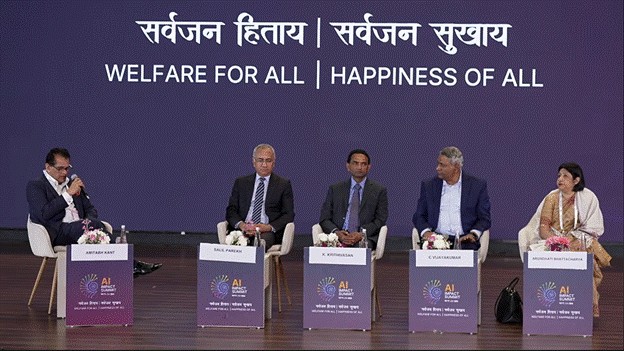
At the India AI Impact Summit, a high-level panel featuring Salil Parekh, Chief Executive Officer of Infosys; K. Krithivasan, Chief Executive Officer of Tata Consultancy Services; C Vijayakumar, Chief Executive Officer & Managing Director of HCL Technologies; and Arundhati Bhattacharya, Chairperson & CEO of Salesforce India, examined whether AI agents are fundamentally disrupting the traditional SaaS model. The discussion was moderated by Amitabh Kant.
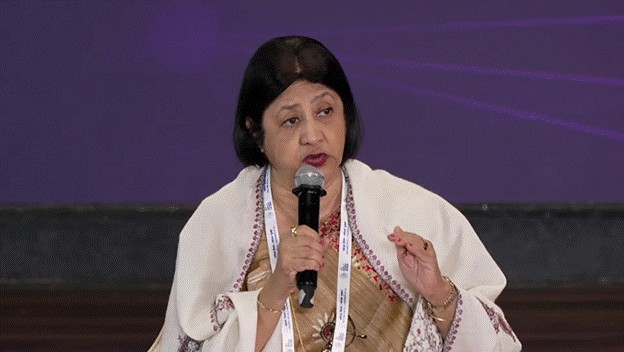
Addressing concerns over sharp market reactions, including speculation around the future of SaaS, Arundhati Bhattacharya cautioned against oversimplification. “Markets will say a lot of things, and not all of it comes true,” she noted. “When you talk about the SaaS model, it’s not only about vibe coding or creating an application, it’s about understanding workflows, recognizing customer pain points, and ensuring you address them. It’s about observability, governance, auditability, and adoption.” She emphasized that while ways of working will evolve, long-term sustainability will depend on delivering real customer value.
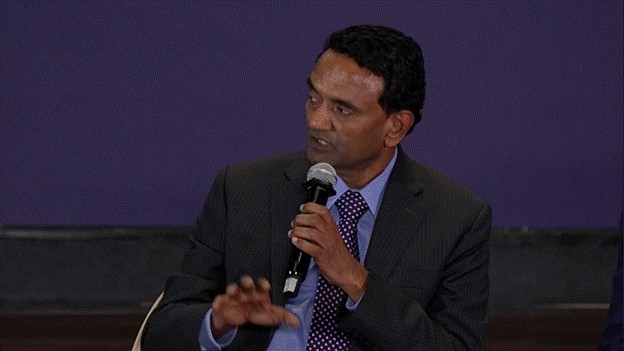
From a services perspective, K. Krithivasan highlighted a fundamental shift in the role of engineers. “We are entering an era where the role of the software engineer is shifting toward high-level architecture and rigorous validation,” he said. While AI promises immense productivity gains, he stressed that enterprise adoption requires significant groundwork, from data rationalization to application modernization. Rather than contraction, he foresees expansion: “We don’t envision a shrinking of the sector, but rather a massive explosion in the volume of what can be produced and the complexity of the problems we can solve.”
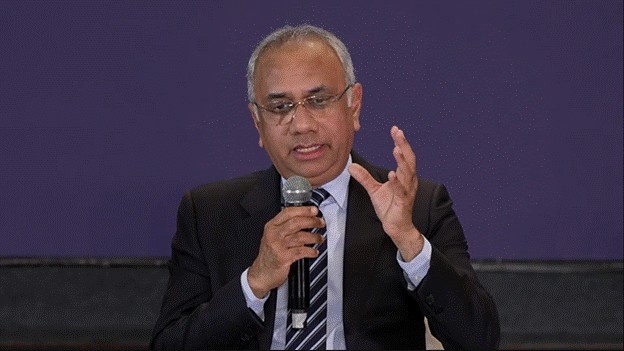
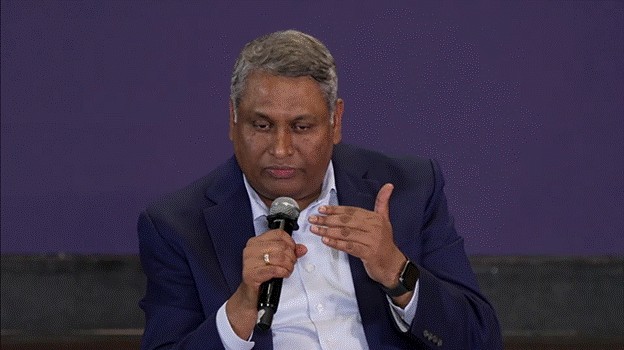
C Vijayakumar echoed the view that enterprise AI adoption demands more than generic models. “Large language models and foundational models cannot yet be applied most efficiently to enterprise use cases,” he said, noting a persistent gap between foundational capabilities and enterprise-grade performance. HCL Technologies, he added, is building intellectual property and specialized services, including physical AI and agentic AI, to bridge that gap and scale adoption, even if that means proactively evolving existing business lines.
Salil Parekh underscored the scale of opportunity ahead. “AI is creating a $300 billion services opportunity by making the ‘impossible’ economically viable,” he said, pointing to legacy modernization as a key example. Through Infosys’ orchestration platforms, he noted, enterprises can integrate foundation models with specialized agents to unlock measurable business value.
Collectively, the panel delivered a clear message: AI agents will reshape business and operating models, but they will not render them obsolete overnight. Success in the AI era will hinge on agility, enterprise readiness, orchestration, and above all, the ability to continuously solve real customer problems in increasingly complex digital ecosystems.
****
Mahesh Kumar / Pawan Faujdar / Kanishk Sharma
(Release ID: 2230979)
Visitor Counter : 588