Office of Principal Scientific Advisor to GoI
PSA Chairs stakeholder consultation on Use of Bio-Plastics in Packaging of Paan Masala and Gutkha
Posted On:
22 JAN 2026 5:38PM by PIB Delhi
The Principal Scientific Adviser (PSA) to the Government of India, Prof. Ajay Kumar Sood, chaired a high-level stakeholder consultation on the “Use of Bio-Plastics in Sachets for Packing and Storage of Paan Masala and Gutkha” to review progress and ensure coordinated action. The meeting was attended by Dr. Parvinder Maini, Scientific Secretary, Office of PSA; Dr. Rajesh Gokhale, Secretary, Department of Biotechnology; Shri Tanmay Kumar, Secretary, Ministry of Environment, Forest and Climate Change (MoEFCC); Shri Rajit Punhani, Chief Executive Officer, Food Safety and Standards Authority of India (FSSAI); senior officials from the Ministry of Consumer Affairs, Department for Promotion of Industry and Internal Trade (DPIIT), Department of Chemicals and Petrochemicals, Bureau of Indian Standards (BIS), and the Indian Institute of Packaging (IIP), along with representatives from academia, industry, and other stakeholders.
The discussions reviewed ongoing national initiatives and research efforts aimed at identifying suitable biodegradable materials for sachet packaging. In his opening remarks, PSA Prof. Sood recapitulated earlier deliberations with the Prime Minister’s Office (PMO) and the Department of Consumer Affairs, and emphasised the need to finalise a clear, time-bound action plan for paan masala and gutkha packaging.
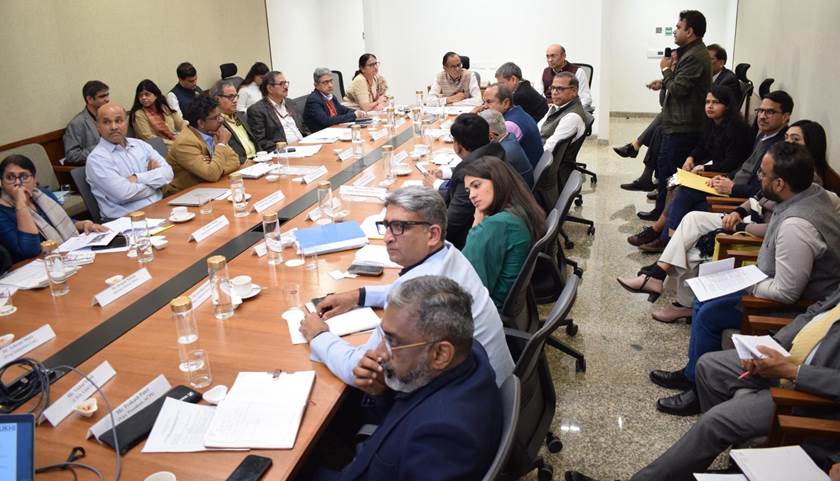
Dr. Gokhale underlined the significant environmental challenge posed by sachet plastics due to their poor degradability. He identified PolyLactic Acid (PLA) as a promising biodegradable alternative with minimal cost implications and stressed the need for coordinated, time-bound action involving government, industry, and academia.
Shri Tanmay Kumar informed that MoEFCC is revisiting the existing definition of bioplastics and is in the process of framing a clear definition of biodegradable materials, which would enable BIS to develop standardised testing protocols. He noted that such consultations are essential to arrive at a common, technically robust framework. Shri Rajit Punhani underlined that the cost of biodegradable packaging must remain lower than the product cost, while ensuring protection of flavour and aroma, strict adherence to FSSAI-prescribed migration limits, and complete exclusion of plastic and aluminium foil from all packaging layers.
From a standards perspective, BIS highlighted that most current biodegradable materials degrade only under industrial composting conditions, thus making collection and processing a significant challenge. The brainstorming session included inputs from multiple ministries and departments, academic perspectives from IIT Madras, IIT Bombay, and Ravenshaw University, and industry presentations by Balrampur Chini Mills Limited, UKHI Ltd, and Praj Industries, followed by interventions from regulatory authorities and industry associations. Building on these multi-stakeholder inputs, the discussions converged on the need to move from exploratory research and pilot solutions to a structured validation and certification pathway for biodegradable materials.
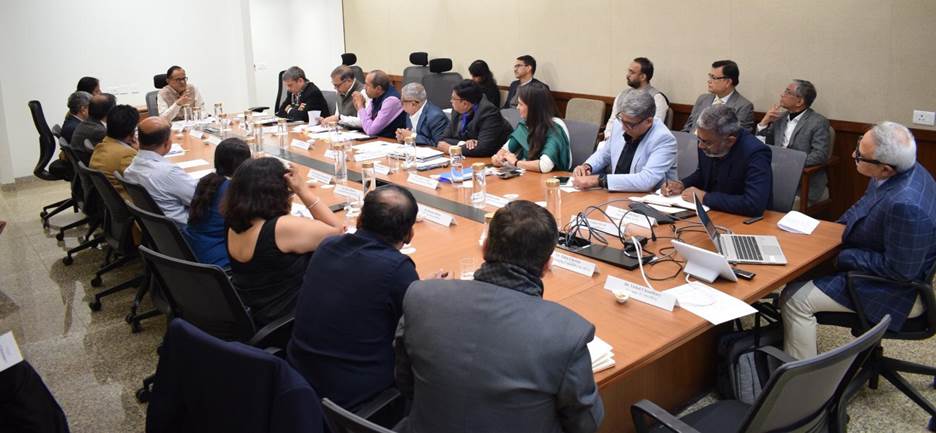
Appreciating the active participation of all stakeholders, Prof. Sood noted that several industries already have potential biodegradable material solutions, which now need to be rigorously tested and certified before finalising the definition of biodegradable materials. He emphasised that MoEFCC, FSSAI, BIS, CIPET, and IIP should work closely with industry and academic institutions to develop a clear process flow with defined timelines. He further directed industry representatives to submit proposed material samples to the Central Institute of Petrochemicals Engineering and Technology (CIPET) and to prepare a Standard Operating Procedure (SoP) ahead of the next meeting.
***
MJPS/ST
(Release ID: 2217328)
Visitor Counter : 1846